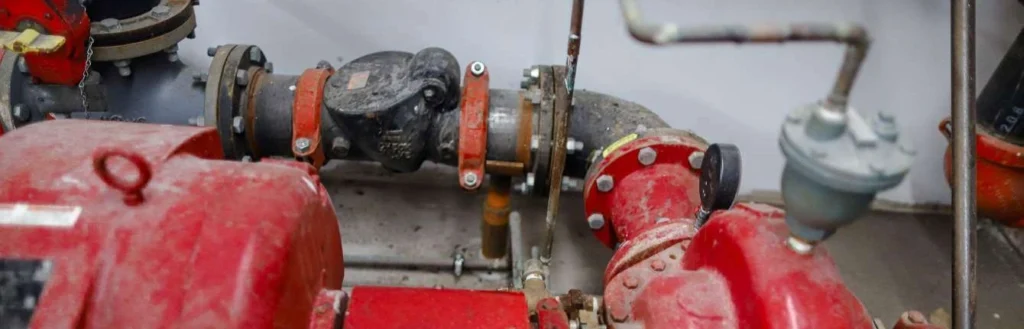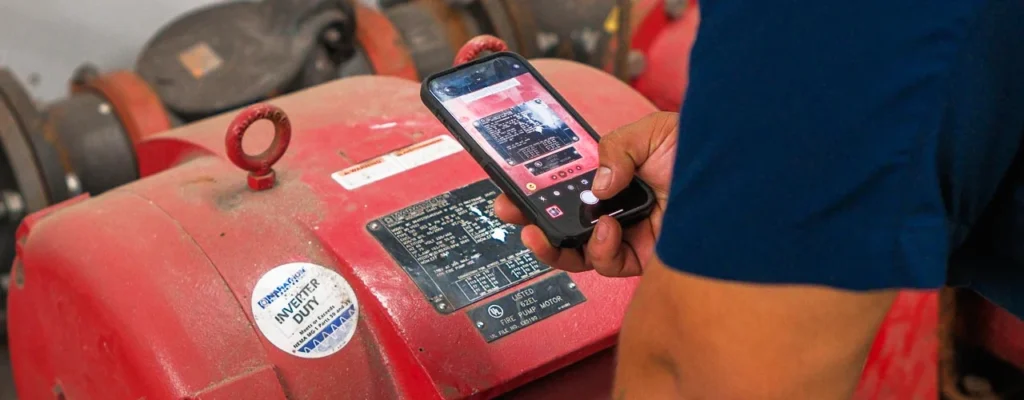
Fire Pump Motor Maintenance for Efficiency and Longevity
Quick Answer: To keep fire pump motors efficient and lasting longer, facilities should focus on clean power delivery, correct alignment, routine inspections, smart lubrication, and temperature based checks. They should also track performance trends and fix small issues early. Kord Fire Protection can support with compliance minded service and reliable response across Australia.
Fire pump systems do not forgive neglect. That is why fire pump motor maintenance matters, and it should start with how the motor is treated day after day. In industrial, retail, and commercial facilities across Australia, a fire pump motor works in the background until it does not. Then it has to perform like it is on cue, every time. And yes, even the best equipment can age faster than a bad coffee machine if the basics are skipped.
This article outlines best practices for fire pump motor efficiency and longevity, explains what to inspect, how to avoid common failure paths, and how Kord Fire Protection can become a vital partner in keeping your system ready for duty. If you are also reviewing broader fire protection services for inspection, testing, and ongoing support, it fits naturally into the same reliability conversation. For electrical context around dependable controller power, a helpful related read is fire alarm power requirements, reliable backup and AC.
Fire pump motor efficiency: where the losses really hide
Efficiency is not just a nameplate number. Over time, motors lose performance because of electrical imbalance, heat buildup, misalignment, dirty airflow paths, and worn bearings. When the motor runs hotter than intended, insulation life shortens. Then starting and stopping become harder, which increases stress on the windings and couplings.
To improve efficiency, a facility should measure and compare results instead of relying on guesswork. Therefore, they should track running current, motor temperature, and vibration trends. If readings drift, the system often signals a mechanical or electrical issue before it becomes a “we will deal with it later” problem. And later usually shows up with a bill.
What trend data actually tells you
Trend data gives maintenance teams something much better than optimism. It shows whether the motor is staying stable or quietly drifting toward trouble. A small increase in current draw might suggest voltage imbalance or rising mechanical load. A steady temperature increase can point to blocked cooling, poor lubrication, or a bearing that has started writing its resignation letter. Vibration trends, meanwhile, can reveal alignment issues before anyone hears the noise across the room.
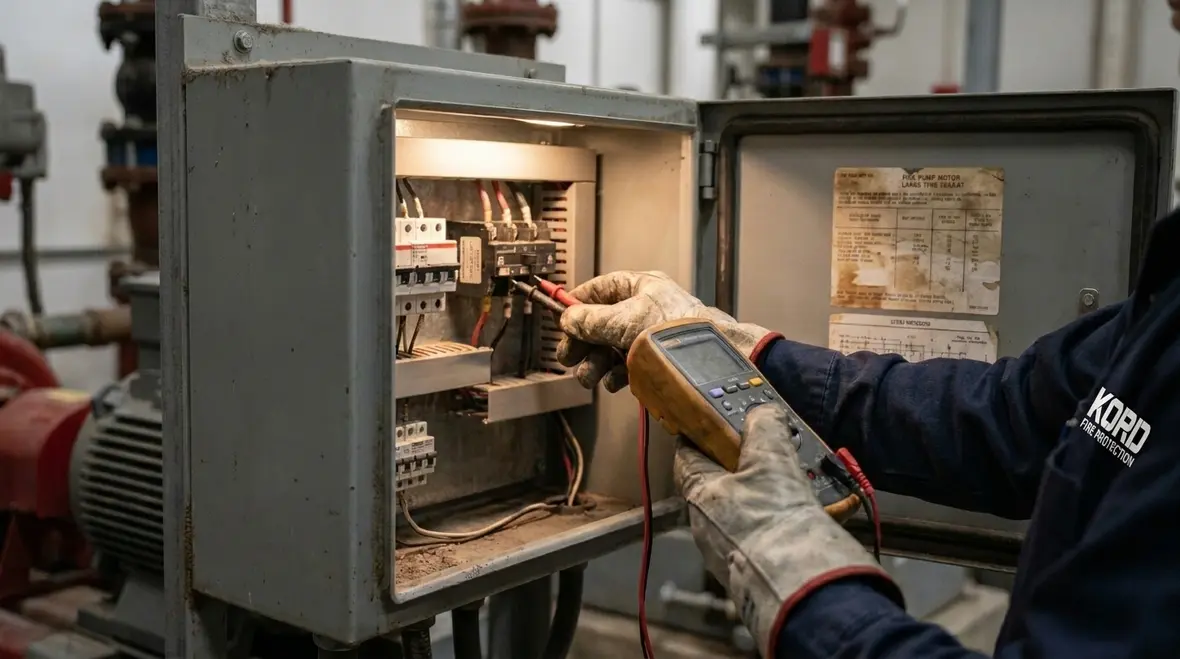
Inspection and testing that actually prevent failures
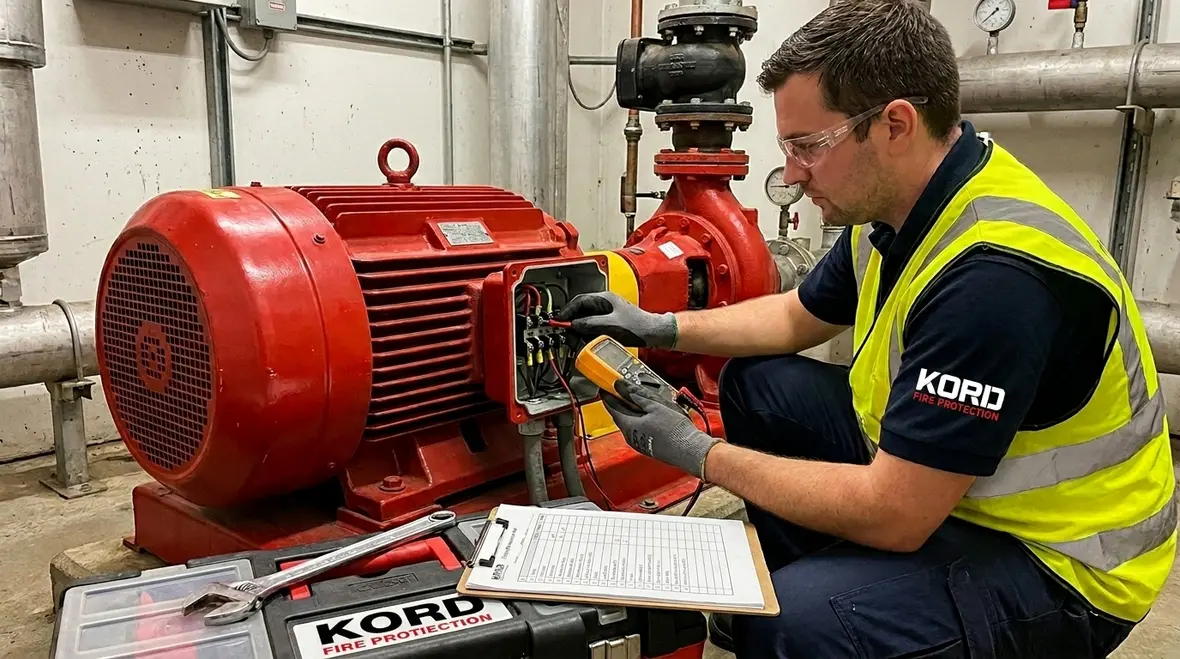
Well planned inspection schedules reduce downtime and protect the whole fire pump train, not only the motor. A strong program typically includes visual checks, electrical tests, and operating condition reviews.
Key checks should include the following:
- Electrical health: inspect contactors, terminations, and cable condition, then perform insulation related tests as required by your standards and OEM guidance
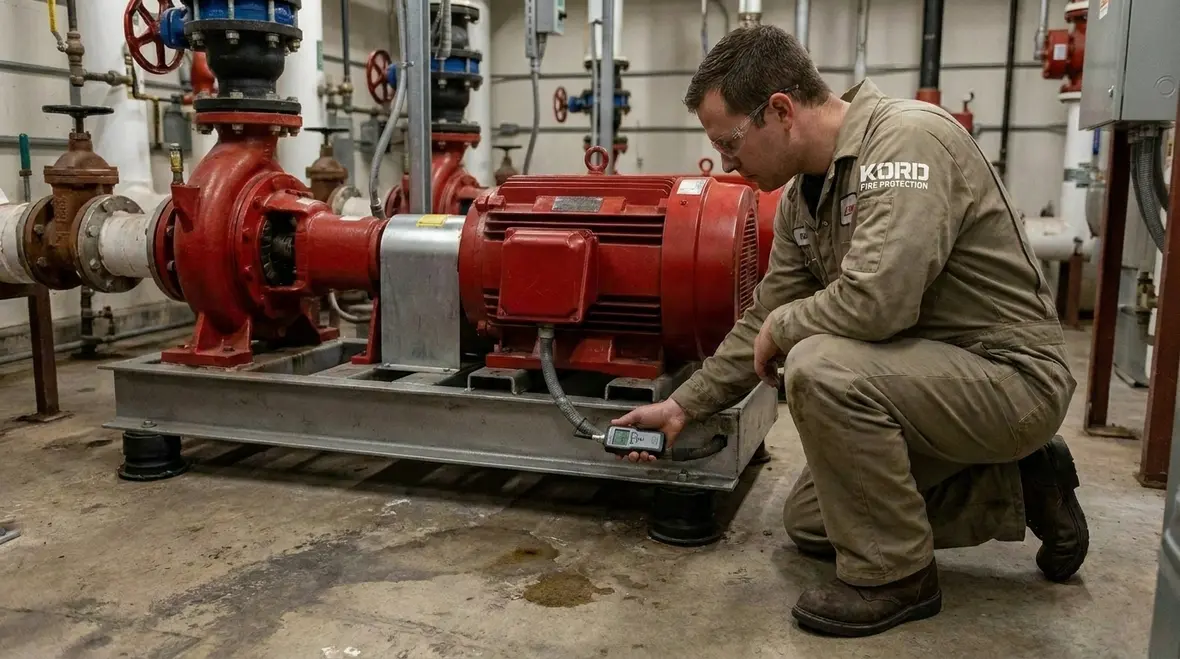
- Vibration and noise: confirm the motor and pump are running smoothly, because vibration often points to alignment and bearing problems
- Coupling condition: verify coupling wear and flexible element health so torque transfer stays stable
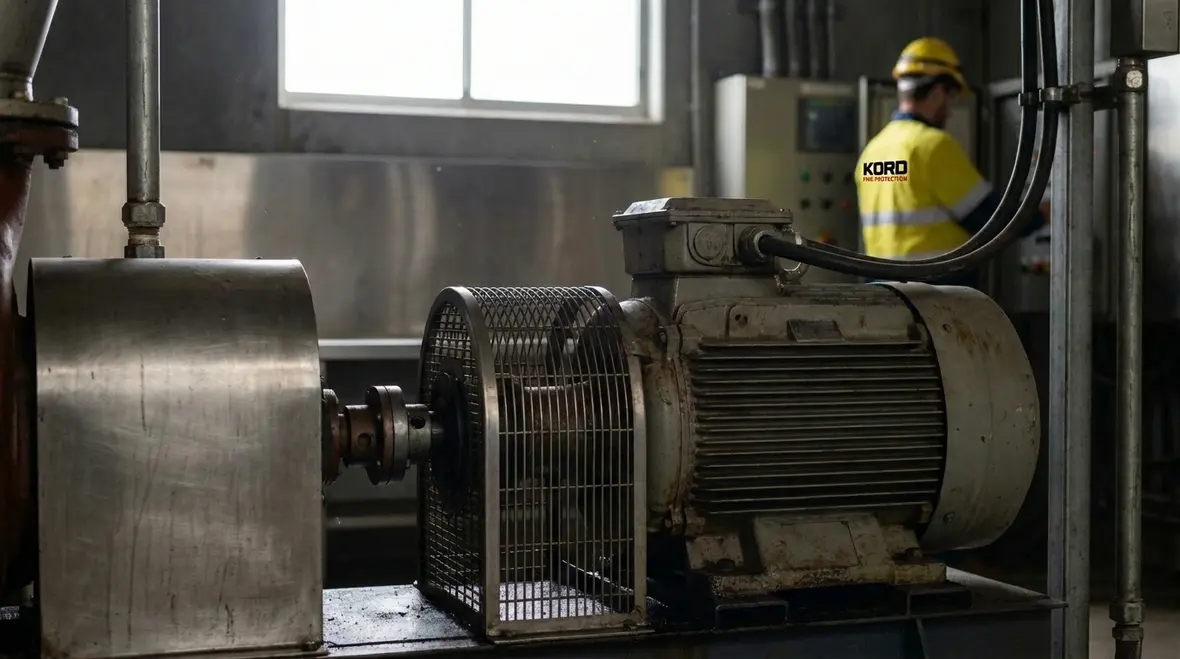
- Cooling and ventilation: clear fan guards and ensure air paths stay unobstructed, so the motor does not cook itself
- Lubrication verification: confirm correct grease type and intervals for bearings, then avoid over greasing which can trap heat
Meanwhile, the facility should follow test procedures that match the risk level and operating requirements of the installation. In other words, they should not treat every site like a warehouse stocked with spare parts and hope.
The difference between routine checks and meaningful checks
There is a big difference between ticking boxes and doing maintenance that changes outcomes. Meaningful checks compare present conditions to past baselines, verify that readings make sense together, and follow up on even small irregularities. For example, a hot motor with normal load and rising vibration is telling a different story than a hot motor with poor voltage balance. A disciplined program connects those clues instead of scattering them across paperwork no one reads again.
Alignment, vibration, and bearings: the quiet longevity drivers
Motors survive longer when mechanical forces stay controlled. Misalignment adds bending stress to the motor shaft and increases bearing load. Over time, that stress turns into heat, wear, and eventual failure. Bearings also suffer from contamination. Dust, moisture, and even fine debris can shorten life if seals are neglected.
For fire pump motor maintenance, best practice means verifying alignment after any service work, after foundation shifts, and after coupling changes. Additionally, vibration analysis during routine checks helps spot issues early. If readings climb, the facility should investigate before the condition becomes irreversible.
To keep bearings in healthy shape, teams should:
- Use correct lubrication quantities and follow the manufacturer schedule
- Inspect seals and end covers for wear or water ingress
- Keep the motor environment clean, especially in dusty retail and industrial zones
- Review operating hours and duty patterns, since cycling changes bearing wear
That is the difference between prevention and “patching it until the system decides to retire.”
Power quality, controls, and starts that do not stress the motor
Fire pump motors often live a dramatic life. They may sit for long periods, then start under emergency demand. Therefore, the control setup must deliver consistent power and reliable starting conditions. Voltage drops, phase imbalance, and degraded contactors can increase starting current and create heat in the windings.
To protect motor life, facilities should focus on:
- Phase balance: check for uneven current draw and correct supply issues
- Contactors and relays: inspect contacts for pitting or heat damage, then confirm correct operation
- Overcurrent protection: ensure settings match motor requirements so the protection works as intended
- Soft start or VFD use: verify parameters so the start profile does not create excessive torque or harmonics
- Control wiring integrity: check terminations and insulation condition so signals stay stable
Additionally, teams should verify that emergency start tests align with the site’s compliance expectations. In short, the controls should work like a well rehearsed theatre cast, not like a group that “might show up” after the curtain rises.
This is also where related controller guidance becomes useful. If control faults and nuisance trips are part of the picture, Kord Fire Protection’s article on why electric fire pump controllers fail adds practical context around heat, settings, and inspection habits. If the issue looks more like a starting circuit problem, their guide to fire pump motor starter issues is another strong internal reference.
Heat management and cooling practices across Australian conditions
Australia brings real variety in ambient conditions. Coastal areas may challenge corrosion resistance, while hot inland climates can raise motor operating temperatures. Heat management becomes a longevity strategy, not a comfort feature.
Best practices include:
- Verify cooling fan operation and clean fan blades so airflow stays strong
- Remove dust and debris from air intakes and louvers, especially where equipment sits in service corridors
- Check for blocked vents, damaged guards, and restricted airflow pathways
- Monitor motor temperature during required tests and compare against baseline values
- Inspect for moisture intrusion, corrosion at terminals, and condensation related symptoms
When motor insulation runs hot, it ages faster. Therefore, fire pump motor maintenance should treat temperature checks as a normal part of the routine, not as an afterthought for “when someone notices the smell.”
How Kord Fire Protection supports fire pump motor service and compliance
Even well trained internal teams benefit from a partner that brings job specific experience, coordinated documentation, and calm response when things get urgent. That is where Kord Fire Protection can become a vital ally. They support facilities with service planning, disciplined inspection routines, and readiness focused oversight that aligns with the expectations placed on fire life safety systems in Australia.
In practical terms, they help facilities reduce guesswork by supporting repeatable procedures and clear reporting. Furthermore, they can coordinate scheduling around operational downtime windows, so industrial sites and retail centres keep running while service happens. When emergency demand arrives, the goal stays simple: the motor and pump system must perform with confidence.
And look, nobody enjoys fire pump work. It is not like changing a lightbulb where you can laugh and move on. With fire safety equipment, the best humour is prevention.
Planning intervals and keeping records that stand up to scrutiny
Longevity depends on consistency. Facilities should set schedules based on manufacturer recommendations, service history, and operating conditions. Then they should document every step clearly. Records matter because they show trends, justify actions, and support compliance audits.
A strong record system should include:
- Baseline readings for vibration, temperature, and electrical parameters
- Results from electrical testing and inspection findings
- Any adjustments made, including alignment work and coupling replacements
- Corrective actions, plus what caused the issue and how it was resolved
- Evidence of ongoing fire pump motor maintenance activities, including dates and outcomes
Additionally, facilities should review performance trends at set intervals. If current draw increases over time, or if vibration rises after a service event, the record will guide the next decision. In other words, data turns maintenance from a cost into a managed risk strategy.
Why records save time when something goes wrong
When a motor suddenly behaves differently, a complete history prevents slow, expensive guessing. Teams can compare today’s readings to the last service interval, see whether the problem began after alignment work or an electrical adjustment, and decide faster whether the issue is mechanical, thermal, or power related. Good records do not only satisfy audits. They make troubleshooting smarter, which is a lot nicer than discovering everyone remembers the issue differently.
FAQ
Conclusion
When facilities treat fire pump motor maintenance like a real system, not a last-minute task, motors run cooler, start smoother, and last longer. By managing alignment, bearings, power quality, and heat, teams prevent the small problems that become big incidents.
For dependable service planning and compliance minded support, Kord Fire Protection can act as a vital partner. Reach out to arrange an assessment and build a maintenance plan that keeps your fire pump ready.

Join Our Newsletter!
Get the latest fire safety tips delivered straight to your inbox From our Newsletter.