Reliable Backup Power for Commercial Fire Alarm Systems
Quick Answer: Reliable backup power keeps commercial fire alarm systems working during outages, faults, or harsh conditions. It starts with correct battery and generator design, then continues with smart monitoring, code aligned testing, and fast service response. With Kord Fire Protection, businesses get a partner that stays ahead of failures, not just reacts to them.
For facilities that need coordinated support across alarms, sprinklers, inspections, and emergency response, full fire protection services can help keep every moving piece aligned before a power problem turns into a much longer day.
How commercial alarm power systems keep life safety online
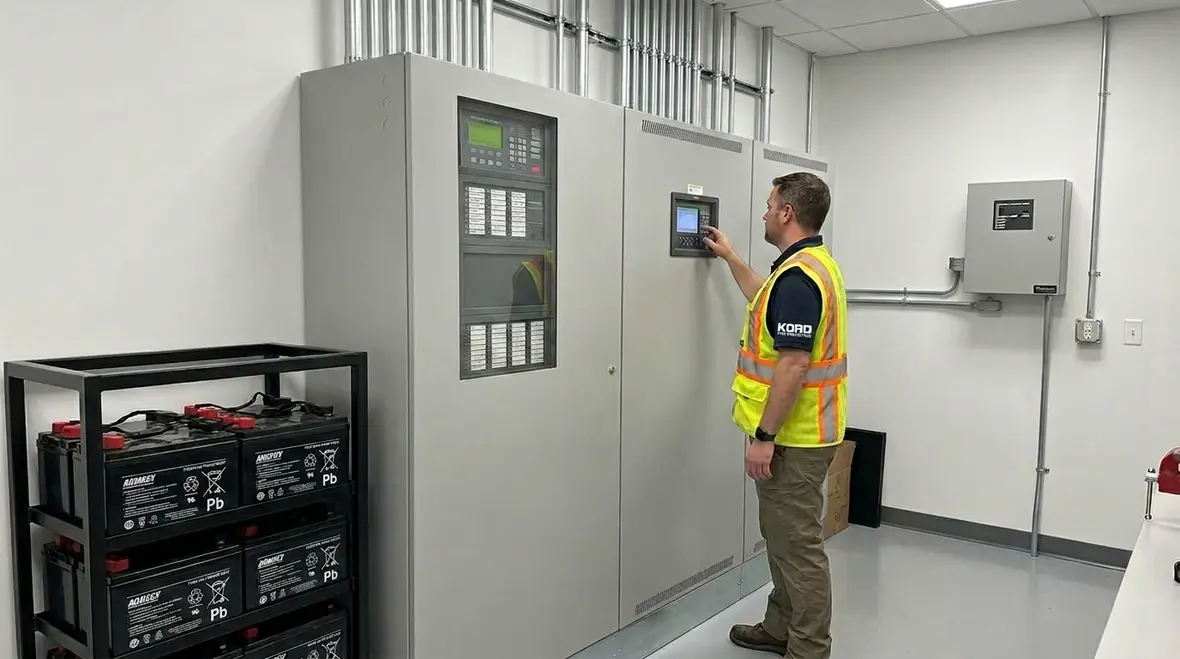
When the lights go out, fire protection can’t. That is why commercial alarm power systems matter in industrial, retail, and facility environments. These systems support fire alarm control panels, communications equipment, detectors, and devices that guide people to safety. And because power issues do not ask permission before they cause downtime, reliable backup design protects both operations and compliance.
In other words, backup power should not be treated like a “maybe it will work” feature. It needs a plan, proof, and ongoing care. Kord Fire Protection can become a vital partner here, coordinating the right power approach with system requirements, inspection schedules, and practical on site execution. Because nothing ruins a day like finding out the backup power failed during the one test you absolutely had to pass.
Step one: assess load, voltage, and duration like a pro
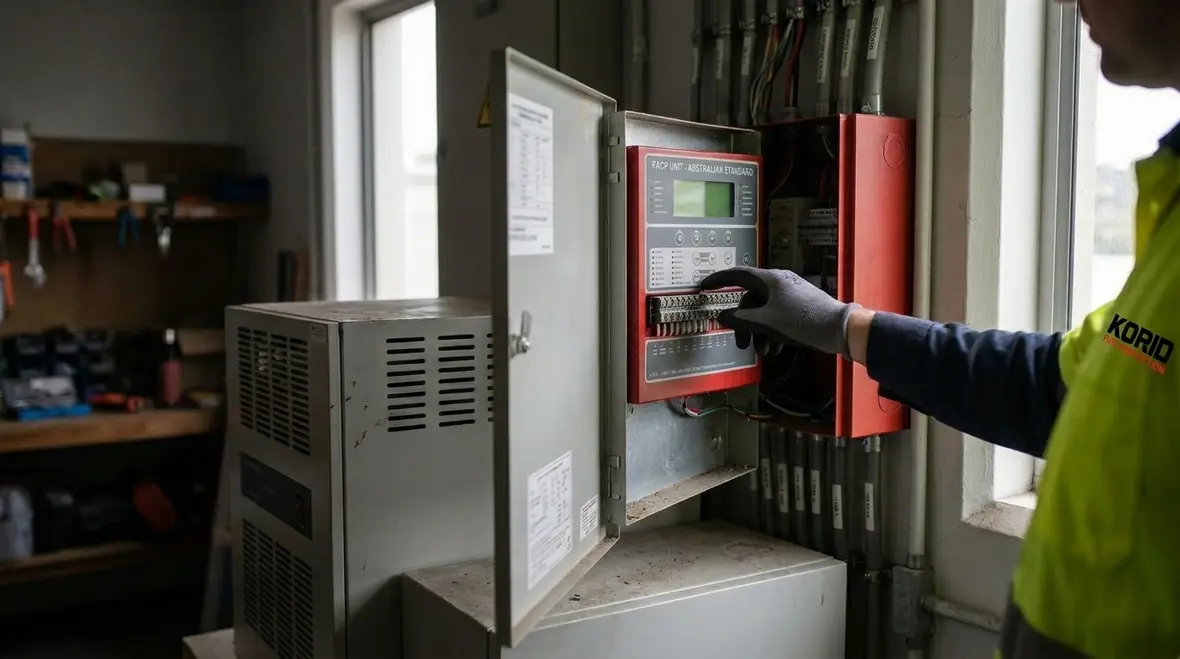
To ensure reliable backup, a team must first understand the true operating load. Then they select a power solution that can run the system long enough for evacuation, alarm signaling, and monitoring. This matters even more in facilities where expansions happen, equipment changes, and doors, interfaces, or communication modules get added over time.
They should evaluate:
- Fire panel type and standby requirements
- Device count and device type, including sounders, beacons, and interfaces
- Current draw during standby and during alarm
- Voltage drop limits across cabling runs
- Expected outage duration based on site risk and power stability
From there, they can size batteries or generators properly. If they oversize, costs rise. If they undersize, they get a backup system that looks fine on paper and fails in the real world. And yes, real world problems love paperwork. They show up after hours.
This is also where planning connects naturally with broader system reliability. Kord Fire Protection covers fire alarm power requirements, reliable backup, and AC considerations, which helps teams understand how power decisions affect the rest of the alarm system rather than treating the batteries like a side quest.
Batteries, generators, and switching: choose the right backup path
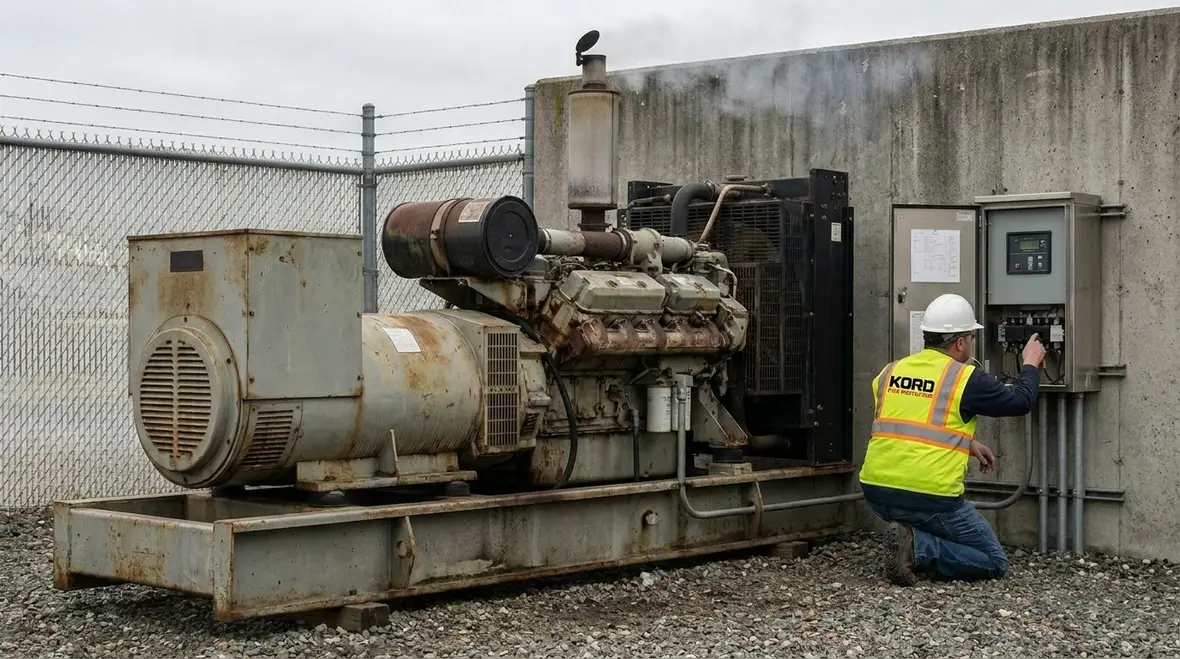
Backup power usually comes from batteries, generators, or a combination. Batteries provide immediate support for short outages. Generators take over for longer disruptions. Switching equipment manages the transition without dropping vital power to the fire alarm system.
In commercial alarm power systems, the key is continuity. The system must stay powered through transfer sequences, especially where alarm loads spike. A good design accounts for surge behavior, charging cycles, and how quickly the generator reaches stable output. If the transfer is slow or unstable, the fire alarm system can reset, and that can turn an emergency into a technical incident.
Facilities with critical operations also benefit from considering:
- Battery chemistry suited to temperature and cycling patterns
- Ventilation and enclosure conditions where batteries install
- Generator health, including fuel quality and test history
- Separation of non essential loads so the fire system remains protected
- Correct annunciation for trouble signals and power status
Transition planning is not just engineering. It is also operations. Kord Fire Protection can help coordinate how the fire alarm system, power solution, and monitoring indicators work together, so staff do not get stuck interpreting confusing trouble messages.
Monitoring and supervision: catch problems before they become emergencies
Backup power fails quietly when nobody watches it. So reliable designs include supervision that detects faults early. Then teams can schedule maintenance before performance drops.
They should look for supervision features that cover:
- Battery voltage and internal resistance trends
- Charger performance and charging current
- Loss of mains detection and transfer status
- Ground faults and wiring integrity where applicable
- Generator alarm states and run time tracking
Because modern facilities rely on continuity, the best approach goes beyond “it works.” It includes clear status reporting, trouble conditions that point to the likely cause, and procedures that staff can follow. When a trouble signal arrives, people should know what to do next, not scramble like they just opened a pop quiz without studying.
This kind of coordination mirrors how connected life safety systems already behave in the field. If your site is tying alarms into doors, controls, or other building functions, related planning around commercial fire alarm integration for building automation safety can help reduce surprises when power or signaling conditions change.
Testing and maintenance schedules that actually hold up
Even correctly designed backup power needs proof through testing. Furthermore, testing should reflect the site’s real risk profile, equipment configuration, and operational changes. A test plan that never changes becomes outdated. So teams should review it whenever the facility expands, remodels, or adds devices to the fire alarm system.
A strong program typically includes these layers:
- Planned routine inspections to confirm physical integrity and connections
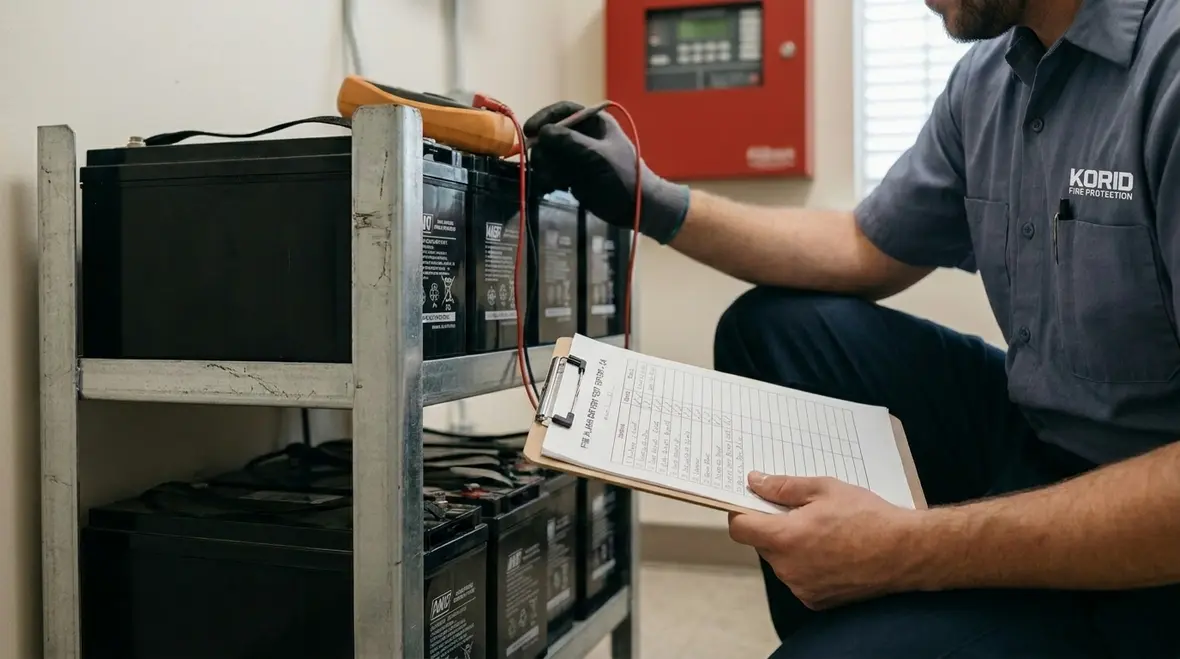
- Battery capacity and health checks using safe, code aligned methods
- Charger verification to confirm it maintains correct charge behavior
- Transfer and run tests for generators under controlled conditions
- Record keeping that shows what was tested, when, and what was found
Maintenance should also include cleaning, checking terminations, and verifying that environmental conditions remain within the manufacturer’s limits. Dust, heat, and moisture do not respect warranties. They just accumulate. Kord Fire Protection can act as a vital partner by aligning power maintenance with the fire alarm system’s inspection requirements and supporting consistent documentation across industrial, retail, and facilities teams.
Compliance and documentation for commercial facilities
Commercial fire safety is not a “trust me” business. Regulators and insurers expect evidence that life safety systems remain operational. That means documentation matters: it proves design intent and ongoing reliability. Additionally, it helps technicians troubleshoot faster when something changes.
Good documentation typically includes:
- As built details for power and fire alarm system integration
- Load calculations used for battery or generator sizing
- Test reports with pass or fail criteria
- Service history, including component replacements and findings
- Change management notes when equipment or tenancy updates occur
Because industrial and retail sites often face frequent tenant fit outs, the documentation must stay current. Transitioning between vendors or adding new circuits can create gaps if someone does not own the process. That is where a partner like Kord Fire Protection helps, because they can coordinate how power backup aligns with the fire alarm system rather than treating it as a separate silo. In short, it keeps everyone speaking the same language: safe, documented, and verifiable.
Common failures in backup power and how to prevent them
Backup power problems usually share a theme: they start as small issues, then grow during the next outage. And that next outage always shows up when schedules are tight.
Here are frequent failure patterns and what teams can do to reduce risk:
- Under sized batteries: They run fine during light loads, then collapse during alarm demand. Teams prevent this by re checking loads after any system change.
- Poor charger performance: Batteries look “connected” but never fully charge. Teams prevent this through charger verification and supervised status monitoring.
- Loose terminations or corrosion: High resistance creates heat, which speeds failure. Teams prevent this with routine inspection and environmental checks.
- Generator reliability gaps: Fuel degradation or failed components shows up during long outages. Teams prevent this by keeping run tests consistent and tracking generator alarms.
- Unclear transfer logic: Some sites experience resets during transfer. Teams prevent this by reviewing transfer settings and ensuring the fire alarm power path stays stable.
Kord Fire Protection can help facilities address these issues with a coordinated approach that respects both electrical reality and fire system behavior. Because if a system resets during alarm power transfer, the “backup” is not truly backup.
FAQ: Ensuring reliable backup power
Conclusion: secure the next outage before it arrives
Reliable backup power for commercial fire alarm systems does not happen by chance. It happens through correct load sizing, stable switching, real monitoring, and testing that matches how your site truly operates. When industrial, retail, and facility teams want confidence, Kord Fire Protection can serve as a vital partner to plan, maintain, and document power performance.
If this feels urgent, it is. Request an assessment today and keep life safety systems ready when power cannot be counted on. The best time to fix backup weakness is before the outage, not while everyone is staring at a panel and hoping confidence counts as voltage.

Join Our Newsletter!
Get the latest fire safety tips delivered straight to your inbox From our Newsletter.