
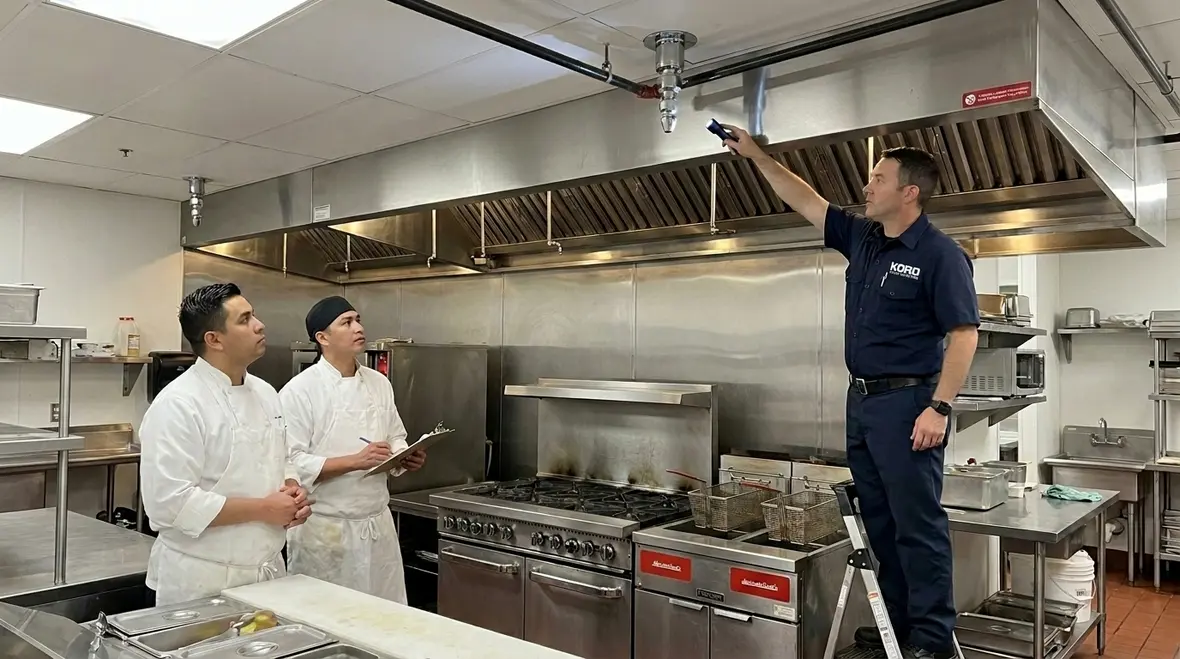
Commercial Kitchen Fire Suppression Safety Protocols Australia
Quick answer: Commercial kitchen fire suppression protects staff, guests, and property by detecting fast-growing fires and releasing the right agent at the right time. Safety protocols matter just as much as the system itself, because equipment fails only when people treat checklists like optional extras. With the right partner, inspections, training, and compliance stay solid.
In commercial kitchens, commercial kitchen fire suppression systems act like a quiet bouncer at the door: they only step in when things get ugly. Yet even the best suppression setup cannot do its job if teams ignore the safety protocols around it. That is why the rest of this guide focuses on the practical steps that reduce risk in real Australian operations, from busy retail food service to industrial-scale facilities where cooking power never takes a day off. Businesses that want stronger system readiness can also explore commercial kitchen fire suppression systems explained for a broader look at how protection design fits the kitchen environment. And when businesses need a reliable partner to keep protection current, Kord Fire Protection can become a vital ally, helping teams coordinate testing, compliance support, and ongoing readiness so the kitchen stays productive instead of dramatic.
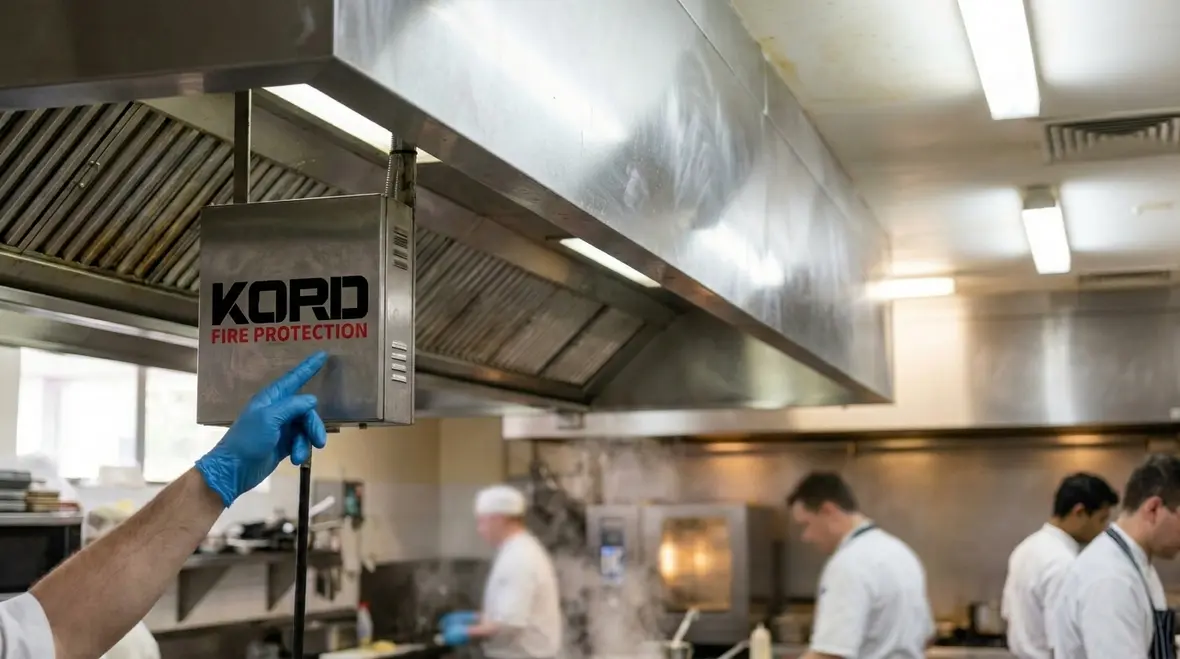
Kitchen fire risk moves fast, so prevention must too
Grease and heat build up quietly, and then a small flare-up turns into a problem that spreads through hood systems, ductwork, and air pathways. As a result, safety protocol planning must start before any emergency happens. Teams should map where flames typically begin, where smoke travels, and which surfaces heat the fastest. Then they should align that understanding with how the system detects and releases agents.
In practice, prevention means consistent cleaning schedules, correct cookware use, and clear rules for ventilation controls. However, protocols should also cover what to do when something looks “not too bad.” Because in a kitchen, “not too bad” can become “everybody out” before anyone finishes a sentence.
Start with the hazards everyone already knows, then verify the ones they miss
The obvious risks get attention first: fryers, open flame appliances, hot oil, overloaded cooking lines, and greasy extraction paths. The less obvious ones are usually the troublemakers. That includes blocked access to pull stations, clutter near suppression controls, worn components no one reported, and layout changes that quietly move the risk profile. Safety is rarely undone by one dramatic mistake. More often, it gets chipped away by dozens of tiny shortcuts that each seem harmless on their own.
Essential safety protocols that keep systems dependable
When a commercial kitchen fire suppression system gets installed, the real work begins after startup. Each shift should support readiness through simple, repeatable steps.
Core protocols teams should follow
- Daily checks for obvious issues such as blocked access panels, damaged wiring covers, or missing pull handles
- Clear kitchen control rules that prevent disabling alarms or shutting down ventilation in the wrong sequence
- Proper staff response procedures that trigger evacuation, shutdown steps, and emergency notifications
- Controlled maintenance access so technicians can service equipment without “temporary” shortcuts turning permanent
- Post-incident documentation that records what happened, when it happened, and what actions were taken
These actions sound basic, but they reduce failure points. Also, they support calmer decision-making when a real alarm arrives, instead of the usual chaos where everyone becomes a part-time firefighter and full-time amateur.
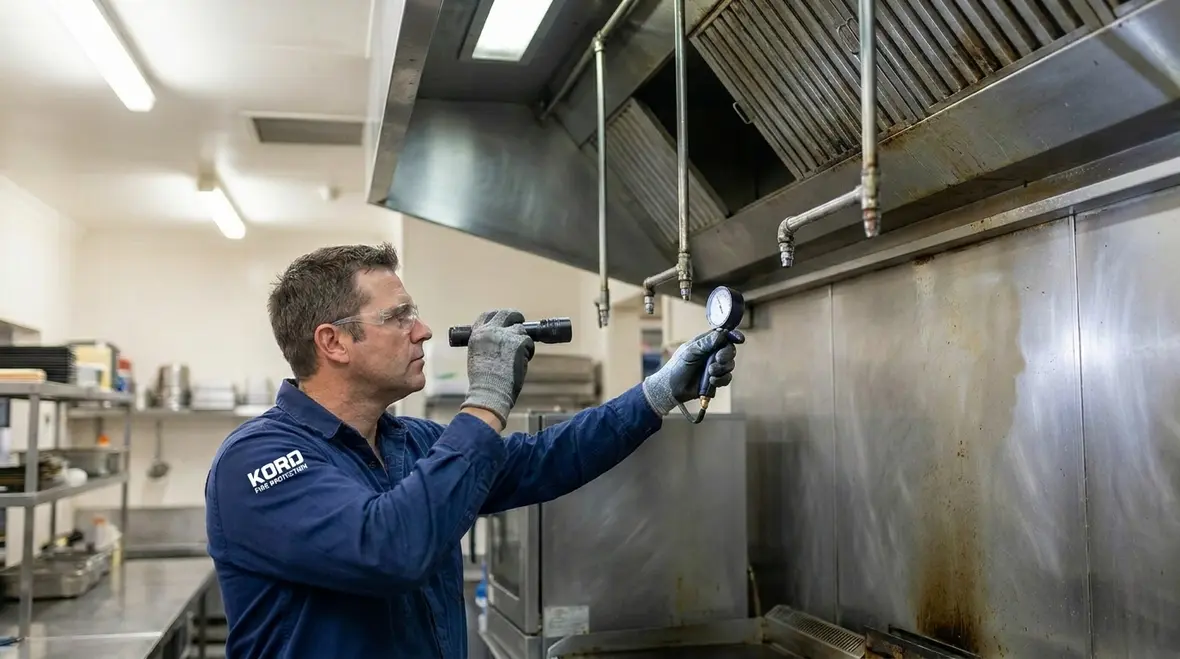
Inspection and testing routines that match how kitchens operate
Fire suppression systems require verification, not vibes. Schedules should reflect actual cooking hours, workload, and how quickly grease accumulates. Therefore, a high-volume facility needs tighter intervals than a slower site, even if both appear similar on paper.
Good testing does not just check the hardware. It also checks the environment around it. For example, a blocked inspection route, a changed layout, or a new appliance type can alter risk. So protocols should include a change review each time operations add a fryer, upgrade ventilation, or relocate hood components.
Kitchens also experience wear. That wear can affect detection accuracy, agent release performance, and trigger timing. As a result, inspections should include clean component condition checks, verification of controls, and assessment of access to manual operation points.
What a useful inspection routine actually looks like
A useful routine goes beyond ticking a box and racing back to service. Teams should review whether nozzles remain correctly positioned, whether protected appliances still match the suppression layout, whether duct access remains serviceable, and whether the manual release path is free of obstacles. They should also confirm that records are current, because undocumented maintenance has a magical way of vanishing the moment someone asks for proof.
How Kord Fire Protection supports compliance across Australia
Many teams know what to do, but coordination becomes the real challenge. Maintenance windows, documentation requests, and site access often collide with peak service schedules. That is where Kord Fire Protection can become a vital partner for service and jobs tied to commercial protection systems.
Because businesses operate across multiple facets in Australia, they need support that fits real schedules. Kord Fire Protection can help facilities keep their fire suppression program organized, so teams do not scramble for proof after a regulator visit or an insurance request. In addition, a coordinated approach helps staff stay confident, since readiness depends on more than just the moment a system activates.
It is like having a steady co-pilot on a long road trip. The driver still steers, but the co-pilot keeps track of maps, weather, and the fact that the next exit is not always where it looks. When safety relies on timing and documentation, that support matters.
For teams also responsible for broader system reliability, it makes sense to connect kitchen readiness with related life-safety planning. A practical example is fire alarm battery backup systems power reliability tips, which fits naturally into the wider conversation about keeping protection dependable when normal conditions disappear.
Training that turns alarms into quick, correct actions
Protocols fail when staff do not understand what good looks like under pressure. Training should be role-based and short enough that people actually remember it. It should also be repeated, because new hires arrive and experienced staff still get used to routines that drift.
Training elements that work well
- Hands-on walkthroughs for how the hood area is protected and how activation should be handled
- Clear shutdown steps for fuel and power systems, so the situation does not escalate
- Evacuation and communication practice so teams know who calls emergency services and who guides others out
- Lessons from real scenarios that show decision paths during early smoke, flare-ups, and discharge events
To keep engagement high, training can use simple scenario cards. One card says “Your fryer sparks twice and then calms down,” and the next says “The alarm sounds and the kitchen is still busy.” People laugh, but they remember. And yes, laughter helps retention. The kitchen still needs discipline, not a comedy club. Think of it as professional rehearsal, with better punchlines.
Why repeated practice beats one-off training
One toolbox talk in January does not carry a team through the rest of the year. Repetition matters because kitchens change, staffing changes, and pressure changes. Short refreshers before peak seasons, after equipment updates, or after near misses help keep the response sharp. The goal is not to create panic experts. It is to create people who know exactly what to do before panic gets a vote.
After discharge: what teams must do to restore safety fast
When a commercial kitchen fire suppression system discharges, it usually means a serious incident occurred. However, the response should not stop at “everything is out.” Teams must restore safe operation with a disciplined process.
Typical post-activation actions
- Confirm evacuation and prevent re-entry until the site is cleared by the right authority
- Isolate the affected cooking equipment and prevent power or fuel restart
- Document the event including time, location, and observed fire behavior
- Arrange system reinspection and recharge so the kitchen returns to protected status
- Review root cause to stop repeat incidents, especially with new grease patterns or appliance changes
Transitioning back to service should happen only after verification, not after a quick wipe-down and a hopeful sigh. The kitchen can feel clean but still carry risk in ducts, surfaces, and controls.
FAQ: Commercial kitchen fire suppression and safety protocols
Build a calmer, compliant kitchen with Kord Fire Protection
Commercial cooking is busy. Safety should not be chaotic. Facilities across Australia can reduce risk by pairing disciplined protocols with expert support. Kord Fire Protection helps teams keep commercial kitchen fire suppression systems organized, tested, and ready for real incidents.
If your kitchen needs a service plan, inspection schedule, or documentation support, contact Kord Fire Protection and protect the whole operation, not just the equipment. A calmer kitchen is not an accident. It is what happens when good systems and good habits finally work together.

Join Our Newsletter!
Get the latest fire safety tips delivered straight to your inbox From our Newsletter.



