Fire Protection System Backup Power for Life Safety
Every facility lives on borrowed time during a power loss. A flicker can turn into a fire alarm that fails to move, a controller that shuts down, and a system that stops doing its job. That is why Fire protection system backup power matters, and why Kord Fire Protection technicians insist on planning for it like it is part of the building’s backbone, not an afterthought. When the lights go out, sprinklers and alarms still need to work, and they need to work right away. Because smoke does not wait politely for the generator to warm up. Neither do insurance underwriters, and they definitely do not take pop quizzes.
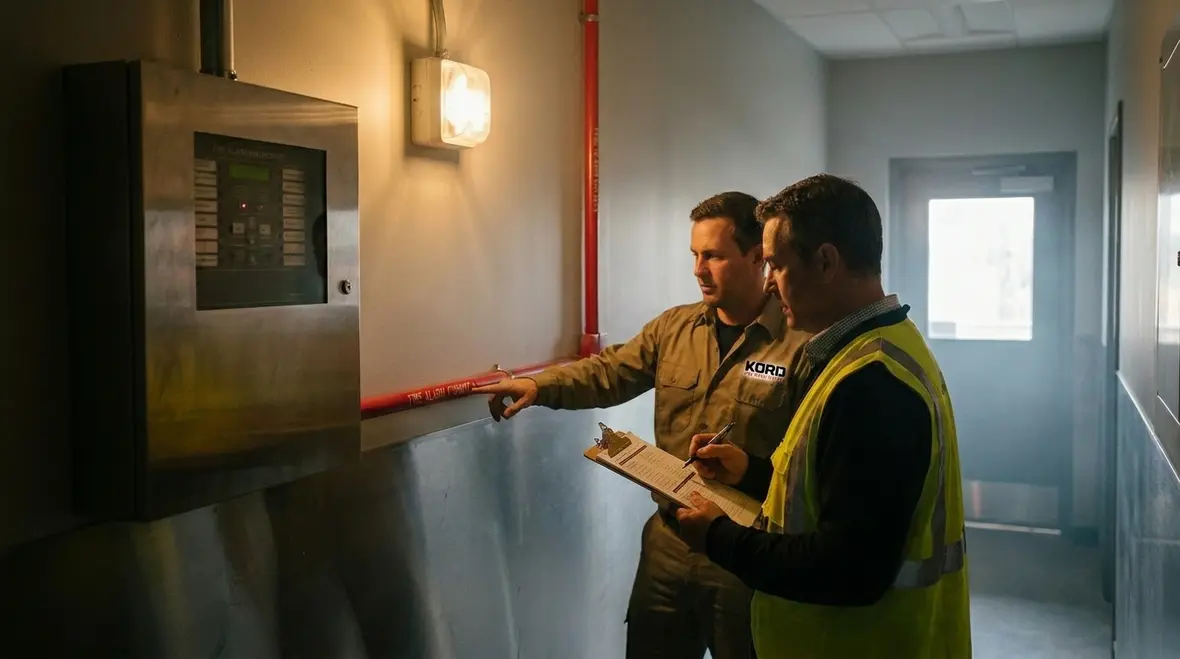
Backup power keeps life safety systems online during outages
When utility power drops, fire protection gear cannot guess what comes next. It needs stable power to supervise devices, send alarm signals, and keep control boards running. Fire protection system backup power supports that continuity so the system stays in a safe state while everyone else scrambles for flashlights and calm voices.
Typically, Kord Fire Protection technicians explain that “backup” does not mean “later.” It means the system transitions fast enough that alarms and monitoring still meet code expectations. Therefore, facility managers need more than a single battery in a panel. They need a plan that matches the actual load, the runtime requirements, and the risks on site.
Also, they often note that a power loss is not just a blackout. It can include brownouts, surges, and momentary dips that reset equipment. In those cases, backup systems help prevent nuisance behavior like alarms resetting mid event. And yes, that is still a problem even if it feels like the building is trolling everyone.
Why stable transition matters more than a simple battery label
A reliable system does more than keep the lights on inside a cabinet. It maintains supervision, preserves communication, and avoids confusing resets that leave operators guessing. That practical distinction is one reason facilities reviewing their electrical strategy often also look closely at essential fire pump electrical requirements and design when larger water-based systems are involved.
What Fire protection backup should power in your facility
A real plan identifies the exact components that rely on backup energy. Kord Fire Protection technicians usually break it down by function, not by guesswork. Then they map those functions to the devices on your site.
Common loads include:
- Fire alarm control panels and annunciators
- Supervision and signaling circuits that monitor initiating devices
- Door hold open systems tied to smoke control and alarm events
- Elevator recall integration where applicable
- Fire pump controller systems that may require power for control logic
- Monitoring equipment that transmits signals to central stations
Once the list exists, facility teams can size the batteries or generators correctly. Otherwise, they end up with a system that runs fine during short outages but fails during the long ones. And the long ones always show up at the least convenient moment, like a villain in a streaming series who refuses to reveal their plan until episode ten.
Map function first, equipment second
That order matters. If a facility starts with equipment names alone, it is easy to overlook a link in the chain. Door releases, relay modules, communication pathways, and monitoring interfaces may not seem dramatic until they quietly disappear during an outage. Facilities with pump-supported systems can also benefit from understanding how NFPA 20 regulates fire pump systems, since power and controller behavior affect the larger response picture.
Why timing and runtime matter more than people think
Some outages end quickly. Others last long enough to drain a small backup source and leave you with dead control panels when you need them most. That is why Kord Fire Protection technicians focus on runtime, not just availability.
They look at how the building uses the system. For example, if your fire alarm includes notification appliance circuits, the power draw during an alarm is higher than during normal standby. Therefore, the backup must cover the expected standby time and also support alarm operation for the required duration.
Next, they factor in environmental conditions. Temperature affects battery performance. Humidity affects electronics. Vibration affects mechanical parts. A system that meets numbers on paper can underperform in the real world if it lacks proper installation and maintenance.
In other words, runtime is not a line item. It is a safety margin. When power loss happens, you want that margin to hold firm while your team follows the plan.
Standby versus alarm load is where planning gets real
This is the point where rough estimates usually stop being helpful. A panel sitting quietly and a panel driving horns, strobes, relays, and communications are two very different power stories. If your site includes pumps, transfer equipment, or controller coordination, the related behavior discussed in fire pump start sequence and operating settings can give added context for how systems behave when the pressure is on. Literally.
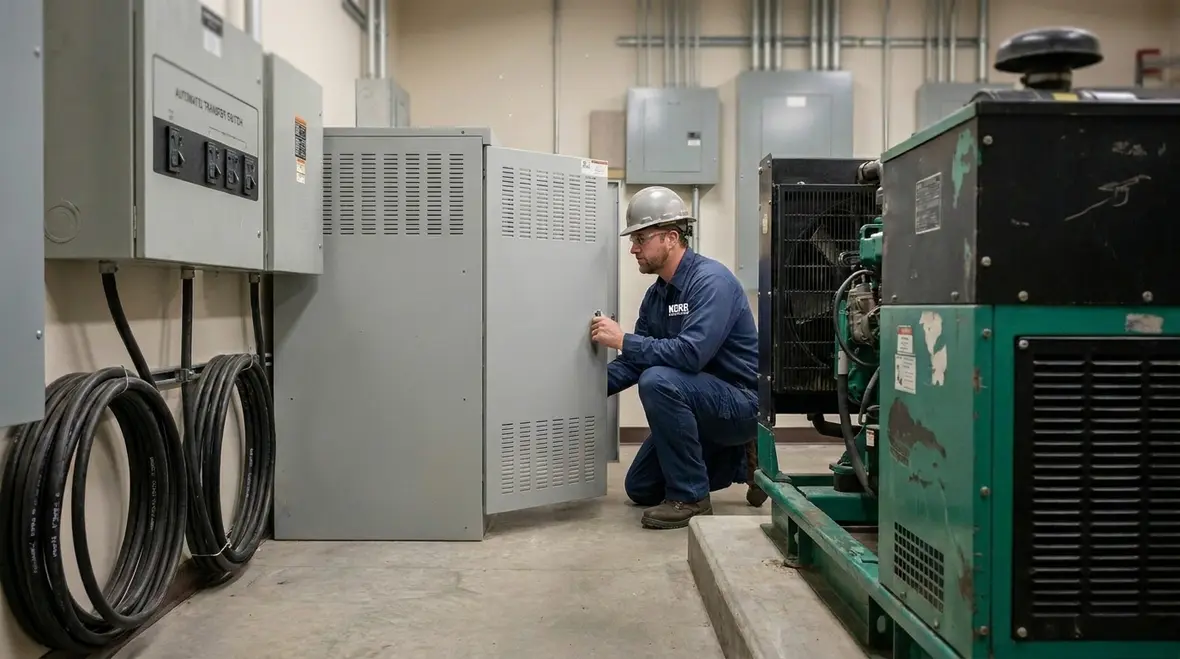
Risk management: how backup power supports compliance and continuity
Fire protection systems must work when emergency action matters most. Backup power supports compliance by keeping system supervision and alarm functions active during outages. Yet the bigger win is continuity of protection.
Kord Fire Protection technicians often explain that inspectors do not only care that the system exists. They care that it performs as designed. Consequently, facilities need documentation for system design, maintenance records, and test results. That paperwork can feel tedious, but it beats the alternative: a failed test and a late-night call that nobody enjoys.
Additionally, backup power reduces downtime risk for connected safety controls. If smoke control dampers, fire doors, or monitoring interfaces lose power, the whole chain weakens. Backup systems help keep that chain intact.
Finally, it protects business operations. When fire protection remains online, incident response stays coordinated. That can lower confusion, support faster evacuation decisions, and reduce the chance that a small event becomes chaos.
Reliability comes from design, installation, and maintenance
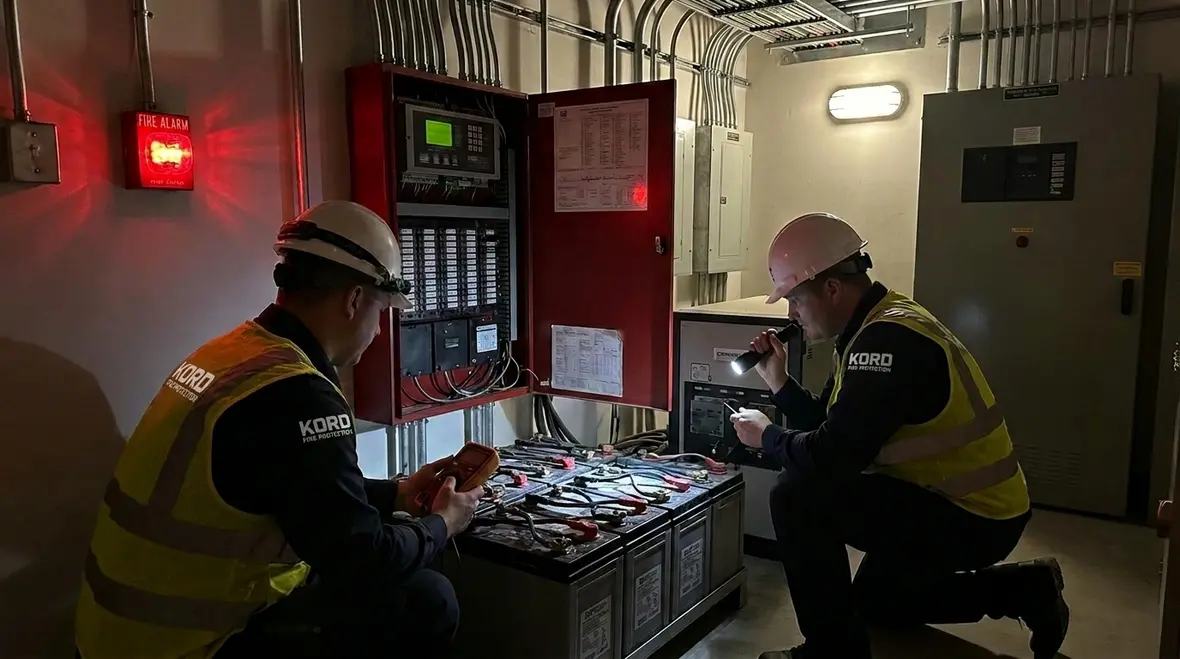
A backup system is only as dependable as its design and its upkeep. Kord Fire Protection technicians typically start by confirming the expected electrical load. Then they select the right backup type for the site conditions and the system requirements.
After that, they verify installation details that often get overlooked. Battery cabinets need proper ventilation. Connections need correct torque and labeling. Monitoring features should report faults so operators learn about issues before a failure happens.
Finally, maintenance closes the loop. Batteries age. Chargers drift. Generators need fuel management and periodic load testing. Without maintenance, a backup system becomes a “hope system,” which is not a strategy and not a part of any code manual.
As a result, facilities that plan maintenance win twice. They keep safety functions ready, and they avoid costly emergency repairs. Like fixing a leaky roof before it turns into a swimming pool, just with less screaming.
Trouble signals are early warnings, not background noise
One of the fastest ways to miss a developing backup problem is to normalize panel trouble conditions. Low batteries, charging faults, and communication issues rarely fix themselves out of pure optimism. Teams that want a clearer picture of those warnings should review fire alarm trouble signal meanings explained so small alerts do not become big surprises.
Choosing the right backup power approach for your system
Not every facility needs the same backup setup. Some systems rely on battery power for control circuits and alarm functions. Others require generator power for broader loads and extended outages. Many facilities use a layered approach so critical components stay powered while larger equipment comes online as required.
Kord Fire Protection technicians usually recommend assessing the site’s outage history and the equipment criticality. For instance, a hospital, manufacturing line, or data-heavy campus faces different risks than an office suite. Then they consider the fire protection system design, including how many devices operate during alarm.
Once the facility selects an approach, it should include clear procedures for response. Operators must know how the system behaves during a transition. They should understand what alarms to expect and what fault messages mean. In this way, the system does not become a mystery box during an emergency.
In short, the “right” approach protects the safety goal first, then supports operational needs.
Where a fire pump is part of that equation, it is worth reviewing the dedicated fire pump service page near the planning stage instead of waiting until a power event exposes a design gap. That gives facility teams a cleaner path to evaluating controls, transfer behavior, testing expectations, and long-term reliability.
FAQ
Final word: secure Fire protection system backup power now
Power loss does not send invitations. It arrives, and your life safety systems must stay ready. Kord Fire Protection technicians can review your fire alarm and control loads, confirm the correct backup approach, and build a maintenance plan that keeps performance strong over time. If the backup power strategy is outdated or unverified, it is time to close that gap before the next outage turns into a costly lesson.
For facilities that need a stronger water-based protection strategy alongside dependable electrical support, connect with Kord Fire Protection through the fire pump service page and schedule an assessment for your facility’s fire network. It is a much better story when backup power is verified ahead of time instead of introduced like an unwanted plot twist during an outage.

Join Our Newsletter!
Get the latest fire safety tips delivered straight to your inbox From our Newsletter.