Industrial Fire Suppression Electrical Requirements Explained
When an advanced fire suppression system goes live, the Industrial fire suppression electrical requirements must be treated like the foundation of the whole building. That means power sources, control wiring, supervision, and alarm interfaces all get designed and tested before anyone trusts a single nozzle. And while people love to picture fire protection as a matter of pipes and sprinklers, the truth is simpler and more serious: electricity can either save the day or turn it into a very expensive way to learn a lesson. Kord Fire Protection technicians explain that the best installs plan for failure modes up front, so the system keeps working when conditions get chaotic.
Below, this article walks through the electrical considerations that advanced installations demand, in a way that helps facility managers, contractors, and decision makers stay calm and compliant, even when the inspector shows up like a pop quiz.
Electrical risk mapping before any wire gets pulled
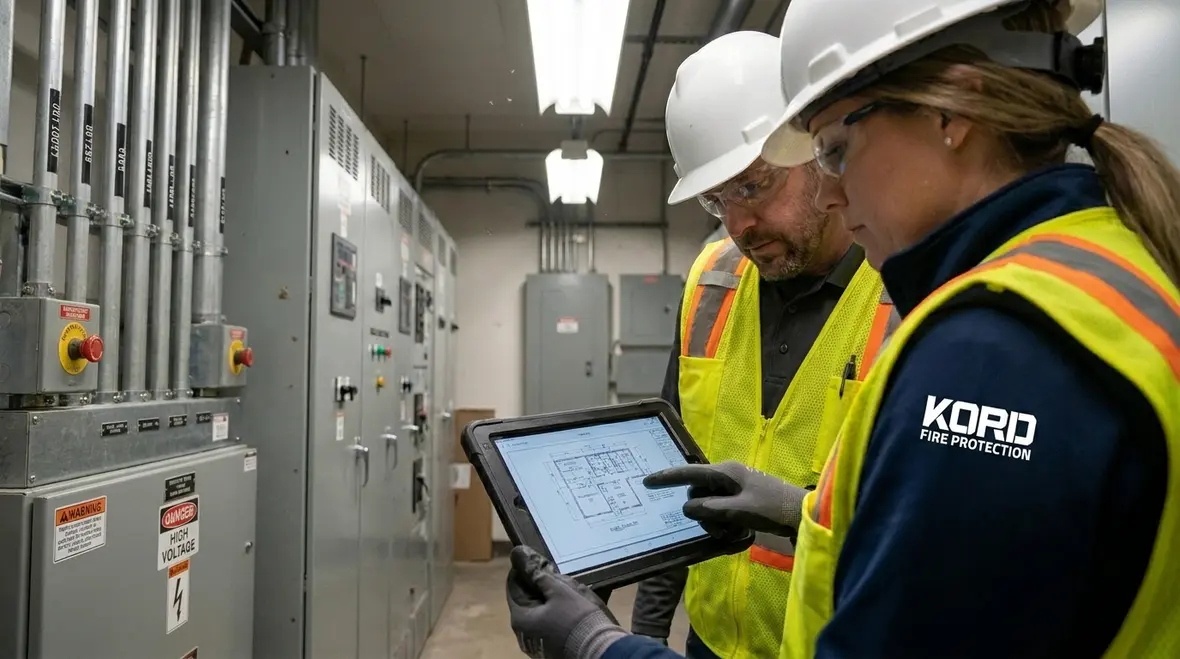
Advanced fire suppression installations start with one practical step: the system team maps electrical risk. Kord Fire Protection technicians often begin by asking what the building will do under stress. Then they identify where power might drop, where interference might rise, and where a single point of failure could disable multiple functions.
From there, they define zones and circuits so that critical control elements stay supervised and protected. For example, they review how the suppression control panel communicates with detection, releasing devices, and alarm outputs. Next, they confirm that emergency power and transfer logic support the correct operation time based on local code and site needs.
In other words, they do not just wire for “it works today.” They wire for “it still works tomorrow,” even during a storm, a load surge, or a shutdown that no one scheduled. That mindset is what separates an advanced installation from a rushed one. If the design team can already picture what happens when power dips, a panel faults, or a communication path gets compromised, they can build supervision and redundancy into the project before those problems become expensive field lessons.
Why early mapping keeps projects cleaner later
Early mapping also helps every trade stay in the same conversation. Electrical contractors, suppression specialists, controls teams, and facility staff all need to understand where critical circuits will run and what must stay protected. That makes coordination easier, reduces change orders, and lowers the odds that somebody accidentally treats life safety wiring like an afterthought tucked behind a conduit bundle no one wants to open again.
Power supply and emergency backup that actually behaves
Once risks are mapped, the team focuses on power. Advanced suppression systems rely on stable, verified power to operate releasing circuits and signal status. Therefore, the design must follow the Industrial fire suppression electrical requirements for primary power and supervised backup power paths. That means selecting equipment sized for the load, then confirming the system will maintain the correct voltage and control function during a transition.
Kord Fire Protection technicians explain that backup power must do more than “exist.” It must start on time, maintain output under load, and keep control logic alive long enough to complete its sequence. Additionally, they check how battery supervision and charger operation work, so the system can report trouble early rather than waiting for a failure to show up in a dramatic way, like a movie villain who waits until the final act.
This part of the job matters because power quality problems are sneaky. A panel may look normal during a quick walk through and still behave badly during transfer, startup, or partial failure. That is why advanced teams verify voltage behavior, loading, charger health, standby duration, and transition performance. If a system cannot ride through the ugly moments, then it is not as ready as everyone keeps pretending it is.
Facilities that depend on pumps should also understand how suppression controls relate to broader water supply reliability. Kord Fire Protection covers this in its fire pump overview and dedicated fire pump service page, which are useful references when suppression controls and pump power planning need to work together instead of acting like distant cousins at a holiday dinner.
Supervision, wiring methods, and route protection
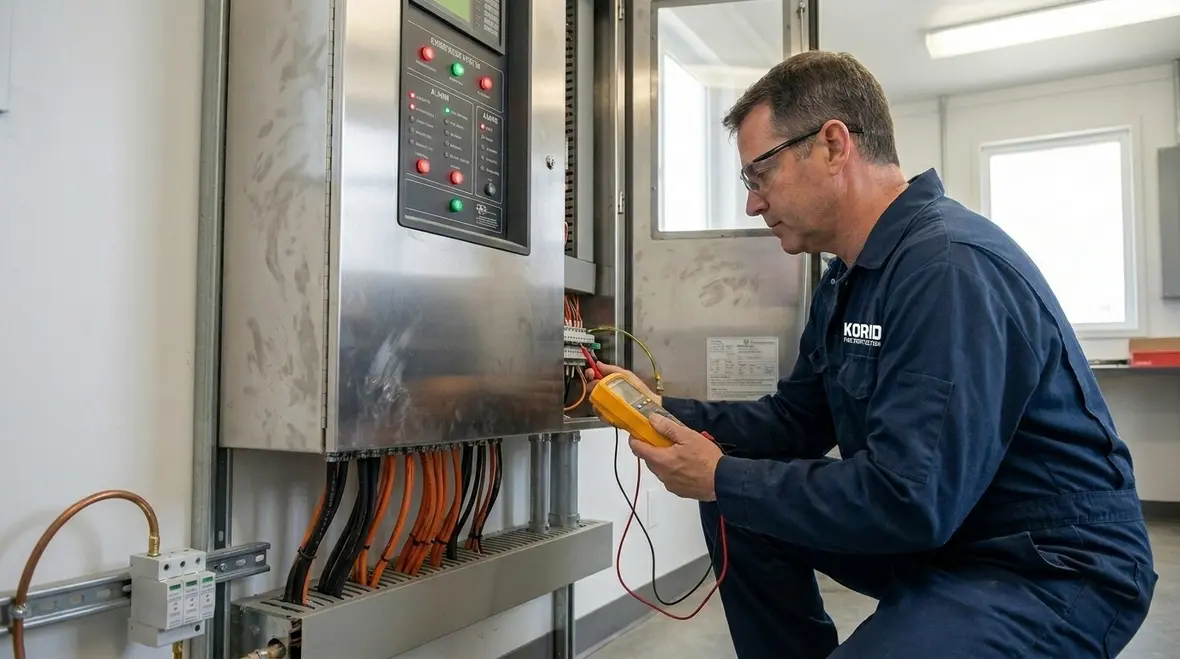
Next, the team addresses supervision and wiring methods. A reliable suppression system monitors circuits so it can detect open circuits, shorts, ground faults, and loss of communication. As a result, it can alert building staff early and maintain safety without guessing.
They also control wiring routes. Even if a system uses the right devices, poor routing can expose conductors to damage from heat, vibration, impact, or water intrusion. So they choose wiring methods that fit the environment, such as appropriate conduit types, proper separation from noise sources, and secure supports.
Kord Fire Protection technicians often stress that clean labeling and path documentation matter. Inspectors do not just want to hear “we did it right.” They want to see it, test it, and trace it. Therefore, the install includes clear circuit IDs, trouble point mapping, and as built records that match what was actually installed.
Route protection is about more than neatness
Route protection is not just a cleanliness issue or a preference for tidy installations. It directly affects survivability and troubleshooting. When conductors are separated from likely damage points and documented properly, technicians can isolate faults faster and owners avoid the familiar headache of standing around a panel asking who touched what last. Better routing also supports future service, retrofits, and inspections because the system remains readable instead of turning into a guessing game with conduit.
Control circuits and releasing device wiring, step by step
Control circuits carry the commands that move the system from monitoring to action. That makes releasing device wiring one of the most sensitive parts of the entire project. If the wiring sequence, polarity, or supervision behavior is off, the system might delay operation or fail to release when needed.
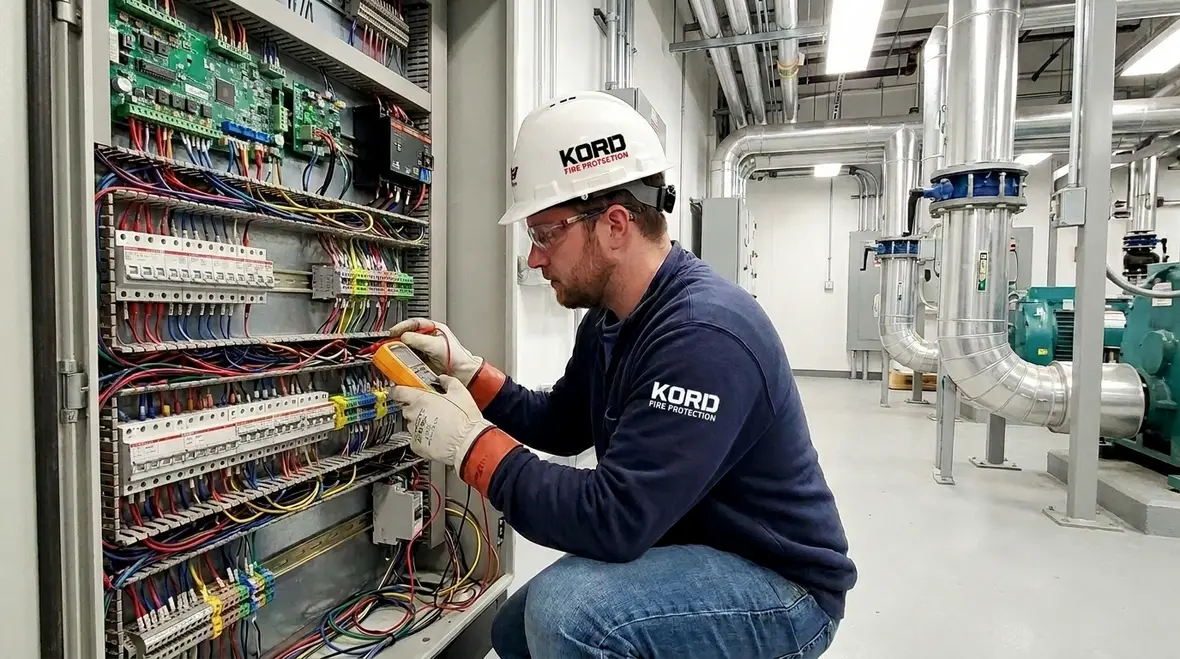
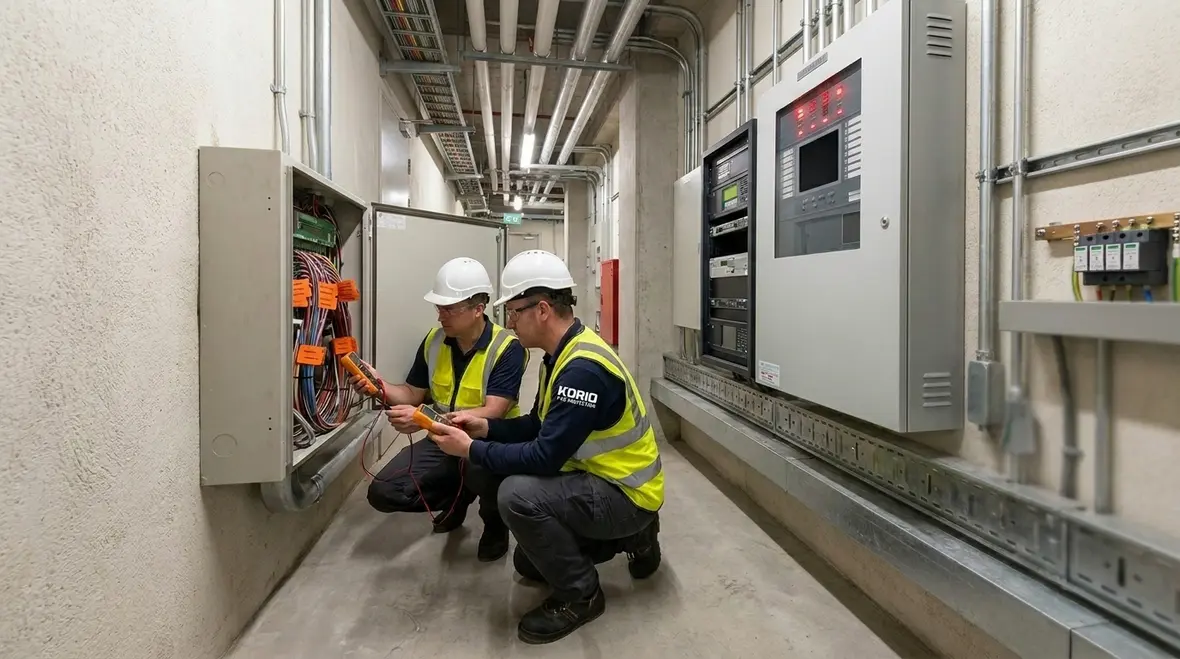
In a well designed setup, releasing circuits use the right protection scheme and proper conductor sizing, then they get tested under real conditions. The team verifies continuity, insulation integrity, polarity, and supervised status points. After that, they run functional tests that confirm the release logic behaves as designed.
They also coordinate with fire alarm interfaces. When a detection system triggers, the suppression control must interpret signals correctly and transmit the right status back to the building. Consequently, the facility gets clear annunciation rather than vague alarms that send everyone sprinting to the wrong location like it is the opening scene of a sitcom.
Because the stakes are high, this stage benefits from disciplined sequencing. Teams should verify point mapping, release logic, abort functions where applicable, and every supervised pathway before they ever call the install complete. It is not enough that the panel lights up and looks official. The sequence has to be predictable, repeatable, and documented so future service does not rely on folklore and crossed fingers.
Interface with fire alarm, building systems, and signaling
Advanced suppression systems rarely operate alone. They interface with fire alarm panels, monitoring services, elevator control logic, dampers, and sometimes facility management systems. Therefore, electrical design must protect signal integrity and avoid unwanted triggers.
The team reviews compatibility: signal voltage levels, input output behavior, supervised contact requirements, and reset logic. Next, they confirm that alarm and supervisory signals meet the intent of the Industrial fire suppression electrical requirements for fail safe operation. That means a fault should not look like a normal state, and a normal state should not mask a dangerous condition.
Kord Fire Protection technicians explain that good interfaces also reduce nuisance events. When wiring practices and signal mapping are consistent, the building does not flood staff with unnecessary troubles every time a breaker cycles or a contractor bumps a cable tray.
This is also where interconnection with a broader alarm strategy matters. Kord Fire Protection offers fire alarm service and fire alarm systems support that align well with suppression controls, especially when facilities need clean signaling, dependable supervision, and fewer mystery troubles that appear at the worst possible time.
Grounding, bonding, and surge control for stable operation
Electric stability matters. Grounding and bonding help control touch potential and reduce interference. At the same time, surge protection helps guard sensitive electronics from lightning events, utility transients, and nearby equipment switching.
So the team confirms grounding paths and verifies bonding continuity where required. They also evaluate whether surge protective devices belong at panel locations, device level locations, or both. Then, they confirm the grounding scheme does not conflict with other building systems.
In practice, this work supports dependable supervision readings. A system that sees constant “ghost faults” often ends up being ignored. Meanwhile, a system with solid grounding and surge control can report true problems without turning every weather change into a false alarm festival.
Stable electronics make everything downstream easier
Grounding and surge planning also protect the credibility of the whole system. When operators see random troubles too often, they stop trusting what the panel is telling them. A stable installation preserves confidence, speeds troubleshooting, and helps maintenance teams focus on actual issues rather than electrical ghosts that seem to show up whenever the weather gets dramatic.
Commissioning, testing, and documentation that hold up in real life
After installation, the project enters commissioning. This is where advanced electrical design proves itself. The team performs required inspections and tests that verify wiring integrity, supervision functionality, alarm routing, and releasing sequence logic.
They also test under conditions that reflect real operation. That can include simulating detector activation, verifying panel supervision responses, checking alarm outputs, and confirming communication between suppression and fire alarm components. Finally, they document everything: test results, circuit mappings, equipment serial numbers, and any field adjustments made during the install.
Kord Fire Protection technicians point out that documentation is not paperwork theater. It helps future service technicians troubleshoot faster, helps insurers understand what happened, and helps owners keep the system in safe working order without guesswork.
It also gives owners something extremely valuable during renovations, inspections, and emergency service calls: confidence. Good records show what was installed, how it was tested, and where to begin if a condition changes later. That means fewer delays, better accountability, and much less of the classic “we think this is how it was wired” conversation nobody enjoys hearing in a life safety system review.
FAQ
Next steps for safer advanced suppression systems
If an owner wants advanced fire suppression that stays reliable when conditions get ugly, they should start by reviewing the electrical plan and the supervision strategy before any walls close up. Kord Fire Protection technicians can help map risks, confirm power and releasing circuit behavior, and commission the system with the right tests and records.
For facilities that want a stronger end to end life safety plan, Kord Fire Protection’s full fire protection services provide a practical next step, especially when suppression, alarms, pumps, and inspections all need to work together. Reach out for a review and commissioning walkthrough so the installation performs as designed, not as hoped. After all, nobody wins when safety becomes a surprise.

Join Our Newsletter!
Get the latest fire safety tips delivered straight to your inbox From our Newsletter.