
Fire Hydrant Flow Test Guide to Water Pressure
There is something reassuring about seeing a red hydrant standing quietly on a curb. It waits patiently, like a superhero in plain clothes. However, before it can save the day, someone has to make sure it can actually deliver. That is where a fire hydrant flow test comes in. This process measures how much water a hydrant can provide and how strong that water pressure really is. Without it, firefighters would be guessing, and guessing is best left to game shows, not emergencies. Throughout this article, Kord Fire Protection technicians explain what a flow reveals, how results guide real world decisions, and why this simple test carries serious weight.

Understanding the Purpose of a Fire Hydrant Flow Test
A fire hydrant flow test measures two main things: water pressure and water volume. Together, they tell a story. Static pressure shows the pressure in the system when no water is flowing. Residual pressure shows what happens when water moves through the hydrant. Meanwhile, flow rate measures how many gallons per minute the hydrant can deliver.
Although that sounds technical, the goal is simple. Fire crews need to know whether the hydrant can support sprinklers, standpipes, or hose lines during an emergency. Therefore, the test acts as a performance check for the public water supply.
Kord Fire Protection technicians often compare it to checking blood pressure. A person may look fine, but numbers reveal the truth. Similarly, a hydrant may look sturdy and freshly painted, yet only a proper hydrant flow evaluation confirms its strength.
In addition, cities and property owners rely on this data when designing fire protection systems. Engineers use the results to determine pipe sizes, pump needs, and sprinkler density. Without those numbers, building safety becomes guesswork. And nobody wants a guess when the stakes involve fire. For deeper context on how flow data also drives color coding and ratings, see Kord Fire’s guide on fire hydrant color code and classifications.
What a Hydrant Flow Evaluation Actually Reveals
At its core, the test shows whether enough water exists to fight a fire effectively. However, the details matter.
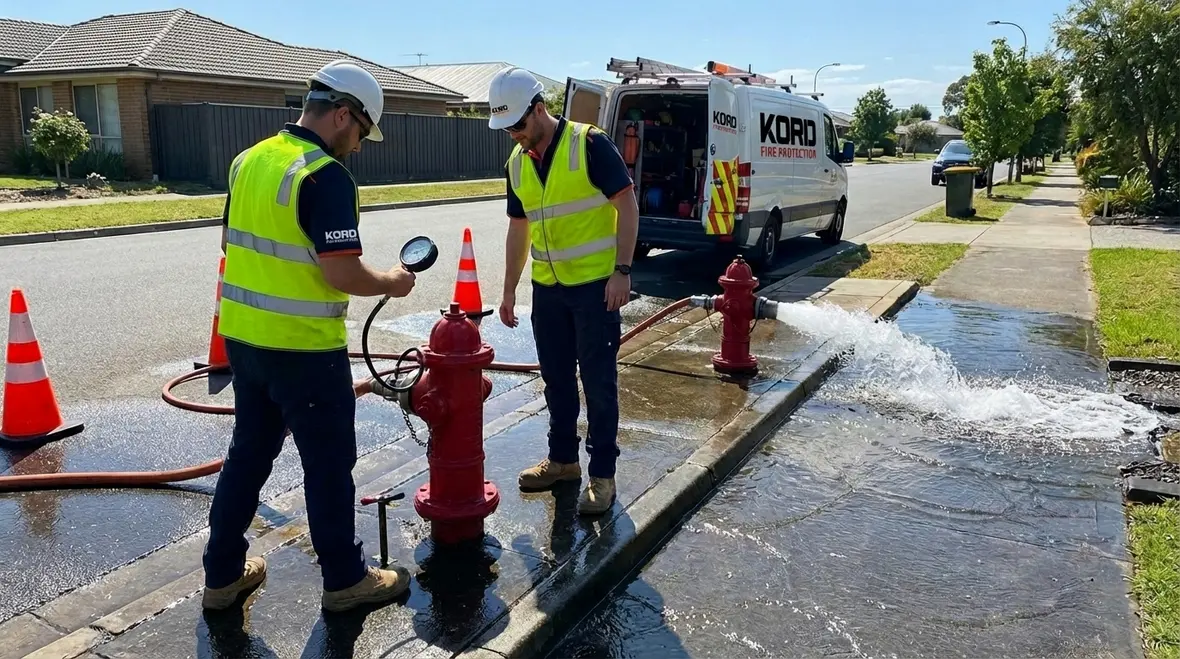
First, technicians record static pressure at a nearby hydrant. Next, they open a second hydrant and measure residual pressure while water flows. Using specialized gauges and diffusers, they calculate the gallons per minute available at a specific pressure.
Consequently, the results reveal:
- The strength of the underground water main
- The capacity of the local water supply
- Pressure drops under demand
- Potential weaknesses in the system
For example, if residual pressure drops too low during flow, that signals limited supply. On the other hand, strong residual numbers suggest the system can handle heavy demand.
Kord Fire Protection technicians explain this in clear terms during onsite visits. They often tell clients, “We are not just turning valves. We are reading the pulse of your water system.” That explanation tends to replace confusion with confidence.
Moreover, these results help determine whether a fire pump is required. If the municipal supply cannot meet the building’s demand, a pump boosts pressure. If the supply already meets requirements, that extra equipment may not be necessary. That difference can mean significant cost savings and informs decisions alongside standards like NFPA 20 fire pump design and installation guidance.
How Professionals Conduct a Fire Hydrant Flow Test Safely
While the concept sounds simple, the execution demands precision. Technicians begin by notifying local authorities. After all, opening hydrants affects water pressure in the area. Nobody wants an unexpected surprise during a morning shower.
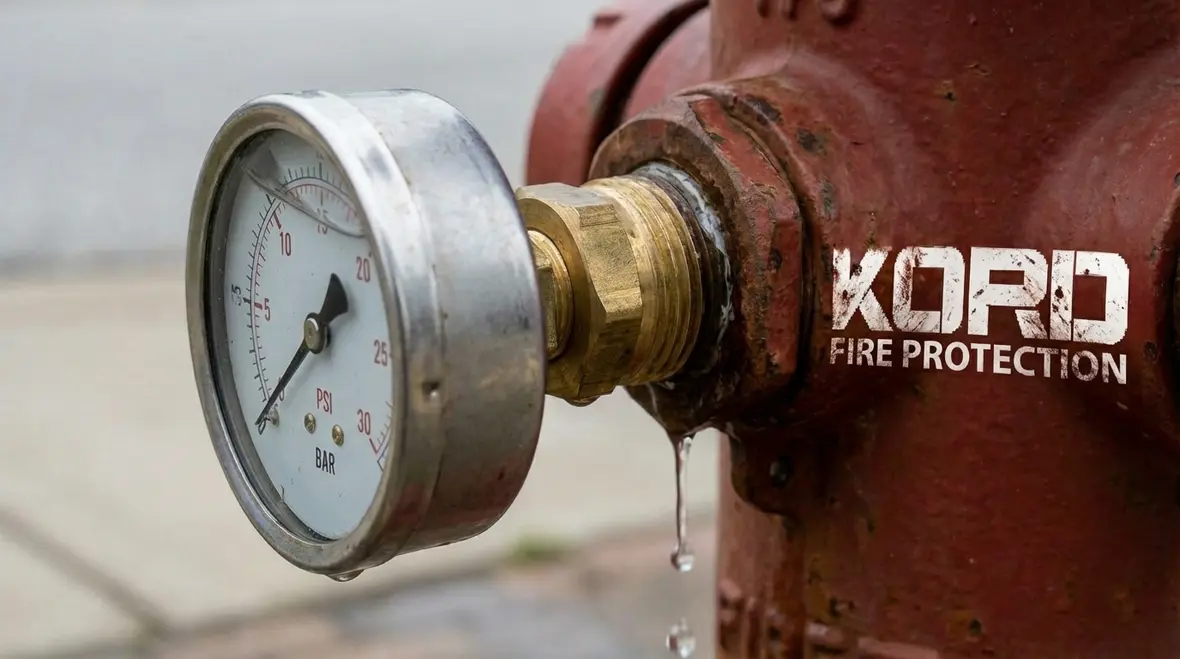
Next, crews inspect hydrants for damage. They check caps, threads, and valves to ensure safe operation. Once ready, they attach calibrated gauges to measure pressure accurately.
During the test, one hydrant acts as the residual hydrant while another serves as the flow hydrant. The flow hydrant releases water through a diffuser that controls direction and minimizes erosion. This is not a free for all water show. It is controlled, measured, and deliberate.
Technicians record readings carefully. Then they use standard formulas to calculate available flow at various pressures. Accuracy matters because engineers rely on these numbers for system design and to comply with testing practices such as those outlined in NFPA 291 hydrant testing standards.
Afterward, crews close hydrants slowly to prevent water hammer. Water hammer can damage pipes, and that is about as welcome as a plot twist in the final minute of a movie.
Finally, they document results in a detailed report. Kord Fire Protection technicians walk clients through the findings step by step. Instead of handing over a stack of numbers and disappearing, they explain what each value means and how it affects compliance and safety.
How Flow Test Results Are Used in Real Projects
Numbers alone do not protect buildings. Decisions based on those numbers do. Therefore, the results of a hydrant capacity test influence several key areas.
Engineers use the data to design fire sprinkler systems. If available flow meets the required demand, the system can connect directly to the municipal supply. However, if supply falls short, designers may add storage tanks or fire pumps.
Additionally, insurance companies often request recent test data. Strong water supply can reduce risk ratings. Lower risk can influence premiums. In that sense, water pressure quietly affects budgets.
Municipal planners also benefit. Repeated testing across neighborhoods highlights weak zones in infrastructure. As a result, cities can plan upgrades where they matter most.
Below is a simplified view of how results translate into action.
Because of this, a fire hydrant flow test does more than satisfy a checklist. It shapes engineering decisions, budget planning, and long term safety strategies.

When and Why Hydrant Testing Should Be Scheduled
Timing matters. Many jurisdictions require testing before new construction or major renovations. Engineers need current data, not numbers from a decade ago when flip phones were still impressive.
Property owners should also consider testing when:
- Adding square footage to a building
- Changing occupancy type
- Installing or upgrading sprinkler systems
- Experiencing repeated water pressure issues
Furthermore, periodic testing helps confirm that municipal supply remains stable. Infrastructure ages. Valves corrode. Water demands shift as neighborhoods grow. Therefore, relying on outdated information can create risk.
Kord Fire Protection technicians recommend scheduling evaluations during planning phases, not at the last minute. Early testing allows time to adjust designs without delaying permits. In construction, time truly is money.
Common Misconceptions About Hydrant Flow Testing
Some assume that if water comes out of a hydrant, everything must be fine. That belief is comforting, yet incorrect. A hydrant can flow water and still fail to meet required demand.
Others think testing damages the water system. In reality, trained professionals conduct the procedure carefully. They open and close valves gradually and monitor system response. When done correctly, the process is safe.
Another myth suggests one test lasts forever. However, water systems change. Seasonal demand, nearby development, and infrastructure updates can alter results. Consequently, updated data ensures accurate system design.
Kord Fire Protection technicians often address these concerns with patience. They explain that testing is proactive, not reactive. It identifies limitations before an emergency exposes them.
And then there is the idea that this process is overly complicated. While calculations require expertise, clients do not need engineering degrees to understand outcomes. Clear communication makes all the difference. Think of it less like advanced physics and more like checking tire pressure before a long trip. Simple step. Big impact.

The Role of Technology and Expertise
Modern equipment improves accuracy. Digital gauges provide precise readings. Flow diffusers reduce environmental impact. Software helps analyze data quickly.
However, tools alone do not guarantee reliable results. Experience matters. Technicians must understand water distribution systems, recognize abnormal readings, and apply formulas correctly.
Kord Fire Protection technicians combine field knowledge with clear reporting. They translate technical measurements into practical guidance. For example, instead of simply stating that residual pressure measured 42 psi, they explain how that figure affects sprinkler performance.
Moreover, they coordinate with engineers, contractors, and inspectors. This collaboration ensures that everyone works from the same set of accurate numbers. In complex projects, alignment prevents costly redesigns.
Ultimately, the blend of skill and technology transforms raw data into actionable insight. That insight supports compliance with fire codes and national standards. More importantly, it supports life safety.
Why Reliable Water Data Strengthens Community Safety
Although testing often focuses on individual properties, its impact reaches further. Reliable hydrant data supports firefighters across entire neighborhoods. When crews arrive on scene, they rely on known flow capabilities. That knowledge guides hose placement, apparatus positioning, and tactical decisions.
Additionally, strong infrastructure planning reduces strain during large incidents. If multiple hydrants in an area show solid capacity, responders can operate with confidence.
Conversely, if testing reveals weak supply zones, municipalities can prioritize improvements. Therefore, a routine fire hydrant flow test contributes to long term public safety. When paired with services like professional fire hydrant testing and inspection, it becomes a cornerstone of community resilience.
It may not have the cinematic flair of a blockbuster rescue scene. There are no slow motion water sprays set to dramatic music. Nevertheless, behind every effective response stands preparation. And preparation begins with understanding water supply.
Frequently Asked Questions
Conclusion
Water is powerful, yet only when it is measured and understood. A professional fire hydrant flow test reveals the truth behind the hydrant’s quiet presence on the curb. Kord Fire Protection technicians stand ready to deliver clear answers, precise data, and steady guidance.
For property owners, developers, and municipalities seeking confidence in their fire protection systems, now is the time to schedule expert testing and build safety on solid ground. Pairing hydrant evaluations with complementary services like standpipe and automatic sprinkler Reg 4 testing or Reg 4 fire pump testing creates a complete picture of water-based protection.
Ready to verify your water supply?
Schedule a dedicated fire hydrant testing service with Kord Fire Protection and turn unknowns into clear numbers and confident decisions. From hydrant flow tests to pump and sprinkler inspections, their team helps ensure that when firefighters open a valve, the water they need is already waiting.
Know Your Weapon Before You Fight the Flame
Kord Fire Protection is your go-to when it comes to all things fire protection. For over 20 years, we’ve been serving Southern California with the quality service and equipment to keep your home or business safe at all times. Our competitive prices reflect our unwavering commitment to protecting what matters most in the event of a fire emergency. Give us a call, send an email, or use that form!

Join Our Newsletter!
Get the latest fire safety tips delivered straight to your inbox From our Newsletter.


