
Fire Hydrant Water Hammer and Pressure Surges
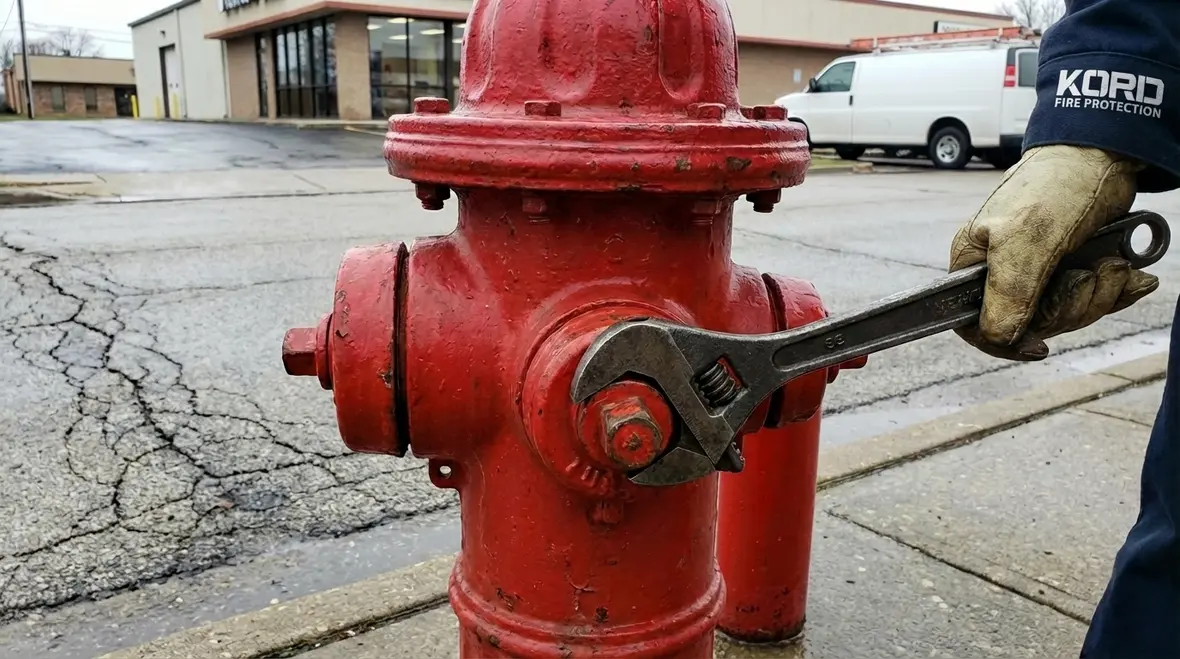
When fire hydrant water hammer strikes, it does not send a polite warning. It announces itself with a bang that echoes through iron mains and rattles valves like a drum solo in a rock concert. In seconds, calm water flow turns into a violent pressure surge. While it may sound dramatic, this hydraulic shock is no small matter. It can crack fittings, weaken underground mains, and quietly shorten the life of an entire fire protection system. Throughout the industry, Kord Fire Protection technicians often explain that understanding this force is the first step toward preventing costly damage. And as they calmly remind clients, water may look gentle in a glass, but in motion, it can hit like a freight train.
Understanding Fire Hydrant Water Hammer in Plain Terms
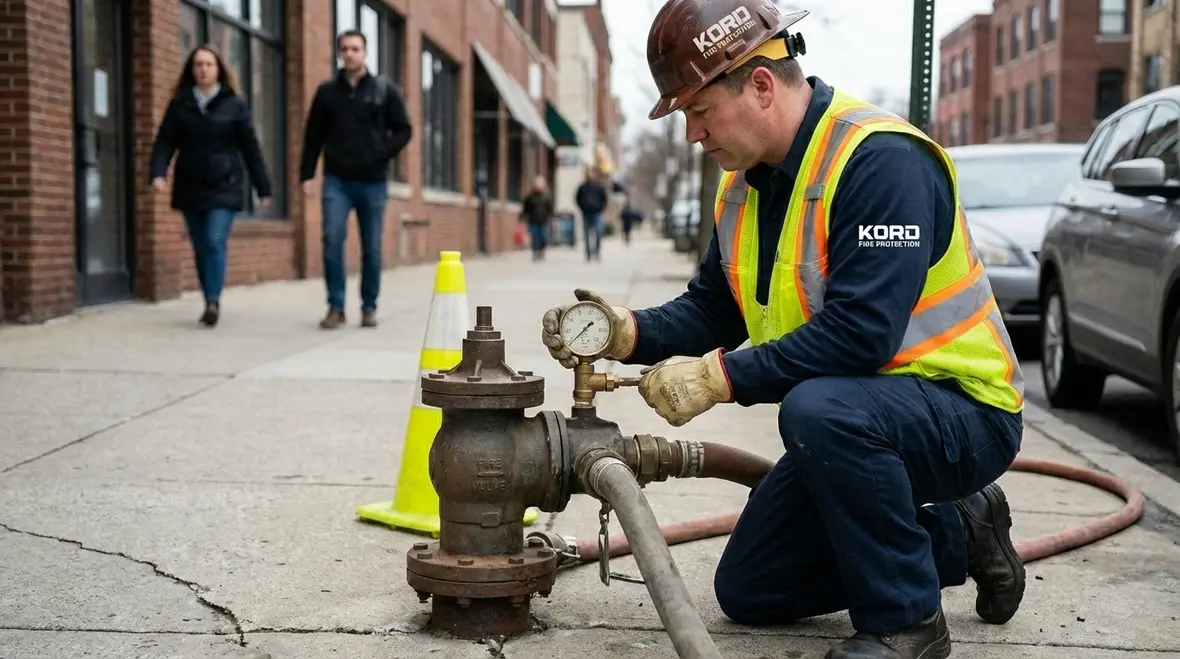
To understand hydrant pressure surges, one must picture water moving quickly through a closed pipe. Now imagine that flow stopping almost instantly. The energy has nowhere to go. Therefore, it slams into the pipe walls, creating a shockwave that travels back and forth inside the system.
This phenomenon, often called hydraulic shock, is simple in theory. However, its effects can be complex and destructive. When a hydrant valve closes too quickly, or when a pump suddenly shuts down, the moving water mass compresses and rebounds. As a result, pressure spikes far beyond normal operating levels.
Kord Fire Protection technicians often compare it to traffic on a busy highway. If every car moving at full speed suddenly hit the brakes at once, chaos would follow. Pipes behave much the same way. Water carries momentum, and when that momentum is interrupted, the force must release somewhere.
Moreover, these surges do not remain in one spot. They travel through the main, reflect off fittings, and intensify at weak points. Consequently, what begins as a quick valve closure at a hydrant can ripple through blocks of municipal piping.

What Causes Hydrant Pressure Surges in Municipal Systems
Several triggers set the stage for a damaging pressure event. Some are human. Others are mechanical. All demand attention.
Common causes include:
1. Rapid valve operation
When a hydrant is opened or closed too quickly, the sudden stop in flow generates shockwaves.
2. Pump startups and shutdowns
Fire pumps that engage or disengage without controlled ramping create abrupt velocity changes.
3. Air pockets in mains
Trapped air compresses and expands, amplifying pressure spikes when water flow shifts.
4. Sudden changes in demand
Large volume withdrawals, followed by immediate shutoff, send energy surging backward.
Additionally, aging infrastructure plays a role. Older cast iron mains lack the flexibility of modern ductile iron piping. Therefore, they absorb less shock and crack more easily under repeated stress.
Kord Fire Protection technicians frequently observe that many incidents stem from simple haste. Someone spins a hydrant wrench too fast, perhaps in an emergency drill, and the system reacts with a loud bang. Although the moment passes, the internal strain remains.
How Fire Hydrant Water Hammer Damages Valves and Underground Mains
Pressure surges do not politely tap on pipe walls. They slam into them. Over time, repeated hydraulic shock weakens joints, gaskets, and valve seats.
First, valves suffer internal wear. The sudden force can deform sealing surfaces. As a result, valves may begin to leak or fail to seat properly. In fire protection systems, that failure risks both water loss and reduced readiness.
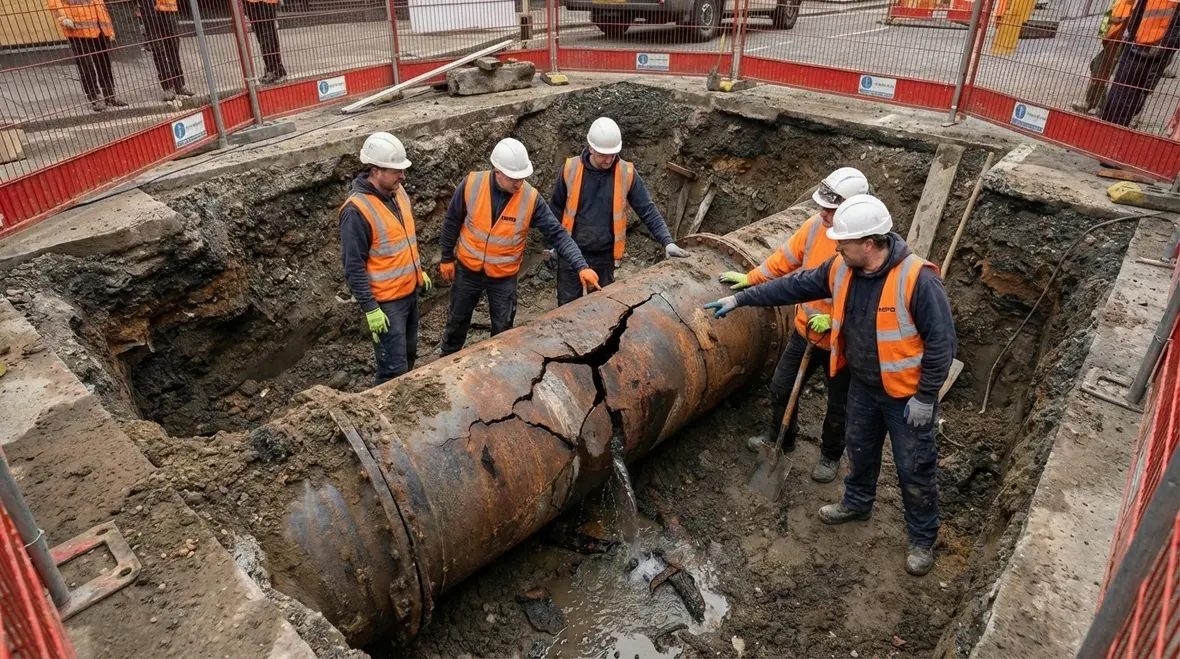
Next, underground mains absorb the shockwave. Because these pipes stretch across long distances, they act like echo chambers for pressure spikes. Consequently, stress concentrates at bends, tees, and threaded connections.
In extreme cases, a single strong event can split a pipe. More often, however, damage builds slowly. Micro fractures develop. Corrosion then finds those weak points. Eventually, a small crack becomes a costly break beneath pavement or landscaping.
Kord Fire Protection technicians often explain this process with a simple image. Bend a paperclip once, and it survives. Bend it back and forth repeatedly, and it snaps. Similarly, repeated water hammer events fatigue metal components until failure becomes inevitable.
Inside the System: Where the Force Hits Hardest
Pressure spikes do not distribute evenly. Instead, they concentrate at structural transitions.
High-Risk Components and Typical Damage
Below is a simplified comparison of common impact points and typical results.
| High Risk Component | Typical Damage Observed |
|---|---|
| Hydrant valve assembly | Worn seats, stem misalignment, internal leaks |
| Mechanical joints | Gasket displacement, bolt stress, gradual seepage |
| Elbows and bends | Concentrated cracking due to directional force |
| Backflow preventers | Check failure, chatter damage, spring fatigue |
Because shockwaves reflect at directional changes, elbows often endure amplified stress. Furthermore, backflow devices contain moving parts that react violently to abrupt reversals in flow. Therefore, these components frequently show early signs of wear.
Kord Fire Protection technicians emphasize inspection at these points during routine service. After all, it is easier to replace a gasket than excavate a fractured main under a parking lot. And nobody enjoys explaining to management why the asphalt now resembles a sinkhole scene from a disaster movie.
How to Prevent Fire Hydrant Water Hammer Before It Starts
Slow, Controlled Operation
Prevention begins with controlled movement. Water prefers a gradual change, not a dramatic exit.
First, operators should open and close hydrants slowly. This simple habit significantly reduces sudden pressure shifts. Although emergencies require urgency, technique still matters.
Surge Control and Smart Pumping
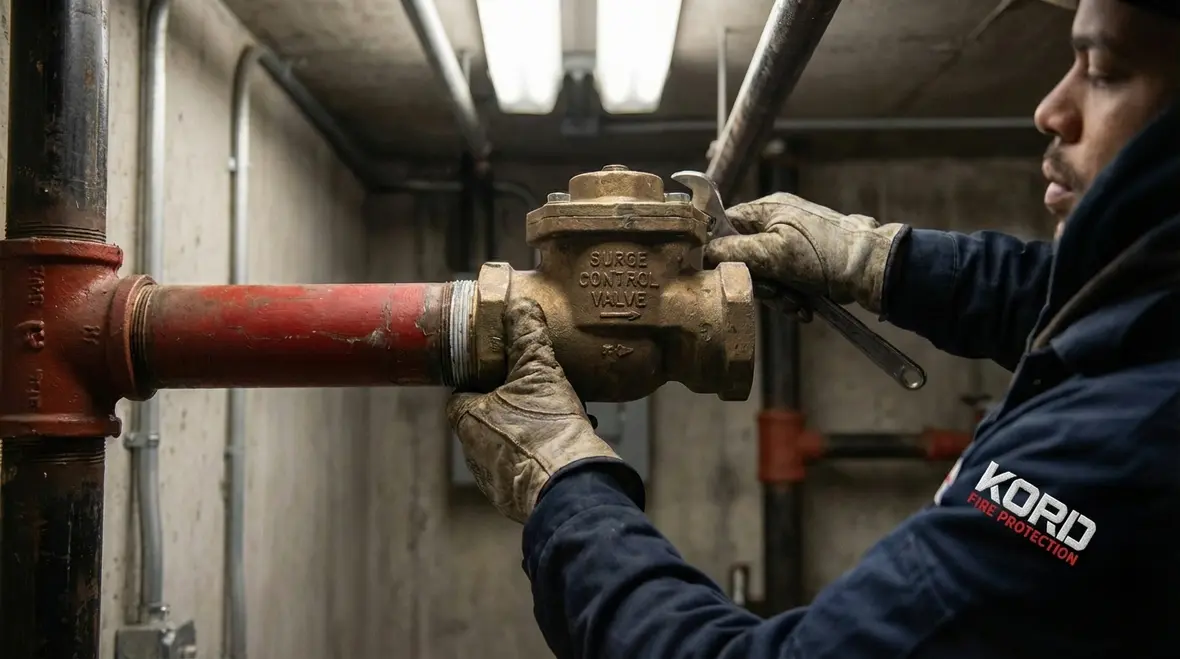
Second, systems benefit from surge control devices. Pressure relief valves, surge tanks, and air chambers absorb excess energy. Consequently, they act as shock absorbers for the pipeline.
Third, pump controllers should include soft start and soft stop features. By ramping speed gradually, they limit abrupt velocity swings.
Maintenance, Air Management, and Training
Additionally, routine maintenance plays a key role. Air release valves must function correctly to prevent trapped air from intensifying surges. Likewise, worn components should be replaced before they become failure points.
Kord Fire Protection technicians often stress training as much as hardware. When crews understand the physics, they operate equipment with more care. And as they sometimes joke, pipes appreciate patience. They just express gratitude by not exploding.
For facilities that depend on reliable fire pumps, pairing good operating habits with regular testing is essential. Resources like Kord Fire Protection’s guide on fire pump testing requirements help owners align daily practice with long-term performance.
Prompt Answer: What Should a Facility Manager Check After a Loud Bang in the Hydrant System?
Immediate Checks After a Pressure Surge
When a facility manager hears a sharp bang during hydrant use, immediate inspection should follow.
First, check pressure gauges for abnormal readings. If pressure fluctuates wildly, residual instability may remain. Next, inspect visible valves and fittings for leaks. Even minor drips suggest internal stress.
Then, listen for unusual vibration in connected piping. Continued rattling indicates unresolved shock. In addition, verify that backflow preventers reset properly.
Document, Monitor, and Call in Support
Kord Fire Protection technicians recommend documenting the event. Tracking repeated incidents helps identify patterns. If the same hydrant produces noise consistently, the issue may involve valve wear or improper operation.
Most importantly, do not ignore the sound. A single loud bang might be harmless. However, repeated events quietly reduce system reliability. And in fire protection, reliability is not optional.
Long Term Impact on Infrastructure Budgets and Safety
Hidden Costs Beneath the Pavement
Municipalities and facility owners often focus on visible maintenance needs. Yet underground damage from repeated hydraulic shock can quietly drain budgets.
Repairing a ruptured main involves excavation, traffic control, labor, and restoration. Consequently, a preventable surge event can multiply into thousands of dollars in unexpected cost.
Risk to Fire Protection Performance
Moreover, compromised hydrant performance affects emergency response. If valves fail or pressure drops during a fire event, consequences extend beyond property damage.
Kord Fire Protection technicians frequently remind stakeholders that proactive care costs less than reactive repair. Although prevention requires planning and training, it preserves both infrastructure and peace of mind.
For many owners, partnering ongoing hydrant and water hammer prevention efforts with consistent routine fire pump inspections and NFPA 25 testing closes the loop between infrastructure health and system readiness.
In the end, water hammer is not dramatic every day. It does not always announce itself with cinematic flair. Sometimes it whispers through small leaks and subtle vibrations. Nevertheless, its long term impact remains real.
Frequently Asked Questions
Protect the System Before the Next Surge
Fire protection systems deserve respect, steady hands, and informed oversight. By understanding fire hydrant water hammer and acting early, facility managers can prevent silent damage that grows beneath the surface. Kord Fire Protection technicians stand ready to inspect, educate, and reinforce vulnerable components before failure strikes.
If your facility relies on pumps to support hydrants or sprinklers, tying water hammer prevention into a regular fire pump servicing program helps ensure pressure is delivered smoothly when it matters most.
Schedule a professional evaluation today, because when the next surge comes, preparation will speak louder than any bang. From hydrant operation guidance to NFPA 25-compliant testing and maintenance, Kord Fire Protection offers comprehensive fire pump testing services and full-service fire protection support across Southern California.
Ready to protect your mains, hydrants, and budget from the next pressure surge? Contact Kord Fire Protection to discuss inspection schedules, surge mitigation strategies, and tailored service plans for your site.
Know Your Weapon Before You Fight the Flame
Kord Fire Protection is your go-to when it comes to all things fire protection. For over 20 years, we’ve been serving Southern California with the quality service and equipment to keep your home or business safe at all times. Our competitive prices reflect our unwavering commitment to protecting what matters most in the event of a fire emergency. Give us a call, send an email, or use that form!

Join Our Newsletter!
Get the latest fire safety tips delivered straight to your inbox From our Newsletter.


