Fire Extinguisher Placement Guide in Australia by Kord Fire
Quick Answer
Fire extinguisher placement in commercial facilities follows more than “near the door” rules. Teams must match extinguisher types to likely hazards, place units where people can reach them fast, and keep paths clear. A strong fire extinguisher placement guide also helps Australia wide compliance and smoother inspections.
Fire safety planning can feel like herding cats in steel boots, especially across busy industrial sites and retail floors. Yet, when a facility team gets extinguisher placement right, response times improve and confusion drops. In the first place, this article follows a practical fire extinguisher placement guide covering where units mount, how far people can reach them, and why hazard matching matters. Then it goes deeper into the decisions that actually make the difference: risk levels, travel distances, obstruction rules, signage, and maintenance checks.
For facilities that want placement tied directly to inspections and upkeep, Kord Fire’s fire extinguisher service and certification support fits naturally into the bigger picture. It helps teams connect wall locations, hazard matching, service records, and readiness without leaving the whole plan to guesswork and crossed fingers.
What the fire extinguisher placement guide gets right first
Most mistakes start small, and then grow legs. The fire extinguisher placement guide starts by placing extinguishers where trained people and bystanders can get to them without hunting. It also links location to hazard, not just geometry. In other words, a facility team places the right equipment near the right risk, along safe travel routes, and keeps it visible even during a busy shift.
Next, the guide pushes a simple principle: accessibility beats aesthetics. Cabinets, glass fronts, and decor can look great until they block quick grabs. Therefore, in commercial spaces across Australia, facility managers should treat placement like a route plan for a stressed human, not like a museum label.
How they should map hazards across industrial and retail sites
Commercial facilities rarely have one hazard. They have a chain of them, like a playlist that keeps changing genres without warning. A robust placement plan begins with hazard mapping, especially in:
- Warehouses with storage racks, pallets, and loading docks
- Workshops with flammable liquids, solvents, and tools
- Retail areas with high-value stock, packaging, and display materials
- Catering or break rooms with cooking risks and grease buildup
Then teams decide what the extinguisher will face in the real world. A lithium-ion battery store and a paint mixing area do not fight fires the same way. As a result, placement cannot be based on one “average” extinguisher. It must support the likely fire classes for that site.
Finally, teams should consider how risks change by time of day. During opening hours, the public affects access routes. During cleaning cycles, staff move carts, hoses, and ladders. Consequently, placement must still work when the site is not perfectly staged.
Why hazard mapping should happen before mounting begins
If teams skip the mapping step, they usually install units where wall space is convenient instead of where risk is real. That creates a comforting illusion and not much else. Hazard mapping lets supervisors compare ignition sources, fuel loads, workflow, and occupant movement before deciding coverage. It also makes later training far easier because people can understand why each extinguisher is there, not just memorize that “the red one is near aisle four.”
Where extinguishers must be reachable during an emergency
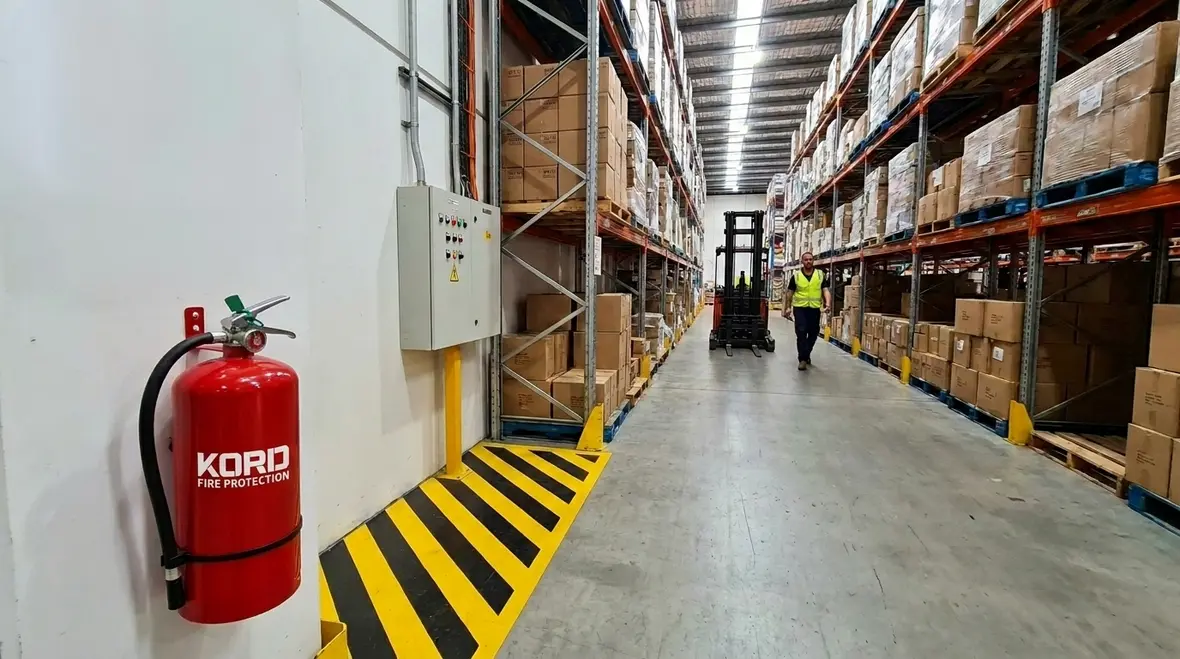
Accessibility drives outcomes. When people cannot reach an extinguisher quickly, even the best unit becomes a prop. To avoid that, facilities should place extinguishers along normal walk paths and near exits where permitted, while ensuring people do not have to pass through blocked areas.
Key ideas for reachability include:
- Mounting at a height that allows rapid use by most staff, including those assisting others
- Keeping clear access so carts, pallets, and seasonal displays do not block the unit
- Using consistent signage so staff spot the nearest option under stress
- Planning for smoke and heat effects by avoiding locations that could become unsafe fast
And yes, people will still try to “just grab it” even when it is behind a locked cage. That is why the plan must include access control that supports emergencies, not just daily security routines.
Spacing and travel distances that keep response realistic
Placement is only effective when coverage works across the full site footprint. Therefore, teams should evaluate spacing and travel distances between units and between risks. In large industrial floors and multi-aisle retail layouts, a single extinguisher in the wrong spot creates a gap that nobody wants to discover during drills.
To manage that, facilities should:
- Identify high-risk zones where travel time to the nearest unit must stay short
- Place units so a person can reach one without crossing the hazard area
- Adjust spacing in long corridors and open-plan warehouses
- Account for doors, turns, and fixed obstacles that slow movement
Moreover, they should document the reasoning so inspectors and internal safety teams can understand the logic. In business, documentation is the calm voice during a loud conversation.
This is also a good place to align with related Kord guidance, such as Proper Placement of Extinguishers Saves Seconds and Fire Extinguisher Placement for Complete Safety Coverage. Both reinforce the same practical point: coverage only works when the route makes sense in real life, not just on paper.
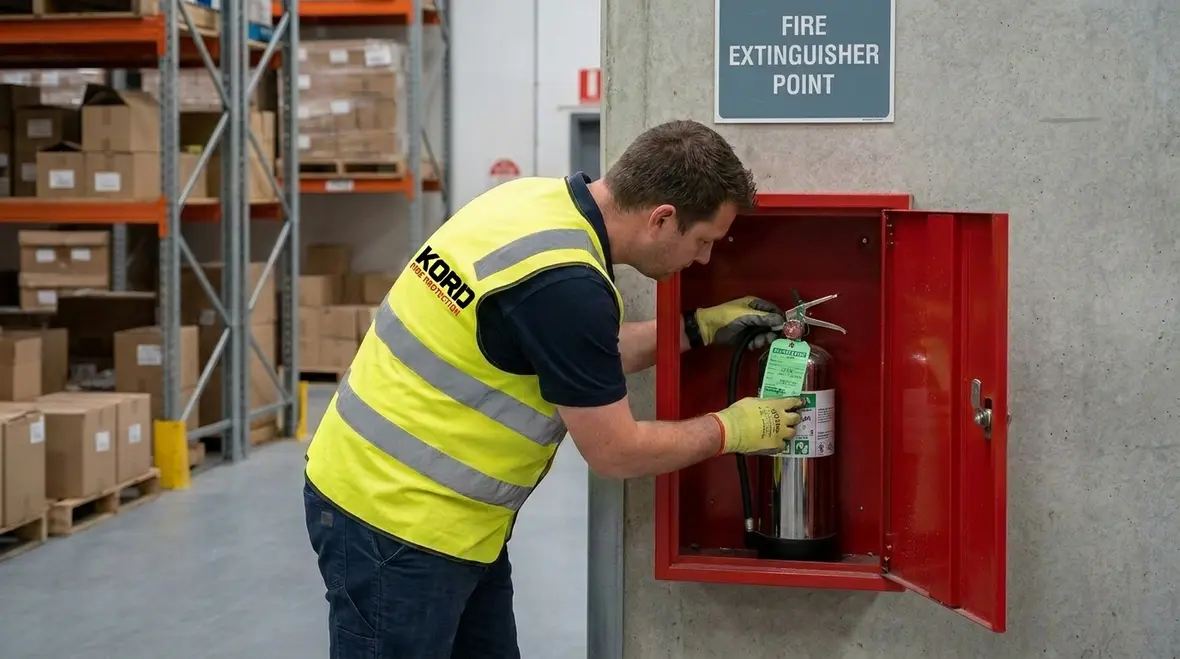
Matching extinguisher type to the risk, not the vibe
Some facilities place extinguishers based on what was easiest to order, like buying whatever is on sale. That is not fire safety. The extinguishing agent and fire class matter, and the placement plan should reflect the likely fuel and ignition sources at each location.
For example, a facility might need different solutions for:
- Electrical equipment and switch rooms
- Flammable liquids near storage cabinets
- Cooking areas where grease fires can start quickly
- General combustibles like cardboard packaging and wood products
Then the team should coordinate extinguisher placement with any fixed systems such as sprinklers, hydrants, or suppression equipment. When those systems and portable extinguishers work together, staff spend less time guessing and more time controlling.
That is also where training aligns with placement. If staff understand what each unit handles, they choose faster. And if they choose faster, the fire has fewer chances to grow teeth.
Why the right extinguisher in the wrong spot still fails
A perfectly selected unit is still a poor choice if staff need to cross the hazard to reach it. Placement should support the first few seconds of decision making, when people are stressed, noisy alarms are doing their best to ruin everybody’s concentration, and visibility may already be getting worse. Good planning reduces those choices to something simple, visible, and immediate.
Visibility, signage, and obstruction rules that prevent “hidden” failures
Even correct placement can fail if people cannot find the unit. A placement plan should treat visibility as part of performance. Therefore, teams should ensure extinguishers stand out against their environment, with clear signage and no clutter around the mounting location.
Common issues include:
- Units placed behind promotional stands or seasonal displays
- Cabinets blocked by pallets, shrink wrap, or shelving during busy weeks
- Inadequate lighting in stairwells, back corridors, and loading dock paths
- Missing or outdated labels that confuse staff
Next, facilities should build an obstruction check into routine housekeeping. If the site changes daily, the verification must keep up. Otherwise, the extinguisher becomes a well-hidden anchor in a place where speed matters most.
As for jokes, here is one that earns its keep: if a fire extinguisher needs “an Easter egg hunt,” the placement plan has missed the point.
Why Kord Fire Protection can be the vital partner for placement planning
Many facility managers handle safety tasks like they are solo projects. However, extinguisher placement works best when it is coordinated with inspections, site walkdowns, documentation, and ongoing updates. That is where Kord Fire Protection becomes a vital partner.
Kord Fire Protection supports commercial facilities across multiple facets in Australia by helping teams plan placement that fits real hazards, real layouts, and real staff workflows. Instead of guessing, the facility benefits from structured guidance that reduces ambiguity. As a result, managers can expect better coverage, clearer routes to equipment, and improved readiness for internal audits and third-party reviews.
In addition, partnerships help keep the plan alive. When warehouses expand, retail fit-outs change, or new machinery arrives, placement needs review. Kord Fire Protection can help facilities maintain a current system rather than a legacy plan from last year’s “close enough” moment.
Teams looking for more reading can also connect this topic with Kord’s Fire Extinguisher Placement and Accessibility by Kord and Annual Fire Extinguisher Inspection Guide. Those resources support the same message from different angles: placement works best when service, inspections, access, and staff awareness all stop acting like distant cousins at a family reunion.
Maintenance and inspections that keep the plan trustworthy
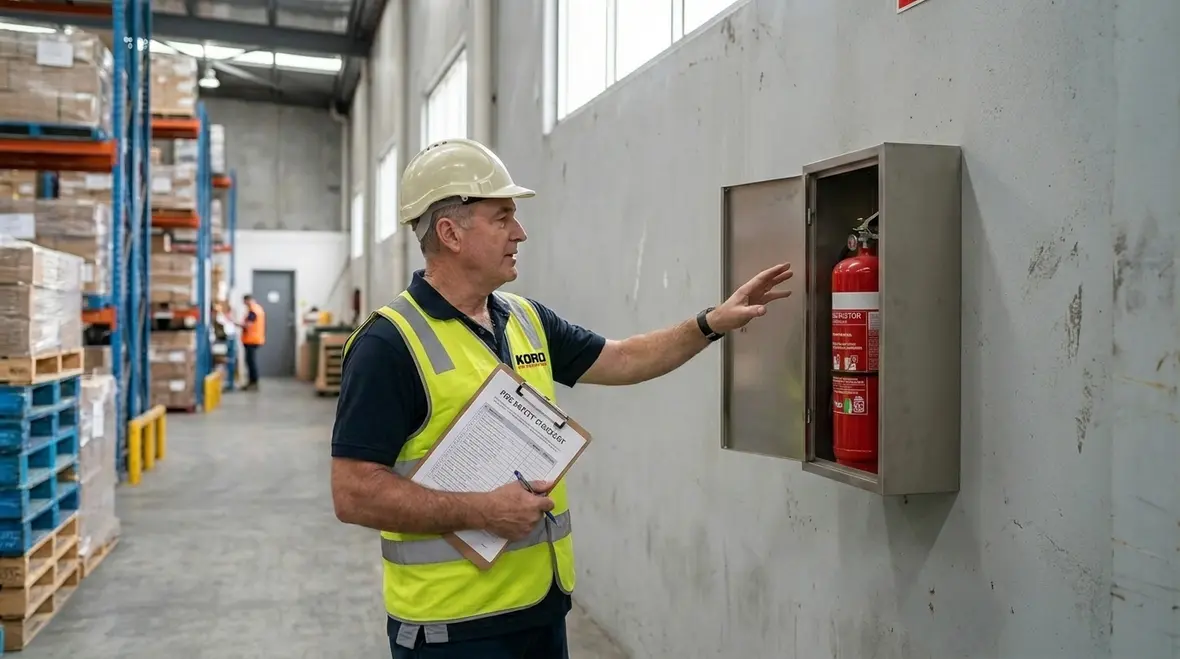
Placement does not stop at installation. Extinguishers can lose pressure, get damaged, or be swapped incorrectly. Therefore, facilities should run a disciplined inspection routine tied to service schedules and site risk.
A strong program includes:
- Regular checks of gauges, seals, and access pathways
- Verification of extinguisher type at each risk zone
- Replacement of units that reach service intervals
- Recordkeeping that makes audits smoother
Also, facilities should conduct periodic walk-throughs with supervisors and, where appropriate, with staff who understand where things block access. That human feedback often finds issues technical checklists miss.
Then, they update signage and training when the layout changes. After all, people respond to what they remember, not what the plan used to say.
FAQ
Conclusion
Commercial fire extinguisher placement should read like a clear map under pressure: hazard matched, easy to reach, and visible when it matters. Facilities across Australia can reduce risk and confusion by planning coverage with a fire extinguisher placement guide, then maintaining it as the site evolves.
For help turning this into a working system, contact Kord Fire Protection and bring calm, confidence, and better coverage to the next assessment. When the right unit is in the right place, people waste less time guessing and spend more time doing the thing that actually helps.

Join Our Newsletter!
Get the latest fire safety tips delivered straight to your inbox From our Newsletter.