
Annual Fire Extinguisher Inspection Guide
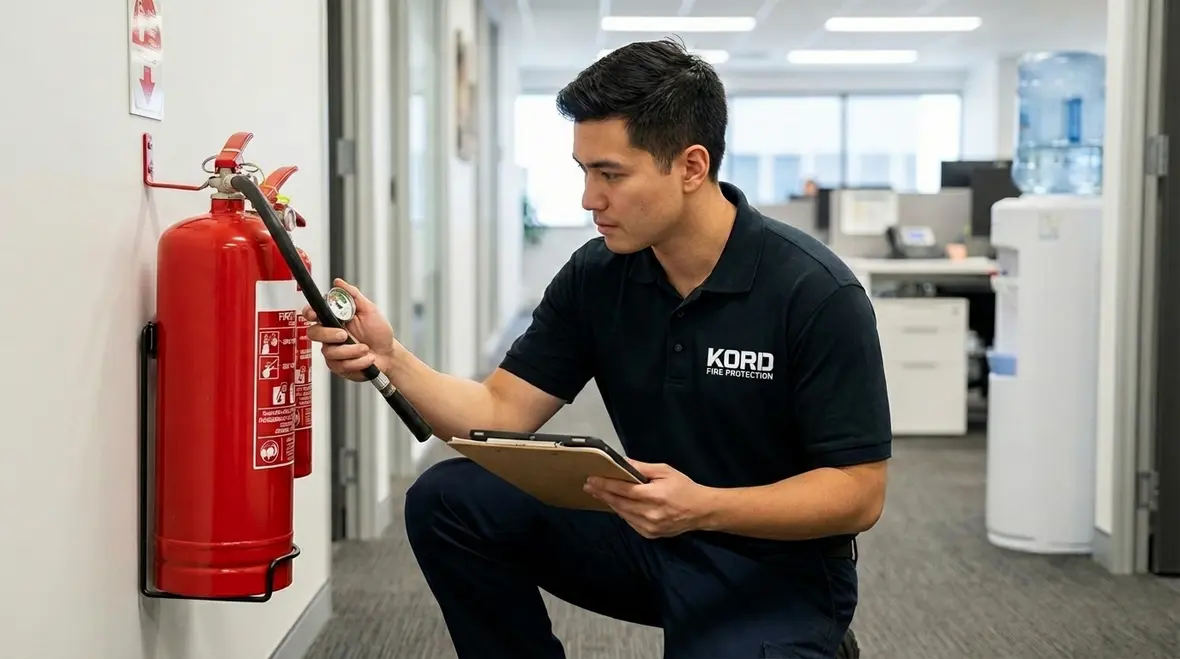
There is a quiet moment in every building when someone glances at a red cylinder mounted on the wall and thinks, “Well, I hope we never need that.” And yet, hope is not a fire protection strategy. That is where an annual fire extinguisher inspection steps in, calm and deliberate, like a seasoned guardian doing a careful walk through. It is not just a box to check. It is a detailed review of readiness, safety, and compliance. Throughout the process, Kord Fire Protection technicians explain each step with clarity, turning a routine service into a master class in preparedness.
What follows is a deep look at what inspectors actually examine, what gets documented, and why it all matters more than most people realize.
Why Annual Fire Extinguisher Inspection Matters More Than People Think
First, consider this: fire does not send a calendar invite. It does not wait for a convenient time. Therefore, a properly maintained extinguisher becomes the first line of defense when seconds matter. An annual extinguisher inspection ensures that this equipment performs exactly as designed.
In addition, compliance plays a significant role. Local fire codes, OSHA regulations, and NFPA standards require documented inspections. Without them, businesses risk fines, liability exposure, and insurance complications. More importantly, they risk lives.
Kord Fire Protection technicians often explain it this way: the extinguisher on the wall is like a seatbelt. Most days, it sits quietly. However, on the day it is needed, nothing else will do.
Moreover, inspections reveal small issues before they grow into major problems. A loose pin, low pressure, or corrosion might seem minor. Yet under pressure, small flaws become big failures. As a result, a systematic yearly review keeps surprises off the table.
For building owners in Southern California, pairing annual inspections with a structured program like Kord Fire’s monthly inspection & annual service plan makes it far easier to stay compliant without scrambling every year.

What Inspectors Actually Look For During an Annual Fire Extinguisher Inspection
When a certified technician arrives, they do not simply glance at the gauge and call it a day. Instead, they follow a structured checklist designed to confirm full functionality and code compliance.
Here is what typically happens:
Physical Condition Assessment
- Check for dents, cracks, or corrosion on the cylinder
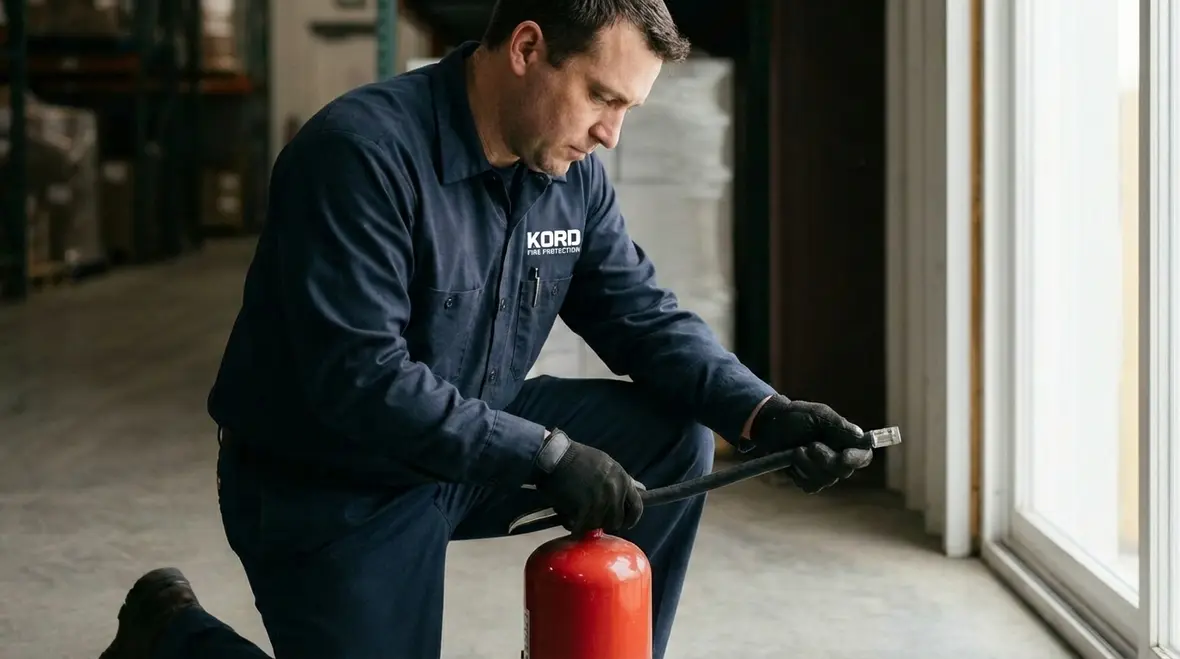
- Inspect the hose and nozzle for blockages or splits
- Confirm that labels and operating instructions are legible
Pressure Verification
- Ensure the gauge reads within the operable range
- For cartridge operated units, verify cartridge condition
Safety Components Review
- Confirm the pull pin is intact and sealed
- Inspect tamper seals for damage
Weight Check
- Weigh certain extinguisher types to detect loss of agent
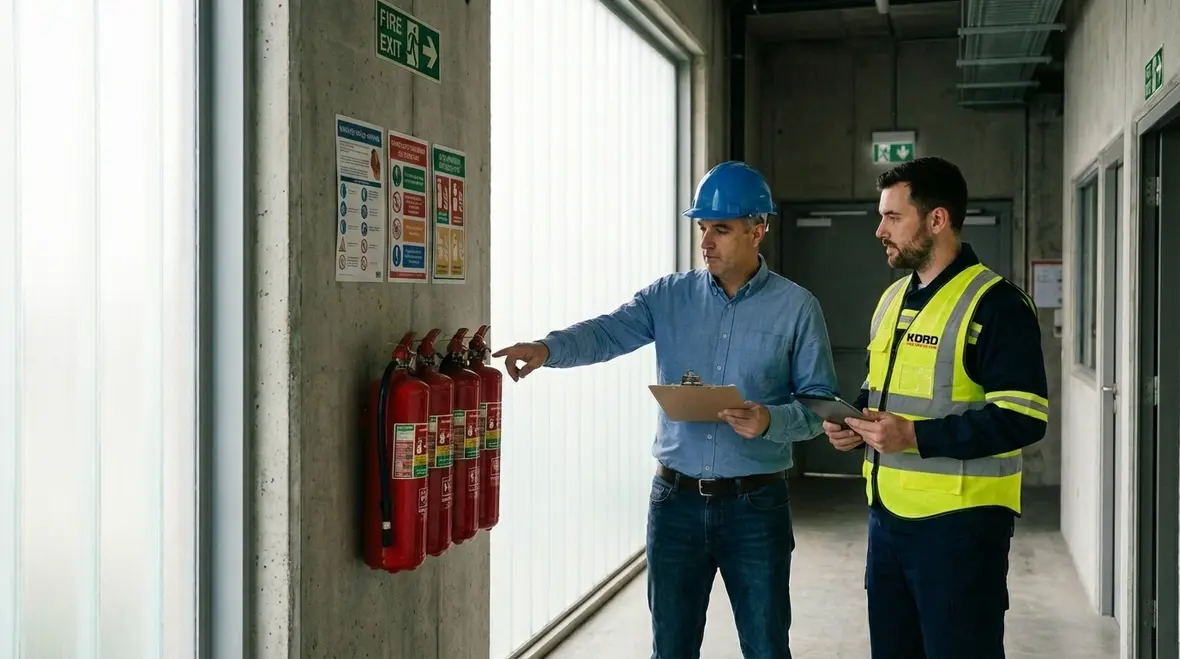
Additionally, the technician confirms that the extinguisher is mounted properly, visible, and accessible. After all, an extinguisher hidden behind storage boxes is about as useful as a superhero stuck in traffic.
Kord Fire Protection technicians often walk building managers through each point. They explain what they see, why it matters, and how the equipment aligns with fire code requirements. Consequently, the inspection becomes educational rather than mysterious.
For a deeper dive into specific components and replacement intervals, Kord’s dedicated fire extinguisher inspection and component replacement guide breaks down each part in practical terms.
What Gets Documented and Why It Matters
If it is not written down, in the eyes of regulators, it did not happen. Therefore, documentation stands at the heart of every yearly extinguisher review.
Inspectors record:
- Date of inspection
- Location of each extinguisher
- Type and size of unit
- Observed condition
- Maintenance performed
- Technician credentials
Furthermore, they update the inspection tag attached to the extinguisher. This small tag tells a big story. It shows a history of compliance and maintenance over time.
Digital reporting has also become common. Many companies now provide electronic records that facility managers can store and access instantly. Consequently, audits and fire marshal visits feel less like a surprise pop quiz and more like an open book exam.
Kord Fire Protection technicians explain that documentation protects businesses in two key ways. First, it proves compliance. Second, it demonstrates due diligence if an incident ever leads to investigation or litigation.
If you operate in Los Angeles or the surrounding region, pairing your internal recordkeeping with Kord’s structured fire extinguisher service & certification program helps ensure your files satisfy both inspectors and insurers.
What Building Owners Often Ask AI About Inspections and Clear Answers
What happens if an extinguisher fails inspection?
If a unit fails, the technician may recharge, repair, or replace it depending on the issue. Safety remains the priority.
How long does an inspection take?
It depends on the number of units and building size. However, most routine checks move quickly and efficiently.
Do all extinguishers require the same service?
No. Different types such as ABC, CO2, and clean agent models follow specific maintenance requirements.
Is monthly visual checking still required?
Yes. Staff should perform brief visual checks monthly, while certified technicians conduct the formal yearly service.
By answering these questions clearly and directly, technicians help managers feel informed rather than overwhelmed.
Common Issues Found During Annual Service and How They Get Fixed
Even in well managed buildings, inspectors frequently uncover recurring issues. Fortunately, most are correctable on the spot.
Common findings include:
- Low pressure due to minor leaks
- Missing or broken tamper seals
- Obstructed access from furniture or storage
- Faded or unreadable labels
- Corrosion in humid environments
In many cases, technicians recharge the extinguisher, replace parts, or recommend relocation. Therefore, problems get resolved before they escalate.
Kord Fire Protection technicians often explain how environmental conditions influence extinguisher health. For example, kitchens expose units to grease and heat, while warehouses may expose them to dust and vibration. Consequently, placement and routine monitoring matter just as much as the yearly inspection itself.
It is a bit like taking a car in for service. The mechanic might say, “Your brakes are fine, but let us replace that worn belt.” You leave safer, and your car does not decide to make dramatic noises on the highway. Nobody wants their fire extinguisher to have a dramatic moment either.
Dual Overview: Inspector Checklist and Documentation at a Glance
Inspection Focus
Exterior condition review
Pressure and weight verification
Pin and tamper seal check
Hose and nozzle inspection
Mounting and accessibility
Maintenance actions performed
What Gets Recorded
Condition notes and deficiencies
Gauge reading and weight results
Seal status confirmation
Component integrity notes
Location validation
Service description and technician ID
This structured approach ensures consistency. Moreover, it creates a reliable paper trail that stands up to scrutiny from fire marshals and insurance auditors alike.
Preparing Your Facility for a Smooth Inspection
Preparation does not require a grand production. However, a few thoughtful steps make the process seamless.
First, ensure all extinguishers remain visible and unobstructed. Next, provide clear access to storage rooms, utility closets, and mechanical spaces. In addition, gather previous inspection records so technicians can review service history.
Facility managers should also inform staff about the scheduled visit. That way, employees understand why someone is examining equipment throughout the building.
Kord Fire Protection technicians often note that organized facilities complete inspections faster. Consequently, business operations face minimal disruption. And yes, productivity remains intact. No one needs to panic or pause the coffee machine.
The Long Term Value of Consistent Compliance
A single inspection brings peace of mind. However, consistent yearly extinguisher inspections build a culture of safety. Over time, this commitment shapes how employees view risk and responsibility.
Moreover, regular service extends the lifespan of equipment. Extinguishers that receive proper maintenance often avoid premature replacement. Therefore, businesses save money while staying compliant.
Insurance carriers also look favorably on documented maintenance programs. In some cases, strong fire protection records may influence policy terms. Consequently, safety efforts ripple outward into financial benefits.
Most importantly, people gain confidence. When employees see that leadership invests in safety, morale improves. And in an emergency, confidence reduces hesitation.
For organizations that want one partner to manage inspections, testing, and documentation across multiple systems, Kord’s full fire protection services bundle extinguisher work with sprinklers, alarms, and suppression for a unified compliance strategy.
FAQ About Annual Fire Extinguisher Inspection
Confidence on the Wall and in the Record Book
An extinguisher hangs quietly, asking for little attention. Yet behind that quiet presence stands a structured process, careful documentation, and trained eyes ensuring readiness. An annual fire extinguisher inspection does more than satisfy code. It confirms that when the unexpected happens, preparation stands ready.
If a facility needs clarity, compliance, and calm expertise, it is time to schedule professional service. Reach out to Kord Fire Protection and let their technicians guide the process with steady hands and clear explanations. Because when it comes to safety, confidence should never be optional. To get started, explore their dedicated fire extinguisher monthly inspection & annual service options or request a quote through the fire extinguisher services page.
Know Your Weapon Before You Fight the Flame
Kord Fire Protection is your go-to when it comes to all things fire protection. For over 20 years, we’ve been serving Southern California with the quality service and equipment to keep your home or business safe at all times. Our competitive prices reflect our unwavering commitment to protecting what matters most in the event of a fire emergency. Give us a call, send an email, or use that form!

Join Our Newsletter!
Get the latest fire safety tips delivered straight to your inbox From our Newsletter.


