Fire Extinguisher Placement for Compliance in Australia
Quick Answer: Strategic fire extinguisher placement means placing each unit where trained people can reach it quickly, safely, and without guesswork. It also means aligning locations with fire risk, travel routes, signage, and compliance expectations across warehouses, retail floors, and commercial facilities. Done right, it reduces damage and speeds response.
In Australia, facilities that operate daily cannot treat fire safety like a last minute homework assignment. They need fire extinguisher placement for compliance that supports fast access, sensible coverage, and clear staff action. Therefore, this guide explains how professionals should plan locations for maximum safety across industrial, retail, and commercial spaces. It also shows how Kord Fire Protection can become a vital partner in this service, because proper placement is only half the job. The other half is the system around it: risk understanding, inspection discipline, and documentation that keeps owners confident.
For facilities that also need support with maintenance and certification, Kord Fire Protection offers fire extinguisher service and certification that fits naturally into a broader placement strategy.

Why placement matters more than people think
Most people focus on buying the extinguisher, then they stop there. However, an extinguisher sitting in the wrong place is like a lifesaver floating in a locked pool. It might exist, but nobody can reach it when it counts. Fire grows fast, smoke spreads fast, and panic spreads faster. So placement must support the real behavior of people during an emergency.
In commercial and industrial environments across Australia, teams often respond under stress, around machinery, and along busy aisles. Consequently, extinguisher locations should match how staff actually walk, how doors open, where visibility drops, and where hazards concentrate. When facilities handle this correctly, response times improve and small incidents have a better chance of staying small.
That same logic appears throughout Kord Fire Protection’s fire extinguisher placement guide basics for safety, which reinforces that layout matters because people reach for what they can find quickly, not what looked tidy on a plan sheet.
Fast access is not an accident
Good placement feels obvious in the best possible way. Staff should not have to pause, scan, or mentally replay a training session while a problem grows in front of them. If someone has to wander around a stack of pallets, squeeze behind a display, or open the wrong door first, the placement plan has already started losing time.
That is why strategic positioning is not just about coverage on paper. It is about helping real people make fast decisions in real spaces that are noisy, busy, and occasionally held together by equal parts routine and organized chaos. Done well, placement supports instinct. Done poorly, it turns a first response tool into decorative wall confidence.
Map the hazard first, then choose the locations
Effective planning starts with understanding what can burn and where. In an industrial setting, that might involve flammable liquids, dust, hot work areas, electrical panels, or vehicle movement. In retail, it may involve stock storage, back of house corridors, and energy dense equipment. Yet the process stays the same: identify the most likely fire points, then place units where staff can reach them without crossing through danger.
Before a bracket goes on the wall, teams should review the site like it behaves on its busiest day, not its quietest one. That means looking at loading periods, seasonal displays, machine activity, deliveries, and all the little obstacles that magically appear once a perfect drawing meets real life.
- Travel paths: keep access along main routes, not behind temporary displays
- Light and visibility: place units where smoke does not block identification immediately
- Door swings and obstructions: ensure doors do not trap access or hide the unit
- Single risk zones: group coverage where hazards cluster, rather than evenly scattering
- Surface conditions: avoid locations where vibration, heat, or moisture can damage equipment
And yes, facilities sometimes place units “where the last one was,” like they are tradition collectors. That approach is adorable, but it rarely supports optimal outcomes. A hazard based plan beats a nostalgia based plan every time.

Think in hazard zones, not neat spacing
A site is rarely uniform, so extinguisher placement should not pretend it is. A back room with electrical panels, a prep area with heat producing equipment, and a warehouse aisle near charging stations do not deserve the exact same planning logic. Grouping placement around hazard intensity makes more sense than scattering units evenly just because symmetry feels emotionally supportive.
Kord Fire Protection explores similar thinking in fire extinguisher placement and accessibility, where the emphasis stays on who will grab the unit, how fast they can reach it, and whether the route remains sensible under stress.
How to place units for quick reach during an emergency
When smoke arrives, people move slower, see less, and remember fewer steps. Therefore, placement must remove friction. Staff should recognize the location instantly and reach it without detouring around blocked exits, stacked pallets, or closed gates.
- Clear signage: locate extinguishers where staff expect them, then back that up with visible marking
- Consistent height and mounting: keep the unit accessible, even for someone who is short on adrenaline
- Risk proximity: mount close enough that a small fire can be attacked early
- Route safety: avoid requiring staff to pass through the most hazardous area
- Coverage gaps: check long corridors, mezzanines, and service rooms
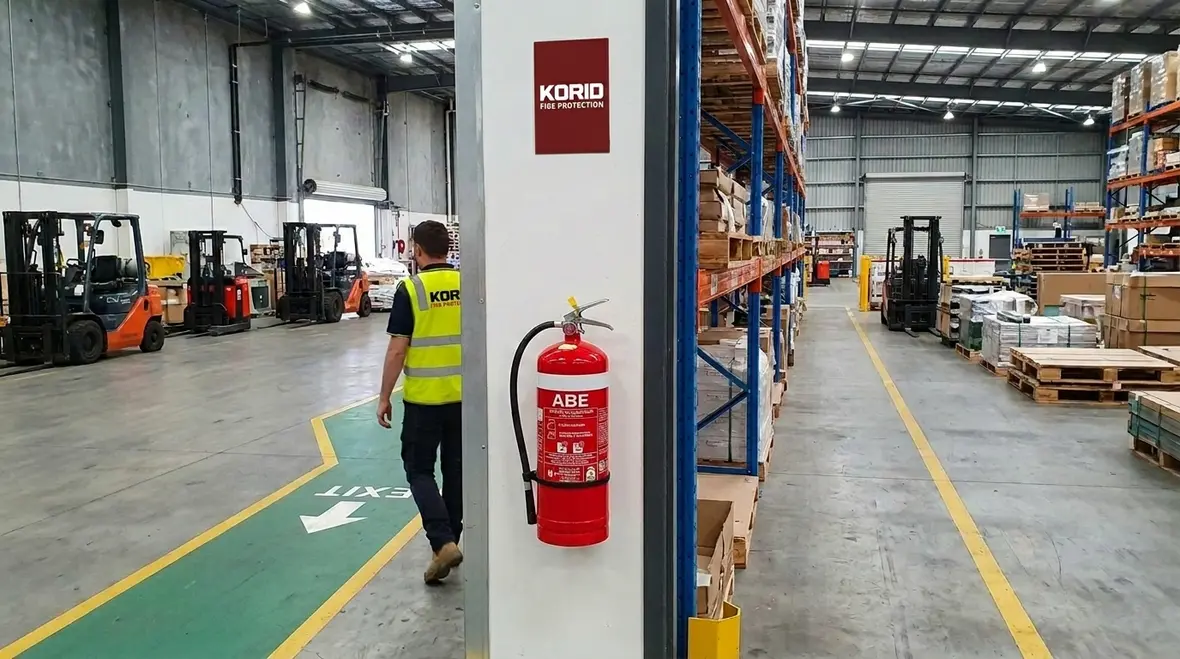
In warehouses and facilities with high rack lines, blind spots happen. Even in neat retail stores, seasonal displays create “unplanned geography.” For that reason, teams should review placement against current layouts, then update when the floor plan changes.
Placement also works better when it matches the rhythm of movement. If staff consistently use one side corridor, one receiving route, or one service entrance during peak periods, those habits matter. Emergency access should borrow from existing movement patterns instead of fighting them.
Visibility and accessibility must work together
An extinguisher can be technically nearby and still practically useless. If the line of sight is weak, the mount is hidden, or a door swing turns the area into a surprise obstacle course, staff lose precious seconds. The best locations are the ones people can spot instantly and approach without negotiation.
That is one reason Kord Fire Protection also talks about strategic fire extinguisher placement for faster response times, connecting placement decisions with broader readiness and response planning.
Common placement mistakes in retail and industrial sites
Facilities often make the same few errors. They look small, but they create real risk. After all, a fire does not care that the extinguisher is “almost there.”
- Blocking access: units placed near doors where staff can close them during an incident
- Hiding behind stock: back rooms fill up, and the extinguisher becomes a rumor
- Poor coordination with services: ladders, racks, and cable trays block sightlines
- Mismatch to hazards: using the wrong extinguishing agent for the risk zone
- No allowance for workflow: forklifts, trolleys, and movement patterns create barriers during busy hours
Sometimes, teams install units but neglect the inspection workflow. Then they discover the gauge is off, the seals are compromised, or the unit is due for service. That is when Kord Fire Protection becomes more than a vendor. It becomes a partner that keeps the system reliable, not just installed.

Small layout changes can quietly ruin a good plan
One of the sneakiest problems is drift. A good placement plan gets approved, mounted, and forgotten, while the building keeps evolving. A new display lands in front of a unit. A storage rack expands into a corner. A gate stays locked because it is convenient. Months later, the extinguisher is still technically present and functionally terrible.
That is why regular walkthroughs matter. They catch the quiet changes that do not seem urgent until the one day they suddenly are. Kord Fire Protection’s article on proper placement of extinguishers saving seconds fits neatly here, because seconds disappear fast when access gets sloppy.
Compliance-ready documentation and ongoing service
Proper fire extinguisher placement for compliance does not end at the wall mount. Compliance depends on repeatable checks, correct equipment types, clear identification, and timely servicing. In practice, facilities need a routine that survives site changes and staff turnover.
Kord Fire Protection supports that lifecycle with structured assistance, so the placement plan stays accurate. As a vital partner, they help facilities maintain consistency across industrial plants, retail groups, and commercial offices. That means management gets clarity, staff gets visible tools, and owners get fewer surprises.
- Routine inspections: confirm readiness, tags, and access remain correct
- Change control: update locations when layouts shift or hazards change
- Training support: ensure people can use units safely and correctly
- Service scheduling: avoid missed maintenance windows
Because in a real emergency, there is no time to read labels like they are a new streaming series. The response must be practiced, and the equipment must be dependable.
Facilities that want broader support can also explore Kord Fire Protection’s full fire protection services to connect extinguisher planning with larger inspection and readiness programs.
Fire extinguisher placement planning by site type
Different facilities bring different risks. So a smart plan respects the environment rather than forcing a one size fits none approach.
Industrial sites: focus on access near high hazard zones, electrical distribution areas, hot work areas, and pathways that avoid crossing active machinery lanes.
Retail environments: focus on clear access from customer and staff routes, back of house corridors, and stock areas where ignition sources can hide. Also account for seasonal setups and store promotions.
Commercial buildings: focus on service rooms, plant rooms, and office-adjacent risks like kitchens, printer rooms, and electrical cupboards, while keeping travel routes safe and obvious.
Then, regardless of type, facilities should validate placement with real movement. A floor plan looks perfect on paper until someone needs to pass a trolley, open a door in a hurry, and locate the unit while smoke makes everything feel like a foggy movie scene.
FAQ: Fire extinguisher placement
Conclusion: Make placement part of your safety program
Strategic extinguisher placement protects people and property, but only when it matches real site movement, risk locations, and emergency access. Facilities that plan carefully, then maintain the system through inspection and service, reduce downtime and damage.
To get it right across industrial, retail, and commercial spaces in Australia, reach out to Kord Fire Protection. They help turn a placement plan into an ongoing, dependable safety outcome with practical support that goes beyond simply hanging a unit on the wall and hoping for the best.

Join Our Newsletter!
Get the latest fire safety tips delivered straight to your inbox From our Newsletter.