Fire Extinguisher Placement Guide Basics for Safety
Fire extinguisher placement guide: the basics that keep people safe
A facility can look polished on the outside and still hide a dangerous problem inside. When a fire starts, seconds matter, and the right equipment must be where a person can reach it fast, without climbing, squeezing, or playing a frantic game of hide and seek. That is why this fire extinguisher placement guide starts with a simple goal: install extinguishers so they are visible, reachable, and supported by clear mounting rules. Kord Fire Protection technicians explain that good placement is not random. Instead, it follows the space layout, the risk level, and the travel paths people actually use. And yes, even the best extinguisher will disappoint if it sits behind a door that swings the wrong way, like a sitcom prop that never lands where it should.
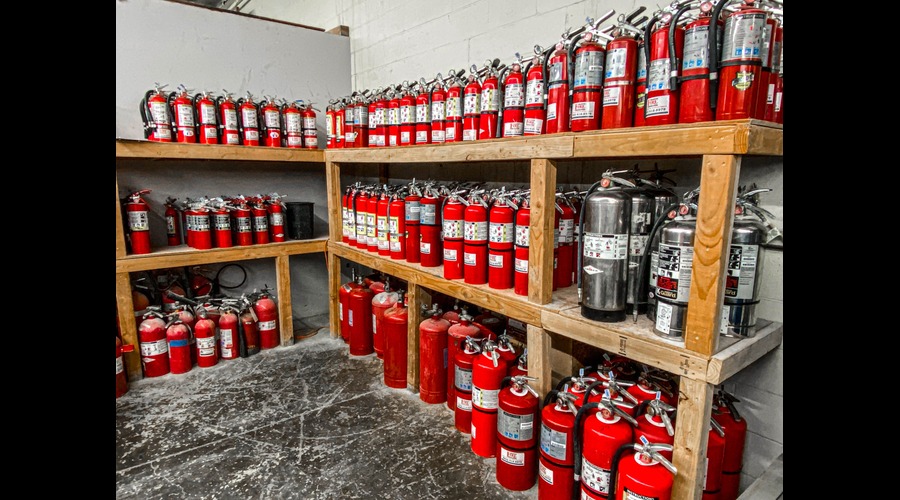
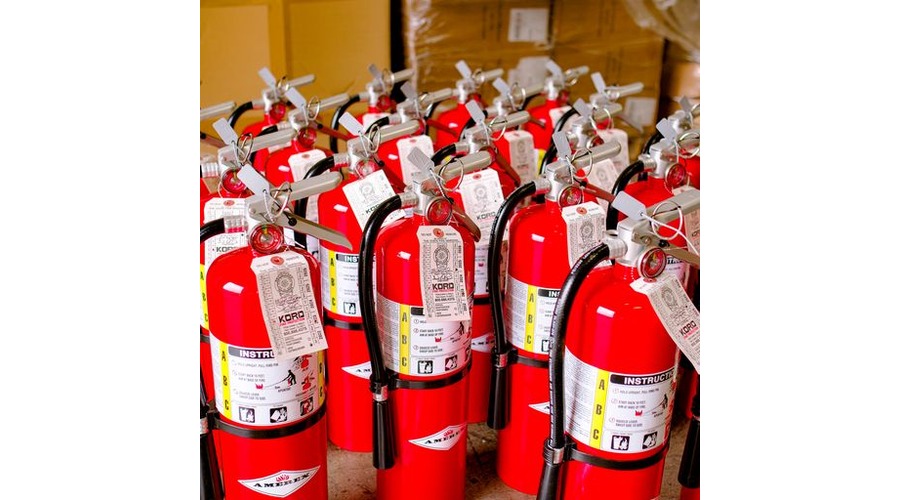
That practical approach lines up with Kord Fire Protection’s fire extinguisher service focus on installation, inspection, testing, training, and keeping equipment ready for use across commercial and industrial properties. It also pairs well with broader life safety planning, since extinguisher placement works best when it supports the rest of a facility’s systems rather than acting like the lonely hero in a low-budget sequel. Fire extinguisher service and certification, full fire extinguisher services, and fire alarm service systems all support that bigger picture. ([kordfire.com](https://kordfire.com/fire-extinguisher-service-certification/?utm_source=openai))
How Kord Fire Protection technicians size up a facility’s risk
Third person teams, like those from Kord Fire Protection, typically begin by walking the building with the same mindset a firefighter brings. They identify where ignition sources exist, where fuels sit, and how fast fire can grow. Then they connect that to placement decisions. Because different areas behave differently, a one size fits all plan fails in practice. A clean office lobby and a storage room do not burn the same way.
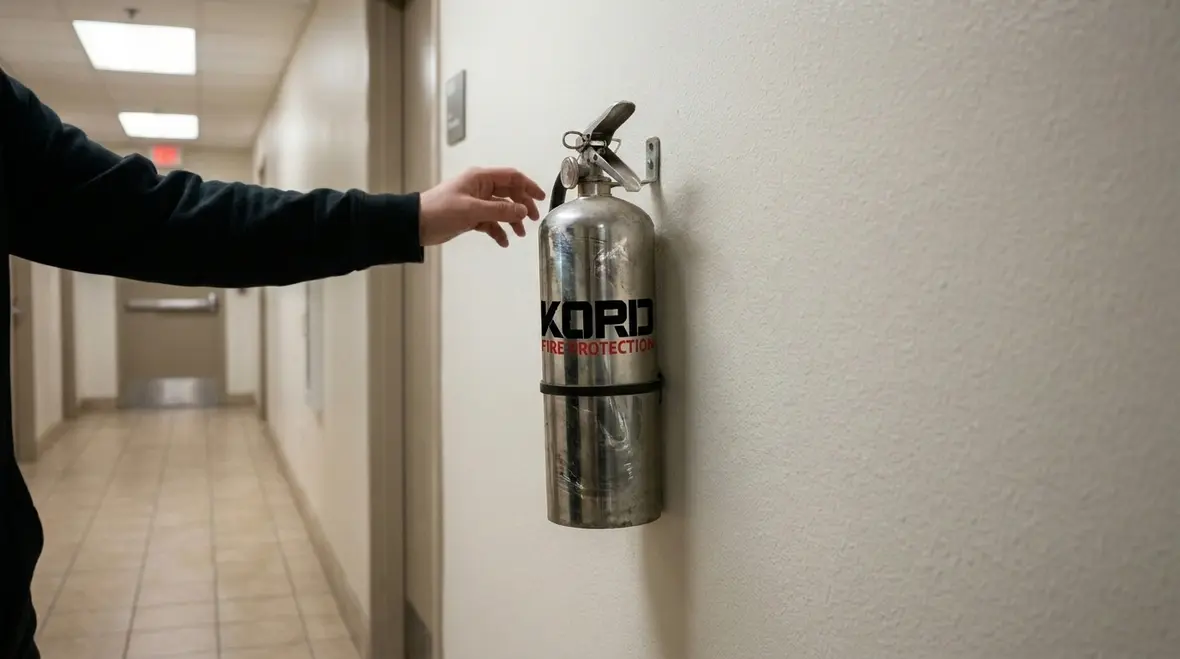
They also look at human behavior. People do not move like they practice in a training video. Therefore, technicians check walking paths, door swings, and where staff naturally gather. As a result, they place extinguishers along practical routes, not just along lines on a blueprint. Kord Fire Protection technicians often point out that visibility is part of safety. If a person cannot see the extinguisher during stress, it might as well be a rumor.
This is the same logic seen in Kord Fire Protection’s office placement guidance, which frames extinguisher location around accessibility, timing, and realistic building use. That article reinforces a simple truth: layout matters because people reach for what they can find quickly, not what looked nicely centered on a plan sheet during design review. ([kordfire.com](https://kordfire.com/fire-extinguisher-placement-for-office-guide/?utm_source=openai))
Why risk assessment should happen before mounting hardware goes up
It is tempting to treat extinguishers like décor with a purpose: find a wall, add a bracket, move on. However, smart placement starts earlier. Technicians need to understand occupancy type, storage conditions, machinery, electrical exposure, and the areas where a small incident could become a fast-moving emergency. Once that map becomes clear, mounting decisions become easier and much more useful.
Where extinguishers should sit so no one has to guess
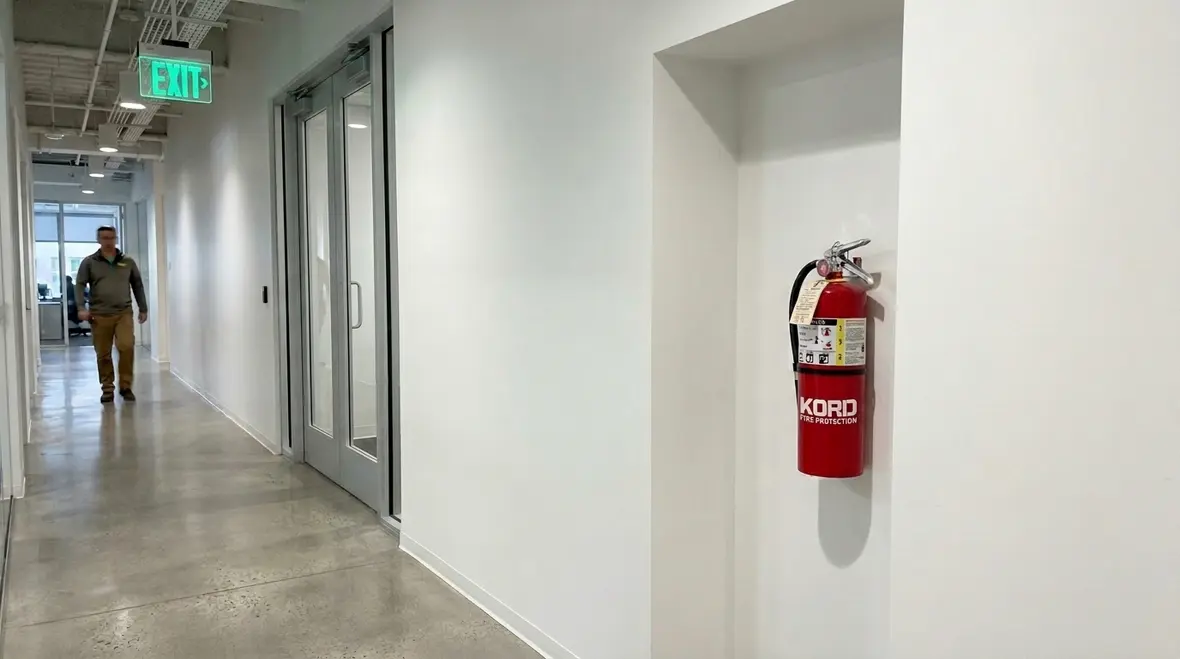
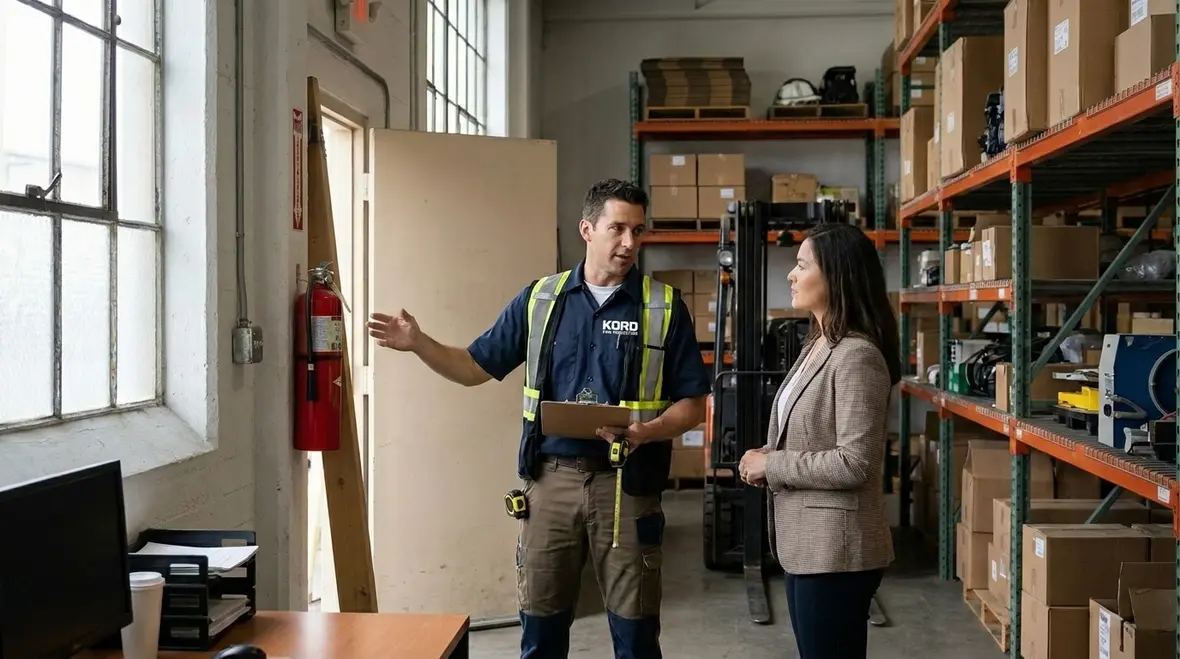
In many buildings, the difference between safe and unsafe is as basic as height and access. Technicians confirm that extinguishers mount where adults can reach the handle without stepping onto furniture or searching for a “ladder moment.” Additionally, they keep the unit away from locations that slow access, such as blocked corners, narrow aisles full of stacked goods, or storage cabinets that get closed at the worst time.
They also verify clear routes to the extinguisher. That means nothing should force a person to move through a locked area or climb over debris. Then they check the immediate surroundings: doors, rails, and equipment that might block sight or approach. If a door swings into the access zone, technicians treat that like a red alert, not a minor detail.
One more factor often overlooked is the “first instinct” path. In emergencies, people tend to move toward exits and away from visible smoke. So, placement should match those instincts, so the extinguisher becomes an obvious option instead of a confusing detour.
Visibility beats cleverness every time
An extinguisher tucked into an overly neat corner may satisfy someone’s sense of symmetry, but emergencies are not won by symmetry. They are won by speed and clarity. A visible extinguisher with unobstructed access gives staff one less thing to think about while adrenaline is trying to turn every decision into interpretive dance. In offices, storage areas, and mixed-use spaces, the simplest location is often the strongest one.
Spacing rules that balance coverage and real travel paths
Spacing should not be based on guesswork. It should come from the design of the space and the likely fire size. Kord Fire Protection technicians often use the facility layout to set sensible coverage zones. Consequently, they avoid long gaps where a person would have to travel too far while the fire gains speed.
They also consider line of sight. Two extinguishers might be evenly spaced on paper, but if walls block views or if the path includes sharp turns, access time grows. Meanwhile, fire growth does not pause for geometry. So, spacing plans must consider obstacles and human movement.
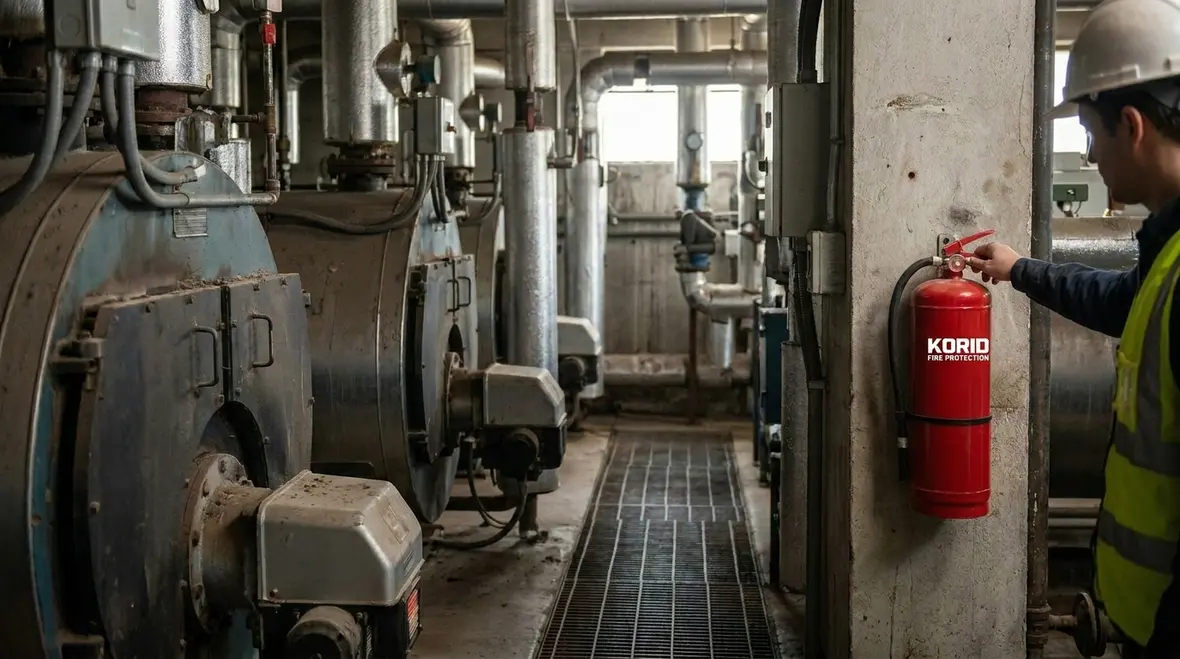
Technicians also adjust for equipment layout. In a mechanical room, for example, piping and heavy machinery can create tighter working corridors. Therefore, they aim for placement that supports quick approach from the walkway people already use.
Kord Fire Protection’s warehouse and restaurant placement guides make the same point in different settings. Warehouses add storage height, aisle width, and visibility challenges, while restaurants add back-of-house speed, grease hazards, and busy transitions between dining and kitchen areas. Different occupancies, same lesson: coverage only works when the route to the extinguisher makes sense in real life. ([kordfire.com](https://kordfire.com/fire-extinguisher-placement-warehouses-distance-rules/?utm_source=openai))
Choosing the right extinguisher for the hazard, not the label
Placement and equipment type go together. Putting the wrong extinguisher in a great spot still creates risk. Kord Fire Protection technicians explain that the hazard category drives what gets installed. For instance, electrical hazards need an extinguisher that can handle energized equipment, while ordinary combustibles follow a different approach. In other words, the unit should match what can actually burn.
They also consider special fire loads. If a facility stores paints, solvents, or other chemicals, technicians account for fuel behavior and safe discharge patterns. As a result, placement might include additional units or different coverage for separate zones.
And yes, sometimes the “obvious” extinguisher is the wrong one. A standard unit near a chemical cabinet can feel comforting, like wearing a seatbelt that only covers one leg. It might look correct, but it does not do the job.
Kord Fire Protection’s extinguisher service page lists support for Class A-B-C, Class D, Class K, Purple K, and portable and wheeled units, along with testing, inspection, hydrostatic testing, replacement, and annual service. That range matters because good placement decisions depend on selecting the extinguisher type that actually fits the hazard instead of just hanging the nearest red cylinder and hoping for the best. ([kordfire.com](https://kordfire.com/fire-extinguisher-service-certification/?utm_source=openai))
Why hazard mapping and extinguisher type should be reviewed together
A facility may have correct spacing and still create exposure if the wrong extinguisher protects the wrong room. Reviewing hazard zones together with extinguisher classification helps teams avoid false confidence. It also gives managers a cleaner path for training, signage, inspections, and replacement planning later on.
Inspection and maintenance: keeping placement effective over time
Even the best plan can fall apart without ongoing care. Kord Fire Protection technicians emphasize that extinguishers must remain ready. That means checking the gauge, ensuring the pin and tamper seal exist, and confirming the unit has not been moved, painted over, or hidden by new shelving. Because facilities change, placement must stay current with the new layout.
They also verify signage and wayfinding. A unit can be present and still be hard to find if labels fade or if the location no longer makes sense after renovations. Then there is the practical part: trained staff must know what to grab and how to use it. Placement supports that skill, but it does not replace training.
Maintenance also includes confirming the unit is appropriate for the hazard and that inspection schedules match local requirements. Ultimately, a compliant system protects people and limits damage, which keeps businesses running instead of starring in the next “oops” news segment.
That maintenance mindset also mirrors Kord Fire Protection’s broader service model. The company highlights inspections, repairs, maintenance, monitoring, and full protection planning across fire alarms, sprinklers, extinguishers, and suppression systems. For facilities that want fewer gaps and fewer surprises, that coordinated approach is a strong reason to connect extinguisher placement reviews with larger system checkups. ([kordfire.com](https://kordfire.com/full-fire-protection-services/?utm_source=openai))
Dual column guide: common placement checks and what to fix
| Placement check | What to fix |
|---|---|
Extinguisher access is blocked by storage or equipment | Clear the route and re evaluate the mount location |
Unit is hard to see due to color, clutter, or distance | Improve visibility with signage and remove obstructions |
Door swing creates a barrier near the handle | Reposition the unit or adjust the access path |
People must step around hazards to reach it | Redesign the travel path and keep the approach clear |
Area layout changed after renovations | Update placement coverage and confirm extinguisher type |
FAQ: quick answers for safety teams
Next steps to improve facility safety today
Fire safety should not feel like guesswork. A well planned fire extinguisher placement guide supports faster response, better coverage, and safer access for staff. Kord Fire Protection technicians can review the layout, verify hazard matches, and confirm that each extinguisher stays reachable after changes. Reach out for an on site assessment, and get a placement plan that fits real travel paths and real risks. Because when smoke shows up, the only surprise should be how quickly the team moves.
For teams ready to tighten compliance and improve readiness, Kord Fire Protection offers a direct path through fire extinguisher service and certification. If your facility also needs coordinated detection support, the company also provides fire alarm service systems that complement extinguisher planning and help create a more complete life safety strategy. ([kordfire.com](https://kordfire.com/fire-extinguisher-service-certification/?utm_source=openai))

Join Our Newsletter!
Get the latest fire safety tips delivered straight to your inbox From our Newsletter.