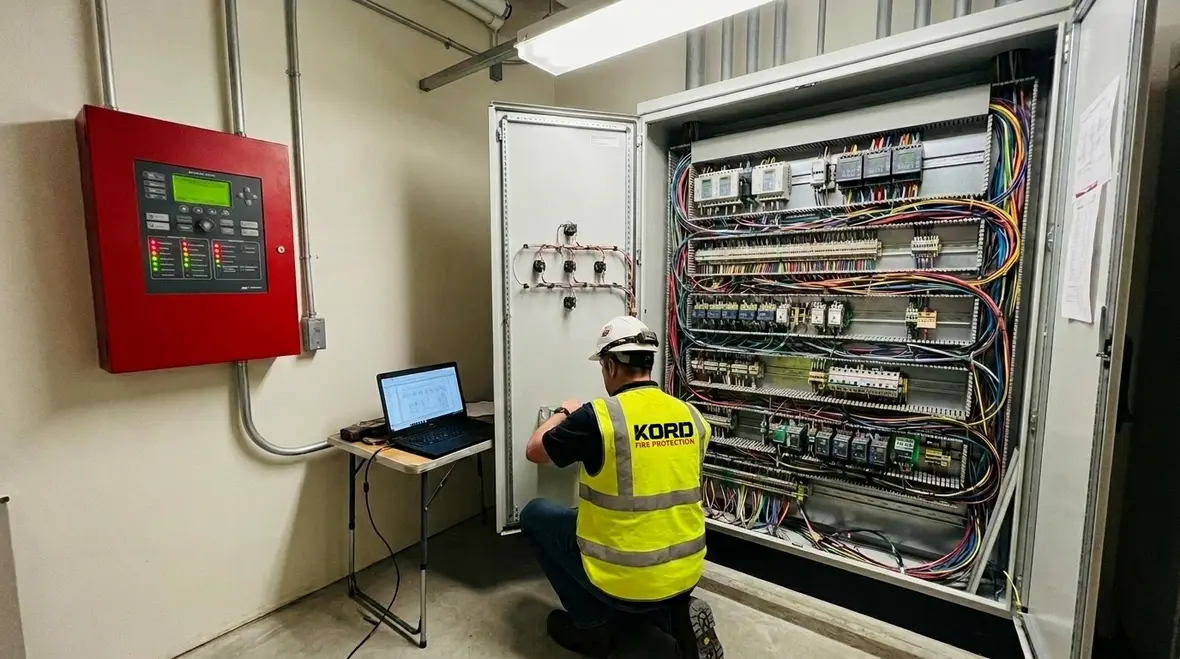
Fire Protection System Integration Strategies With Electrical Controls
Quick Answer: Integrating modern electrical controls with fire systems helps facilities run smarter and respond faster during emergencies. The job works best when designers plan wiring, signaling, and control logic from day one, not as a last minute patch. Kord Fire Protection can support the process so compliance, reliability, and uptime stay on track.
In the first planning steps, teams should use fire protection system integration strategies to align control systems, detection devices, and alarm outputs before any panel gets locked up. That means mapping circuits, defining control logic, and setting clear rules for how safety functions override normal operations. Then, as the build moves forward, the same team verifies signals end to end so the system behaves exactly as intended under real conditions. When that approach gets executed well, Kord Fire Protection can become a vital partner, because it helps teams integrate fire detection and notification without turning the project into a “surprise, it does not work” episode.
Facilities that want a stronger foundation for this work often benefit from reviewing Kord Fire Protection’s full fire protection services early in the process, especially when integration overlaps with inspections, testing, alarms, sprinklers, and ongoing maintenance expectations.
Why modern facilities demand smarter electrical control
Industrial sites, retail precincts, and commercial facilities increasingly rely on automation, monitoring, and remote control. Yet fire safety cannot follow the same “eventually we will tune it” mindset. Fire systems must act predictably, even when other controls get busy. As a result, electrical controls now need to coordinate with detection and notification so the facility can respond fast and reduce confusion.
Think of it like a live concert. If the lighting desk and the sound board fight each other, the show suffers. Fire safety is the part of the show where mistakes get costly, so the electrical control layer needs to support fire signals cleanly. That is where planning and coordination earn their keep.

Where electrical controls meet fire detection and notification
Electrical controls usually handle power distribution, switching, HVAC control, access systems, and status monitoring. Fire systems handle detection, alarms, and emergency actions. Integration happens when those worlds share signals and logic. Kord Fire Protection covers this broader concept in its article on integrating fire systems with building controls for safety, which fits naturally with the planning stage discussed here.
For example, modern control rooms may want to display device states, such as “zone alarm active” or “fault condition.” At the same time, emergency actions may require electrical control changes, such as closing dampers, releasing magnetic door holds, stopping plant equipment, or managing pressurisation systems. These actions should not rely on guesswork. Instead, the fire system provides trusted outputs, and the electrical controls respond with defined behaviour.
Typical integration points
Electrical control side
- Status monitoring for fire inputs
- Controlled outputs for emergency actions
- Alarm routing to control panels and BMS
- Interlocks that prevent unsafe sequencing
Fire protection side
- Device detection and alarm activation
- Fault reporting and supervision
- Sounder and visual alarm signalling
- Fire brigade interface where required
At this stage, the best teams do not just ask whether a signal exists. They ask what that signal means, who owns the decision, how long the action should take, and what the system should do if a component fails. Those questions are not glamorous, but they prevent glamorous failures later.
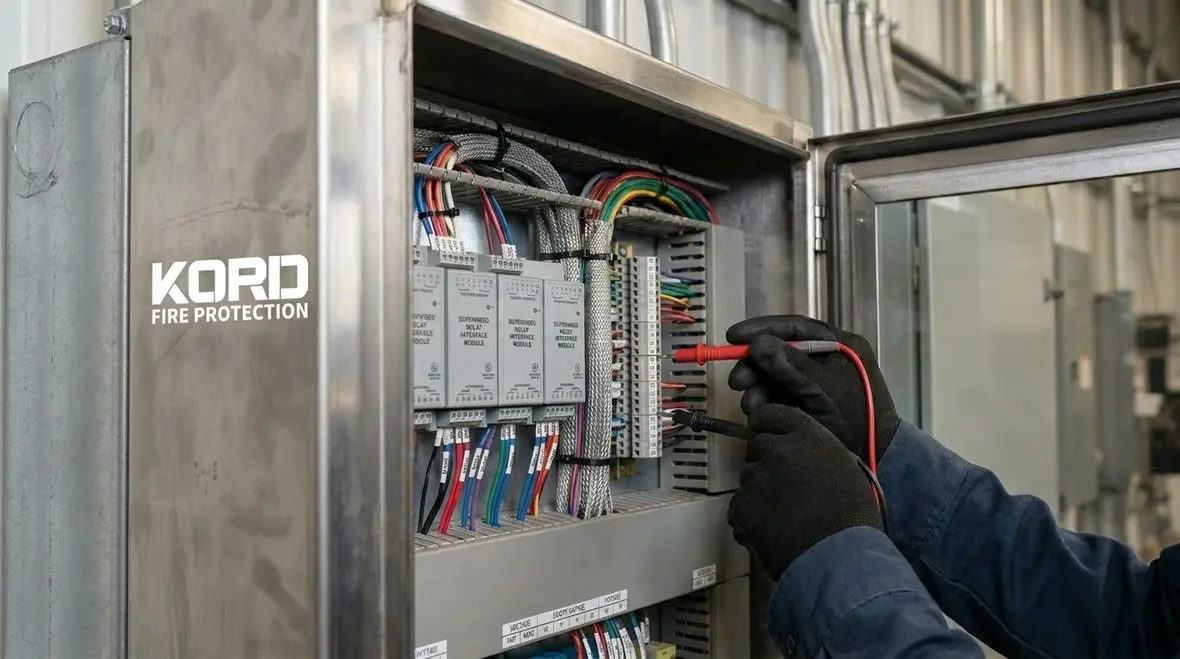
Fire alarm outputs and control logic, explained simply
Integration succeeds when the facility treats fire signals as the source of truth. That means the fire control panel or fire system initiator should drive emergency outputs, while the electrical control system acknowledges those outputs and logs them. Kord Fire Protection’s article on fire alarm relay integration for smarter commercial safety adds useful context here because relay strategy often decides whether an elegant design becomes an elegant result.
Teams often try to “mirror” behaviour in multiple places. However, that can create delays and mismatched states. Instead, they should centralise the decision making. Then, they should route outputs to electrical functions through interposing relays, certified interfaces, and supervised circuits where needed. As a rule, each output needs a defined purpose, a defined timing window, and a defined fail safe state.
Also, verification matters. After wiring, teams should run functional tests that confirm action timing. If the HVAC starts to shut down late during a drill, the system will earn a reputation as “that thing that talks nicely but does not perform.” Nobody needs that drama.
A practical logic checklist before commissioning
- Confirm which panel owns each life safety action
- Document every input, output, relay, and interface module
- Define normal, alarm, fault, and loss of power behaviour
- Identify which actions must occur immediately and which can sequence
- Check that operators can understand event labels without needing a decoder ring
Compliance, commissioning, and the paperwork that prevents chaos
Facilities must meet applicable codes and standards, and safety authorities expect clear documentation. Therefore, fire integration work should include design records, circuit schedules, point to point records, and commissioning evidence. This is not just bureaucracy. It supports real risk management, especially when multiple trades contribute to the same system.
During commissioning, the team should test each integration function rather than only the fire alarm sounds. For instance, they should confirm that any linked damper, smoke management action, shutdown sequence, or access release happens under the right conditions. Additionally, they should confirm that faults in one part of the electrical control layer do not mask fire signals. Kord Fire Protection’s piece on the full lifecycle of fire protection reinforces why strong commissioning gives the rest of the system’s life a much better starting point.
When the job involves BMS integration or remote monitoring, the design should separate informative data from safety actions. In other words, operational dashboards can be useful, but the safety decisions must come from the fire system. Kord Fire Protection can help ensure the fire protection system integration strategies used during design carry through to the commissioning steps, so documentation and real world behaviour match.
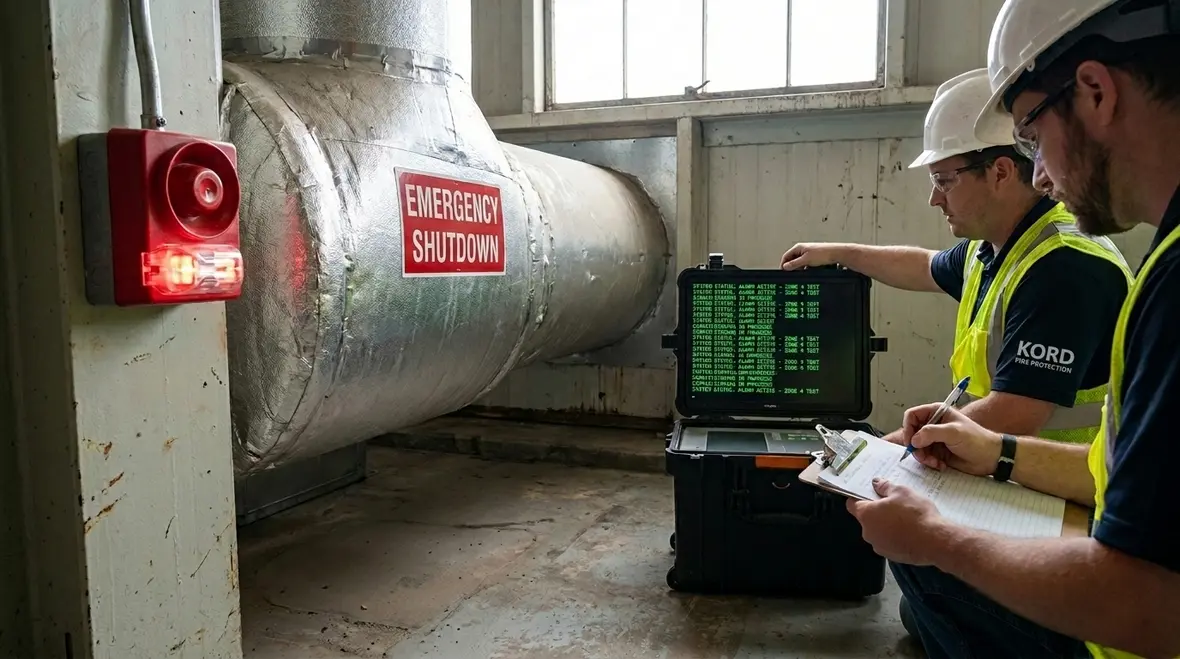
Using interfaces and wiring methods that reduce downtime
Electrical control upgrades often move fast. Yet fire systems change slowly by design, because reliability matters. To bridge that gap, teams can use proven interface methods: approved input modules, supervised relay outputs, and integration panels built for safety signalling.
Moreover, proper cable management reduces noise and improves signal integrity. That includes correct segregation of power and data, using appropriate conductor types, and ensuring termination quality. Even if the facility loves speed, it should not speed past workmanship. Bad terminations can create intermittent faults that show up only during peak demand. That is the kind of mystery that eats maintenance hours like it is lunch.
When integration adds new control points, teams should also update graphics, alarms, and operator procedures. If operators cannot interpret the event, they may delay response. Therefore, training and clear alarm naming improve the real outcomes of the technical work. For related reading, Kord Fire Protection’s article on electrical interlocks in fire sprinkler systems helps connect the wiring conversation to real control behaviour.
Small wiring choices that create big downstream benefits
- Keep labeling consistent from drawings to field devices
- Use interface hardware suited to supervised life safety signaling
- Segregate low voltage control runs from higher power circuits where appropriate
- Plan access for future testing instead of burying everything behind other trades’ work
- Review alarm text and graphics so control room staff see plain language, not cryptic abbreviations
How Kord Fire Protection strengthens electrical integration projects
Kord Fire Protection can serve as a vital partner by supporting planning, review, and verification across the integration journey. Instead of arriving late and saying, “We need to change that,” the team can help coordinate early so electrical control work aligns with fire design intent.
Because integration needs both electrical competence and fire system discipline, Kord can help ensure the facility uses sensible fire protection system integration strategies that account for system supervision, correct output behaviour, and practical commissioning. As a result, the facility gains fewer reworks, clearer point schedules, and test outcomes that hold up during audits and drills. In short, Kord helps keep the project calm. The opposite of calm is that frantic Friday afternoon call nobody wants.
Teams exploring this topic further may also want to read Kord Fire Protection’s article on fire alarm system integration for smarter building response, which complements the strategy discussion with more detail around connected building performance.
FAQ about integrating electrical controls with fire systems
Conclusion: take the safe path toward a modern, reliable system
Integrating modern electrical controls with fire systems works best when teams plan early, define safety logic, and commission linked actions with real verification. When electrical work and fire work move as one coordinated effort, facilities reduce rework, improve response times, and keep operations steady.
Kord Fire Protection can help guide the process from design alignment to testing. If the project is in motion or starting soon, reach out to Kord Fire Protection and build integration that actually performs.

Join Our Newsletter!
Get the latest fire safety tips delivered straight to your inbox From our Newsletter.