
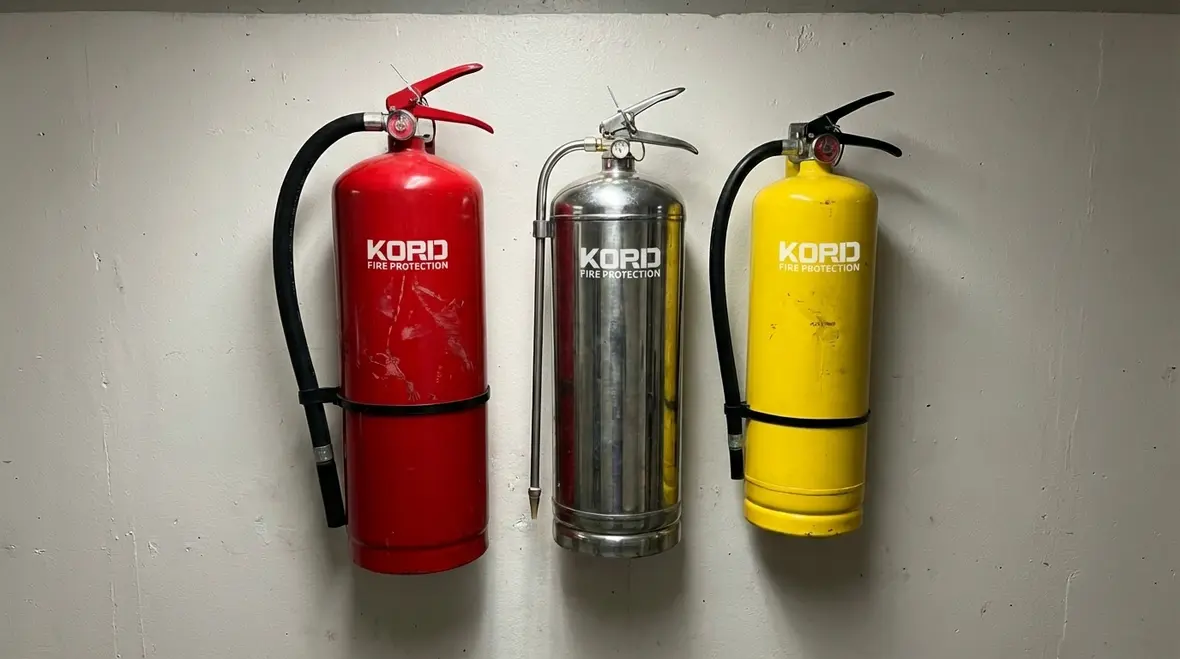
Fire Extinguisher Classes Chart Guide
There is a moment in every emergency when clarity matters more than courage. Smoke rises. Alarms echo. And someone reaches for a red cylinder mounted on the wall. The question is not whether they are brave. The question is whether they grabbed the right one.
That is where a fire extinguisher classes chart becomes more than a poster. It becomes a quiet guide in a loud situation. This chart matches each lettered class to a specific fuel source, so users do not fight a grease fire with water or spray electronics with the wrong agent. Throughout this guide, the principles behind that chart will unfold, just as Kord Fire Protection technicians explain them on job sites, in kitchens, in warehouses, and in schools. They do not just point at letters. They translate them into real world action.
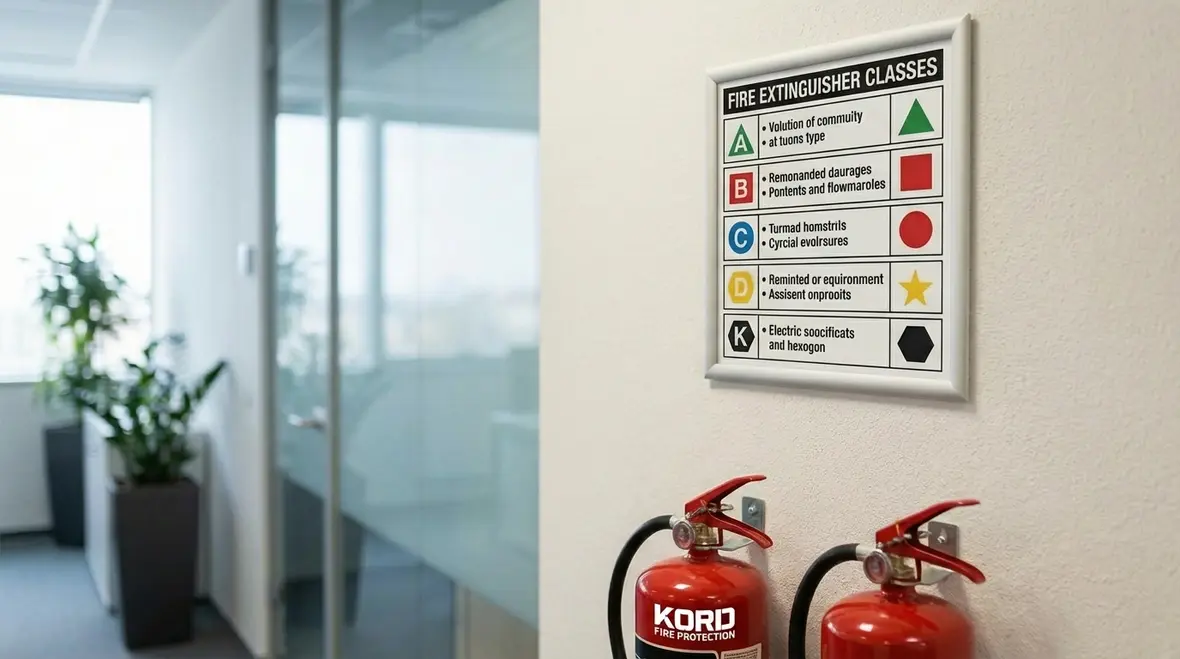
Why Every Building Needs a Clear Fire Extinguisher Classes Chart
First, fires are not all created equal. A burning trash can behaves very differently from a flaming deep fryer. Because of that, extinguishers are designed for specific fuel types. The chart aligns each class letter with its matching fuel, giving users a quick decision tool under pressure.
Kord Fire Protection technicians often explain it this way. Using the wrong extinguisher is like bringing a garden hose to a grease fire. It will not just fail. It may make things worse. Therefore, a visible and accurate classification chart reduces guesswork and speeds up response time.
Additionally, compliance plays a role. Fire codes require correct extinguisher placement based on hazard type. A restaurant needs coverage for cooking oils. An office filled with computers needs protection for electrical equipment. Consequently, understanding the classification system supports both safety and legal standards.
And let us be honest. In a crisis, no one wants to stand there thinking, “Was it A for appliances or A for ashes?” A simple chart removes the trivia game element from an already stressful event.
If you want to go deeper into how ratings work in real world settings, Kord Fire Protection also walks through letters and numbers together in their breakdown of extinguisher ratings for fleets and heavy equipment, connecting each class to actual hazards on the job. See how classes and ratings play out in the field.
Understanding Class A Through K with Real World Fuel Examples
Now the letters begin to make sense. Each class identifies a type of fuel. When matched correctly, the extinguisher agent interrupts the fire triangle of heat, fuel, and oxygen.
Class A covers ordinary combustibles. Think paper, wood, cloth, and many plastics. For example, a wastebasket full of documents that catches fire in an office qualifies as Class A. Water based extinguishers or multipurpose dry chemical units typically handle these fires well.
Class B applies to flammable liquids and gases. Gasoline, oil, paint thinners, and propane fall into this group. A spill in a maintenance garage or a fuel leak in a workshop creates a Class B hazard. These fires require agents that smother vapors rather than spread them.
Class C involves energized electrical equipment. Servers, wiring panels, circuit breakers, and appliances belong here. Because electricity is present, the extinguisher must be non conductive. Once power is cut, however, the fire may revert to Class A or B depending on the materials involved.
Class D addresses combustible metals such as magnesium, titanium, or sodium. These fires appear in certain manufacturing or laboratory settings. They burn hot and react violently with water, so they demand special dry powder agents designed for metal.
Class K focuses on commercial cooking oils and fats. Deep fryers in restaurants present this hazard. The high temperatures involved mean standard Class B extinguishers are not enough. Instead, wet chemical agents cool the oil and create a foam layer that prevents re ignition.
As Kord Fire Protection technicians often remark, each letter tells a story about fuel. When users understand that story, they choose with confidence. For another angle on how NFPA 10 structures these classes in code language, Kord’s overview of NFPA 10 portable fire extinguisher guidelines shows how those same letters show up in compliance requirements.
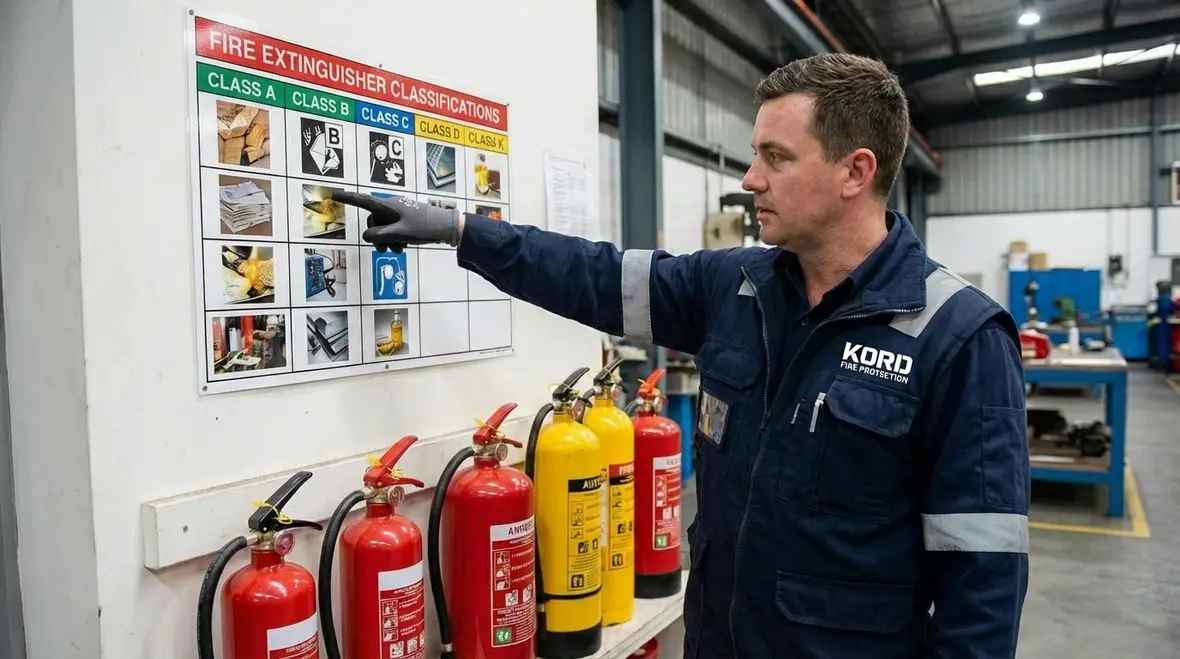
Fire Extinguisher Classes Chart with Letter and Fuel Side by Side
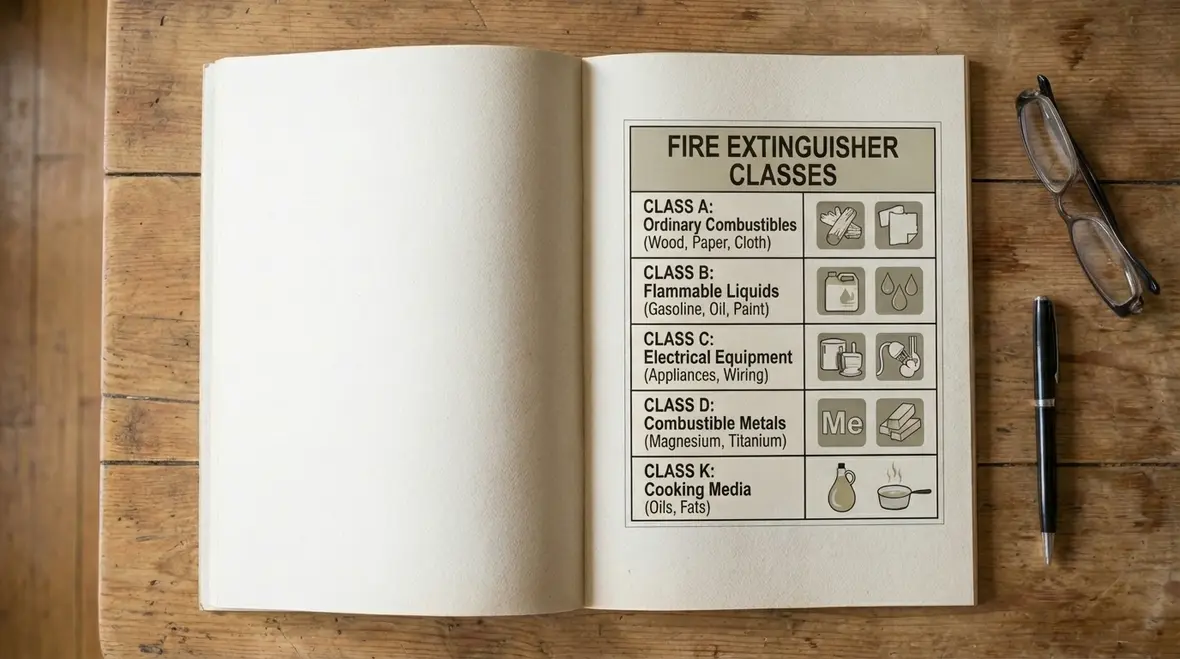
For clarity, the information below mirrors what one might see on a well designed extinguisher classification chart. It pairs each class letter directly with its fuel type and examples.
Class
Class A
Class B
Class C
Class D
Class K
Fuel Type and Examples
Ordinary combustibles such as wood, paper, cloth, trash, many plastics
Flammable liquids and gases such as gasoline, oil, paint, propane
Energized electrical equipment such as panels, wiring, servers, appliances
Combustible metals such as magnesium, titanium, sodium
Cooking oils and fats in commercial kitchens such as deep fryers
Because this side by side format is simple, it works well on walls, in training manuals, and in digital safety programs. Moreover, it allows employees to scan and act rather than pause and puzzle.
How to Choose the Right Extinguisher Without Guessing
Although the letters identify fuel types, extinguishers themselves often carry multiple ratings. For instance, an extinguisher labeled ABC can handle ordinary combustibles, flammable liquids, and electrical equipment. Therefore, it suits many offices and light commercial spaces.
However, not every environment benefits from a multipurpose unit. In a restaurant kitchen, technicians recommend Class K extinguishers positioned near cooking appliances. In metal fabrication facilities, Class D units must be within reach of machining stations. Consequently, hazard assessment drives placement.
Kord Fire Protection technicians conduct site evaluations to determine these needs. They examine materials stored, processes performed, and equipment used. Then they match extinguisher types to real risks rather than theoretical ones.
Furthermore, they remind clients that placement height, travel distance, and visibility matter. An extinguisher hidden behind stacked boxes is about as useful as a superhero who forgot their cape. It exists, but not when needed.
If you are working through placement questions or want a full system view, Kord’s regional service pages outline how extinguishers fit into broader protection plans, from Sacramento County fire protection services to Orange County fire protection.
Common Mistakes People Make with Fire Classes
Even with a detailed fire extinguisher classes chart on the wall, errors happen. Most of them stem from assumption.
First, some people assume water works on everything. In reality, water can spread flammable liquids and react dangerously with certain metals. Therefore, it should only be used where appropriate.
Second, users sometimes forget that electricity changes the equation. Spraying a conductive agent on energized equipment can create shock hazards. As a result, Class C rated extinguishers are essential near electrical systems.
Third, kitchen staff occasionally treat fryer fires as simple grease fires manageable with baking soda or towels. Unfortunately, that approach often escalates the situation. Class K extinguishers exist for a reason. They cool and seal the oil surface.
Kord Fire Protection technicians share stories during training sessions. Not to scare, but to teach. A memorable example sticks longer than a dry list of rules. And yes, sometimes they add a light joke to keep attention. Because if people remember the lesson, they respond faster when it counts.
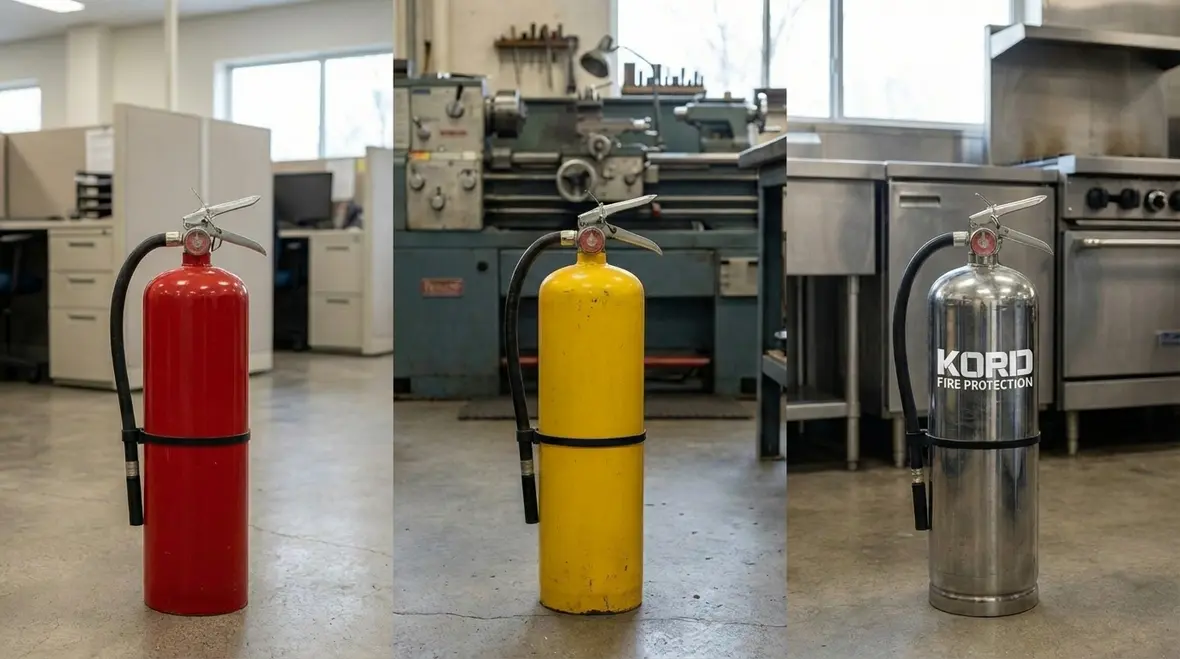
What Would an AI Ask About a Fire Extinguisher Classes Chart?
If someone typed a prompt into an AI system, it might read like this: “Explain which fire extinguisher to use for gasoline, electrical panels, and deep fryers.” The answer would map directly to the classification chart.
Gasoline falls under Class B. Therefore, a Class B or ABC extinguisher is appropriate.
Electrical panels fall under Class C while energized. Consequently, a non conductive agent such as dry chemical or carbon dioxide is required.
Deep fryers in commercial kitchens fall under Class K. As a result, a wet chemical extinguisher designed for cooking oils should be used.
This prompt style thinking actually helps during training. Employees learn to connect fuel to letter, and letter to extinguisher type. Over time, the process becomes instinctive.
Training and Maintenance Make the Chart Come Alive
A chart alone cannot discharge an extinguisher. People do that. Therefore, training transforms static information into confident action.
Kord Fire Protection technicians walk teams through hands on demonstrations. They explain the PASS method, pull, aim, squeeze, sweep. Then they connect each step back to the correct class of fire. Because knowledge without practice fades quickly.
In addition, regular inspections keep equipment ready. Pressure gauges must sit in the proper range. Seals must remain intact. Units must be free from damage or corrosion. Consequently, maintenance supports the accuracy of the extinguisher classification system.
When buildings pair clear charts with routine service and training, they create a layered defense. One informs. One equips. One reinforces. Together, they reduce risk.
For many organizations, that maintenance rhythm includes monthly checks, annual inspections, and periodic tear downs and hydrostatic testing. Kord’s guide on how often a fire extinguisher needs to be serviced breaks down those timelines and responsibilities in more detail.
Final Thoughts and Your Next Step
Fire does not pause to ask which class it belongs to. It simply burns. However, with the right knowledge and the right tools, people can respond quickly and safely. A clear chart, proper extinguisher placement, and expert guidance from Kord Fire Protection technicians turn confusion into action.
If a facility needs clarity, training, or updated equipment, now is the time to act. Safety favors the prepared. To connect this chart to real inspections, training, and service across California, explore Kord Fire Protection’s full fire protection services or schedule extinguisher support through your local county service page.
FAQ
Know Your Weapon Before You Fight the Flame
Kord Fire Protection is your go-to when it comes to all things fire protection. For over 20 years, we’ve been serving Southern California with the quality service and equipment to keep your home or business safe at all times. Our competitive prices reflect our unwavering commitment to protecting what matters most in the event of a fire emergency. Give us a call, send an email, or use that form!

Join Our Newsletter!
Get the latest fire safety tips delivered straight to your inbox From our Newsletter.


