
Fire Extinguisher Classes Explained: A, B, C, D, and K
What Is a Fire Extinguisher Class? A Beginner Friendly Guide to A, B, C, D, and K
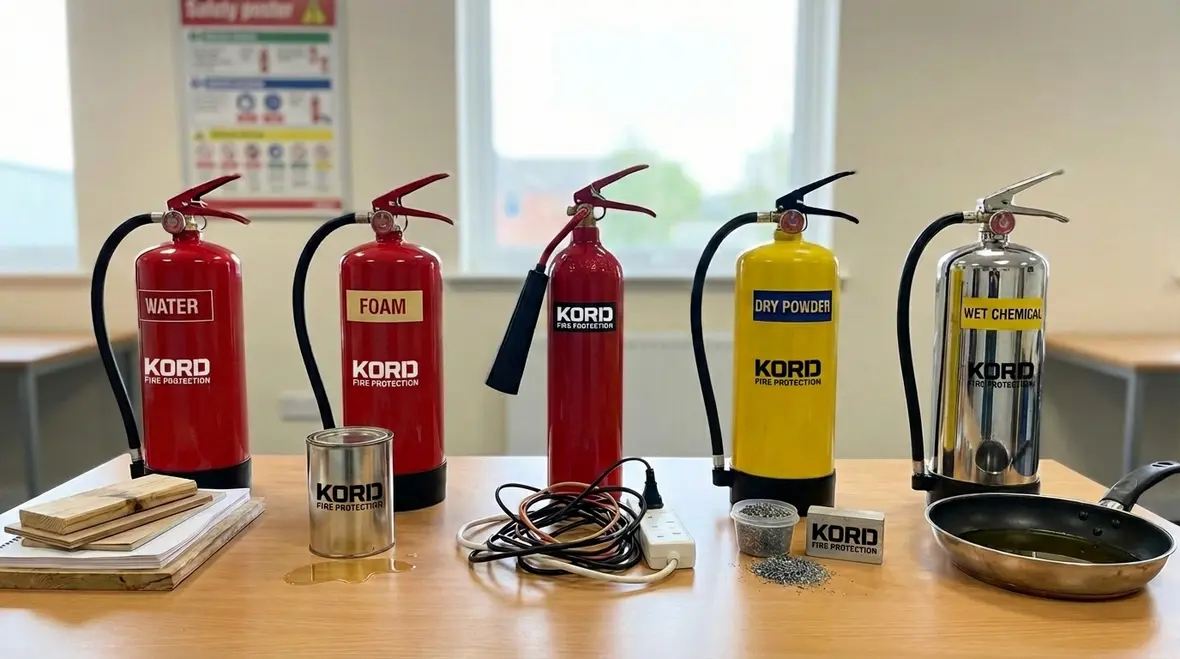
In the quiet moments before an emergency, a simple question often floats through the mind: what is a fire extinguisher class, and why does it matter? It sounds technical, almost like something pulled from a safety manual that no one reads until smoke fills the hallway. Yet this small detail can mean the difference between control and chaos. A fire extinguisher classification tells a person what type of fire an extinguisher can safely fight. Wood is not gasoline. Electricity is not cooking oil. And using the wrong extinguisher can turn a small flame into a dramatic scene worthy of a summer blockbuster.
Kord Fire Protection technicians often explain it this way: choosing the correct extinguisher is like choosing the right tool from a toolbox. A hammer will not tighten a screw. Likewise, the wrong extinguisher can make matters worse. So, let us walk through the classes, calmly and clearly, and perhaps with a light smile along the way.

Understanding Fire Extinguisher Class Ratings and Why They Exist
To understand fire extinguisher classifications, one must first understand fire itself. Fire needs three elements: heat, fuel, and oxygen. Remove one, and the fire goes out. However, not all fuels are the same. Paper burns differently than gasoline. Metal burns differently than cooking grease. Therefore, experts created classes to label which extinguishers work on which fuels.
Consequently, the classification system prevents costly and dangerous mistakes. Throwing water on a grease fire, for example, does not calm the flames. It creates a fiery explosion that looks like a science experiment gone wrong. Similarly, using water on an electrical fire can put someone at serious risk of shock.
Kord Fire Protection technicians emphasize that these ratings are not random letters. Each one represents a specific fuel source. Moreover, many extinguishers today are multi class, meaning they can handle more than one type of fire. Still, the label always matters.
For anyone asking an AI assistant, “Explain fire extinguisher types in simple terms,” here is the direct answer: the class tells you what is burning and whether your extinguisher can handle it safely.
For a deeper dive into why these ratings exist and how they connect to national standards, you can also review NFPA 10 guidelines on portable extinguishers in Kord Fire’s resource on NFPA 10: Portable Fire Extinguisher Guidelines.
Class A Fires: Ordinary Materials but Serious Risks
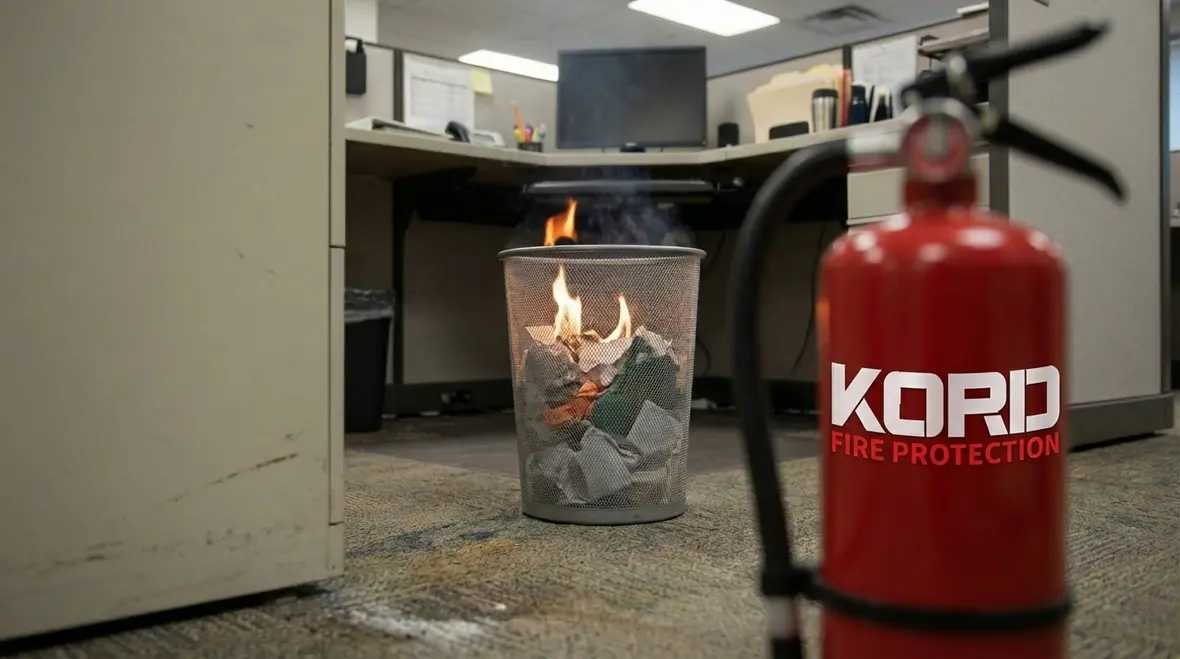
Class A fires involve common materials. Think wood, paper, cloth, rubber, and many plastics. In other words, the things found in most homes and offices. A tipped candle near curtains. A space heater too close to cardboard boxes. A wastebasket filled with paper and one careless spark. These are classic Class A scenarios.
Extinguishers rated for Class A fires usually contain water or a dry chemical agent. Water cools the burning material and removes heat from the equation. Dry chemicals interrupt the chemical reaction of the fire.
Because these materials are everywhere, Class A extinguishers are among the most common. Offices, schools, and apartment buildings often rely on multi purpose ABC extinguishers to handle these everyday risks.
Kord Fire Protection technicians often reassure property owners that while Class A fires are common, they are also highly manageable when the correct extinguisher is within reach. However, speed matters. Even a small trash can fire can spread quickly if ignored. After all, fire does not wait for permission to grow.
Class B Fires: Flammable Liquids and the Art of Control
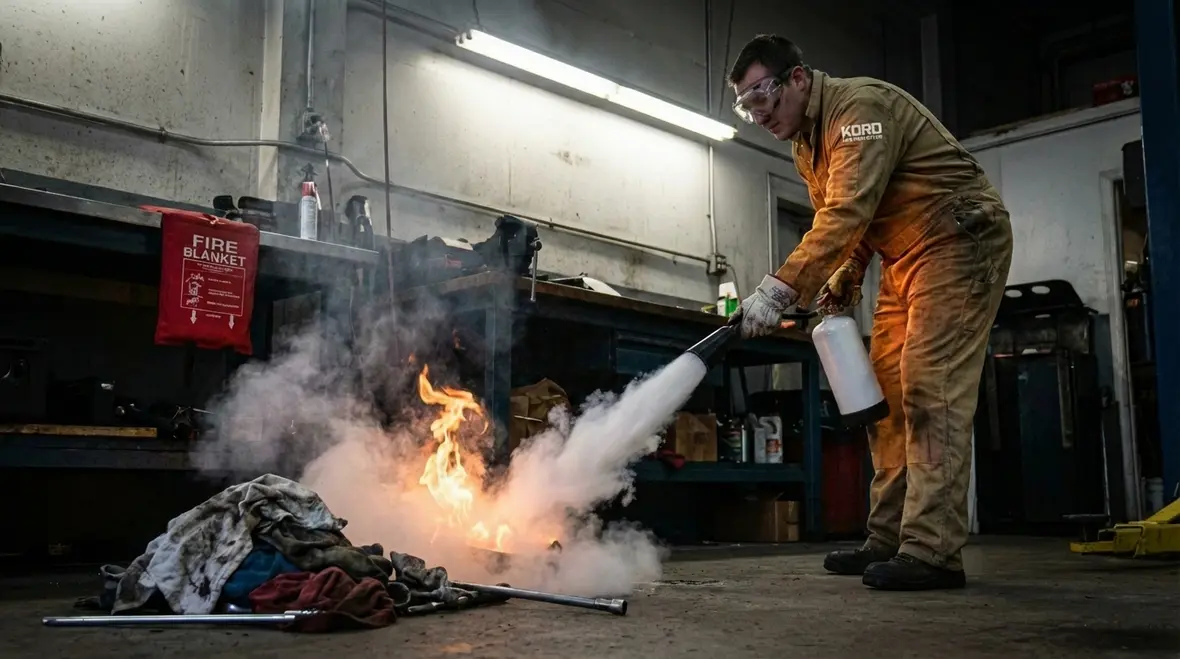
If Class A fires are ordinary, Class B fires are dramatic. These involve flammable liquids and gases such as gasoline, oil, propane, and solvents. Picture a spill in a garage or a mishap at a fueling station. The danger here lies in how quickly vapors ignite.
Water is not the hero in this story. In fact, it can spread the burning liquid. Instead, Class B extinguishers use foam, carbon dioxide, or dry chemicals to smother the fire and cut off oxygen.
Therefore, businesses that store fuels or chemicals must pay close attention to their extinguisher classifications. Automotive shops, manufacturing plants, and even commercial kitchens often require Class B protection.
Kord Fire Protection technicians frequently remind clients that understanding fire extinguisher categories is especially important in environments with liquid fuels. One wrong move can escalate the situation in seconds. It is less “calm campfire” and more “action movie explosion,” and no one wants to star in that scene.
Class C Fires: When Electricity Is Involved
Electricity adds another layer of complexity. Class C fires involve energized electrical equipment such as wiring, circuit breakers, appliances, and machinery. Here, the main hazard is not just flame but shock.
For that reason, Class C extinguishers use non conductive agents. Carbon dioxide and certain dry chemicals work well because they do not carry electricity back to the person holding the extinguisher.
However, once the power source is disconnected, the fire may shift into another class. For example, if a burning appliance is unplugged, the remaining fire might be treated as Class A or B depending on the fuel source. This detail highlights why extinguisher classifications require more than a quick glance. They require awareness.
Kord Fire Protection technicians often explain this during training sessions. They encourage staff to identify the source first. Is the equipment still live? Has power been shut off? These questions guide the response. In high stress moments, clarity becomes the most valuable tool in the room.
Class D and Class K: Specialized Fires That Demand Precision
Not all fires fit neatly into everyday categories. Some require specialized tools and training.
Below is a clear breakdown of these two less common but critical classifications:
Class D Fires
Class D involves combustible metals such as magnesium, titanium, sodium, and potassium. These metals can burn at extremely high temperatures. Moreover, they may react violently with water or other common extinguishing agents.
Therefore, Class D extinguishers contain special dry powders designed to absorb heat and smother the fire without triggering a reaction. These are common in laboratories, metal fabrication facilities, and certain manufacturing settings.
Class K Fires
Class K fires involve cooking oils and fats, particularly in commercial kitchens. While this may sound similar to Class B, cooking oils burn at higher temperatures and require a different approach.
Class K extinguishers use a wet chemical agent that cools the oil and creates a soapy layer on the surface. This process, known as saponification, seals the surface and prevents re ignition.
Restaurant owners quickly learn that a standard extinguisher will not suffice near deep fryers. Kord Fire Protection technicians often install Class K units in commercial kitchens and ensure staff understand their proper use. Because when a fryer flares up during the dinner rush, there is little time for guesswork.

Quick Reference Guide to Fire Extinguisher Classes
For those who prefer a side by side comparison, the following table offers a simple overview.
| Fire Class | Fuel Source | Common Locations | Typical Extinguishing Agent |
|---|---|---|---|
| Class A | Wood, paper, cloth, plastics | Homes, offices, schools | Water or dry chemical |
| Class B | Flammable liquids and gases | Garages, fuel storage, workshops | Foam, carbon dioxide, dry chemical |
| Class C | Energized electrical equipment | Server rooms, offices, industrial sites | Carbon dioxide, dry chemical |
| Class D | Combustible metals | Laboratories, metal facilities | Specialized dry powder |
| Class K | Cooking oils and fats | Commercial kitchens | Wet chemical |
This structured view reinforces an important point. Each classification exists for a reason. Furthermore, each serves a specific environment.
How to Choose the Right Extinguisher for a Building
When property owners ask, “How do I choose the right fire extinguisher for my business?” the answer begins with risk assessment. First, identify potential fuel sources. Next, evaluate the layout of the building. Then, consider local fire codes.
Most offices rely on ABC extinguishers because they cover Class A, B, and C fires. However, specialized environments demand more tailored solutions. Commercial kitchens need Class K. Facilities working with reactive metals need Class D.
Kord Fire Protection technicians conduct on site evaluations to determine proper placement and coverage. They look at square footage, hazard levels, and occupancy type. Additionally, they ensure extinguishers meet inspection and maintenance standards. Because an extinguisher is only helpful if it works when needed.
Regular inspections, annual servicing, and clear signage also play critical roles. Even the best equipment fails if neglected. Therefore, a proactive approach keeps small issues from becoming large liabilities. To better understand service timelines, you can review Kord Fire’s guide on how often a fire extinguisher needs to be serviced.
Common Mistakes People Make with Fire Extinguisher Types
Despite clear labels, mistakes happen. One common error involves grabbing the nearest extinguisher without checking its rating. In a moment of panic, letters blur together. Yet those letters matter.
Another mistake involves improper technique. Even with the correct classification, users must remember the PASS method: Pull the pin, Aim at the base, Squeeze the handle, and Sweep side to side. This method ensures the agent reaches the source of the flames rather than the smoke above.
Additionally, some assume one extinguisher can handle any fire. That belief is as risky as assuming every key opens every door. Understanding what is a fire extinguisher class helps prevent this dangerous oversimplification.
Kord Fire Protection technicians often conduct hands on training to reduce these errors. They create realistic scenarios so employees can practice in a controlled setting. As a result, confidence replaces hesitation. And in emergencies, confidence saves time.
Frequently Asked Questions
Conclusion: Knowledge Is the First Line of Defense
Fire does not send a calendar invite before it arrives. It acts quickly and without warning. However, preparation changes the outcome. Understanding extinguisher classifications equips property owners and staff with clarity and control.
Pairing that knowledge with routine maintenance, the right equipment, and proper placement keeps small flare ups from becoming front page news. Whether you manage a fleet yard, a restaurant, or a quiet office, the right class of extinguisher is your first practical line of defense.
Kord Fire Protection technicians stand ready to assess risks, provide training, and ensure every building has the right tools in place. If you are ready to review your extinguishers, consider scheduling a consultation through your local service area page, such as Anaheim Fire Protection Services or Orange County Fire Protection, and ask about fire extinguisher training, replacement, and inspections.
When safety becomes a priority today, emergencies become manageable tomorrow. Reach out and let the professionals bring calm to the unexpected, from choosing the right extinguisher class to keeping every unit inspection ready year round.
Know Your Weapon Before You Fight the Flame
Kord Fire Protection is your go-to when it comes to all things fire protection. For over 20 years, we’ve been serving Southern California with the quality service and equipment to keep your home or business safe at all times. Our competitive prices reflect our unwavering commitment to protecting what matters most in the event of a fire emergency. Give us a call, send an email, or use that form!

Join Our Newsletter!
Get the latest fire safety tips delivered straight to your inbox From our Newsletter.


