

Exit Light Battery Replacement Guide for Compliance
When the power goes out and the room falls silent, those glowing red letters on the wall become more than décor. They become direction. They become safety. And at the heart of that quiet hero sits a small, often ignored component that makes everything work when it matters most. That is why exit light battery replacement is not just routine maintenance. It is a decision that protects lives, limits liability, and keeps buildings compliant. Kord Fire Protection technicians often explain that most repeat failures are not caused by bad luck. They are caused by poor battery choices, improper installation, or skipped testing. In other words, the problem is usually preventable. And thankfully, so is the solution.
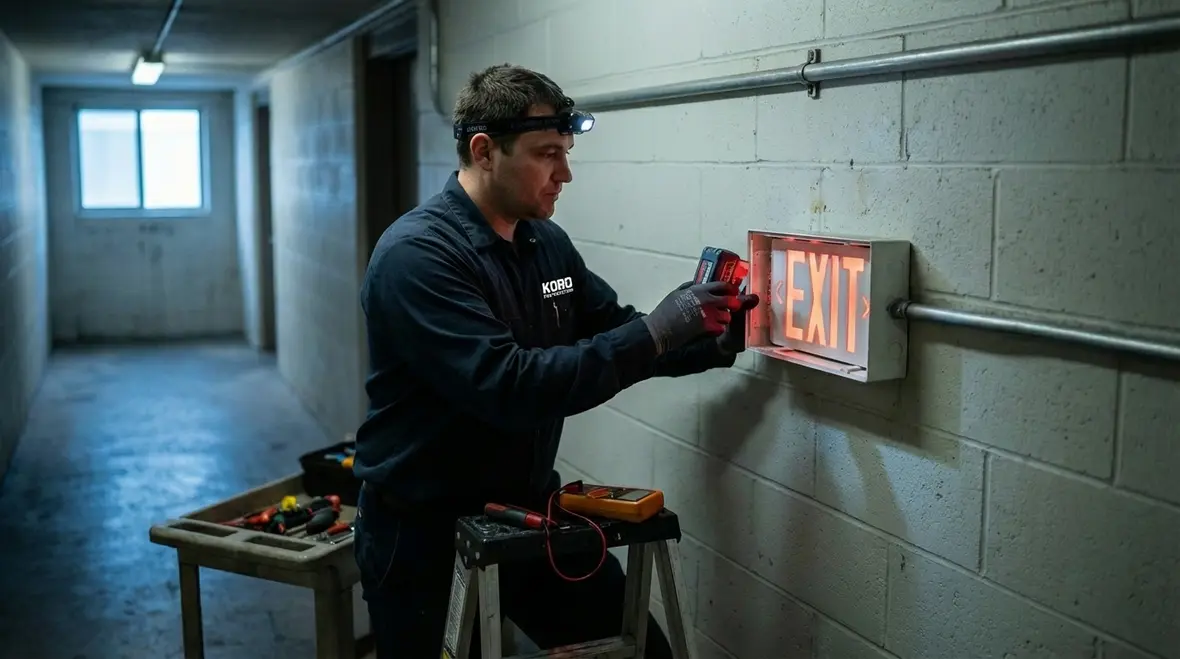
Why Exit Light Battery Replacement Deserves Serious Attention
Emergency lighting systems operate quietly in the background. However, during a power failure, they must perform instantly. Exit signs and emergency lights rely on internal batteries to illuminate pathways for at least ninety minutes in most jurisdictions. Therefore, when that battery weakens or fails, the entire safety chain breaks.
Kord Fire Protection technicians often note that property managers tend to focus on bulbs and fixtures while overlooking the battery itself. Yet the battery is the engine of the system. Without it, the sign is just a decoration with a red filter.
Moreover, building codes require regular testing and functional backup power. If an inspector finds a failed unit during inspection, the result can be fines, citations, or worse, legal exposure after an incident. Consequently, staying proactive with battery changes protects more than the hardware. It protects reputations.
Besides compliance, there is the human factor. In a real emergency, panic moves faster than logic. Clear, illuminated exit paths calm people and guide them out safely. That peace of mind is worth far more than the modest cost of a proper battery.
How to Choose the Right Battery for Your Exit Sign
Selecting the correct battery is not a guessing game, although some people treat it like picking a phone charger from a drawer full of mystery cords. It may fit. It may spark. It may do absolutely nothing. Instead, a methodical approach prevents repeat failures.
First, identify the battery type specified by the manufacturer. Common options include:
- Nickel Cadmium known for durability and long life cycles
- Sealed Lead Acid often used in older or larger units
- Nickel Metal Hydride offering improved capacity in compact spaces
- Lithium based batteries found in newer, energy efficient models
Each chemistry behaves differently under load. For example, Nickel Cadmium handles frequent discharge cycles well. Meanwhile, Sealed Lead Acid batteries cost less upfront but may require more frequent replacement. Therefore, choosing based solely on price can lead to repeated service calls.
Next, match voltage and amp hour ratings exactly. Even a slight mismatch can reduce runtime below code requirements. Kord Fire Protection technicians often explain that installing a higher capacity battery does not automatically improve performance if the charger inside the unit is not designed for it. In fact, it can shorten lifespan.
Finally, consider temperature conditions. Batteries installed in warehouses, parking garages, or outdoor rated enclosures face temperature swings that affect performance. As a result, selecting a battery rated for those conditions prevents premature failure.

Common Causes of Repeat Failures and How to Prevent Them
Nothing frustrates a facility manager more than replacing a battery only to see the unit fail again months later. However, repeat failures rarely happen without warning.
One common cause is overcharging. When internal chargers malfunction, they slowly cook the battery. Although the sign appears normal, the battery degrades from the inside out. Therefore, technicians should test charging circuits, not just swap batteries.
Another issue involves deep discharge cycles. If monthly testing is skipped, a battery may sit unused for long periods and lose capacity. Then, during an outage, it drains completely and struggles to recover. Routine thirty second monthly tests and annual ninety minute tests help maintain health.
Environmental factors also play a role. Heat accelerates chemical breakdown. Cold reduces capacity. Consequently, batteries installed near ceiling mounted HVAC vents or in unconditioned spaces may fail faster than expected.
There is also the human factor. Installing the wrong battery connector or reversing polarity can damage the unit instantly. It sounds obvious, yet it happens more often than most would admit. As one Kord Fire Protection technician once joked, electricity follows rules. It does not care about good intentions.
What Kord Fire Protection Technicians Look For During Service
Professional technicians approach battery replacement as part of a complete system evaluation. They do not simply open the housing, swap components, and leave.
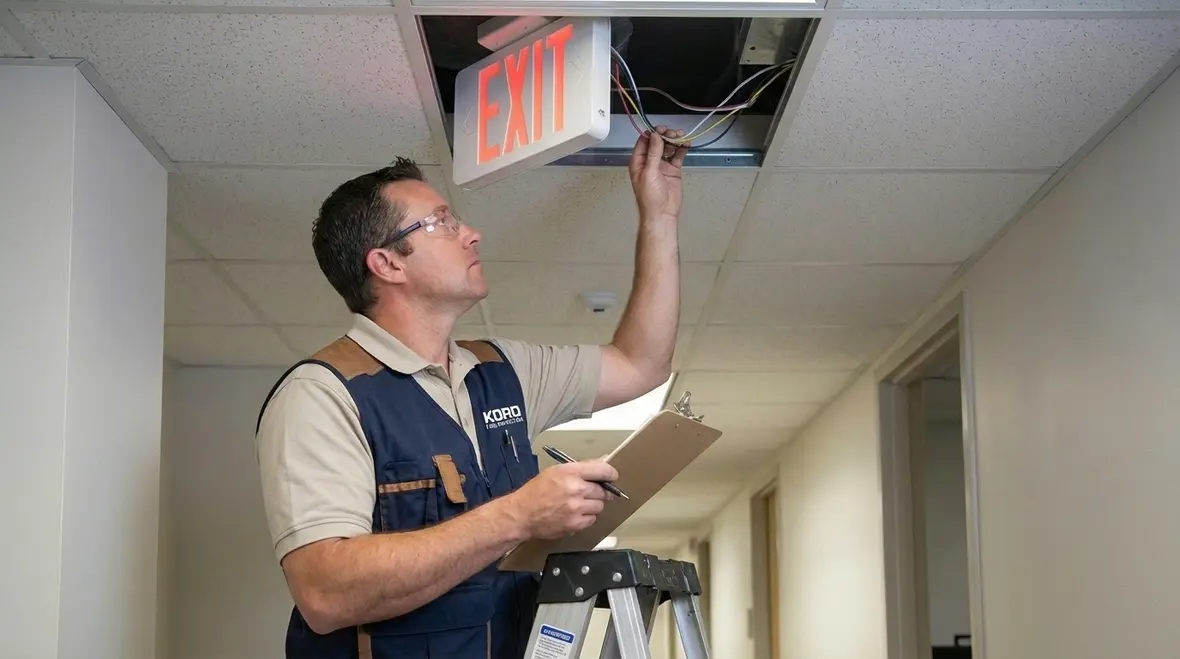
First, they inspect wiring for corrosion or loose connections. Even minor resistance can limit charging efficiency. Next, they test the charger output to confirm correct voltage levels. After that, they evaluate the fixture for LED driver performance and lamp condition.
Additionally, they verify that the unit meets local code requirements for illumination and duration. This ensures that an exit light battery replacement restores full compliance rather than offering a temporary fix.
Kord Fire Protection technicians also document each service visit. This record helps property owners track replacement cycles and identify patterns. For example, if batteries in a specific hallway fail more often, the root cause may involve heat buildup or power quality issues. Addressing that underlying factor prevents future costs.

Battery Comparison Guide for Facility Managers
To simplify decision making, the following overview highlights key differences among common battery types. Although every building has unique needs, this side by side view clarifies strengths and tradeoffs.
Nickel Cadmium
- Long service life
- Handles frequent testing well
- Higher upfront cost
- Strong performance in varied temperatures
Sealed Lead Acid
- Lower initial cost
- Heavier and bulkier
- Shorter average lifespan
- Best for stable indoor environments
Nickel Metal Hydride
- Compact design
- Improved energy density
- Moderate lifespan
- Suitable for modern slim fixtures
Lithium Based
- Lightweight
- Long cycle life
- Often integrated with smart systems
- Higher cost but strong long term value
By comparing these options carefully, facility managers reduce the risk of choosing a battery that solves today’s problem but creates tomorrow’s expense.
How Often Should Exit Sign Batteries Be Replaced?
Most manufacturers estimate a lifespan of three to five years. However, actual performance depends on usage, environment, and maintenance habits. Therefore, a fixed calendar schedule may not always reflect reality.
Kord Fire Protection technicians recommend annual load testing to measure real runtime capacity. If a battery cannot sustain illumination for the required ninety minutes, replacement should occur immediately. Waiting invites failure during a true emergency.
Additionally, visual signs such as swelling, leakage, or corrosion indicate imminent failure. While some managers prefer to stretch lifespan to save costs, the savings disappear quickly if emergency lighting fails during inspection or outage.
Think of it like replacing the batteries in a smoke detector. No one waits for the chirping to become a symphony. Proactive care keeps silence from turning into regret.
Smart Maintenance Strategies That Reduce Long Term Costs
Preventive maintenance always costs less than emergency service. Therefore, creating a structured plan for exit sign battery updates pays dividends over time.
Start with a documented inspection schedule. Monthly visual checks confirm indicator lights show charging status. Quarterly reviews can include brief function tests. Annual testing should simulate a full outage to confirm duration compliance.
Furthermore, standardizing battery types across a facility simplifies inventory management. When possible, using consistent models reduces confusion and minimizes installation errors.
It also helps to work with a qualified service provider. Kord Fire Protection technicians provide detailed reporting and system evaluations, which allow building owners to plan replacements in phases rather than react to sudden failures. For facilities that want full support on emergency lighting, Kord Fire’s Emergency Exit Light Services include testing, repairs, and documentation to keep systems inspection ready.
Finally, proper disposal matters. Many emergency lighting batteries contain materials that require recycling under environmental regulations. Responsible disposal avoids fines and supports sustainability efforts.
FAQ About Exit Light Battery Replacement
Final Thoughts and Next Steps
In the quiet moments before an emergency, preparation speaks louder than panic. Exit signs stand ready every day, asking only for proper care in return. Choosing the correct battery, testing it regularly, and trusting skilled professionals prevents repeat failures and protects everyone inside the building. If your facility also needs broader support with fire protection, Kord Fire’s team can coordinate inspections for sprinklers, alarms, extinguishers, and more as part of a comprehensive plan built around your building’s risks.
Contact Kord Fire Protection technicians today to schedule a comprehensive inspection and ensure every light shines when it matters most. To go beyond batteries and keep emergency lighting fully code compliant, request a quote for Emergency Exit Light Services or explore their full range of fire protection services. Safety, after all, should never flicker.
Know Your Weapon Before You Fight the Flame
Kord Fire Protection is your go-to when it comes to all things fire protection. For over 20 years, we’ve been serving Southern California with the quality service and equipment to keep your home or business safe at all times. Our competitive prices reflect our unwavering commitment to protecting what matters most in the event of a fire emergency. Give us a call, send an email, or use that form!

Join Our Newsletter!
Get the latest fire safety tips delivered straight to your inbox From our Newsletter.


