Exit Light Not Working Troubleshooting Guide
Exit Light Not Working: A Step by Step Troubleshooting Guide for Facilities
When an exit light not working becomes more than a minor annoyance, it turns into a safety risk, a code violation, and a liability waiting for the wrong moment. In commercial buildings, hospitals, schools, and warehouses, exit signs are quiet guardians. They do not ask for attention until the lights go out. Then, suddenly, everyone depends on them. Throughout this guide, Kord Fire Protection technicians explain what facilities teams should check, how to fix common issues, and when to call in professionals. Because when the power fails, no one wants to play guess the doorway.
Moreover, emergency lighting systems are required by fire code to function properly at all times. Therefore, a malfunctioning exit sign is not just an inconvenience. It is a compliance issue. This article walks through practical steps in a calm, methodical way, much like a seasoned technician leaning against a tool cart explaining how things really work.
Why Exit Signs Matter More Than People Think
At first glance, an illuminated red or green sign seems simple. However, behind that glowing panel sits a small electrical system designed to operate even when the building loses power. In fact, exit signs typically connect to both normal power and a battery backup system. When utility power drops, the battery keeps the sign lit for a required duration, often 90 minutes or more.
Kord Fire Protection technicians often explain it this way. The exit sign is the last employee on duty during an emergency. It does not panic. It does not clock out early. It simply points the way. Therefore, when that employee calls in sick, facilities managers need to respond quickly.
Additionally, building inspectors check exit signage during routine inspections. If they find an exit light not working, they may issue citations or require immediate correction. More importantly, during an emergency evacuation, visibility can drop fast. Smoke reduces sight lines. Power may fail. In those moments, a dark sign becomes more than a maintenance issue. It becomes a risk.
For a broader view of why exit signs and emergency lighting matter for overall fire safety compliance, facilities teams can also review Kord Fire’s guidance on egress, exit signs, and emergency lighting in their San Francisco fire inspection checklist, which reinforces how illuminated exit routes protect people when conditions change quickly.
Common Reasons an Exit Light Not Working Occurs
When facilities teams encounter an exit light not working, the cause usually falls into a few categories. Fortunately, many of them are straightforward to diagnose.
1. Burned Out LED or Lamp
Although modern exit signs use LEDs with long lifespans, components still fail. Over time, heat and electrical wear can reduce output or cause total failure.
2. Battery Failure
Emergency exit signs rely on rechargeable batteries. However, batteries degrade. If they cannot hold a charge, the sign may go dark during a power outage or fail its monthly test.
3. Power Supply Issues
Sometimes the sign does not receive building power. A tripped breaker, loose wiring, or faulty transformer can interrupt normal operation.
4. Internal Circuit Board Problems
In more advanced models, a control board regulates charging and illumination. If that board fails, the entire unit may stop functioning.
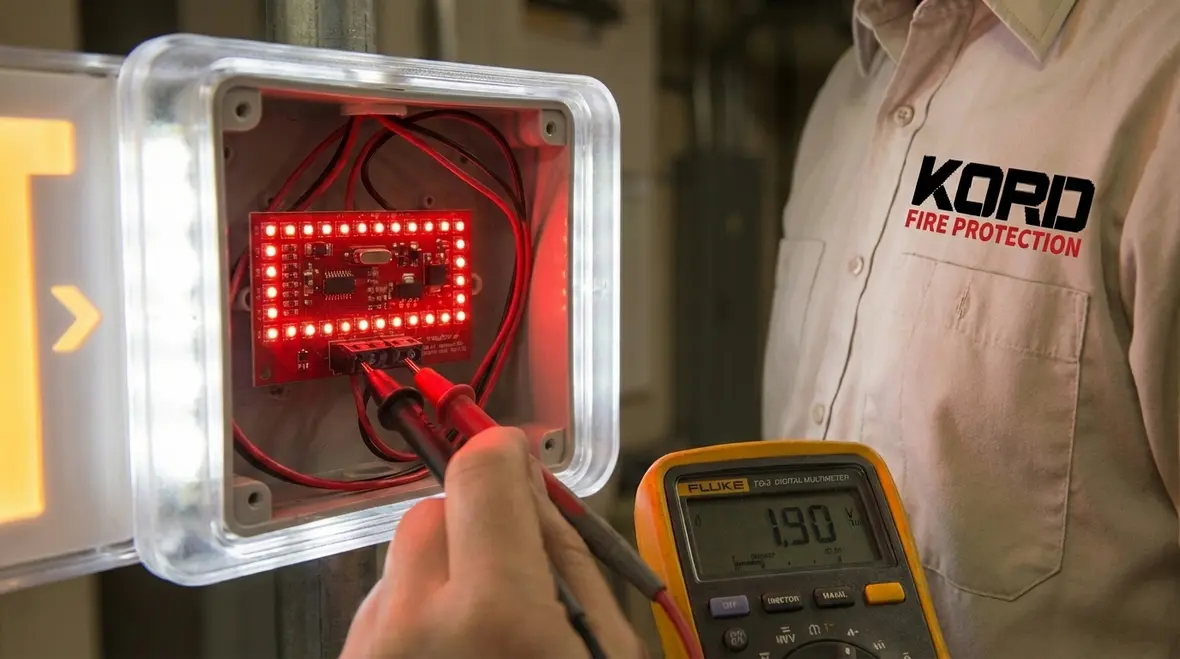
As Kord Fire Protection technicians explain during service calls, most issues are not dramatic. They are simple mechanical or electrical problems that went unnoticed during routine inspections. Therefore, regular testing reduces surprises.
What Should Facilities Check First When an Exit Sign Goes Dark?
This is the question many facility managers type into search engines at 7 am before a safety audit. Fortunately, the first steps are practical and safe if handled correctly.
Step 1: Check for Visible Power
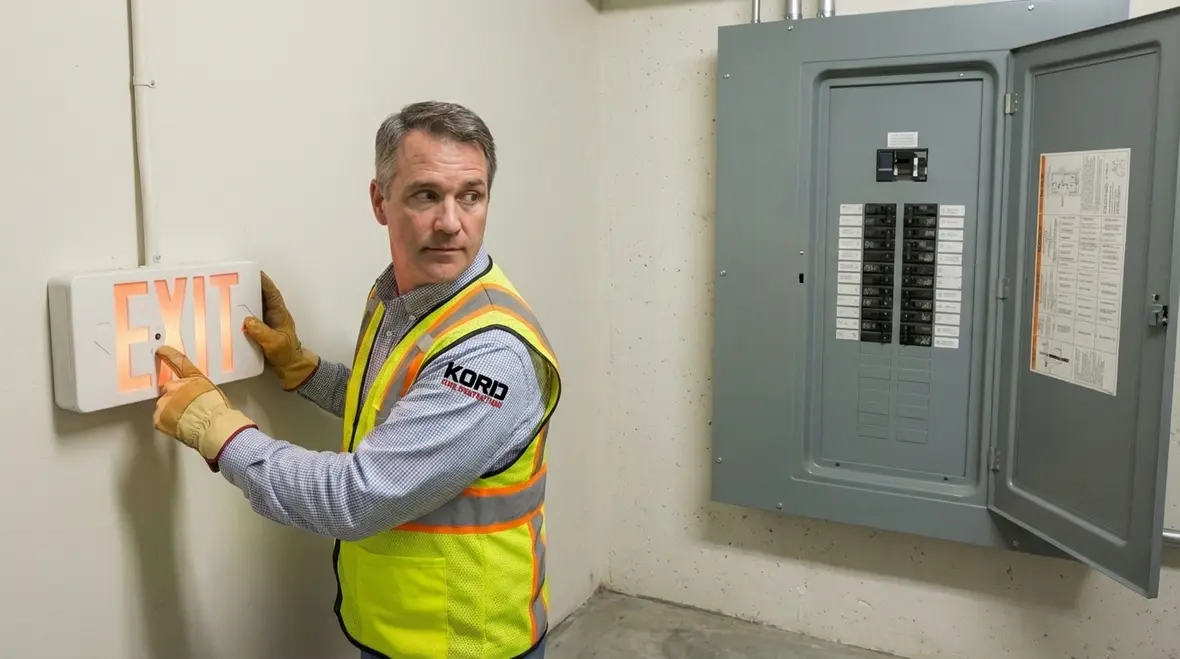
First, confirm whether the unit has any illumination at all. If the entire sign is dark, check the circuit breaker panel. Reset any tripped breaker once. However, if it trips again, stop and investigate further. Repeated tripping suggests a deeper electrical issue.
Step 2: Inspect the Test Button
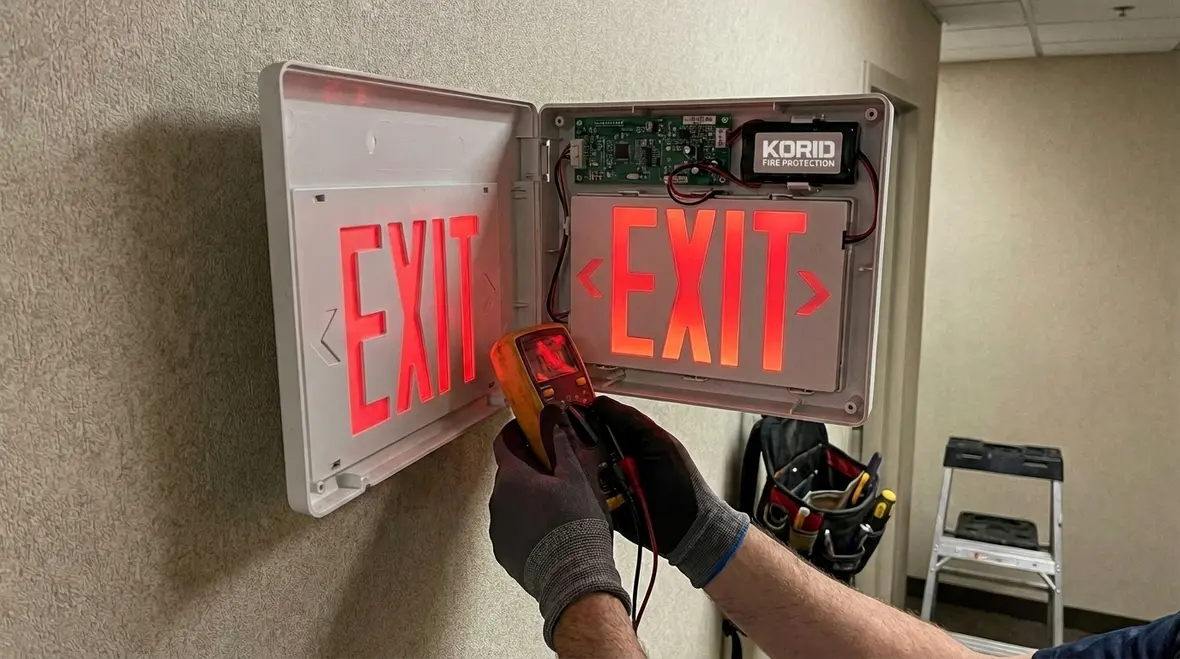
Most exit signs include a small test button. Press and hold it. If the sign lights up during the test, normal power may be the issue. If nothing happens, the battery or internal electronics may have failed.
Step 3: Look for Charging Indicator Lights
Many models include a small LED indicator that shows charging status. A blinking or unlit indicator often signals battery trouble.
According to Kord Fire Protection technicians, these basic checks solve a large percentage of service calls. Nevertheless, if wiring is exposed or there are signs of heat damage, professionals should take over.
If your team prefers to outsource this early troubleshooting entirely, Kord Fire’s Emergency Exit Light Services can take on testing, repairs, and documentation so facilities staff can focus on operations.
Understanding Battery Backup Failures
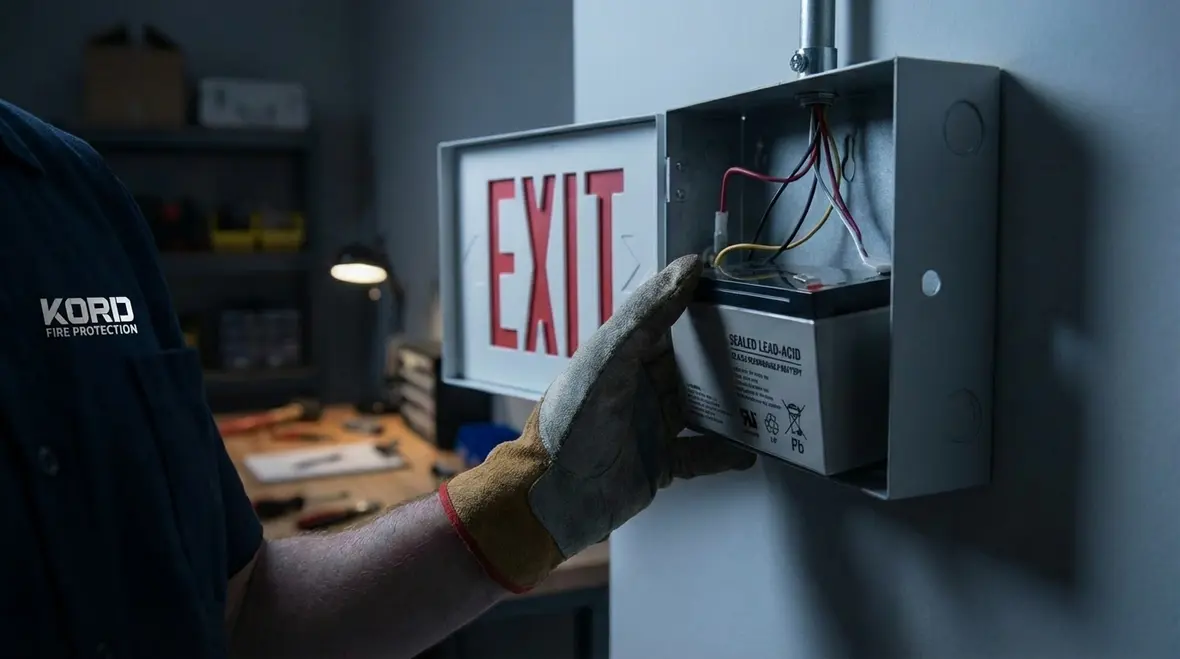
Battery issues are one of the leading causes of an exit light not working during inspections. Over time, rechargeable batteries lose capacity. Even if the sign appears lit during normal power, it may fail during an outage.
Therefore, facilities should perform monthly and annual tests. During a 30 second monthly test, press the test button and confirm illumination. Annually, disconnect normal power for the full required duration, usually 90 minutes. If the sign dims or shuts off early, the battery needs replacement.
Kord Fire Protection technicians often compare emergency light batteries to car batteries. They may look fine until a cold morning reveals the truth. Similarly, an exit sign battery can appear functional until it must carry the full load.
Replacing batteries promptly ensures compliance and prevents future surprises. Additionally, using manufacturer approved batteries protects the unit from damage.
Electrical and Wiring Issues Behind the Walls
Sometimes, the cause of an exit light not working hides in the wiring. Loose connections, aging conductors, or improper installation can disrupt power flow. In older buildings, renovations may have altered circuits without updating documentation.
Therefore, when basic troubleshooting does not resolve the issue, a licensed technician should inspect the wiring. They will check voltage levels, inspect junction boxes, and verify proper grounding.
Moreover, Kord Fire Protection technicians emphasize the importance of secure connections. Even a slightly loose wire can generate heat over time. That heat degrades insulation and increases failure risk. Addressing small issues early prevents larger repairs later.
In some cases, replacing the entire unit proves more cost effective than repairing outdated components. Modern LED exit signs consume less power and offer improved battery performance.
Dual Column Guide: Quick Diagnosis vs Professional Service
Facility Team Can Check
- Test button response
- Visible damage to housing
- Charging indicator status
- Battery replacement if trained
- Circuit breaker position
Call Kord Fire Protection Technicians
- Repeated breaker trips
- Burned wiring smell
- Failed annual 90 minute test
- Multiple units failing simultaneously
- Code compliance concerns
This side by side view helps facilities decide quickly. While some checks are routine, others demand professional expertise. After all, electrical systems deserve respect. They do not respond well to guesswork.
Compliance, Testing, and Documentation
Beyond repairs, documentation matters. Fire codes require written records of monthly and annual testing. Inspectors may request proof during audits. Therefore, facilities should log test dates, results, and corrective actions.
If an exit light not working is discovered, document the date found, steps taken, and date repaired. This record demonstrates due diligence. Furthermore, it shows that the facility prioritizes occupant safety.
Kord Fire Protection technicians often assist clients in setting up maintenance schedules. They recommend consistent intervals rather than reactive fixes. Consequently, buildings remain prepared and compliant year round.
Additionally, consider upgrading older incandescent models to LED systems. LEDs last longer, reduce energy use, and lower maintenance frequency. In the long run, proactive upgrades save both time and budget.
Preventive Maintenance That Keeps Signs Ready
Prevention always costs less than emergency repair. Therefore, facilities should integrate exit sign checks into broader life safety inspections. During walkthroughs, staff can visually confirm illumination and inspect for cracks or discoloration.
Moreover, cleaning the sign face improves visibility. Dust buildup can reduce brightness. While that may sound minor, every bit of clarity helps during an evacuation.
Kord Fire Protection technicians recommend replacing batteries on a set schedule even if they appear functional. Predictable replacement reduces the risk of sudden failure. Think of it as changing smoke detector batteries before the low chirp begins its midnight concert.
Finally, training staff on basic testing procedures empowers faster response. When team members understand how systems work, they notice small changes sooner.
When Replacement Is the Smart Move
In some cases, repeated instances of an exit light not working signal that the unit has reached the end of its service life. Plastic housings may yellow. Internal components may become unreliable. At that point, patching problems resembles repairing a flip phone in a smartphone world.
Modern exit signs offer improved efficiency and clearer illumination. Additionally, many models include self testing features that automate monthly diagnostics. These features reduce manual labor and provide status indicators.
Kord Fire Protection technicians evaluate existing units and recommend replacements when appropriate. They consider code requirements, building layout, and occupancy type. Consequently, upgrades align with both safety and budget goals.
If your facility is planning a wider upgrade to emergency lighting and life safety systems, pairing exit sign replacements with a review of evacuation routes and emergency lighting coverage, as described in Kord Fire’s broader fire safety resources, can create a cleaner, more resilient egress strategy.
FAQ: Exit Sign Troubleshooting
Conclusion: Keep the Path Clear
When an exit light not working appears, it signals a call to action. Facilities teams can handle basic checks, yet deeper issues deserve expert care. Kord Fire Protection technicians bring clarity, compliance, and calm expertise to every building they serve.
Do not wait for an inspection or outage to reveal a problem. Schedule testing, document results, and ensure every sign stands ready to guide the way when it matters most.
If you would rather have a dedicated team own this part of life safety, explore Kord Fire’s Emergency Exit Light Services page and request a quote. From installation and testing to repairs and upgrades, their technicians keep exit signs and emergency lighting ready for real emergencies, not just inspections.
Know Your Weapon Before You Fight the Flame
Kord Fire Protection is your go-to when it comes to all things fire protection. For over 20 years, we’ve been serving Southern California with the quality service and equipment to keep your home or business safe at all times. Our competitive prices reflect our unwavering commitment to protecting what matters most in the event of a fire emergency. Give us a call, send an email, or use that form!

Join Our Newsletter!
Get the latest fire safety tips delivered straight to your inbox From our Newsletter.