Essential Pre Testing Protocols for Commercial Standpipe Systems
Essential Pre-Testing Protocols for Commercial Standpipe Systems start long before the first valve gets turned. In the early stages, the team follows standpipe system testing procedures to confirm the system is ready for performance testing, field verification, and eventual commissioning. Kord Fire Protection technicians explain that pre testing is not paperwork for the sake of paperwork. Instead, it is the practical step that helps catch issues while they are still easy to fix. And yes, it is much cheaper than discovering problems after the building is occupied, like finding out your smoke alarm has been unplugged since move in day.
For teams managing commercial properties, this early phase creates order before pressure, water flow, and commissioning schedules start demanding answers. It also gives owners, general contractors, and facility leaders a cleaner view of what is actually installed, what still needs adjustment, and what is ready for the next level of review. If you want a broader look at how these systems function in the field, Kord Fire’s Standpipe System Requirements and How It Works article is a helpful companion read.
Know the scope before anyone touches a valve
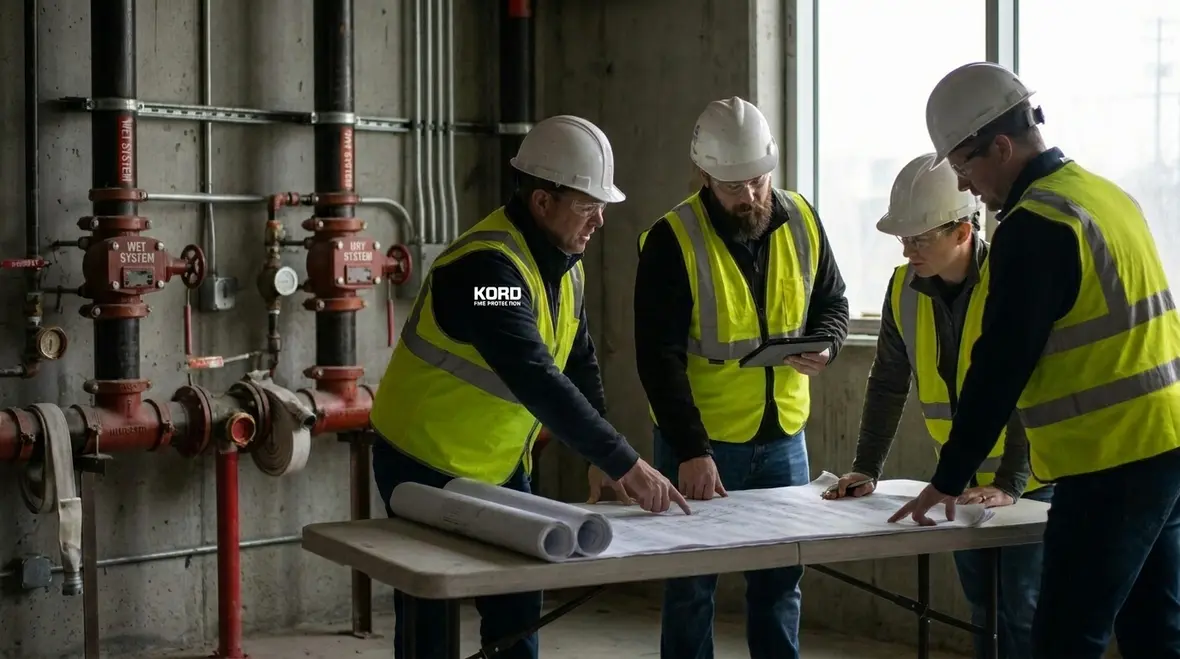
Before testing begins, commercial projects need clear boundaries. First, the site team confirms what sections of the standpipe system exist, including wet and dry standpipes, hose connections, valves, and any related fire department connections. Then they match drawings to reality. Kord Fire Protection technicians often say that a system can look correct on paper and still drift in the field, due to routing changes, ceiling revisions, or overlooked labels.
To keep the process smooth, the pre test plan should include the exact sequence of checks, roles for each person, and the communication method during live activities. After that, the team verifies that the right permits, access permissions, and safety controls are in place. In a commercial environment, that means coordinating with facility management so operations do not get interrupted like a surprise character in a movie who definitely should have stayed off screen.
Finally, the team establishes pass and fail criteria in advance. That way, results do not turn into an argument in the hallway later. It also prevents a common problem in larger projects, where one trade assumes another trade is handling a correction. A written scope keeps the process grounded and gives everyone one source of truth on test day.
What a solid pre test scope usually includes
- System boundaries and riser locations
- Valve schedule and access plan
- Testing sequence and communication method
- Occupancy impact controls and shutdown windows
- Pass and fail criteria for each major check
Verify installation details with field spot checks
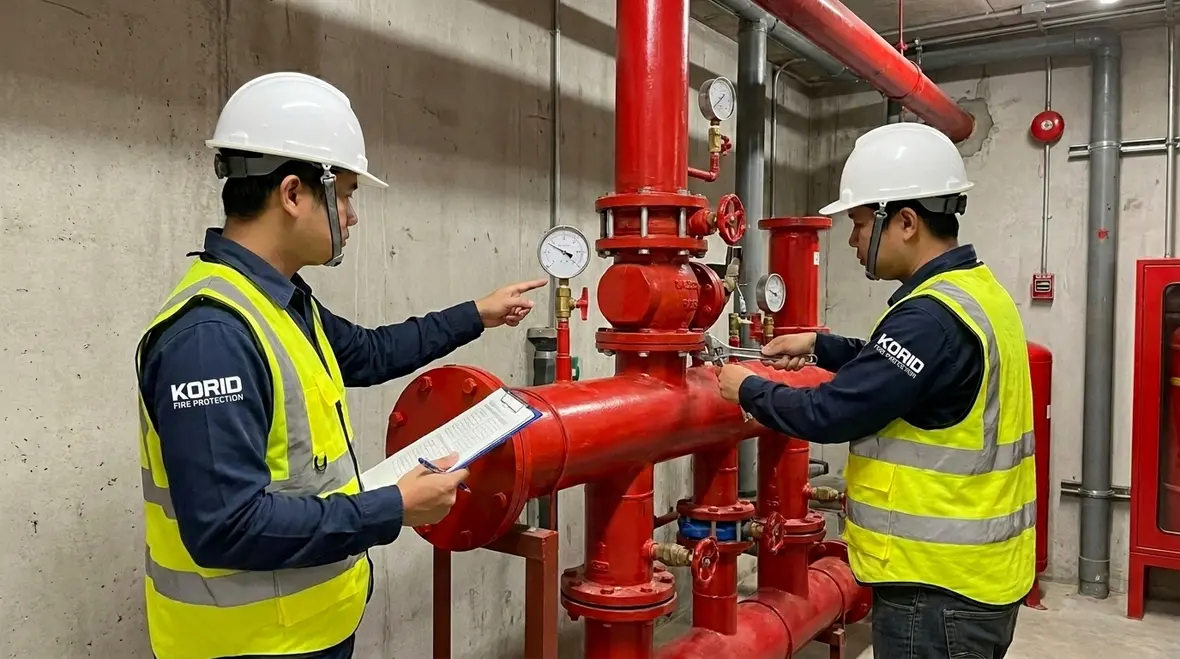
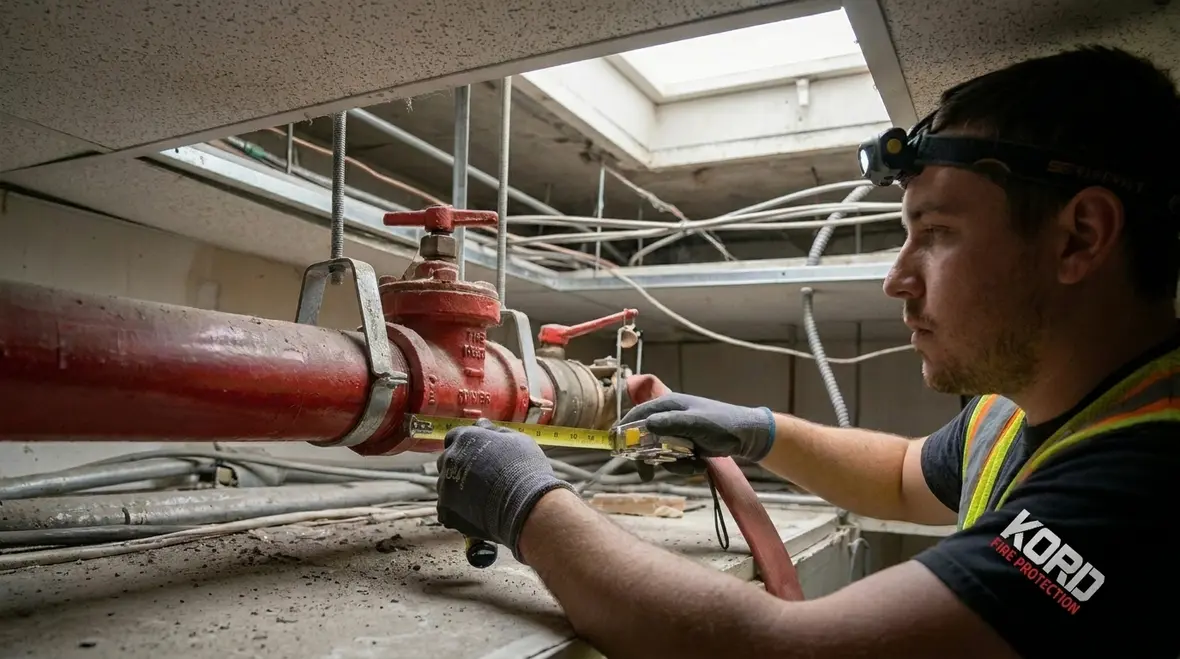
Once the scope is confirmed, the next step is to validate installation details. The technicians review pipe size, hangers, bracing, labeling, and support spacing, because standpipe performance depends on structural stability. In addition, they inspect for obvious physical issues such as damage, improper joints, incorrect orientation, or missing components.
Then they compare hose valves and hose connection points to the plans. They check that each connection matches required type, placement, and accessibility. If the system uses drain valves or automatic controls, they confirm those items are installed correctly and can operate as intended.
At this stage, Kord Fire Protection technicians explain that small gaps can lead to big test failures. A minor missing cap, a miswired control, or a valve that does not move freely can waste hours. Therefore, the team performs targeted spot checks before full system testing proceeds.
And if someone asks, the answer is simple: the goal is to keep the test day calm, not chaotic. Teams that want a refresher on system classifications can also review Kord Fire’s Standpipe Class I II III Explained Clearly page, which helps connect installation details with how the outlet will actually be used in an emergency.
Common details technicians catch early
- Incorrect hose valve type or orientation
- Missing signage or poor labeling
- Support spacing issues
- Drain connections not fully accessible
- Supervisory components installed but not functioning
How technicians validate water supply readiness
Water supply readiness often decides whether the entire test succeeds. The team confirms static and residual pressures, verifies that the water source can meet the demand, and checks that pumps or hydrant pressure boosters operate within expected ranges. If there are pressure reducing components, check valves, or control panels tied to the standpipe system, the technicians verify their set points and wiring.
After the supply checks, they confirm that the system can achieve flow conditions safely. That includes checking for trapped air, verifying discharge paths where required, and confirming that any isolation valves can open smoothly. Kord Fire Protection technicians frequently remind teams that air pockets and friction losses can distort results, especially during the first seconds of flow.
To prevent surprises, the team also evaluates the building water layout. For example, they confirm that domestic water systems do not steal pressure at the exact wrong time. In commercial buildings, water behavior is like a sitcom plot. It looks predictable until someone flips the wrong switch.
Where projects include combined standpipe and sprinkler layouts, technicians pay even closer attention to demand assumptions and control alignment. If that applies to your building, Kord Fire also offers Standpipe System Class I-II-III services and related support tied to installation, maintenance, and repairs.
Use pre test functional checks for valves and controls
Before running full tests, commercial systems need functional checks on critical components. Technicians verify that each valve stroke operates correctly and that indicators match actual valve position. Then they test manual controls and, when present, electrical controls and alarm interfaces.
Next, the team checks continuity and basic operation of any connected supervisory devices. If the standpipe system includes controls that start pumps or communicate status, the technicians confirm those actions occur as intended. They also check that any local annunciation devices and remote signals behave correctly.
Additionally, they examine the valve train for leaks and binding. They do this because a valve that sticks can block flow during the exact moment it must not. Therefore, this phase acts like a rehearsal. Nobody wants the curtain to rise only to discover the actor cannot find the door.
Throughout, Kord Fire Protection technicians explain that consistent documentation matters. Each check gets recorded so later troubleshooting uses real information, not memory and hope. Projects with connected alarm reporting may also benefit from Kord Fire’s Fire Alarm Services, especially when supervisory signals and system status need to line up cleanly during integrated testing.
Why valve and control rehearsal matters
A standpipe system rarely fails because of one dramatic Hollywood style catastrophe. More often, it struggles because of several small misses that stack up quietly. A sticky valve here, an incorrect position indicator there, a supervisory device that never got fully confirmed. Pre testing strips away that uncertainty before the official performance event makes everyone stare at gauges in silence.
Confirm system integrity with hydrostatic and leak checks
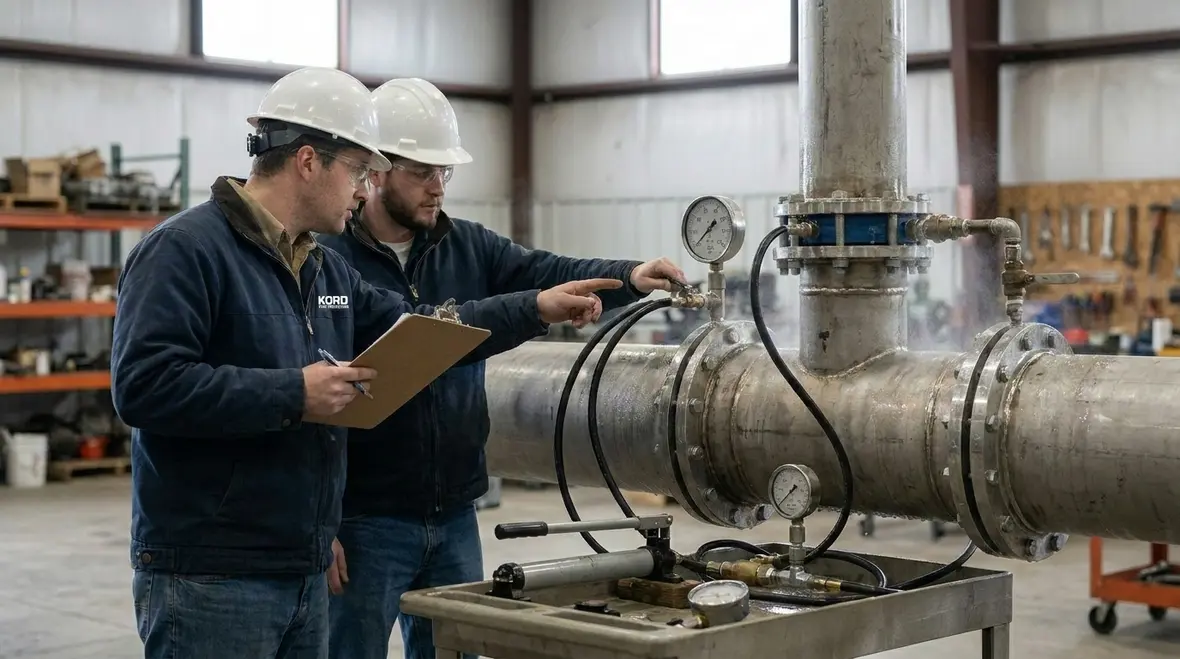
Integrity testing protects both performance and people. Technicians verify that the piping is tight before flow tests. They use hydrostatic testing where required, watching for leaks, pressure stability issues, and unusual pressure drop patterns. Then they inspect joints, fittings, and penetrations for signs of seepage.
During leak checks, the team focuses on likely weak points such as threaded connections, welded joints, and areas where sleeves pass through floors. They also confirm that any drain points or test headers are configured correctly so water stays where it should. If there are water management features such as check valves, they verify those components seal properly.
Because commercial buildings run on schedules, technicians also consider how testing affects occupants and operations. They coordinate shutdown windows and contain water safely. In other words, they handle the wet part with the seriousness it deserves.
After integrity checks, the system enters the readiness phase. Then the team moves toward commissioning level testing with a clearer baseline. Owners comparing wet and dry system behaviors can also explore Kord Fire’s Automatic vs Manual Standpipe Systems Explained and Wet Standpipe System Inspection and Maintenance Guide for more context.
Document results and prepare for commissioning day
Even the best pre test work fails if the results do not get organized. Therefore, Kord Fire Protection technicians compile a test packet that includes installation verification notes, valve and control check outcomes, water supply readiness records, and integrity testing results. They also note conditions that required follow up, such as repairs, adjustments, or component replacements.
Then they review the findings against the project requirements. If something does not align, they flag it early. This keeps the path to standpipe system testing procedures clear and reduces rework. Additionally, they verify that all labels, access panels, and signage remain compliant and easy to find.
Before final handoff, the team coordinates with stakeholders for readiness walk throughs. They confirm that the site team understands what has been completed and what still needs attention. That simple step prevents confusion, which is the hidden villain of every commissioning story.
This is also the right moment to confirm long term service ownership. A building that passes testing still needs dependable inspection, maintenance, and response support after turnover. Near the end of a project, that handoff matters almost as much as the test itself.
FAQ: Pre testing for commercial standpipe systems
Conclusion and call to action
Pre testing is where commercial standpipe success gets built. When Kord Fire Protection technicians follow disciplined protocols, they verify installation accuracy, confirm water readiness, check valves and controls, and prove integrity before performance tests begin. That saves time, reduces rework, and protects your commissioning schedule. It also gives the entire project team a cleaner, calmer path to final acceptance instead of a last minute scramble with clipboards, radios, and worried faces.
If your project is moving toward testing or handoff, request a pre testing review today. A quick site plan check now can prevent a long, expensive “we should have caught that earlier” moment later. For ongoing support, explore Kord Fire’s Standpipe Systems service page and, if your project includes integrated signaling and supervisory components, the Fire Alarm Services page as well.

Join Our Newsletter!
Get the latest fire safety tips delivered straight to your inbox From our Newsletter.