
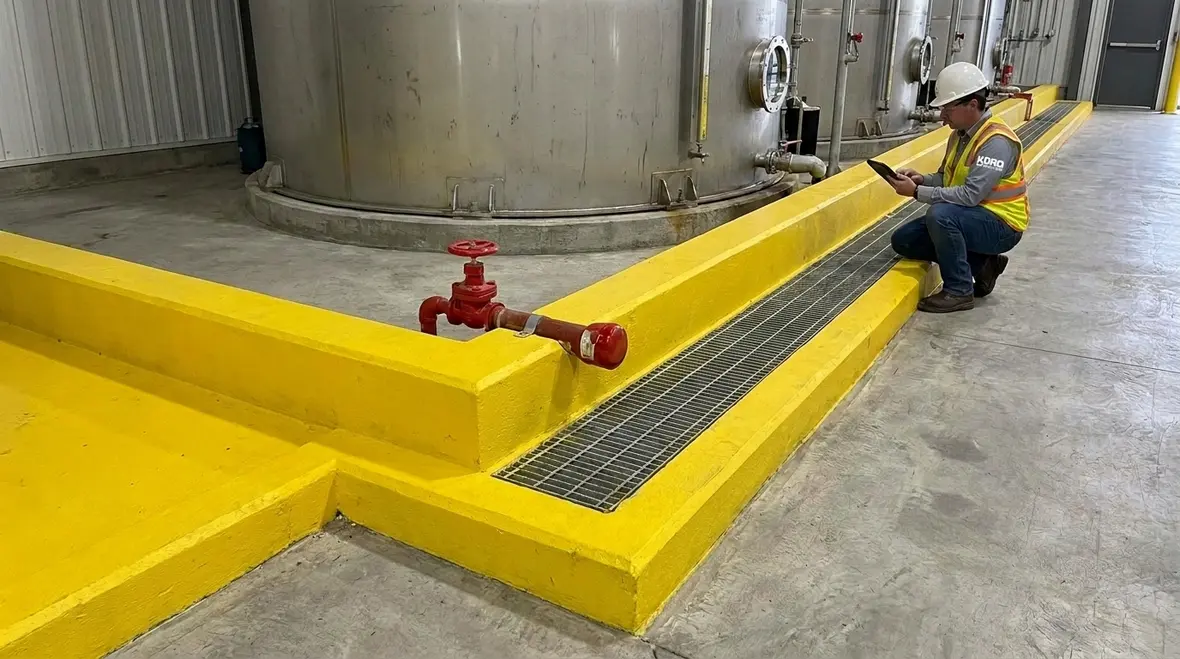
NFPA 18A Section 12.7: Spill Control Design for Combustible and Flammable Liquids
Quick Answer
NFPA 18A Section 12.7 sets minimum requirements for designing spill control systems for combustible and flammable liquids. It focuses on containment effectiveness, drainage management, sizing of spill control areas, and protections that prevent release, escalation, and waterborne spread during incidents and inspections.
For facilities trying to connect code language to field support early, NFPA codes and guidelines solutions for fire protection and life safety is a practical place to start before spill control details turn into expensive cleanup and compliance headaches.
What NFPA 18A Section 12.7 Requires for Spill Control Design
In commercial and industrial settings, the intent of NFPA 18A flammable liquid spill control design is simple: contain a spill long enough to prevent ignition hazards from migrating beyond the intended area. Section 12.7 addresses how facilities manage releases at tanks, piping, and liquid handling points so that spills do not spread uncontrolled onto floors, into drains, or across property boundaries.
Practical compliance starts with a clear hazard inventory, then a containment strategy that matches the actual operational conditions. Facilities often miss requirements when they treat spill control as a one time installation instead of an engineered, inspectable system.
Where Spill Control Failures Commonly Start (and How to Prevent Them)
Section 12.7 affects more than just berms and curbs. The most frequent issues show up during day to day operations and maintenance cycles. Common failure points include:
- Incorrect containment sizing due to incomplete spill volume assumptions or missing process variations.
- Drainage pathways that bypass containment, especially when floor drains, sumps, or trench drains connect to systems that do not effectively stop fire and spreading liquid.
- Failed or improperly selected valves and devices that allow inadvertent discharge during normal cleaning or rainfall events.
- Compromised secondary containment boundaries from vehicle impacts, corrosion, or construction modifications after initial installation.
- Inadequate surface maintenance where cracks, seal failures, or worn coatings reduce containment performance.
These issues typically surface during operational audits, tenant turnover, or after renovations. A strong compliance program pairs the engineered design with documented inspection routines.
Key Design Elements: Containment, Drainage, and Flow Paths
Containment for combustible and flammable liquids
Section 12.7 designs containment for realistic release scenarios rather than idealized ones. In practice, the containment system should account for expected maximum spill conditions related to the liquid handling process. For example, containment must address how a spill behaves on a typical facility floor, including surface texture, slopes, and obstructions.
Commercial operators often underestimate the impact of floor slope and expansion joints. Even a small slope can move liquid quickly toward a drain opening, door threshold, or equipment base.
Drainage management that prevents spread
Drainage strategy plays a central role in spill control. A compliant design typically ensures that spill confinement remains effective when liquid contacts the floor. It also ensures that routine drainage does not defeat containment during normal conditions.
When a facility uses sumps or drains, the design must prevent spill migration into areas where ignition sources or combustible accumulations exist. This is where inspection and maintenance matter: a device that is present but not tested may fail during an actual release.
Barriers, curbs, berms, and secondary containment performance
Secondary containment and spill control barriers must maintain integrity over time. Corrosion resistance, chemical compatibility, and structural stability determine whether a barrier will hold the intended volume. Field modifications also introduce risk. A common operational challenge occurs when maintenance crews alter piping routes, add cable trays, or change flooring without revalidating containment behavior.
Facilities that align their construction change process with fire protection engineering reduce drift from the original NFPA 18A flammable liquid spill control design intent.
Operational Procedures: Keeping the System Effective Between Inspections
Design intent does not survive without operational discipline. Section 12.7 expectations translate into routine procedures that reduce the chance of a spill escalating or escaping the intended area.
Handling, fueling, and transfer controls
Operational controls typically include how transfer hoses are stored, how overfill prevention works, and how staff respond to early signs of leakage. Equipment used during transfer operations should support quick isolation and safe shutdown.
Spill response readiness and speed to containment
Facilities benefit from a spill response plan that aligns with containment layouts. Staff should know which valves or isolation points control drainage and how to keep spills within the protected zone. Slow response often converts a localized incident into a facility wide hazard through spreading and vapor generation.
Housekeeping and surface maintenance
Spill control systems depend on floor conditions. Accumulated debris, pooled water, or degraded sealants can interfere with how liquid flows toward or away from containment. Routine inspections should verify the physical condition of curbs, joints, coatings, and barrier interfaces.
Inspection, Maintenance, and Documentation for Compliance Durability
Section 12.7 compliance cannot rely on installation records alone. Commercial facilities must demonstrate that spill control systems continue to meet performance expectations over time. Typical inspection and maintenance focus areas include:
- Barrier integrity checks for cracks, deformation, corrosion, and chemical attack.
- Drain system verification confirming devices function as intended and do not bypass containment.
- Valve and flow path functionality checks to ensure isolation features activate when required.
- Floor condition assessments including expansion joint condition and seal effectiveness.
- Signage and access verification for containment controls and emergency response interfaces.
Documentation should include inspection results, corrective actions, and dates. This becomes critical during insurance reviews, tenant audits, and enforcement related to fire and life safety systems. For a practical overview of how code-aligned solutions get implemented and maintained, Kord Fire Protection provides guidance on NFPA codes and guidelines solutions for fire protection and life safety.
How Kord Fire Protection Supports NFPA 18A Spill Control Compliance
Commercial and industrial facilities need more than a design checklist. They need a repeatable program that maps NFPA 18A expectations to operational reality and ensures the system remains effective after modifications and normal wear. Kord Fire Protection supports facilities with:
- Compliance review focused on spill control boundaries, drainage pathways, and practical flow behavior.
- Inspection readiness support including maintenance coordination and correction tracking.
- Ongoing testing and verification planning to reduce the risk of dormant failures.
- Change management support so renovations and process updates do not undermine containment performance.
This approach reduces common commercial compliance friction, such as systems that look compliant at installation but fail during real operations.
If your team is also tightening up inspection routines and test planning across water-based protection equipment, Kord Fire’s NFPA 25 8.3 fire pump testing, churn tests, and flow planning article is a helpful companion read near the maintenance side of the conversation.
Frequently Asked Questions
Next Step: Validate Your Spill Control Design and Maintenance Program
Spill control failures usually come from drainage bypasses, degraded containment boundaries, or unverified device performance. Kord Fire Protection can help commercial facilities evaluate NFPA 18A flammable liquid spill control design elements, confirm inspection and maintenance expectations, and close common operational gaps. Contact Kord Fire Protection to schedule a compliance review and build a durable inspection and correction plan that matches your facility’s actual liquid handling workflows.

Join Our Newsletter!
Get the latest fire safety tips delivered straight to your inbox From our Newsletter.



