Dry Chemical vs Wet Chemical Fire Suppression
When it comes to protecting lives and property, few debates are as practical and important as dry chemical vs wet chemical fire suppression. On the surface, they may sound like two sides of the same coin. However, beneath that simple wording lies a world of difference in chemistry, application, and results. Fire does not care about guesswork. It responds to science, speed, and strategy.
Kord Fire Protection technicians often explain it this way. Choosing the wrong system is like bringing a garden hose to a grease fire. It might look helpful, but it can make the problem worse. Therefore, understanding which system fits which hazard is not just smart. It is essential.
This guide walks through how each system works, where it performs best, and why making the right choice matters more than most people think.

The Science Behind Dry Chemical vs Wet Chemical Fire Suppression
To understand the difference, one must first understand the fire triangle. Fire needs heat, fuel, and oxygen. Remove one of these elements, and the fire collapses. Both systems attack this triangle, yet they do so in very different ways.
How Dry Chemical Systems Interrupt Combustion
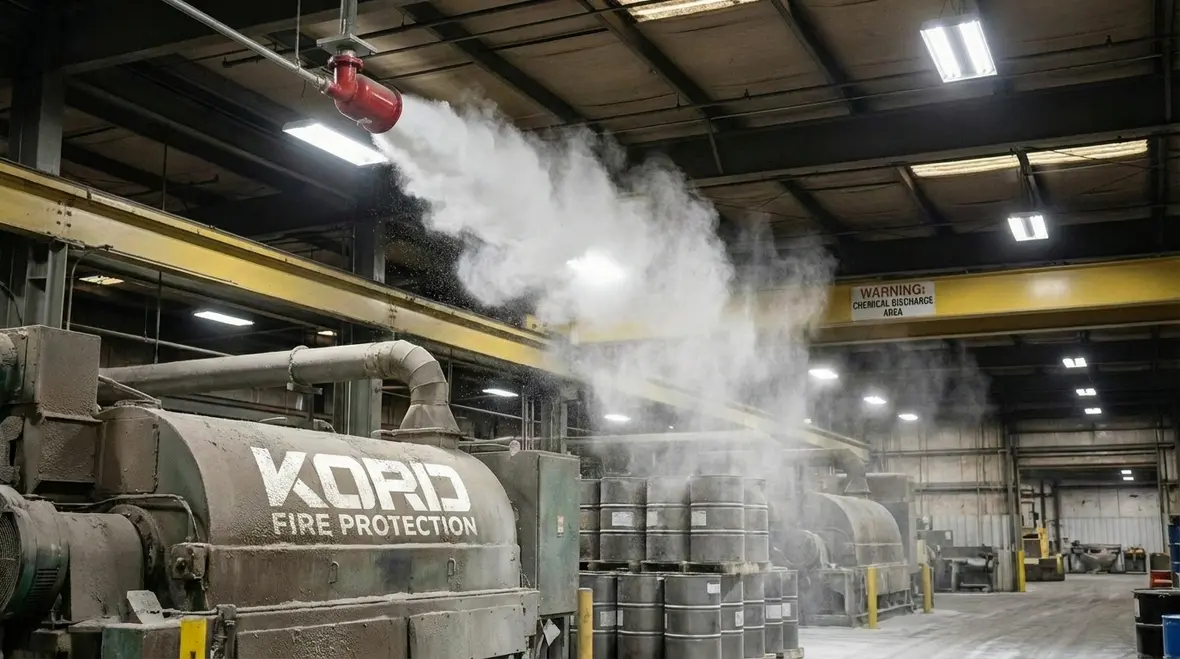
Dry chemical systems release a fine powder, typically made from monoammonium phosphate or sodium bicarbonate. Once discharged, the powder coats the fuel and interrupts the chemical reaction that sustains the flames. Additionally, it creates a barrier between the fuel and oxygen. As a result, the fire loses momentum quickly.
How Wet Chemical Systems Use Saponification
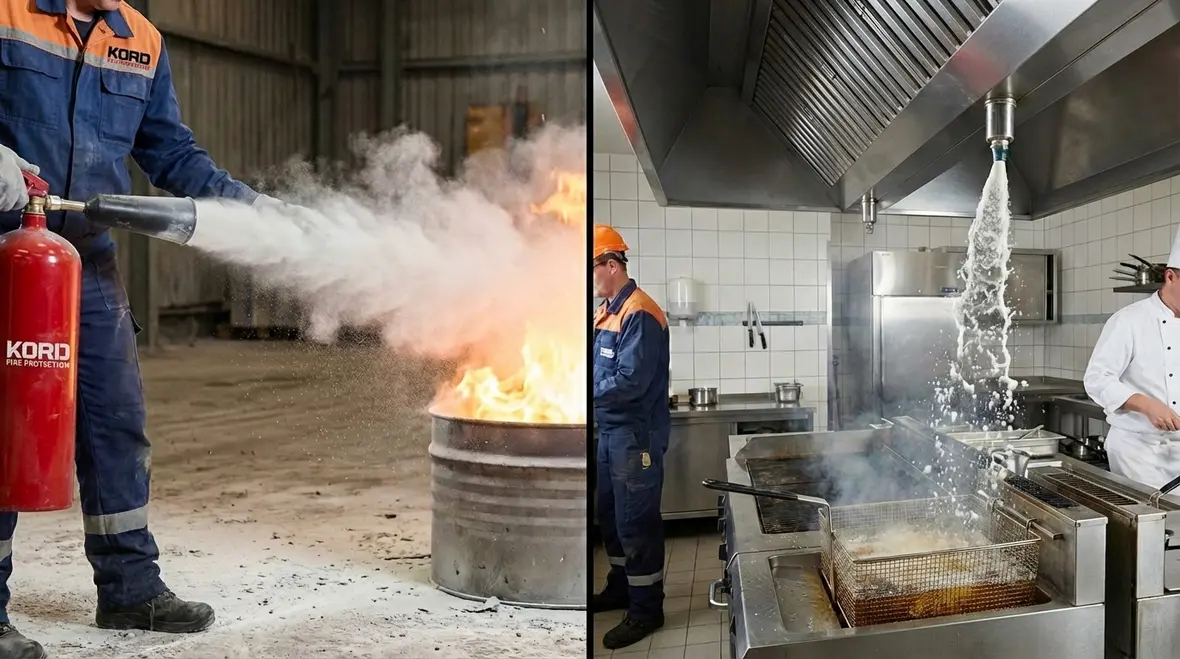
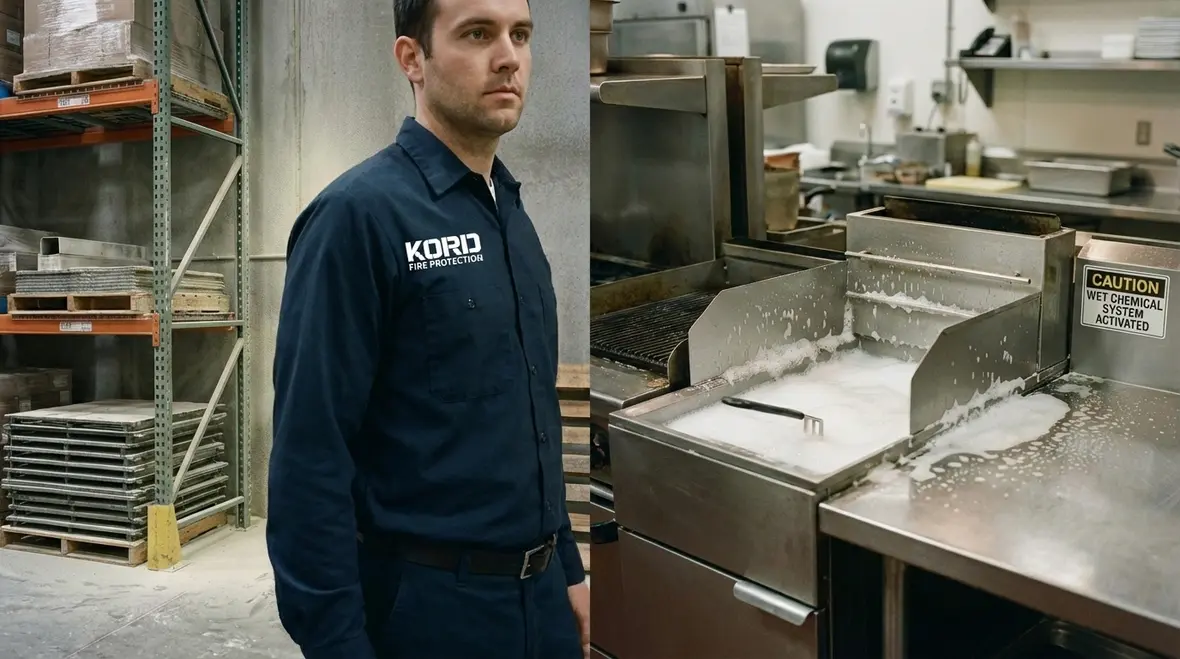
Wet chemical systems, on the other hand, discharge a liquid agent specifically designed for high temperature cooking oils and fats. When the liquid contacts hot grease, it triggers a process called saponification. In simple terms, it forms a soapy foam layer that seals the surface and cools the fuel. Consequently, it both smothers and cools the fire at the same time.
Kord Fire Protection technicians often describe the difference like this. Dry chemical is the firefighter that rushes in and breaks up the fight. Wet chemical is the calm negotiator that cools everyone down and locks the door afterward.
Where Dry Chemical Systems Perform Best
Dry chemical systems shine in environments where multiple fire classes may exist. They are commonly used in:
- Manufacturing plants
- Mechanical rooms
- Fuel storage areas
- Paint booths
- Warehouses with mixed hazards
Because dry chemical agents can handle Class A, B, and C fires, they offer versatility. For example, in a facility that stores flammable liquids and has electrical panels nearby, this system provides broad coverage. Furthermore, it activates quickly and spreads fast, which is critical in high risk industrial settings. For a deeper dive into dry chemical system applications and NFPA 17 requirements, Kord Fire’s overview of dry chemical extinguishing systems breaks down the standards and design considerations.
However, there is a trade off. The powder residue can be messy. It infiltrates machinery, settles into ventilation systems, and requires thorough cleanup. In sensitive environments with electronics, that residue can cause corrosion if not removed promptly.
Even so, in heavy industrial spaces, performance outweighs the inconvenience. As Kord Fire Protection technicians often point out, equipment can be cleaned. A fully involved structure fire is far harder to fix.
Wet Chemical Systems and Commercial Kitchen Protection
If dry chemical is the industrial workhorse, wet chemical is the culinary specialist. Commercial kitchens present a unique hazard. Cooking oils burn at extremely high temperatures, and once ignited, they can reignite even after the flames appear out.
Why Class K Hazards Demand Wet Chemical
Therefore, wet chemical systems were designed specifically for Class K fires. These systems are typically installed in:
- Restaurants
- Food trucks
- Hotel kitchens
- Institutional cafeterias
- Commercial food processing facilities
When activated, the agent discharges through nozzles positioned over cooking appliances and inside exhaust hoods. The liquid reacts with hot grease, forming a foam blanket. At the same time, it cools the surface temperature below the ignition point. Because of this dual action, the chance of reflash drops dramatically. You can see this process broken down step by step in Kord Fire’s guide to commercial kitchen fire suppression systems, which explains how wet chemical agents neutralize high temperature grease fires.
Kord Fire Protection technicians explain that using dry chemical on a deep fryer can knock down flames, yet it may not cool the oil enough to prevent reignition. Wet chemical, by contrast, handles both suppression and stabilization.
In short, kitchens demand precision. And precision is exactly what wet chemical delivers.
A Side by Side Comparison of System Capabilities
For those who appreciate clarity, the differences can be viewed in a direct comparison. While both systems suppress fire effectively, their design focus sets them apart.
| Feature | Dry Chemical System | Wet Chemical System |
|---|---|---|
| Primary Fire Classes | Class A B C | Class K |
| Main Agent Form | Powder | Liquid |
| Best Environment | Industrial and mixed hazard facilities | Commercial kitchens |
| Cooling Effect | Limited | Strong cooling action |
| Residue | Heavy powder cleanup required | Foamy residue easier to wash down |
| Reignition Prevention | Moderate | High due to cooling and sealing |
This comparison highlights why selecting the right system is not a matter of preference. It is a matter of hazard type.
How to Choose the Right System for a Specific Hazard
Start with a Hazard Analysis
Selecting between systems begins with hazard analysis. Fire protection professionals assess fuel sources, ignition risks, occupancy type, and regulatory requirements. Only then can they recommend the proper approach.
Industrial vs Kitchen Use Cases
For instance, an automotive repair facility may store flammable liquids and operate electrical equipment. In that case, dry chemical often makes sense. Meanwhile, a steakhouse with open flame grills and fryers clearly demands wet chemical protection. Many commercial kitchens are required to comply with UL 300 restaurant fire suppression standards, which specifically address modern high efficiency cooking equipment and grease fire risks.
Codes, Insurance, and Compliance
Additionally, local fire codes and insurance carriers often require specific systems. Commercial kitchens, for example, must install wet chemical systems that meet current safety standards. Therefore, compliance becomes part of the decision.
Kord Fire Protection technicians stress that no two buildings are identical. Even facilities within the same industry can have different layouts and risks. As a result, a custom evaluation ensures that protection aligns with real world conditions.
Maintenance, Inspection, and Long Term Reliability
A suppression system is not a decorative ceiling feature. It must function flawlessly under pressure. Consequently, routine inspection and maintenance are non negotiable.
Dry Chemical System Maintenance Priorities
Dry chemical systems require checks for:
- Agent integrity and pressure levels
- Nozzle obstructions
- Control panel functionality
- Distribution piping condition
Because the powder can compact over time, technicians must ensure it remains discharge ready. Otherwise, performance may suffer.
Wet Chemical Inspection Essentials
Wet chemical systems also demand consistent oversight. Technicians inspect:
- Agent levels
- Nozzle alignment over cooking equipment
- Detection links that trigger activation
- Fuel shut off mechanisms
In kitchens especially, grease buildup can interfere with nozzle spray patterns. Therefore, inspections protect both compliance and performance. After any discharge event, recharging the system is critical; Kord Fire’s article on fire system recharging after discharge explains why operating with a partially spent system leaves your building exposed.
Kord Fire Protection technicians often compare maintenance to dental checkups. Nobody gets excited about them. Yet skipping them almost guarantees pain later.
Can One System Replace the Other?
This question surfaces often, particularly from facility managers looking to simplify operations. The short answer is no.
While dry chemical systems handle a broad range of fires, they do not provide the cooling action necessary for commercial cooking oils. Conversely, wet chemical systems are engineered for grease fires and are not designed for general industrial hazards.
Moreover, building codes clearly separate these applications. Attempting to substitute one for the other can result in failed inspections, denied insurance claims, and unsafe conditions.
Think of it like using snow tires in the desert. They are excellent at what they do. They are simply not built for every road.
Dry Chemical vs Wet Chemical Fire Suppression in Real World Scenarios
Industrial Printing Facility Scenario
Real world examples often clarify theory.
Consider a printing facility storing large quantities of paper and solvents. A spark from equipment ignites vapors near a press. In this case, a dry chemical system quickly blankets the area, interrupts combustion, and prevents flame spread. The cleanup may be significant. However, the building remains standing.
Busy Commercial Kitchen Scenario
Now picture a busy restaurant kitchen during dinner rush. A fryer overheats, and flames leap upward into the hood. A wet chemical system activates instantly. It discharges liquid agent, forms a foam layer over the oil, shuts off the gas supply, and cools the surface. The staff evacuates safely, and the fire never spreads beyond the appliance.
In both cases, the correct system matched the hazard. And that alignment made all the difference.
Common Misconceptions About Chemical Fire Suppression
“Sprinklers Can Handle Kitchen Grease Fires Just Fine”
Despite clear distinctions, misconceptions persist.
One common belief is that water based sprinklers can handle kitchen grease fires just as well. In reality, water can cause burning oil to splatter and spread. That dramatic fireball seen in safety videos is not Hollywood exaggeration. It is chemistry at work.
“All Chemical Agents Are Toxic”
Another misconception suggests that all chemical agents are toxic. While direct exposure should always be avoided, modern systems are designed with safety in mind. Properly installed and maintained systems pose minimal risk to occupants.
“Once Installed, Systems Take Care of Themselves”
Finally, some assume that once installed, suppression systems require little attention. In truth, neglect is the enemy of reliability. Regular inspections keep systems ready for the one moment that truly matters.
FAQ
Final Thoughts and Next Steps
Fire does not offer second chances. Therefore, choosing the right suppression system is a decision that deserves expert guidance. Whether the hazard lives in an industrial plant or behind a sizzling grill, Kord Fire Protection technicians stand ready to evaluate, recommend, and maintain the proper solution.
Reach out today, schedule a professional assessment, and ensure that when heat rises, protection responds without hesitation. To explore system options and related services, visit Kord Fire’s fire suppression services page and connect with a team that understands both dry chemical and wet chemical protection from design through long term maintenance.
Know Your Weapon Before You Fight the Flame
Kord Fire Protection is your go-to when it comes to all things fire protection. For over 20 years, we’ve been serving Southern California with the quality service and equipment to keep your home or business safe at all times. Our competitive prices reflect our unwavering commitment to protecting what matters most in the event of a fire emergency. Give us a call, send an email, or use that form!

Join Our Newsletter!
Get the latest fire safety tips delivered straight to your inbox From our Newsletter.