Industrial Sprinkler Power Requirements for High-Volume Systems
When a facility scales up fire protection, the electrical side of that story gets serious fast. In many buildings, the panel and pump systems driving a high-volume sprinkler design rely on consistent industrial sprinkler power requirements for pumps, controls, solenoids, and monitoring loads. Kord Fire Protection technicians explain that the real challenge is not just “getting power in the door,” it is keeping voltage stable, wiring properly sized, and load behavior predictable when many sprinklers flow at once. And yes, that is harder than it sounds. Think of it like hosting a huge party where every guest shows up at the same time, requests the same song, and also turns on a blender. Chaos, but with codes.
Electrical load planning for high-volume sprinkler systems
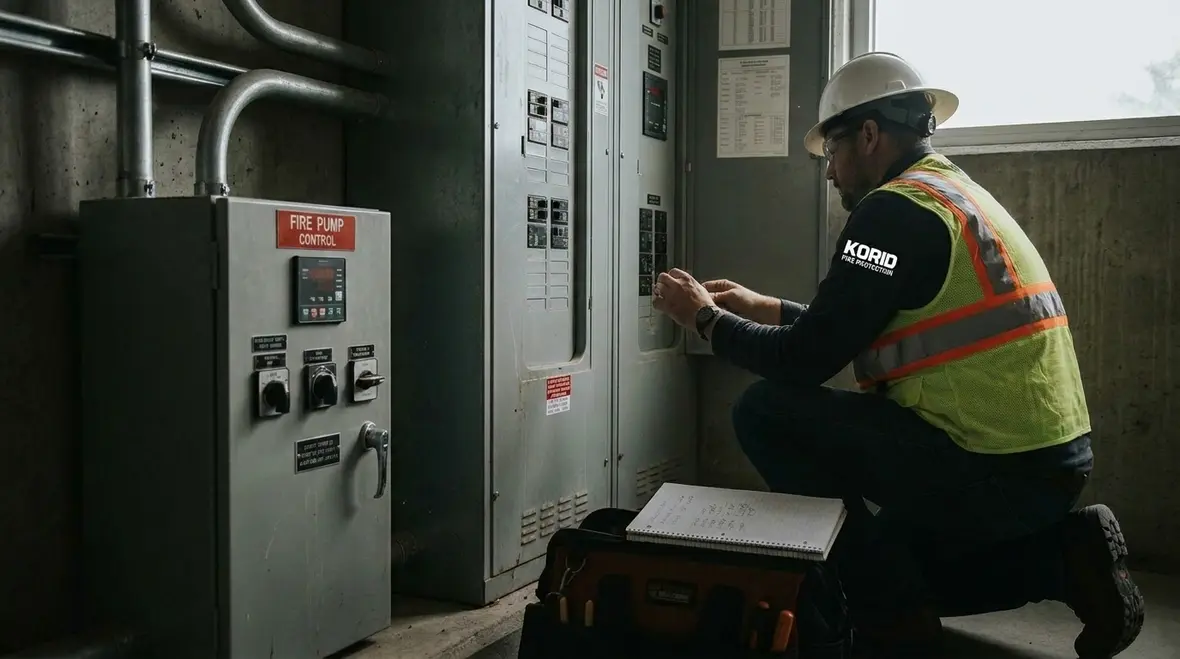
High-volume sprinkler arrays increase the number of active devices and the total demand during operation. Therefore, designers and contractors must map loads across time, not just at one moment. Kord Fire Protection technicians typically start by listing every electrical component tied to sprinkler operation and supervision. Then they group loads by type, such as motor loads for pumps, control power for panels, alarm interfaces, and any solenoid valves or indicating devices.
Next, they estimate worst-case operating scenarios. For example, a flow event can trigger pump starts, pressure switches, and control relays all at once. Meanwhile, supervision signals and annunciation still run in the background. Consequently, the engineer needs a load profile that reflects simultaneous operation rather than a best-case snapshot. If the facility also has standby power, the planning must include transfer behavior and ramping limits to avoid nuisance trips.
In addition, load planning must consider upstream equipment. Switchgear, breakers, feeders, and transformers all influence how power behaves. Kord Fire Protection technicians point out that a properly sized sprinkler system can still fail to perform if upstream panels cannot deliver current without severe voltage drop. That is where early coordination pays off, because power quality problems rarely introduce themselves politely. They just show up, ruin the moment, and act like they own the place.
What gets counted in a real load profile
- Primary fire pump motor demand
- Jockey pump and auxiliary pump loads
- Controllers, panels, relays, and pressure switches
- Alarm interfaces, annunciators, and supervised modules
- Transfer equipment behavior during standby events
- Monitoring loads that remain active during a flow event
How Kord Fire Protection technicians calculate demand and starting current
To understand load behavior, Kord Fire Protection technicians use a practical method: they calculate both steady state demand and peak starting current. Motors do not politely “ease in.” They pull surge current at start, and that surge can stretch the limits of conductors, breakers, and generators.
First, they identify each motor load, including fire pump motors and any jockey pumps or auxiliary pumps. Then they estimate starting current based on motor design and starting method. For example, direct-on-line starts can create a brief but high current spike. Soft starters or variable speed control may reduce the peak draw, though the control logic must still meet safety requirements.
After that, they sum concurrent loads based on the event sequence. If the system design calls for multiple pumps or staged operation, they include those stages. They also include control power requirements that remain active during the event. This way, industrial sprinkler power requirements get treated like an engineered system, not a random number on a spec sheet.
Finally, they verify protective device settings so the breakers do not trip during normal start events. In the real world, a breaker that trips is not “temporary bad luck.” It is a design mismatch, and it becomes a business risk very quickly. That same review helps teams compare utility service behavior with generator-backed operation, because the same motor can feel very different depending on what is feeding it.
Voltage drop and conductor sizing for sprinkler reliability
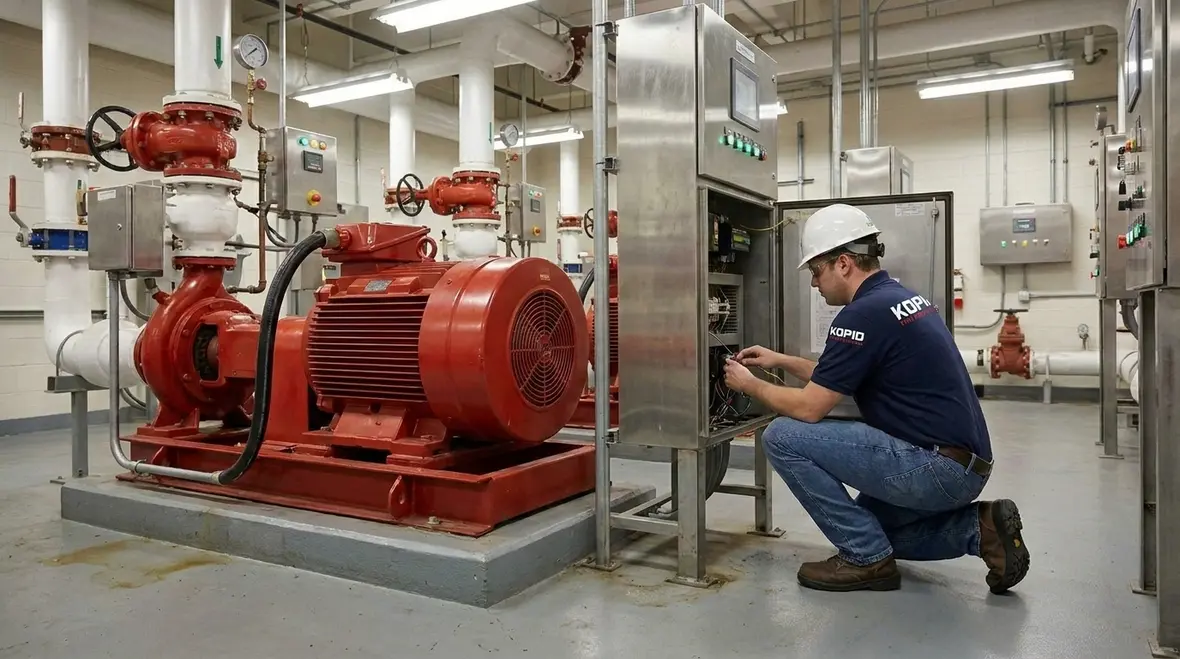
When current runs through long feeders, voltage drop becomes real. And when voltage drop becomes real, motors do not start cleanly, relays can behave oddly, and monitoring devices can miss thresholds. Therefore, Kord Fire Protection technicians push for conductor sizing based on calculations, not guesses. They check length, load current, installation method, ambient temperature, and any derating factors.
Then they aim to keep the voltage within acceptable limits at motor terminals and critical control panels. In practice, that means selecting conductors with enough ampacity and proper insulation ratings, while also controlling drop across parallel runs and splice points.
Additionally, they consider inrush impact on voltage. Even if steady state voltage looks fine, the start surge can dip the system. So they evaluate the combined effect on fire pump motor performance. If the plan includes emergency or standby power, they also check how the generator holds voltage under motor starting conditions.
Is this thrilling? Not exactly. But it prevents the kind of situation where the system does everything right on paper, then performs like a sitcom character who forgets the password at the worst moment. Professional, but with jokes you do not want to live through. It also helps maintenance teams later, because when conductor sizes, terminal ratings, and expected voltages are documented clearly, troubleshooting stops feeling like detective work with no coffee.
Why voltage performance matters during a fire event
- Motors need adequate terminal voltage to accelerate properly
- Relays and panels need stable control voltage to avoid false behavior
- Monitoring devices need dependable thresholds for supervision signals
- Generators must support both surge current and running demand without sagging too far
Standby power and transfer strategies for fire events
Many facilities rely on generators, batteries, or both. So the key question becomes how the system transfers power without losing critical function. Kord Fire Protection technicians explain that transfer time, voltage stability, and control logic all matter during a sprinkler flow event.
First, they confirm that the emergency power source meets the industrial sprinkler power requirements for the pumps and the control system. That includes starting surges and any sustained running demand. Then they review transfer equipment such as ATS units and ensure the fire system mode of operation stays consistent.
Next, they validate that the control circuits remain powered long enough to maintain status signals and allow proper pump sequencing. If the system uses supervised relays, panel signals, or annunciator circuits, any dropouts can cause nuisance alarms or loss of monitoring.
Then they test the system in realistic scenarios. Load testing verifies that voltage and frequency remain within acceptable ranges under motor start conditions. Generator performance is not a theory. It is hardware, and it can only prove itself through testing. That is why technicians emphasize commissioning and functional tests, not just install checklists.
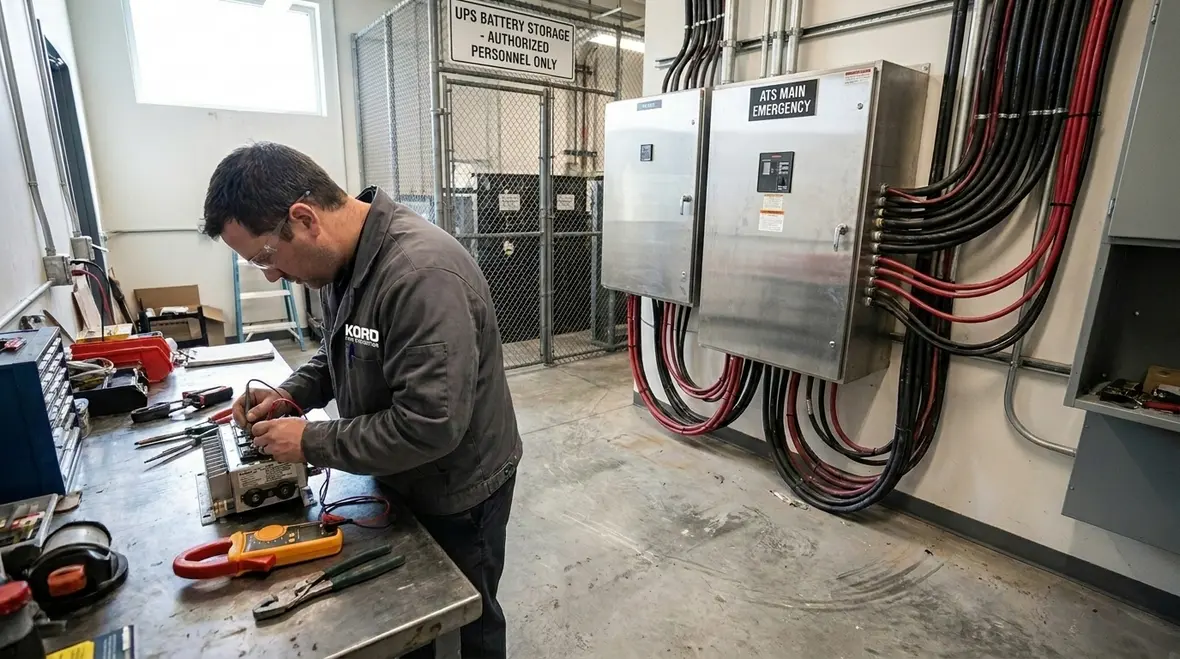
Coordination with panel protection, alarms, and monitoring loads
Electrical design for sprinkler systems does not stop at power. It must also coordinate protection and communication with panels, alarms, and supervisory circuits. Therefore, Kord Fire Protection technicians coordinate breaker selectivity and device ratings across the electrical one-line and fire control diagrams.
They check that the protective devices support safe operation during the pump start window. In addition, they verify that alarm signaling circuits and monitoring modules have appropriate power and do not overload shared circuits. If a building uses networked monitoring, technicians confirm that communication modules and power supplies continue to operate during the fire event and during transfer between normal and standby sources.
They also look at grounding and bonding. Grounding does not just satisfy a checklist. It controls fault behavior so protective devices clear faults in a safe and predictable way. That also helps maintain insulation integrity and reduces nuisance trips.
Finally, they review labeling and documentation. Clear labeling helps the maintenance team and emergency responders. And yes, sometimes “documentation” sounds boring until someone needs it at 2:00 a.m. When that moment arrives, good records feel like a superpower. It also makes future upgrades less painful, because nobody has to guess what a circuit was intended to support five years ago.
Best practices for commissioning, testing, and maintenance
Once the design is built, ongoing performance keeps the system dependable. Kord Fire Protection technicians recommend commissioning that focuses on electrical behavior during realistic operating modes. That includes verifying pump start current conditions, checking voltage at key terminals, and confirming that protective devices operate within the expected time window.
They also test control logic so pump sequencing follows the intended order. Additionally, they verify that alarm, supervisory signals, and panel indicators stay correct during transfer events and under simulated flow conditions.
Maintenance matters because electrical loads drift over time. Motors wear, breakers age, connections loosen, and standby power systems need periodic service. Technicians often recommend scheduled inspections of terminations, megger tests when appropriate, and confirmation of generator readiness.
Moreover, they advise keeping load data current. If the facility adds equipment, remodels electrical rooms, or changes pump configuration, then the sprinkler power plan must reflect that new reality. Otherwise, the system still behaves as if nothing changed, which is the electrical version of setting the thermostat to “summer” in the middle of winter. If you want extra context on pump readiness, Kord Fire Protection also covers related considerations in Fire Pump Testing Requirements – Things To Know and Routine Fire Pump Inspections and Their Importance.
Quick coordination snapshot
FAQ: Managing electrical loads for fire sprinkler arrays
Conclusion: get electrical certainty before the system needs it
If a facility wants high-volume sprinkler performance, it needs more than a good pump and a nice one-line diagram. It needs engineered power behavior that matches the industrial sprinkler power requirements across start, transfer, and sustained operation. Kord Fire Protection technicians help teams coordinate loads, limit voltage drop, and commission the electrical system so it performs when it matters.
If you want a practical load review, learn more about Kord Fire Protection and explore full fire protection services for support with pumps, controls, inspections, and system readiness. Because the best time to prevent electrical surprises is before the alarm ever rings.

Join Our Newsletter!
Get the latest fire safety tips delivered straight to your inbox From our Newsletter.