
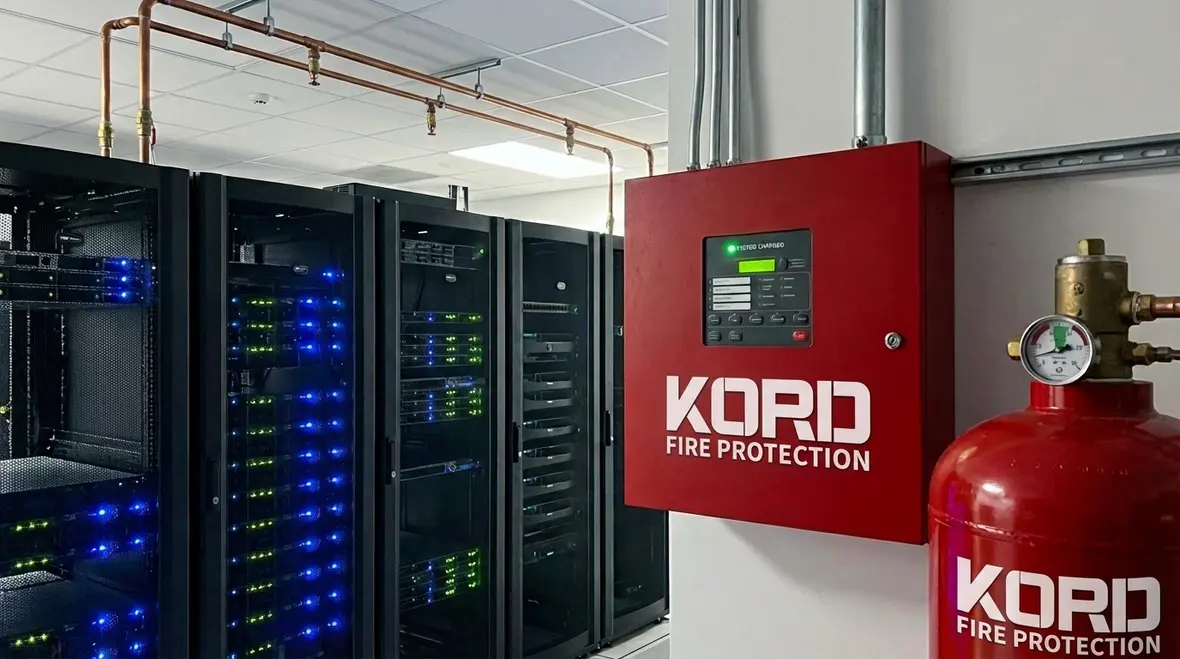
Server Room Fire Suppression System Guide
Server Room Fire Suppression: A Buyer’s Guide for Small and Mid Sized Facilities
In every humming server room, there is a quiet promise. Data flows. Systems respond. Business continues. Yet behind those blinking lights sits a risk that never clocks out. Fire. That is why our server room fire suppression system stands as a silent guardian, designed to detect, respond, and protect before disaster writes its own headline. Kord Fire Protection technicians often explain it this way: hardware can be replaced, but downtime writes a far more expensive story.
This guide walks decision makers through what truly matters when choosing protection for small and mid sized facilities. It strips away noise, clears the smoke, and offers clarity with a steady hand.
Understanding the Real Risk Inside a Server Room
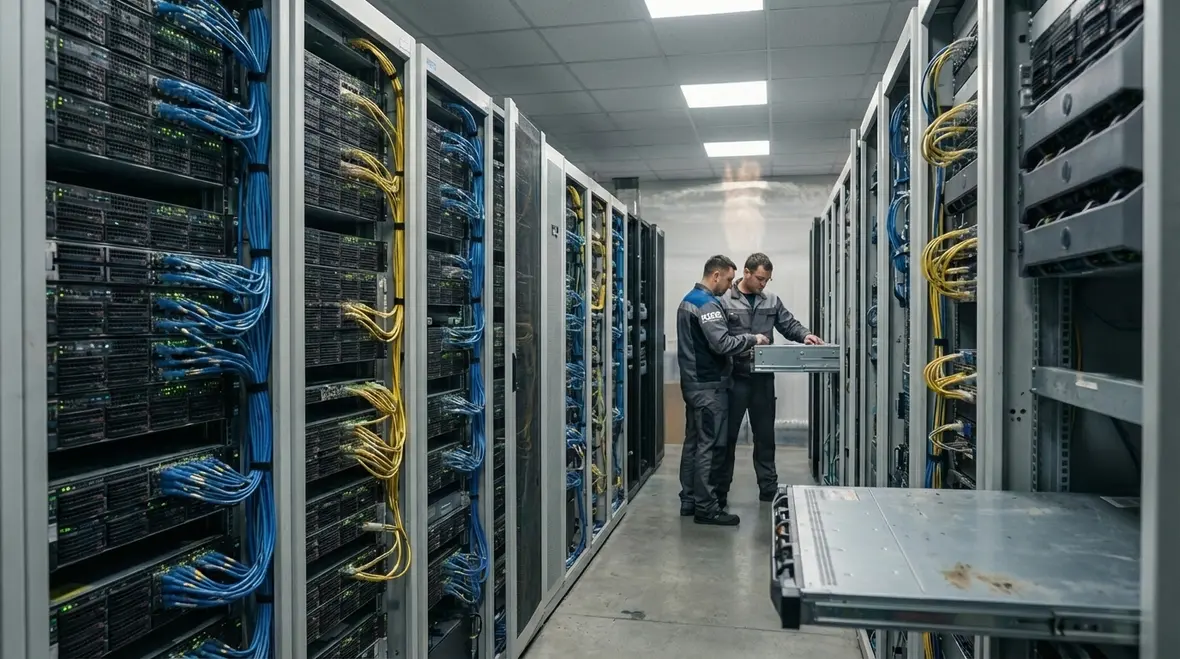
At first glance, a server room seems calm. However, behind those cabinet doors live high wattage equipment, dense wiring, and constant airflow. That combination creates heat. Add a single electrical fault, and heat turns into ignition.
Unlike office spaces, server rooms contain sensitive electronics that react poorly to traditional sprinklers. Water may stop flames, yet it can also destroy circuit boards in seconds. Therefore, facilities need fire protection designed specifically for electronic environments.
Kord Fire Protection technicians often remind clients that most server room fires start small. A power supply overheats. A cable arc flashes. Because the space is enclosed, smoke builds quickly. Consequently, early detection paired with fast suppression makes the difference between a minor interruption and a six figure recovery.
Moreover, small and mid sized businesses face unique pressure. They may not have redundant data centers across the country. So when one room goes down, operations stall. In some cases, customer trust stalls with it. And no one wants to explain to a client that their data vanished because a ten dollar wire failed.
For facilities that rely on clean agents to protect critical electronics, maintaining a tight envelope is just as important as choosing the right gas. If you want a deeper dive into why that room seal matters, Kord’s room integrity testing services article explains how leaks can quietly undermine otherwise well designed systems.
How Does a Server Room Fire Suppression System Work?
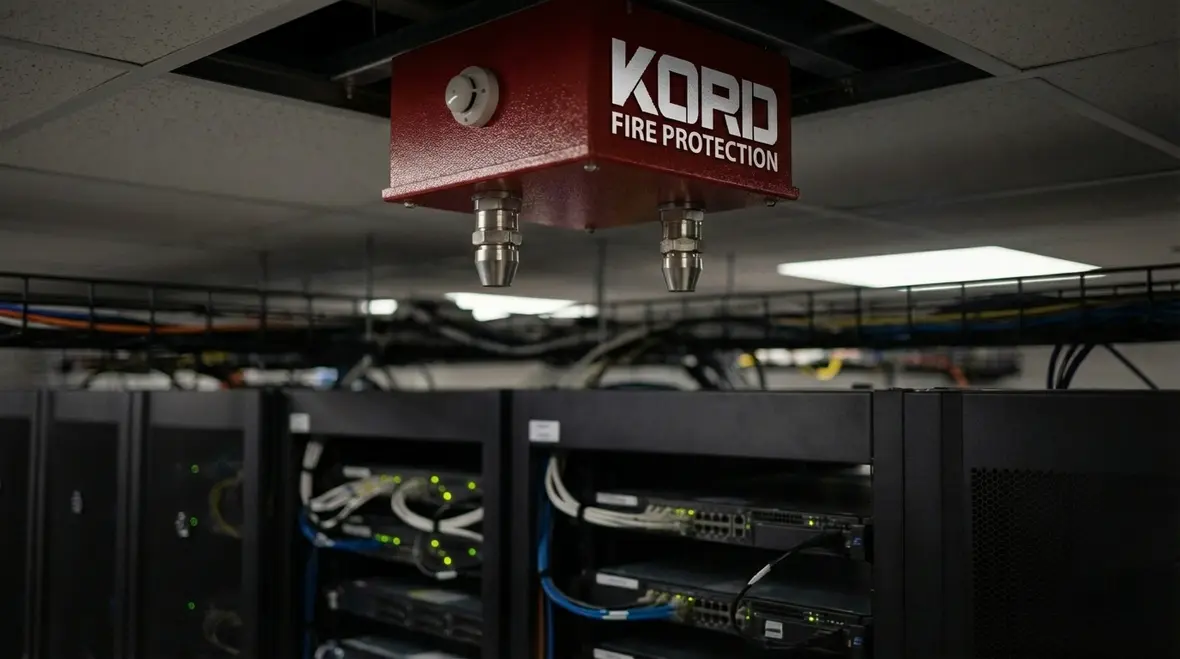
A modern server room fire suppression system uses three core elements. Detection. Control. Suppression.
Early detection
First, advanced smoke detection identifies particles at the earliest stage. These systems often use air sampling technology that detects microscopic changes before visible smoke appears. As a result, staff receive alerts while the issue remains manageable.
Intelligent control
Next, a control panel verifies the signal. It ensures the system reacts to real threats, not burnt popcorn in the breakroom down the hall. Once confirmed, the system activates the chosen suppression agent.
Clean agent suppression
Instead of water, most setups use clean agents. These gases absorb heat or interrupt the chemical reaction of fire. Importantly, they leave no residue. That means once the room is ventilated, equipment can often return to service quickly.
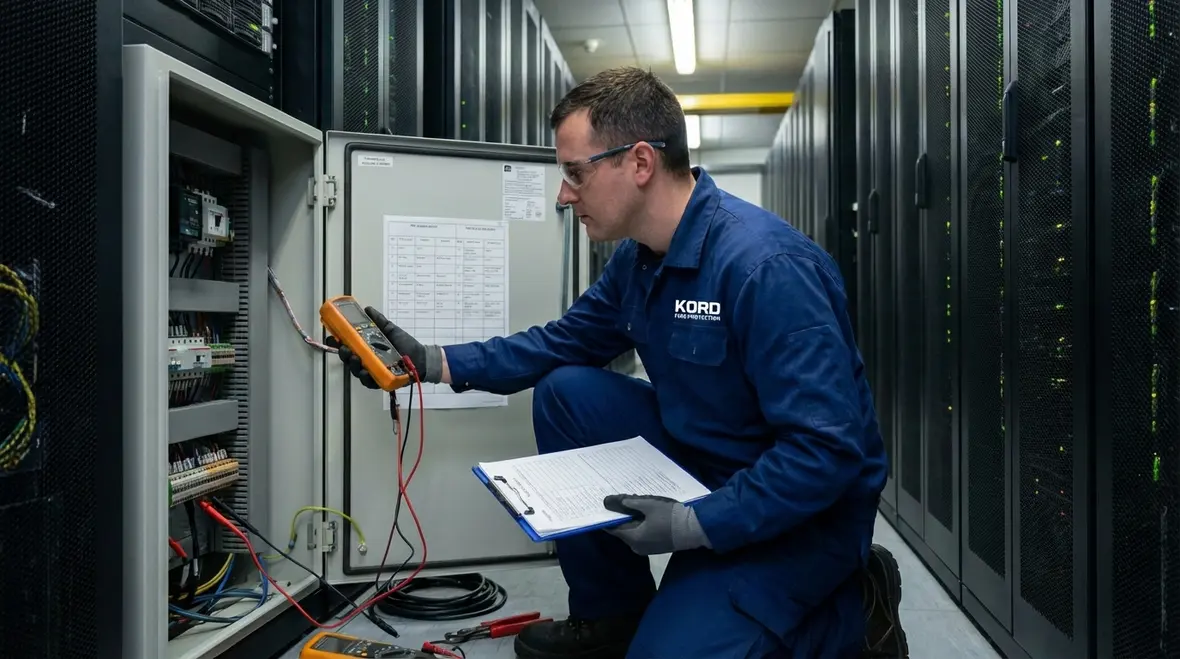
Kord Fire Protection technicians explain this process with calm clarity during walkthroughs. They show facility managers how detection zones operate, how alarms escalate, and how discharge timing protects both equipment and personnel. Because although the system acts fast, it also gives occupants time to exit safely.
If you are curious how these systems translate beyond server rooms into MRI suites, libraries, and other sensitive spaces, Kord’s overview of clean agent systems for high value equipment protection shows how the same principles scale across critical environments.
Choosing the Right Suppression Agent for Small and Mid Sized Facilities
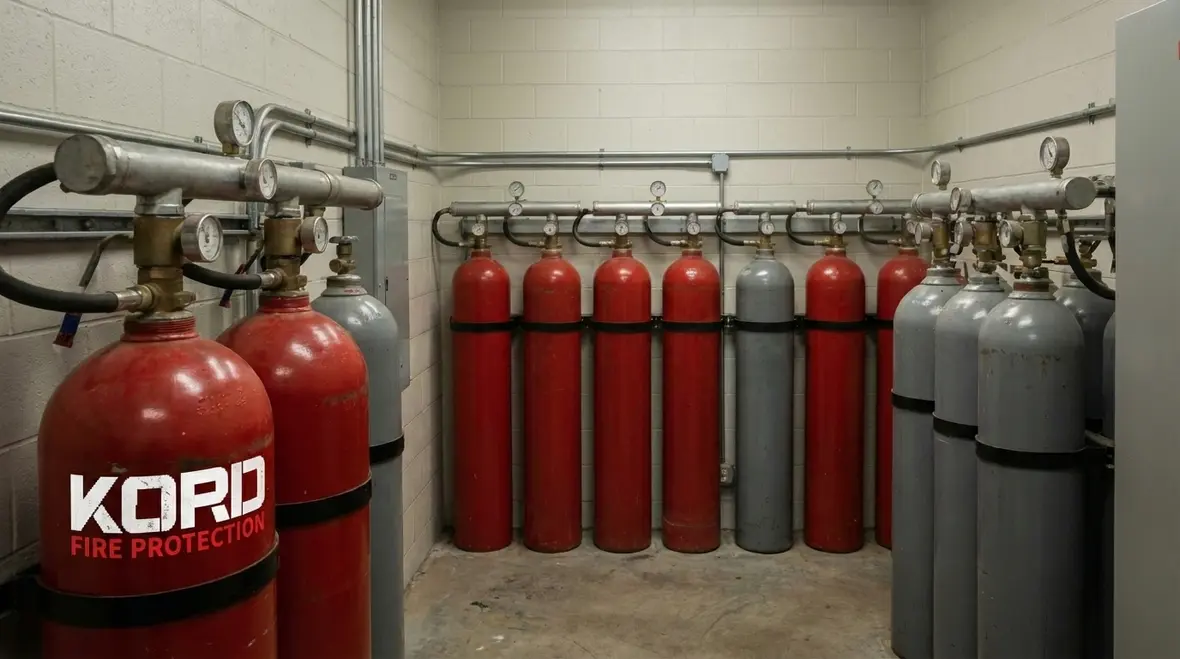
Not all clean agents perform the same way. Therefore, selecting the correct one requires thoughtful review of room size, enclosure integrity, and budget.
Common options include:
Clean chemical agents
Clean chemical agents
These interrupt the combustion process. They require less storage space, which benefits smaller rooms. In addition, they extinguish flames quickly without damaging electronics.
Inert gas systems
Inert gas systems
These reduce oxygen levels to stop fire. They suit larger enclosures and offer environmentally friendly profiles. However, they often require more cylinder storage.
Hybrid systems
Hybrid systems
These combine water mist with inert gas. While effective, they may not fit every small facility due to installation complexity.
Because each facility differs, Kord Fire Protection technicians conduct site evaluations before recommending solutions. They measure room volume, inspect cable penetrations, and test door seals. After all, even the best suppression agent fails if the room cannot hold it long enough to extinguish flames.
Furthermore, technicians discuss future expansion. A growing business may add racks next year. Therefore, the suppression system should scale without requiring a full redesign. Planning ahead prevents costly upgrades later.
If you want to see what a full clean agent program looks like—from selection to installation and maintenance—Kord’s dedicated page on clean agent fire suppression systems walks through the major agent types and where they fit best.
What Should a Small Business Look for in a Fire Protection Partner?
Choosing equipment matters. Choosing the right team matters more.
Depth of assessment
A qualified partner performs detailed risk assessments instead of offering one size fits all packages. They explain code requirements clearly. They coordinate with electricians, IT managers, and building owners. In short, they treat the project like a mission, not a transaction.
Clear communication and support
Kord Fire Protection technicians stand out because they translate technical details into plain language. They walk clients through compliance standards, inspection schedules, and maintenance plans. Consequently, business owners feel informed rather than overwhelmed.
Reliable maintenance and 24/7 response
Additionally, service support plays a crucial role. Fire suppression systems require periodic inspection, cylinder weighing, and control panel testing. Therefore, facilities should confirm that their provider offers ongoing maintenance. A system that sits unchecked for years becomes little more than expensive wall art.
And let us be honest. When alarms sound at 2 a.m., no manager wants to leave a voicemail and hope for a callback. Responsive support builds confidence long before an emergency occurs.
Comparing Protection Options for Server Environments
Below is a simplified comparison to guide decision makers. While every project requires custom evaluation, this overview highlights key differences.
| Option | Best For |
| Traditional Sprinklers | Buildings requiring general fire code compliance but not ideal for sensitive electronics |
| Pre Action Systems | Facilities needing added safeguards before water release |
| Clean Agent Fire Suppression | Dedicated server rooms and data closets with critical equipment |
| Inert Gas Systems | Larger enclosed data environments prioritizing residue free discharge |
While sprinklers meet general code, they rarely serve as the primary defense for IT spaces. Instead, a specialized server room fire suppression system delivers targeted protection without collateral damage.
However, budget always enters the conversation. Clean agent systems often cost more upfront than water based alternatives. Yet when measured against downtime, hardware replacement, and potential data loss, the return on investment becomes clear. It is the classic pay now or pay much more later scenario. And no CFO enjoys the sequel.
Installation, Testing, and Long Term Maintenance
Professional installation and commissioning
Once a facility selects a system, proper installation determines performance. Technicians mount nozzles for even distribution. They secure cylinders in accessible locations. They connect detection devices to control panels with precise wiring.
After installation, commissioning begins. This phase includes functional testing, alarm verification, and room integrity testing. The latter measures how well the enclosure holds the suppression agent. Because without proper sealing, gas escapes and fire may re ignite.
Kord Fire Protection technicians conduct these steps methodically. They document results, train onsite staff, and provide clear operating manuals. As a result, facilities understand exactly how their system behaves under real conditions.
Inspection, testing, and changes over time
Maintenance continues long after installation day. Regular inspections ensure cylinders remain properly pressurized. Control panels receive firmware updates when needed. Detection systems undergo sensitivity checks. Therefore, the protection remains reliable year after year.
Additionally, facility managers should review system performance after any room modification. Adding cable trays or cutting new wall penetrations may affect enclosure integrity. A quick evaluation prevents small changes from weakening overall protection.
Many of these inspections align with the broader requirements described in Kord’s main fire suppression services overview, which covers semi annual testing and the importance of keeping suppression systems in ready to respond condition.
Compliance, Codes, and Insurance Considerations
Fire protection never operates in isolation. Local codes, national standards, and insurance requirements shape system design.
Most jurisdictions reference standards governing clean agent systems, detection devices, and alarm integration. Therefore, buyers must confirm that their chosen solution meets current regulations. Failing inspection delays occupancy and invites fines.
Insurance carriers also review fire protection measures. In many cases, robust suppression systems lower risk profiles. Consequently, businesses may qualify for improved coverage terms. While policies vary, insurers appreciate proactive protection.
Kord Fire Protection technicians stay informed on evolving codes. They coordinate with inspectors and provide required documentation. This guidance prevents last minute surprises during approvals. Because nothing dampens opening day excitement like a red tag on the server room door.
The True Cost of Downtime and Why Prevention Wins
Hardware prices appear on purchase orders. Downtime hides in lost productivity, missed transactions, and strained client relationships.
For small and mid sized facilities, even a few hours offline disrupt payroll systems, customer portals, and communication platforms. Moreover, recovery efforts consume staff time long after flames disappear. Therefore, investing in a reliable server room fire suppression system protects more than equipment. It protects reputation.
Kord Fire Protection technicians often share real world examples during consultations. In one case, early detection stopped a minor electrical event before flames spread. The business resumed operations the same day. In another, a facility without dedicated suppression suffered extended closure. The difference lay not in luck, but in preparation.
As the saying goes, hope is not a strategy. It makes a fine movie theme, but it performs poorly as a risk management plan.
Frequently Asked Questions
Protect What Powers the Business
Every server room holds more than cables and circuits. It holds payroll data, customer trust, and the quiet rhythm of daily operations. Therefore, investing in the right protection is not optional. It is responsible leadership. Kord Fire Protection technicians stand ready to assess, design, and maintain systems built for small and mid sized facilities.
When preparation meets expertise, risk loses its power. Now is the time to secure the room that keeps everything else running. To explore options for your own server room or data closet, start with Kord’s full range of fire suppression services and request a clean agent evaluation tailored to your facility.
Know Your Weapon Before You Fight the Flame
Kord Fire Protection is your go-to when it comes to all things fire protection. For over 20 years, we’ve been serving Southern California with the quality service and equipment to keep your home or business safe at all times. Our competitive prices reflect our unwavering commitment to protecting what matters most in the event of a fire emergency. Give us a call, send an email, or use that form!

Join Our Newsletter!
Get the latest fire safety tips delivered straight to your inbox From our Newsletter.


