NFPA 2001 Section 9.6 Interlocks for Clean Agent Safety
Quick Answer
NFPA 2001 Section 9.6 requires interlocks that stop accidental clean agent discharge during a fire suppression event. In plain terms, these controls help the system act only when it should. For industrial, retail, and commercial sites across Australia, this protects people, equipment, and uptime. Kord Fire Protection can help design, test, and maintain these safeguards.
Clean agent systems do serious work, and NFPA 2001 interlocks clean agent fire suppression safety sits at the heart of that work. In the first critical moments of a fire event, the system must react fast, yet it also must avoid a false release that could shut down operations, create panic, or waste a costly agent. That is where Section 9.6 comes in. It sets the rules for interlocks that keep discharge under control. For busy facilities across Australia, that balance matters. After all, a clean agent system should be the calm guardian in the room, not the dramatic one who spills the punch bowl at the party.
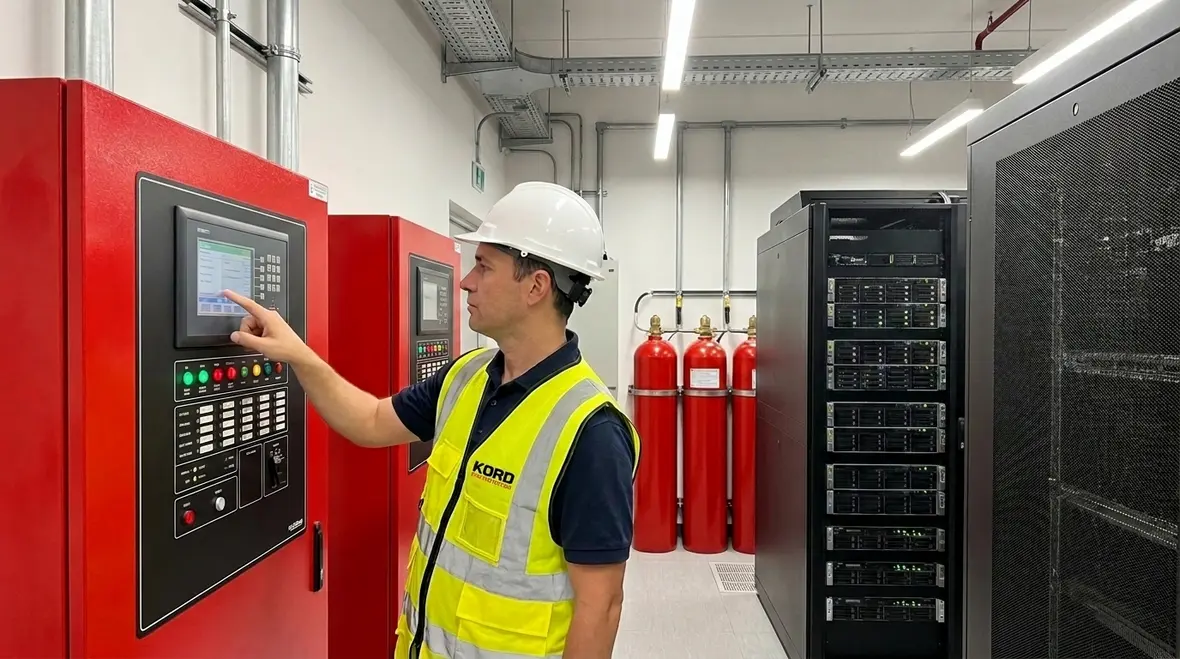
For facilities that need a broader protection strategy around clean agent systems, clean agent fire suppression for server rooms offers a useful look at how Kord Fire Protection supports sensitive spaces where uptime matters just as much as fire control. It fits naturally with the same design, release logic, and testing mindset that Section 9.6 expects.
What NFPA 2001 Section 9.6 requires
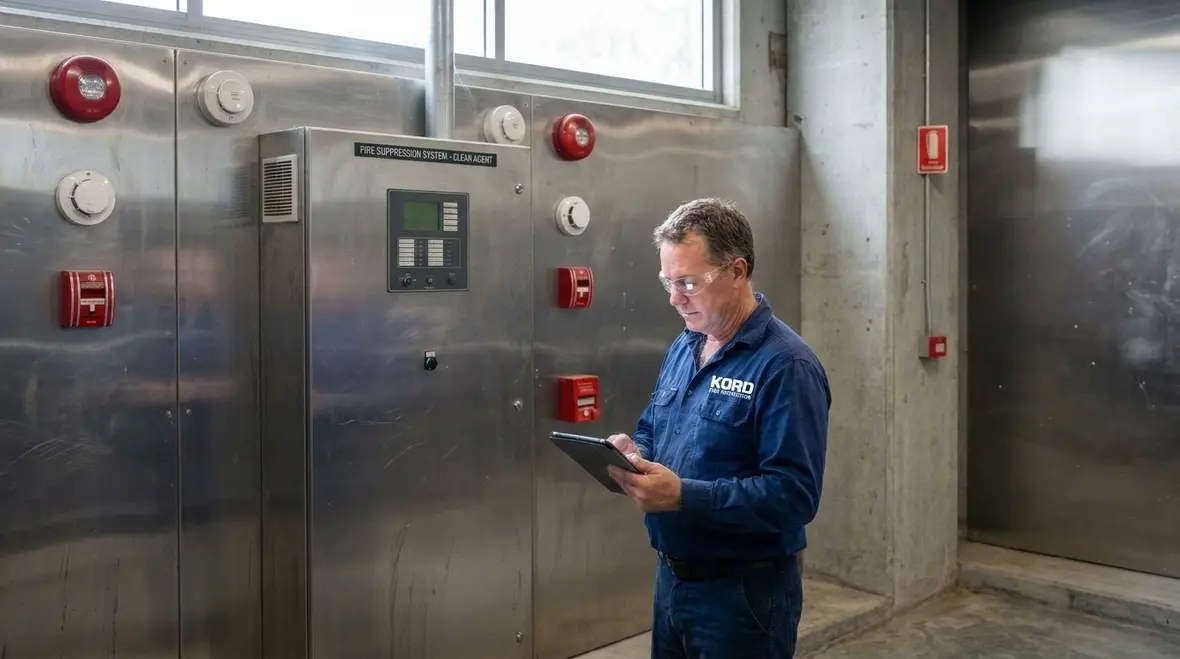
Section 9.6 focuses on the control logic that governs a clean agent system. It requires interlocks that prevent accidental discharge and make sure the system releases agent only under approved conditions. These controls often connect detection, alarm, shutdown, and release devices into one safe sequence. As a result, the system reduces risk to people, property, and business continuity.
In practical terms, the interlock setup can stop agent release when a door is open, when the wrong signal appears, or when a system fault exists. It can also ensure that alarms sound first and that equipment shutdown happens in the right order. This matters because clean agents are designed for speed. Therefore, the controls around them must be just as smart.
Why the logic matters more than people first assume
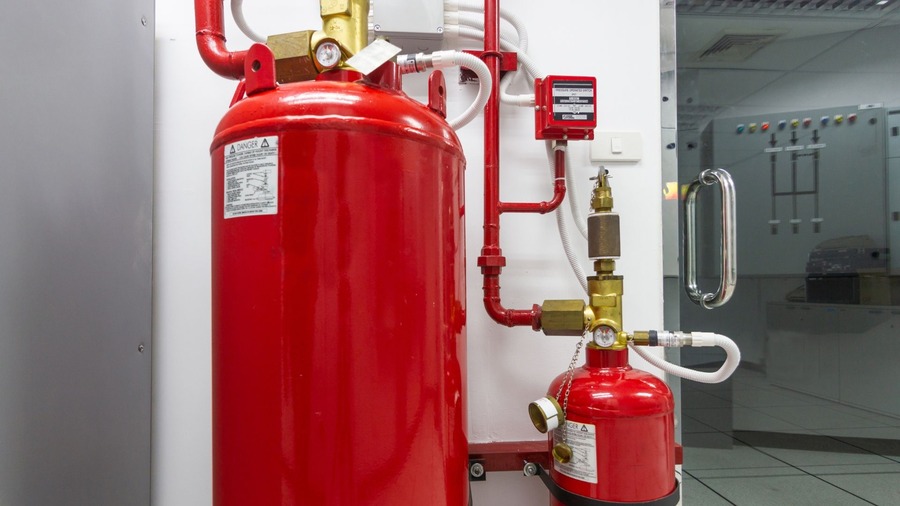
People often picture a clean agent system as cylinders, pipework, and nozzles. Those pieces matter, of course, but the real decision making happens in the logic behind the release. Interlocks are what tell the system to wait, warn, verify, shut things down, and only then discharge if every condition lines up. Without that logic, the hardware is like a very expensive orchestra with no conductor.
Why accidental discharge is such a big issue
An accidental release can create a mess that goes far beyond cleanup. It can interrupt operations, damage sensitive equipment, and trigger costly downtime. In some sites, it can also expose people to risk if the area is not cleared in time. That is why NFPA 2001 interlocks clean agent fire suppression safety is more than a code point. It is a business protection measure.
For data rooms, switchboards, warehouses, plant rooms, and high value commercial spaces, an unwanted discharge can hit hard. One false event may mean lost stock, delayed service, and a very unhappy operations team. Nobody wants that kind of surprise before lunch.
- Production can stop while the area is assessed and reset
- Specialist cleanup or recharge costs can pile up quickly
- Critical electronics may need inspection before being trusted again
- Staff confidence can drop if alarms and releases feel unpredictable
- Management ends up explaining an avoidable event to everyone at once, which is never the fun meeting of the week
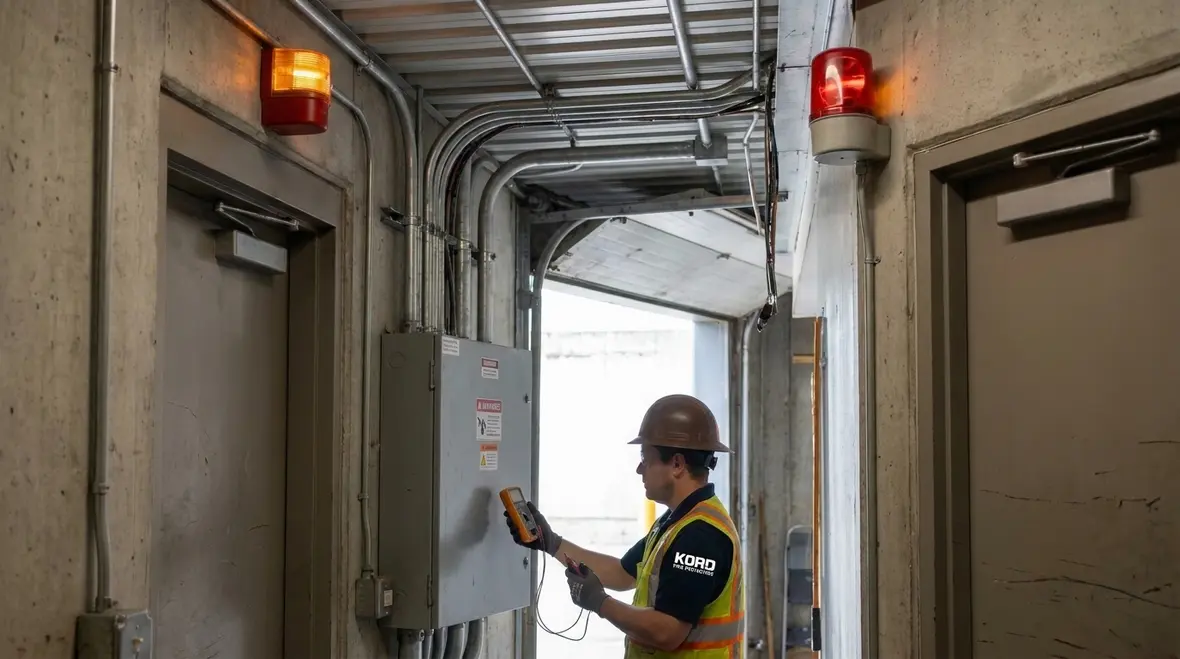
How interlocks work in clean agent systems
| System step | What the interlock does |
| Detection | Confirms the fire signal is valid before release can start |
| Pre discharge alarm | Warns people so they can leave the protected area |
| Door and access control | Limits entry and helps keep the protected space secure |
| Equipment shutdown | Stops HVAC, power related gear, or other systems that may affect discharge |
| Release circuit | Allows agent discharge only when all required conditions are met |
These steps work together like a well rehearsed stage crew. Everyone knows the cue, nobody improvises, and the show goes on without chaos. Moreover, a good interlock design reduces the chance of human error while helping the system respond the right way when a real fire occurs.
A closer look at the release sequence
In many systems, the process begins with detection devices confirming that conditions point to an actual fire rather than a random blip. The pre discharge alarm then gives occupants time to leave. At the same time, connected functions may shut down airflow or related equipment so the protected enclosure behaves as intended. Finally, the release circuit permits discharge only after the approved chain of events has occurred. That orderly sequence is exactly what keeps a fast system from becoming a reckless one.
That is also why documentation matters so much. If the cause and effect logic is unclear, teams may not know what is supposed to happen, when it is supposed to happen, or what to test during maintenance. A system that behaves like a mystery novel is entertaining on a shelf, but not in a protected room full of valuable equipment.
Why facilities should care about interlock performance
Industrial plants, retail operations, logistics hubs, data spaces, and commercial buildings often protect expensive assets with clean agent systems. These sites need reliable fire safety without heavy water damage or long recovery times. However, they also need systems that fit real operations and meet compliance duties.
That means engineers and facility managers must look beyond the cylinder room and the nozzles. They must check cause and effect logic, release sequence, shutdown timing, and alarm flow. In other words, the whole chain must work. If one link fails, the plan gets shaky fast. And as every facilities manager knows, shaky is not a favourite business strategy.
Where Kord Fire Protection adds value
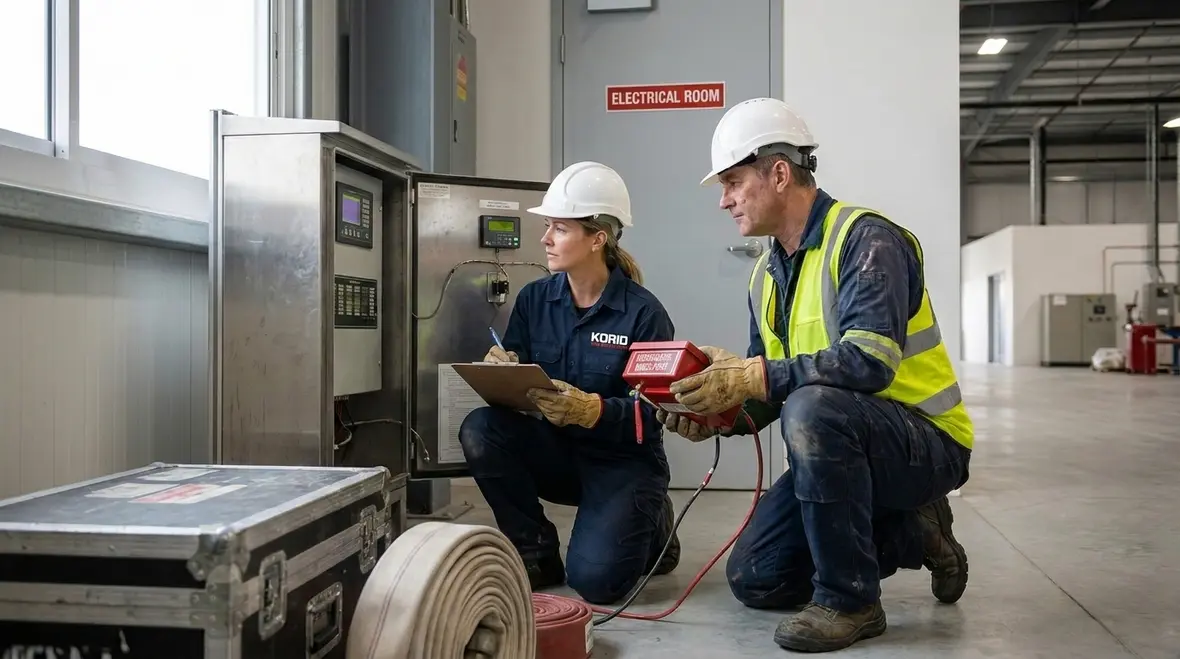
Kord Fire Protection can become a vital partner for this service because the work calls for more than basic installation. It needs careful design, testing, inspection, and ongoing support. Kord Fire Protection can help clients assess the site, confirm the right interlock arrangement, and verify that the system performs as intended.
Just as important, Kord Fire Protection can support businesses with system checks that reduce false discharge risk and protect critical operations. For sites that cannot afford downtime, that support is gold. Or, to put it more plainly, it keeps the lights on and the headaches down.
For readers who want the broader code context, Kord Fire Protection also has a related resource on NFPA 2001 guidelines for clean agent fire suppression systems. It pairs well with this discussion because interlocks do not live in isolation. They are one part of a bigger protection strategy that has to work together under pressure.
What a strong service program should include
- System review against the protected area layout
- Testing of detection and release logic
- Verification of shutdown and alarm signals
- Inspection of doors, panels, and control devices
- Clear records for compliance and maintenance history
- Staff guidance so operators know what the system will do
When these items stay in place, the system becomes easier to trust. Furthermore, the business gains a clearer view of risk, which helps leaders make better decisions before problems appear.
Common questions about interlocks and clean agent safety
Final word
For industrial, retail, and commercial sites, reliable clean agent protection depends on strong interlocks and careful testing. Kord Fire Protection can help businesses build that confidence and keep risk in check. A well planned system does more than react to fire. It protects people, preserves assets, and supports continuity when the pressure is on.
For a safer, smarter system that protects people, assets, and uptime, speak with Kord Fire Protection and review the site’s clean agent controls today. When interlocks are designed, tested, and maintained properly, the whole system becomes calmer, sharper, and a lot less likely to spill the punch bowl.

Join Our Newsletter!
Get the latest fire safety tips delivered straight to your inbox From our Newsletter.