NFPA 2001 Section 11.1 Inspection and Maintenance Schedule
Quick Answer: NFPA 2001 Section 11.1 sets the rhythm for clean agent fire system care. It calls for regular inspection, testing, and maintenance so the system stays ready when needed. For industrial, retail, and commercial sites across Australia, this protects uptime, supports compliance, and keeps risk low.
In the world of NFPA 2001 inspection maintenance clean agent fire suppression, timing matters. These systems protect valuable assets, sensitive equipment, and business continuity without leaving a mess behind. That is the charm. No foam drama. No water damage. Just fast, clean protection. Still, NFPA 2001 Section 11.1 makes one thing very clear: if a system is not checked and maintained on schedule, it may fail when the pressure is on. And nobody wants a fire system that acts like a sleepy extra in a blockbuster scene.
For sites planning upgrades or regular service, Kord Fire Protection’s clean agent fire suppression service is a natural next step for keeping protected spaces aligned with real operational risk. It fits especially well where electronics, archives, control rooms, and critical process areas do not appreciate a surprise soaking.
What NFPA 2001 Section 11.1 means for business sites
Section 11.1 focuses on inspection, testing, and maintenance of clean agent fire suppression systems. It requires owners and facility teams to keep the system in proper working order at all times. In plain terms, the system must be ready to do its job the moment it is called on.
For Australian industrial, retail, and commercial sites, this matters because clean agent systems often protect server rooms, electrical areas, control rooms, archives, and other spaces where water would cause major loss. Therefore, routine care is not optional. It is part of sound risk management.
It also helps owners think beyond the hardware itself. A compliant system is not just a row of cylinders and a control panel looking serious in a corner. It is a full response chain that depends on detection, release logic, room integrity, power supply, signage, and documentation all doing their part without improvising. When one part drifts out of shape, the whole strategy gets a little wobbly.
Why this section matters in day to day operations
The real value of Section 11.1 is that it turns fire protection into a routine discipline instead of a once installed and hopefully fine arrangement. Busy facilities change constantly. Equipment gets added. Rooms get repurposed. Access panels get blocked by storage that somehow appeared overnight. The schedule exists to pull the system back into focus before those small changes become a larger compliance or performance problem.
How the inspection and maintenance schedule should work
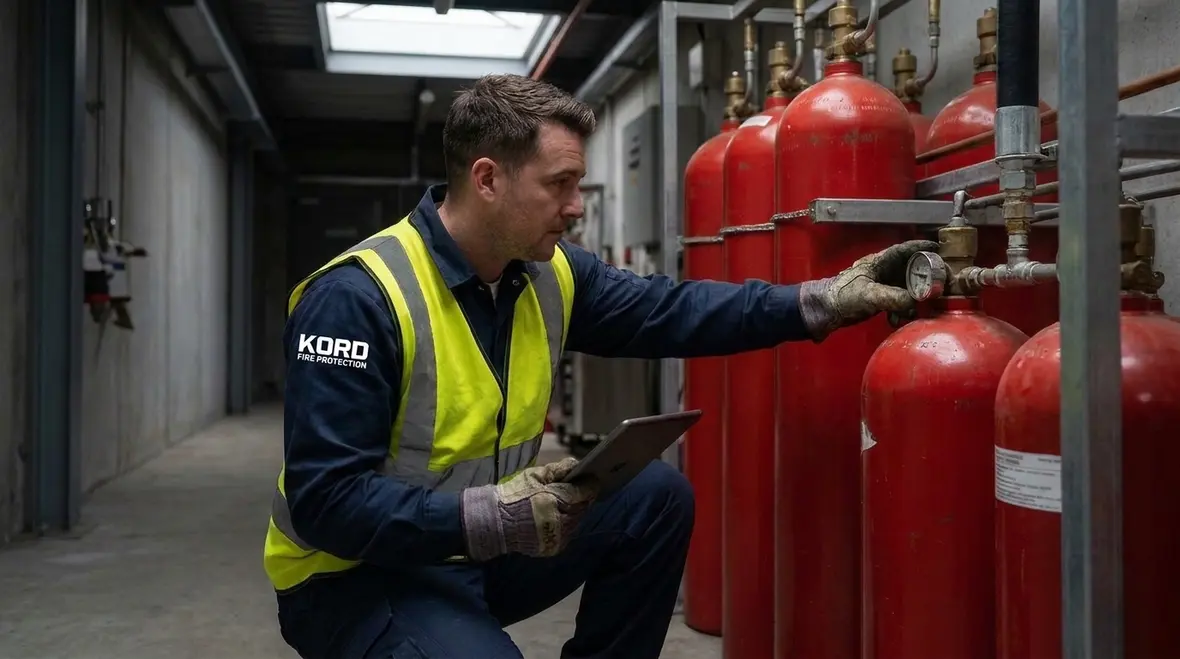
The schedule should follow the system design, the site risk, and the maker’s instructions. However, the core idea stays the same: inspect often, test at the right intervals, and fix faults fast. A good program usually includes:
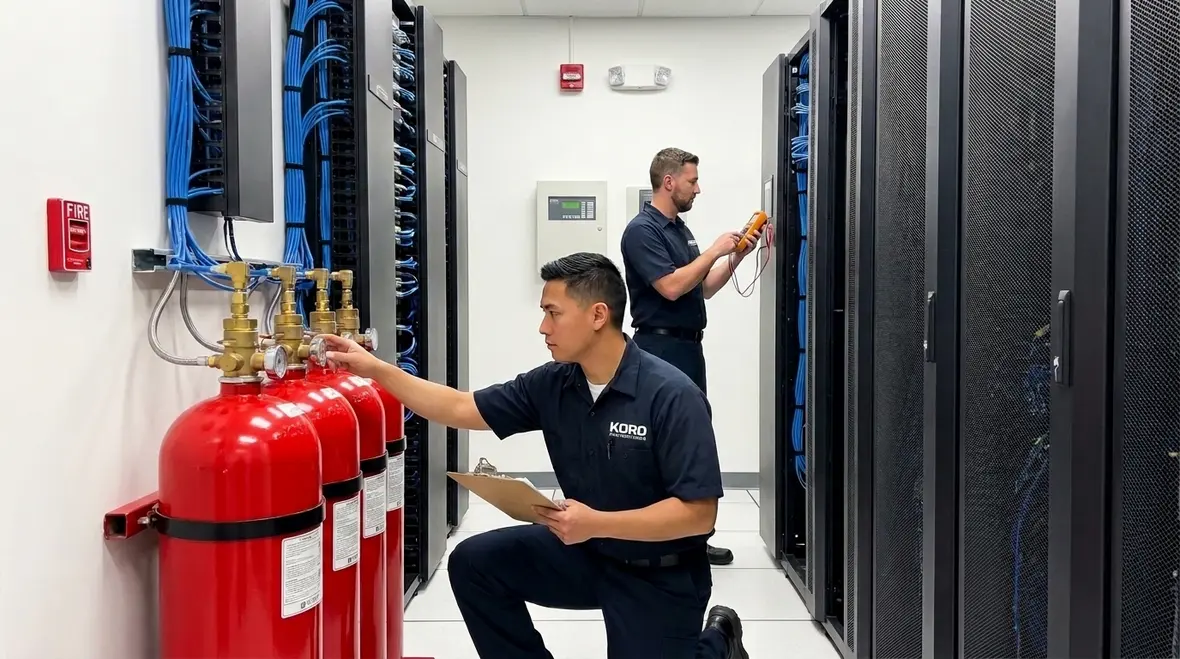
- Regular visual checks of cylinders, nozzles, piping, alarms, and release hardware
- Checks for damage, corrosion, loose parts, leaks, or blocked components
- Review of control panels, power supplies, and manual release stations
- Testing of detection devices and alarms as required
- Maintenance after any discharge, fault, change, or repair
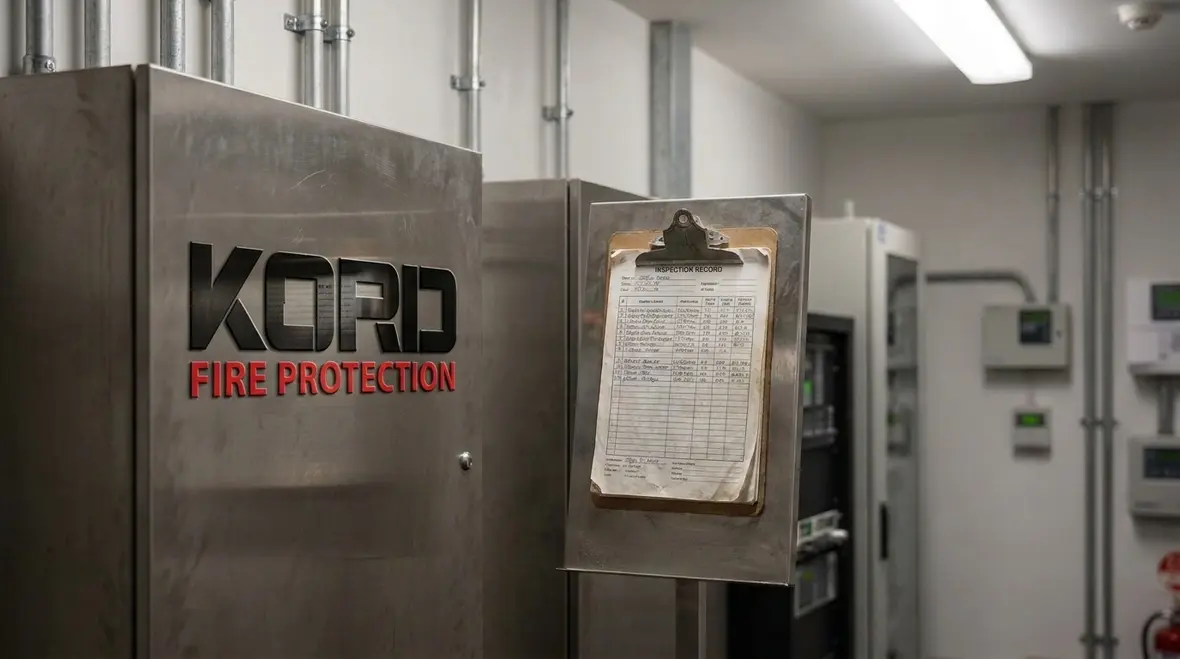
Also, records should stay clear and current. If no one can prove the system was checked, the paperwork can become more dramatic than a reality show reunion. Good logs help show compliance and support safer operations.
In practice, the best schedules are predictable enough to stay on track and flexible enough to respond when the facility changes. If a room layout shifts, a device faults, or a discharge occurs, the program should not shrug and wait for the next calendar date. It should react. That balance between routine and responsiveness is what keeps the system useful instead of ceremonial.
What should be reviewed during scheduled service
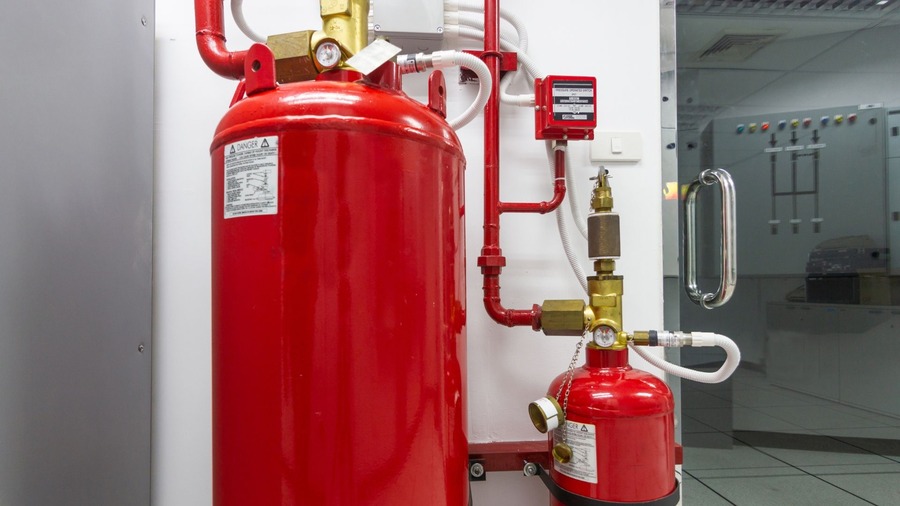
Scheduled service should review the full protected environment, not just the obvious components. That means looking at agent storage, discharge paths, control functions, and the room itself. If openings, penetrations, or airflow conditions have changed, the hold time that supports suppression may be affected. That is why related resources like clean agent suppression system and room integrity testing fit naturally into the wider conversation about keeping a system truly ready.
What a strong inspection plan looks like
A strong plan does more than tick boxes. It protects people, property, and business uptime. First, it starts with trained technicians who know clean agent systems well. Next, it uses a fixed calendar so checks do not drift when work gets busy. Then, it adds follow up actions for any issue found during inspection.
To make the process easier, many businesses break the work into two clear columns:
| Inspection focus | Why it matters |
| Cylinder pressure and agent level | Shows the system can release the right amount of agent |
| Detection and alarms | Confirms the system can sense fire and warn people early |
| Nozzles and pipework | Helps the agent reach the protected area correctly |
| Control equipment | Keeps release logic and power supply ready |
| Room seals and openings | Supports the clean agent hold time needed for fire control |
As a result, the site gains a more reliable system and fewer surprises. And in facility management, surprises tend to cost money. Lots of it.
A strong plan also defines who owns each action after the inspection is done. If a technician notes low pressure, damaged fittings, blocked nozzles, or control issues, someone must track the repair through to closure. Otherwise, the report becomes a lovely little monument to unfinished business. Systems stay dependable when the inspection leads to action, not when the paperwork vanishes into a folder and hopes for the best.
Why maintenance matters after installation
Even the best clean agent system does not stay perfect on its own. Over time, dust builds up, parts age, settings drift, and site changes alter the risk. For example, a new cable tray, a moved partition, or a changed room layout can affect system performance. Therefore, maintenance keeps the system aligned with the current site condition.
Maintenance also helps avoid false alarms and unwanted releases. That is important because a false discharge can stop operations, trigger downtime, and create a very expensive day. Moreover, proper care extends asset life and improves confidence among site leaders and insurers.
This is also where a broader protection strategy matters. Facilities rarely run one isolated life safety system in a vacuum. Suppression needs to coordinate with alarms, shutdown functions, access procedures, and operational planning. Kord Fire’s broader fire suppression services page is useful context for teams that want the clean agent schedule to fit into a bigger compliance and maintenance picture.
Common reasons systems drift out of readiness
Readiness usually slips in ordinary ways, not dramatic ones. A battery loses strength. A nozzle gets obstructed during unrelated works. A room penetration is left unsealed after cabling. A manual release station becomes awkward to access. None of these changes look cinematic on their own, but together they can erode performance. Maintenance is what catches the boring problems before they become exciting ones, and that is exactly the kind of excitement most facilities do not need.
How Kord Fire Protection becomes a vital partner
Kord Fire Protection can become a vital partner by handling the technical side of NFPA 2001 inspection maintenance clean agent fire suppression with skill and consistency. More importantly, Kord Fire Protection can help businesses stay on schedule, reduce risk, and keep records in order.
For facilities across Australia, that support can include planned inspections, maintenance visits, fault finding, system testing, and advice on compliance. In addition, Kord Fire Protection can help identify weak points before they become real trouble. That matters in places where clean agent systems protect high value operations and critical downtime cannot be shrugged off like a Tuesday headache.
When a trusted partner manages the schedule, the site team can focus on operations instead of guessing whether the system is ready. That kind of support brings calm, and calm is gold in risk work.
For readers who want a deeper standards focused companion piece, Kord Fire Protection also has a relevant resource on NFPA 2001 guidelines for clean agent fire suppression systems. It pairs well with Section 11.1 because it helps frame the maintenance schedule within the wider purpose of clean agent protection.
What facilities should ask before scheduling service
Before service begins, a site should ask a few clear questions. Who will inspect the system? What standard and site rules will guide the work? What parts may need repair or replacement? How will any fault be documented and closed out?
These questions help the business choose the right service level. They also improve planning for production areas, retail trading hours, and commercial tenants. Furthermore, they help prevent delays that can ripple through an entire site like a bad sequel nobody asked for.
It is also smart to ask how the provider handles follow up reporting, impairment management, replacement components, and retesting after repairs. A good answer should sound clear, practical, and specific. If it sounds foggy enough to qualify as weather, ask again.
FAQ
Keep the system ready before it is needed
NFPA 2001 Section 11.1 gives businesses a clear path to safer clean agent protection. With steady inspections, proper maintenance, and good records, systems stay ready for the moment that matters. For Australian facilities that need dependable support, Kord Fire Protection can be a practical partner and a steady hand.
When the stakes are high, that kind of service is not just useful. It is smart business. A disciplined schedule today is far cheaper than a failed response tomorrow, and much less embarrassing than discovering the system needed attention after it was supposed to save the day.

Join Our Newsletter!
Get the latest fire safety tips delivered straight to your inbox From our Newsletter.