
Commercial Kitchen Fire Suppression Agents in Australia
Commercial kitchen suppression systems protect food facilities when grease, heat, and airflow team up like a villain duo. This article breaks down the key differences between fire suppression agents used in kitchens, what each one does best, and how kord fire protection can partner with your service plan to keep compliance and safety aligned across Australia. If you are reviewing upgrades or planning a new fitout, Kord’s fire suppression solutions page is a smart place to start before the hood tries to become the most dramatic employee in the building.
Quick answer: which fire suppression agent fits most commercial kitchens?
Many kitchens benefit from wet chemical systems because they cool surfaces, stop grease fires, and help prevent re ignition. However, the right choice depends on cooking equipment, hood design, fuel type, local rules, and maintenance access. kord fire protection can help match agent choice to real kitchen risk, not guesswork.

Why fire suppression in commercial kitchens needs real agent selection
In a commercial kitchen, fire rarely starts as a neat little campfire. It erupts when hot oils reach their limit, then air and cooking speed spread the problem fast. That is why commercial kitchen suppression focuses on both knockdown and control. In addition, the right agent must work inside the hood and at the protected surfaces, not just in theory on paper. And yes, every system has its own “personality.” Some act quickly. Some reduce re ignition. Some are easier to maintain. Choosing wrong can mean downtime when the kitchen cannot pause for heroics.
That practical difference matters because a kitchen is not one hazard pretending to be many. It is many hazards working side by side. Fryers behave differently from chargrills. Open burners do not create the same fire profile as enclosed appliances. Hood geometry, duct routing, and airflow all affect how a suppression agent reaches the seat of a fire. As Kord explains in its Commercial Kitchen Fire Suppression Systems Explained guide, the whole point is to protect cooklines, hoods, and ducts as a coordinated system rather than hoping one piece of hardware saves the day.
Agent choice is really a risk management decision
Owners sometimes talk about suppression agents like they are choosing a phone case, but the decision affects installation layout, inspection routines, post incident cleanup, and how fast the business can reopen. A system that looks fine on a spec sheet may be awkward in a real kitchen if it does not suit the equipment mix or the facility’s cleaning and service rhythm. In other words, the best agent is the one that still makes sense when the lunch rush hits and everyone suddenly remembers that fire safety is not a background extra.
Wet chemical systems for grease rich cooking
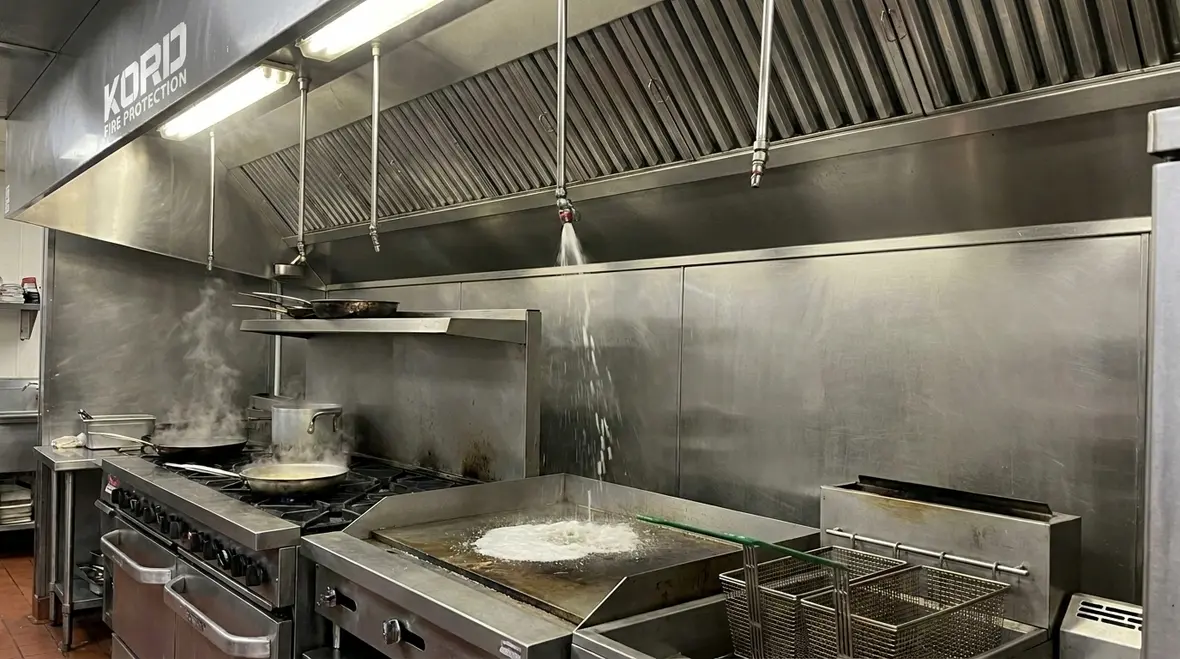
Wet chemical systems use a specially formulated liquid that creates a foam like layer over burning cooking oils and fats. This layer helps separate the fuel from oxygen, while the agent also cools heated surfaces. As a result, the fire slows down and re ignition becomes less likely.
Facilities across Australia often favor wet chemical for ducts, hoods, and suppression nozzles because it targets the fire where it starts: inside the hood assembly. Furthermore, these systems can align well with the realities of grease buildup, grease handling, and high cooking loads found in retail foodservice and industrial catering kitchens.
That said, the “best fit” depends on design details. A system must match the hood type, nozzle placement, pipe runs, and the specific cooking equipment in the area. If the kitchen changes, the suppression plan should be reviewed too. In other words, the system should not rely on yesterday’s menu.
This is also why so many kitchen specific systems are built around wet chemical performance. Kord’s recent article on the commercial kitchen fire suppression system approach highlights how these systems are designed to discharge directly into the hazard area, cool the fire zone, and reduce the chance of flames spreading through the hood and duct path.

Where wet chemical really earns its keep
High volume cooking lines, fryer banks, and grease heavy menu operations usually benefit most from wet chemical systems because they are designed with fats and oils in mind. That does not make them a magic wand. It means they are often the most natural match for the job. If your kitchen pushes serious output, Kord’s article on commercial kitchen fire suppression for high volume kitchens offers a useful companion read on keeping hood and duct coverage aligned with real production pressure.
Clean agent systems and where they make sense
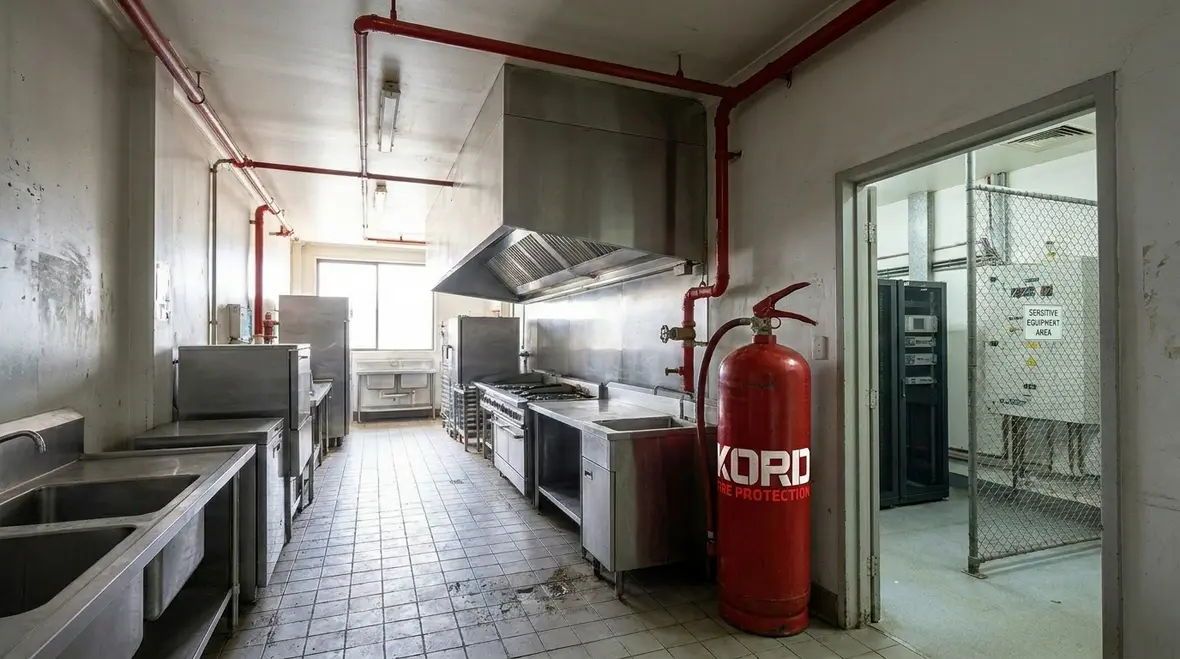
Clean agent systems use gases or inert media designed to suppress fire without leaving wet residue. They often appeal to spaces where liquids create a problem for sensitive equipment, such as certain back of house electronics rooms.
However, they are not always the first pick for typical grease laden hood spaces. Many commercial kitchens rely on agents that actively manage hot oil fires, and wet chemical systems usually deliver that direct interaction. Therefore, clean agents can fit better for targeted hazards like electrical rooms, storage areas, or specific server related risks, depending on the risk assessment.
In practice, suppression in kitchens can involve multiple zones. A facility might use one strategy for the cooking hood and another approach for adjacent equipment areas. This is where clear planning matters, because the wrong agent in the wrong zone turns the whole system into expensive confusion.
Think beyond the hood line
A commercial food facility may protect the hood with one system and nearby electrical or support spaces with another. That does not mean overcomplicating the building. It means respecting how different hazards behave. Clean agent protection can be valuable when residue would create a bigger recovery problem than the fire itself, especially around critical electronics or specialty support areas.
Dry chemical agents for versatile hazard coverage
Dry chemical agents, often powder based, interrupt the chemical reaction in flames. They can work across a range of fire classes, which makes them attractive for flexible or mixed risk environments. For example, some facilities have both cooking risks and additional hazard types like small fuel storage, forklifts nearby, or rapid tool use during service.
Yet, kitchens do not stay clean for long. Dry chemical can leave residue that requires cleanup before operations resume. Consequently, it can increase post event recovery time, which matters when you are trying to reopen the line and serve customers like nothing happened.
In addition, dry chemical effectiveness depends on enclosure conditions, airflow, and how the agent reaches the fire. So, the system design must confirm coverage, nozzle selection, and operational conditions. A strong plan here prevents the “we installed it, so why didn’t it behave like we expected?” conversation.
Versatile does not always mean ideal
Dry chemical has value where hazards overlap, but kitchens care deeply about cleanup time, food safety disruption, and how quickly the operation can get back on its feet. That is why broader coverage can still be the wrong trade if the aftermath creates a second emergency called “now the whole site is shut down and covered in residue.”
How agent choice changes system design, maintenance, and compliance
The agent is only one part of the story. Once the suppression agent type is selected, the system design changes around it. For wet chemical, designers focus on nozzle spacing, detection logic, pipe sizing, and foam performance inside the hood. For clean agents, the priority shifts to room integrity, leakage considerations, and agent concentration control. For dry chemical, the focus leans toward reach, distribution, and cleanup planning.
Moreover, commercial kitchen suppression performance relies on maintenance that matches the agent’s behavior. Installations need scheduled inspections, checks for nozzle condition, tank levels, valve operation, and detection equipment performance. Filters, hood geometry, and duct conditions can affect real world results, so a maintenance plan should include kitchen realities, not just a checklist.
This is also where audits and compliance expectations come into play for industrial, retail, and facilities operations across Australia. Regulations and standards drive requirements, but the practical application comes down to trained service, correct documentation, and consistent upkeep.
If you want a practical maintenance companion, Kord’s restaurant hood fire suppression inspection checklist guide is helpful for understanding what technicians review, from nozzles and pull stations to documentation and shutoffs. It is the kind of reading that makes future surprises much less exciting.
Why kord fire protection becomes a vital partner
Installing a system is not the final chapter. It is the first page. kord fire protection can help teams manage the full lifecycle of fire suppression, from selection support to service schedules that reduce surprise downtime. Additionally, the company works with facilities to align commercial kitchen suppression approaches with actual risks and operational constraints.
What this partnership looks like in real facilities is simple. kord fire protection supports risk based planning, helps coordinate upgrades when kitchens expand or menus change, and ensures that the system you paid for stays the system you need. In other words, it protects you from the classic business problem: “We thought it was covered.”
And yes, kitchens run on timing. You need service that respects shift patterns, cleaning cycles, and operational windows. With kord fire protection involved, many teams find they spend less time reacting and more time running a safe, steady operation.
Dual column comparison of common agent differences
| Agent type | Primary strengths in commercial settings |
|---|---|
| Wet chemical | Cuts grease fires at the source area in hood systems, helps cool surfaces, and lowers re ignition risk during cooking operations. |
| Clean agent | Suppresses with minimal residue, often better for electrical and sensitive areas outside the main grease hood zone. |
| Dry chemical | Provides broader hazard coverage and quicker discharge in some scenarios, but typically leaves residue and needs cleanup planning. |
FAQ on fire suppression agents and kitchen protection
Conclusion and call to action
Choosing the right fire suppression agent is not a guessing game. It shapes system design, maintenance demands, cleanup needs, and how reliably the kitchen can recover after a discharge. A thoughtful plan considers hood layout, appliance mix, service access, and how the facility actually operates day to day, not just what looked fine during procurement.
If your facility operates across Australia and you need a partner who treats service like a long term commitment, kord fire protection can help. Reach out to review your current setup, align agent choice with risk, and keep your suppression coverage ready for real life. Because if the kitchen is already busy enough, your fire protection plan should not be the one adding suspense.

Join Our Newsletter!
Get the latest fire safety tips delivered straight to your inbox From our Newsletter.



