Commercial Kitchen Fire Suppression System by Kord Fire Protection
A commercial kitchen can cook a meal in minutes, and still somehow find new ways to surprise the staff. Grease can smolder quietly, hood filters can clog faster than a soda straw in a marathon, and a small flare up can turn into a major fire before anyone finishes the first sentence of “we should probably call someone.” That is why a commercial kitchen fire suppression system matters. This setup protects people, equipment, and the building by detecting heat or flames and then releasing an agent designed for kitchen hazards. From there, the service becomes more than a box on a drawing. It becomes a managed safety program, and Kord Fire Protection can become a vital partner to keep that program working when it counts.
What counts as a commercial kitchen fire suppression system?
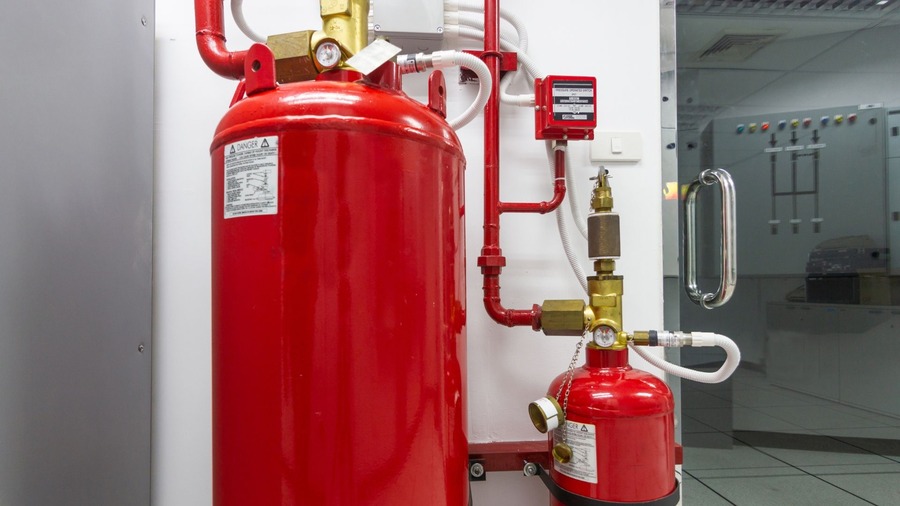
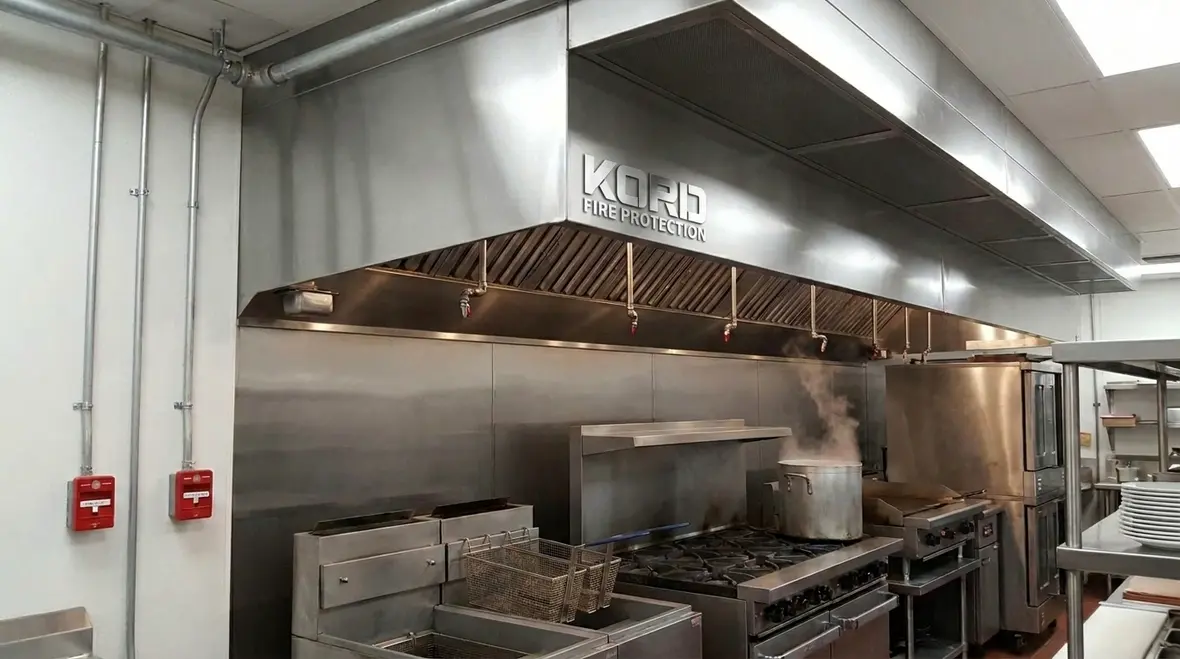
A commercial kitchen fire suppression system is a specialized fire control system built for the cooking environment. It focuses on where fires often start: cooking surfaces, exhaust hoods, duct work, and the grease that collects in and around them. Instead of using a one size fits all approach, these systems match the behavior of cooking fires. Grease can ignite differently than ordinary household material, and the equipment that handles it has to respond fast.
Typically, the system includes a detection and activation method, nozzles, tubing, and a suppression agent. When a fire reaches the trigger points, the system releases suppressant directly into the hazard area. As a result, it helps stop the flame and limit spread through the hood and duct system. Additionally, the system works to reduce reignition, so the kitchen can recover faster. For a related breakdown from Kord, see Commercial Kitchen Fire Suppression Systems Explained.
How these systems prevent hood and duct fires
Kitchens do not just have flames. They have airflow. And airflow moves heat, smoke, and burning grease through the hood and duct. Therefore, protecting the cooking zone alone does not solve the whole problem.
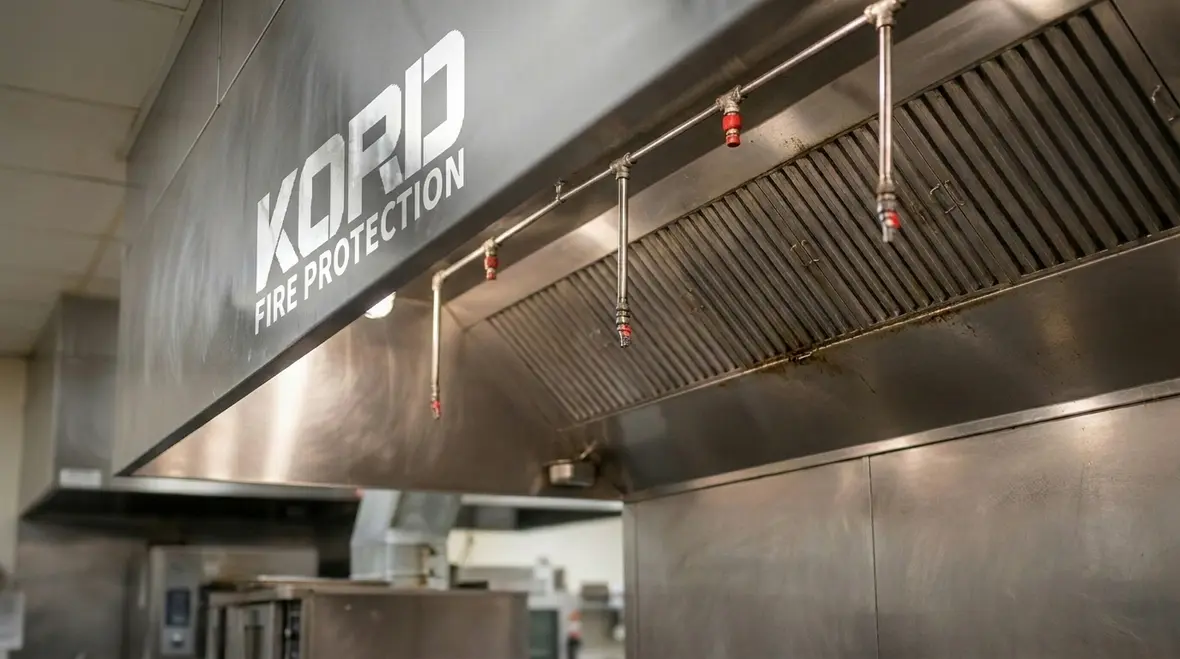
In many commercial kitchens, the hood captures grease laden vapors. Over time, that grease accumulates in the filters, the hood interior, and the duct. If a fire starts in a fryer, grill, or oven, it can push burning residue into the duct. Then, the fire spreads with the help of ventilation.
That is where the commercial kitchen fire suppression system earns its keep. It is designed to discharge where the grease fire tends to grow. It also helps cool and smother the fire in the protected area, so flames do not simply ride the duct like they are on a conveyor belt. If you want a closer look at coverage limits and protected zones, Kord also explains it well in Kitchen Fire Suppression: What It Covers and Does Not Cover.
Why hood and duct protection changes everything
A surface fire is bad enough. A hidden duct fire is worse because it can move beyond the line of sight and build damage where no one can react quickly. That is why the system is designed to address not just the visible cooking line, but also the pathways that heat and grease use to travel. In a busy kitchen, that difference matters a lot more than anyone wants to learn the dramatic way.
Common components and why they matter
A real-world suppression system is a team of parts, not a single magic device. Each component plays a role, and if one part drifts out of spec, performance can suffer. So a good approach centers on clear design, correct installation, and ongoing service.
- Detection: Heat or flame detection triggers activation quickly, often tied to the hood area and nearby hazard zones.
- Actuation: The system controls how and when the agent releases. Proper actuation helps avoid delays.
- Nozzles: Nozzles apply suppression agent in the right pattern over the hazard area.
- Agent: Depending on design, the system uses an approved suppression agent to control grease fires effectively.
- Controls and panels: Indicators, shutoff functions, and alarm integration keep staff informed.
Next, the discharge needs to match the hood size and configuration. If a kitchen changes equipment layout, the system design can require adjustments. In other words, kitchens evolve, and the system needs to keep up.
When one small change creates a larger risk
Swap in a different fryer, add another cooking appliance, or shift a line by a few inches, and the protected area may no longer match the hazard. It is not the kind of mismatch that announces itself with dramatic music. It just sits there quietly until inspection day or, worse, an actual fire event. That is why component alignment and coverage updates matter so much in active kitchens.
Installation and design choices that affect safety
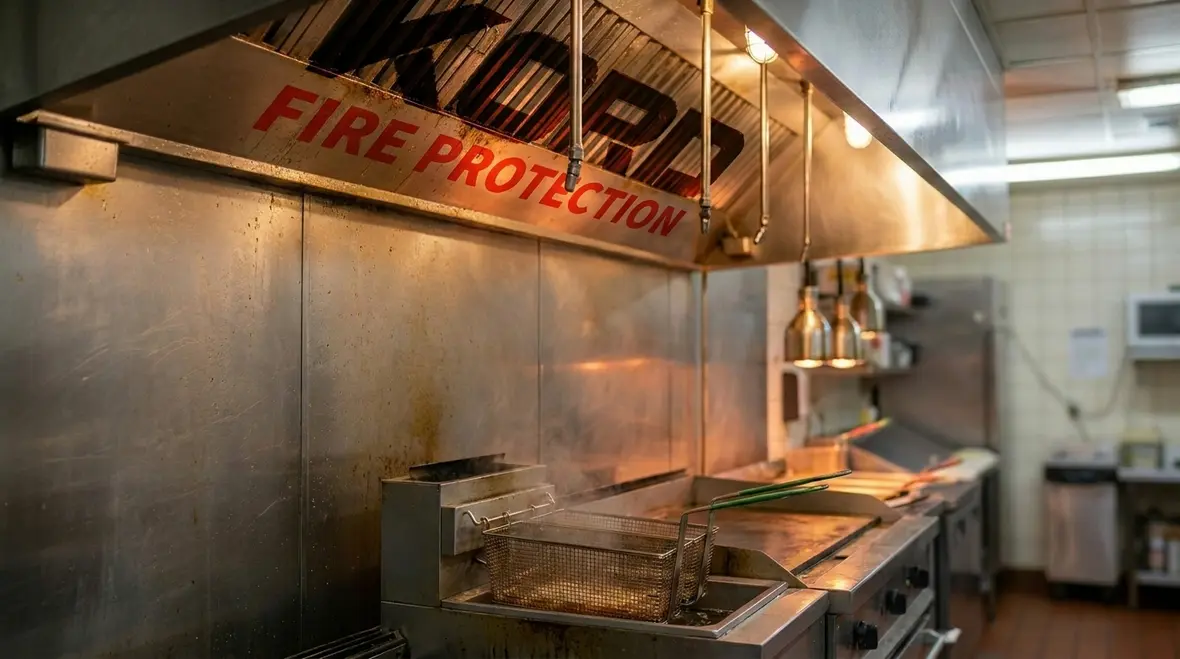
When someone installs a hood system like they are putting together a flat pack desk, that is when problems happen. Installation requires correct routing, alignment, spacing, and coverage. A proper design accounts for ceiling height, hood dimensions, duct layout, and cooking equipment behavior.
Good design also considers access and long term maintenance. Technicians need safe access to panels, sensors, and nozzles. They also need visibility for inspection. Furthermore, integration matters. Many kitchens connect alarms and control signals so staff get an alert immediately.
Here is the part people forget: a suppression system cannot compensate for dirty maintenance. If grease buildup keeps accumulating beyond normal levels, any protection plan becomes harder. Therefore, kitchens should pair suppression with good cleaning practices and a clear operational routine. Operators exploring code focused upgrades can also review Kord’s UL 300 Restaurant Hood Fire Suppression Guide for a more compliance driven perspective, or go directly to UL300 Restaurant Systems for service information.
Service, inspections, and why “it seems fine” is not fine
Fire protection does not stay perfect just because the equipment looks clean. A commercial kitchen fire suppression system must receive inspection and maintenance on a defined schedule. That includes checking mechanical components, verifying agent pressure or condition where applicable, and testing detection and control functions.
Over time, heat exposure and residue can affect performance. Also, staff changes, equipment upgrades, and duct modifications can alter risk. As a result, the system should receive updates whenever the kitchen layout changes.
Even if no one has ever seen a discharge event, inspection still matters. It is the difference between having a seatbelt and never testing it, right? Nobody wants to discover it only works after a problem. Proper service helps prevent surprises. Kord’s broader Fire Suppression Services page also notes that suppression systems are typically tested and inspected on a semi annual basis, which reinforces why regular scheduling matters for kitchens that cannot afford a lazy safety plan.
Why Kord Fire Protection becomes a vital partner
Commercial kitchens operate with tight schedules. Yet fire protection demands careful attention and accurate documentation. Kord Fire Protection can become a vital partner by helping businesses maintain a reliable safety plan, from initial service to ongoing inspection and updates. In many cases, the biggest value is consistency. Teams want to know who is responsible for maintenance, what gets checked, and when.
To accomplish that, Kord can help align service with real kitchen operations. That means coordinated scheduling around business hours where possible, clear reporting after inspections, and practical recommendations for reducing risk in daily routines. Additionally, when a kitchen modifies equipment or ducting, a strong partner checks how the suppression system should adapt.
Think of it like having a kitchen manager who also speaks fluent safety. Not flashy. Not dramatic. Just thorough. And unlike some pop culture heroes, they show up before the fire episode begins. Near the end of any planning conversation, it also helps to work with a provider that can support broader suppression needs if the facility grows. Kord’s Fire Suppression Experts page is a useful next stop for that bigger picture view.
Featured FAQ about kitchen fire suppression
Conclusion and next steps
A commercial kitchen fire suppression system protects what people cannot easily watch: the hidden growth of grease fires in hoods and ducts. However, protection only works when the system stays ready. That means correct design, proper installation, and reliable inspections over time. If the kitchen runs daily, safety support must do the same.
Contact Kord Fire Protection to review current coverage, schedule service, and build a fire readiness plan that fits how the kitchen actually operates. For a direct service page, visit UL300 Restaurant Systems and connect your kitchen safety plan to a provider that treats readiness like a daily requirement, not a once in a blue moon event.

Join Our Newsletter!
Get the latest fire safety tips delivered straight to your inbox From our Newsletter.