
Commercial Kitchen Fire Suppression for High Volume Kitchens
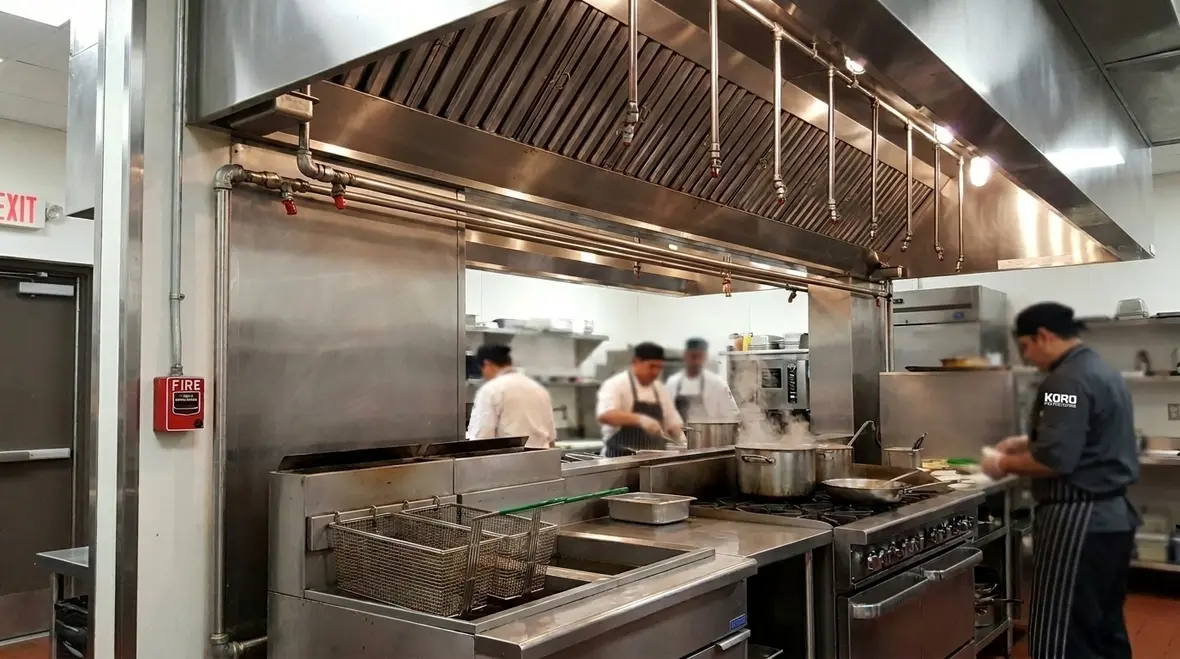
In the world of high volume commercial kitchens, commercial kitchen fire suppression is not a “nice to have.” It is a business-critical layer of protection that keeps cooking from turning into chaos. When flames start in a hood, fryer, or duct, the right system can control the fire fast, limit damage, and protect people who are already working at full speed. Kord Fire Protection technicians explain it this way: the goal is to stop the fire from spreading while the kitchen keeps operating in a safer way. And yes, nobody wants to explain to the health department why the “new special” now smells like smoke.
That is especially true in kitchens pushing serious volume. The faster the line moves, the easier it is for heat, grease, and distraction to pile up all at once. A proper suppression setup helps restaurants stay safer, recover faster, and avoid turning one flare-up into a full operational nightmare. For operators looking at the bigger picture, full fire protection services can help connect kitchen suppression with the rest of the building’s life safety strategy.

Assess Risk in Real Time for Busy Operations
Commercial kitchens do not burn the same way every day. Therefore, risk changes based on cooking volume, equipment type, and staff workflow. Kord Fire Protection technicians begin by reviewing how grease moves through the system and where heat builds up. They look at the hood, ductwork, fans, and the fire hazards tied to daily menu choices.
Next, they match fire behavior to the hazards. For instance, deep fryers generate heavy grease laden vapors, while charbroilers add intense radiant heat. In addition, staff behavior matters. A team that cleans on schedule and handles oil carefully reduces ignition sources. However, even a great team can be overwhelmed on a Friday rush, so the fire plan must be built for the busiest moments.
Map the hazards before the rush starts
To keep the plan practical, teams also document shutoff points, emergency access routes, and where kitchen staff can safely move. As a result, commercial kitchen fire suppression becomes a structured response, not a guessing game. That same risk-based thinking also supports stronger system planning when paired with Kord Fire’s broader fire suppression services, especially in facilities where multiple suppression hazards overlap.
Design Hood and Duct Protection That Matches Grease Loads
The hood is where most problems start, because that is where grease travels and collects. So the design must match the kitchen’s grease load and airflow. Kord Fire Protection technicians explain that suppression nozzles, detection points, and listed components must align with the hood configuration and duct layout. If anything is out of alignment, coverage drops at the worst moment.
Meanwhile, duct material and slope also affect performance. Grease can cling, and it can drop later when heat conditions change. Therefore, good kitchen hood fire suppression design includes proper placement that addresses where grease is most likely to ignite.
Commercial kitchens often add equipment over time. That is normal, but it also means the hood system may become undersized for the new load. Consequently, technicians recommend periodic reviews when menus change, volume increases, or new appliances join the line. This is exactly why Kord highlights dedicated kitchen hood fire suppression service for restaurant environments that evolve faster than their original plans.
Choose Suppression Agents and Components With Purpose
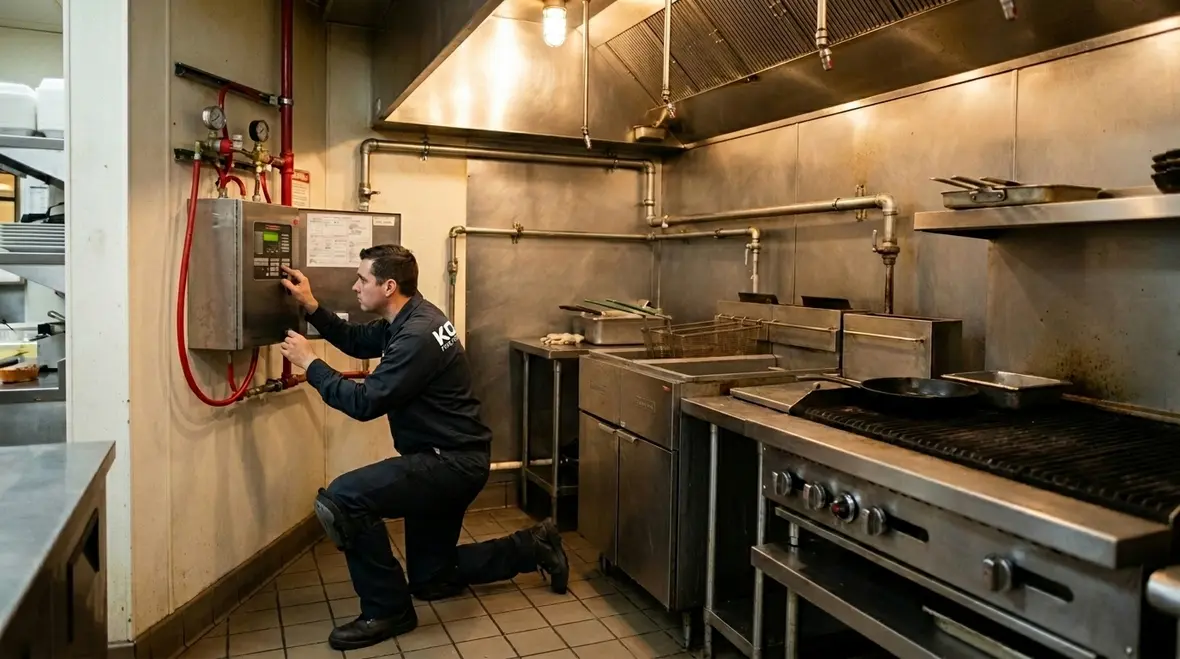
Different fire scenarios need different responses. Kord Fire Protection technicians guide decisions by focusing on the equipment and the likely ignition sources. For example, grease fires respond best when the system can rapidly disrupt the burning process in the protected area.
They also emphasize correct component selection. Detection, release, piping, and valves must work together as a single system. In other words, a good release mechanism matters as much as the nozzle layout. If the system does not trigger as designed, it is like buying a smoke detector and then removing the batteries. The “idea” exists, but the protection does not show up.
One system, not a pile of parts
In addition, they consider compatibility with the kitchen environment. Temperature levels, ventilation patterns, and maintenance access influence what works best long term. When restaurants need systems built around heavy-duty cooking conditions, Kord also points operators toward its UL300 restaurant systems expertise, which is directly tied to commercial kitchen suppression performance.
Train Staff and Set Clear Response Steps
Even the strongest system cannot replace good human action. So training turns a fire safety plan into muscle memory. Kord Fire Protection technicians often role play realistic events: a fryer fire that starts quietly, a hood issue that escalates fast, or a fryer operator who hears alarms while juggling orders. Then they walk staff through what to do immediately and what to avoid.
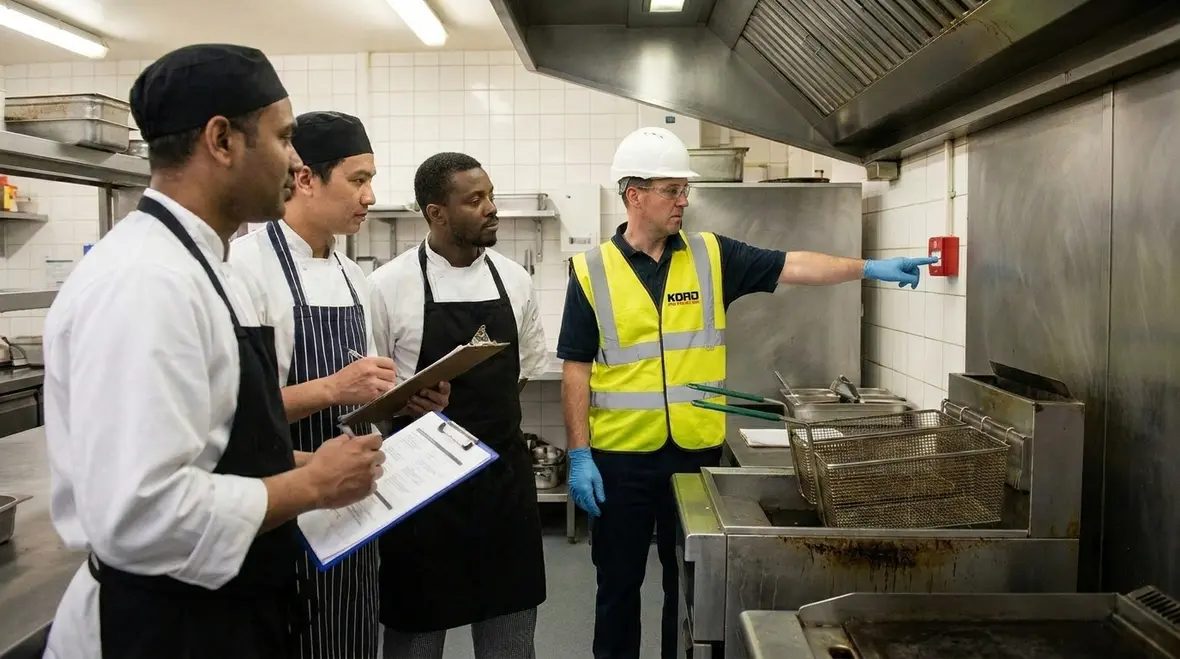
Technicians stress three practical goals. First, staff must know the location and purpose of manual pull stations. Second, they must understand when to evacuate and when to continue operations only if the area stays safe. Third, they must know how to report the event clearly, so maintenance and inspection happen correctly after the incident.
Also, they remind teams that alarms can sound like they are judging you, but they are not trying to ruin the night. They are trying to keep people alive and keep damage under control. In a high-volume kitchen, clear roles and repeated walk-throughs make the difference between a controlled response and a panicked mess.
Maintain Systems Like the Business Depends on It
Maintenance is where many kitchens quietly lose protection. Therefore, Kord Fire Protection technicians recommend a tight schedule for inspections, cleaning, and component checks. They also explain what technicians verify during visits: visual condition, placement, and signs of blockage. They confirm that detection devices stay within spec and that discharge pathways remain clear.
They also connect maintenance to fire suppression performance. Grease buildup can interfere with coverage and trigger patterns. Additionally, components can drift over time due to vibration, kitchen remodeling, or equipment changes. So maintenance keeps the system “as built,” not “as hoped.”
Because kitchens are busy, they plan work to reduce downtime. However, the schedule still matters. When suppression systems fall behind, the system may still function, but it becomes less reliable. And reliability is the whole point.
Use Monitoring, Inspections, and Documentation to Stay Ready
High volume kitchens do not just need a system. They need proof that the system will work. Kord Fire Protection technicians help kitchens set up inspection routines that align with local requirements and best practices. Then they ensure documentation stays organized, because inspectors and insurance reviewers look for records.
In addition, monitoring helps managers spot trends. If the hood, filters, or duct show recurring issues, the problem likely needs operational changes, not just repairs. For instance, inefficient cleaning timing can keep grease in places it should not be. When that is addressed, fire suppression works better and the kitchen stays calmer.
To reduce surprise, technicians also encourage pre-season readiness checkups, especially for kitchens that scale up during holidays, events, or catering peaks. Paperwork may not be glamorous, but it beats trying to reconstruct service history while smoke is still a recent memory.
Common Mistakes With Commercial Kitchen Fire Suppression
Even well run kitchens make avoidable errors. Kord Fire Protection technicians frequently see the same themes. One mistake is assuming that a kitchen remodel does not affect fire protection. Another is delaying inspections because the ticket printer is loud and the line is long. The problem is simple: fire safety does not pause for peak service.
Technicians also warn against mixing unlisted parts or making “temporary” changes that become permanent. If a hood is modified without addressing suppression coverage, the system may not protect what staff expects it to protect.
Fast kitchens still need slow, careful updates
Finally, they flag training gaps. Staff turnover happens, especially in fast paced kitchens. When training lags behind staffing changes, response steps become unclear. Then, during an incident, chaos fills the gaps like spilled sauce. The fix is not complicated, but it does require discipline: review the system after equipment changes, keep inspections current, and train new people before the next lunch rush decides to test everyone.
FAQ
Call Kord Fire Protection for a Kitchen That Stays Protected
High volume cooking demands a fire plan that works under pressure. Kord Fire Protection technicians help kitchens assess risk, verify hood and duct coverage, set clear response steps, and keep commercial kitchen fire suppression reliable through real maintenance and documentation. If the kitchen has grown, changed menus, or added equipment, it is time to review the system.
For restaurants that need a direct next step, contact Kord Fire Protection today to schedule an inspection and build confidence that the next rush will not become a fire drill. A smart place to start is the dedicated kitchen hood fire suppression service page, or explore full fire protection services for broader support across your property.

Join Our Newsletter!
Get the latest fire safety tips delivered straight to your inbox From our Newsletter.



