Fire Extinguisher Placement Rules for Commercial Sites
Quick Answer: Strategic fire extinguisher placement keeps early response fast and predictable. Commercial sites must follow fire extinguisher placement rules, including safe access, clear visibility, and correct mounting heights, so staff can find and use them under stress. Kord Fire Protection helps businesses plan, install, inspect, and stay compliant with confidence.
For businesses that need a reliable service partner, Kord Fire Protection also provides fire extinguisher service and certification, which fits naturally into a stronger placement, inspection, and compliance strategy.
Fire extinguisher placement rules that commercial teams should know
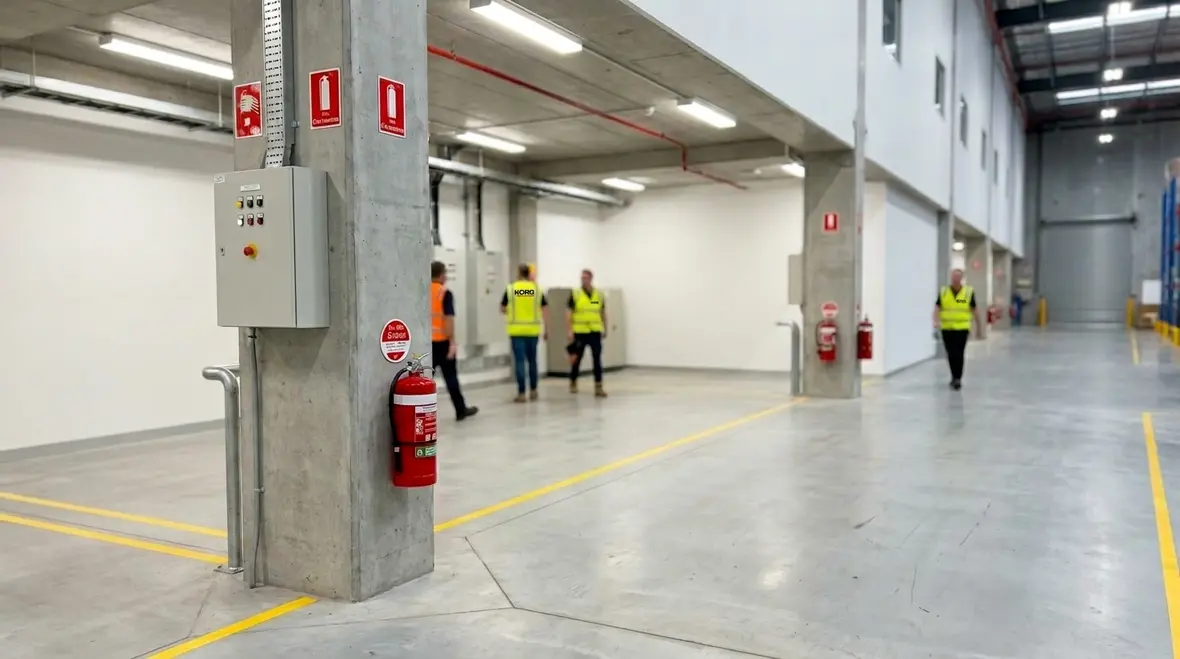
When a fire starts, seconds matter, and confusion burns time. First, keep extinguishers where people can reach them quickly, without climbing, squeezing through locked gates, or walking past the very hazard they should handle. Next, ensure clear visibility and unobstructed access, so the unit stands out like a hard-working safety sign, not a hidden Easter egg. Then, mount extinguishers at the correct height, and maintain a safe travel path around stairs, doors, and equipment. Finally, match the extinguisher type and rating to the specific risks in each area.
That covers the core of fire extinguisher placement rules, and it sets the foundation for the rest of this guide. However, the real challenge is not memorizing a neat list. It is translating that list into a floor plan that still makes sense during noise, smoke, and stress. In calm conditions, everyone thinks they know where the extinguisher is. In an emergency, calm tends to leave the building first.
Why placement strategy beats “just hang a few units”
In industrial, retail, and other commercial facilities, fire risk rarely sits politely in one corner. Equipment, materials, and daily foot traffic move. Therefore, placement should follow the building’s real layout and human behavior.
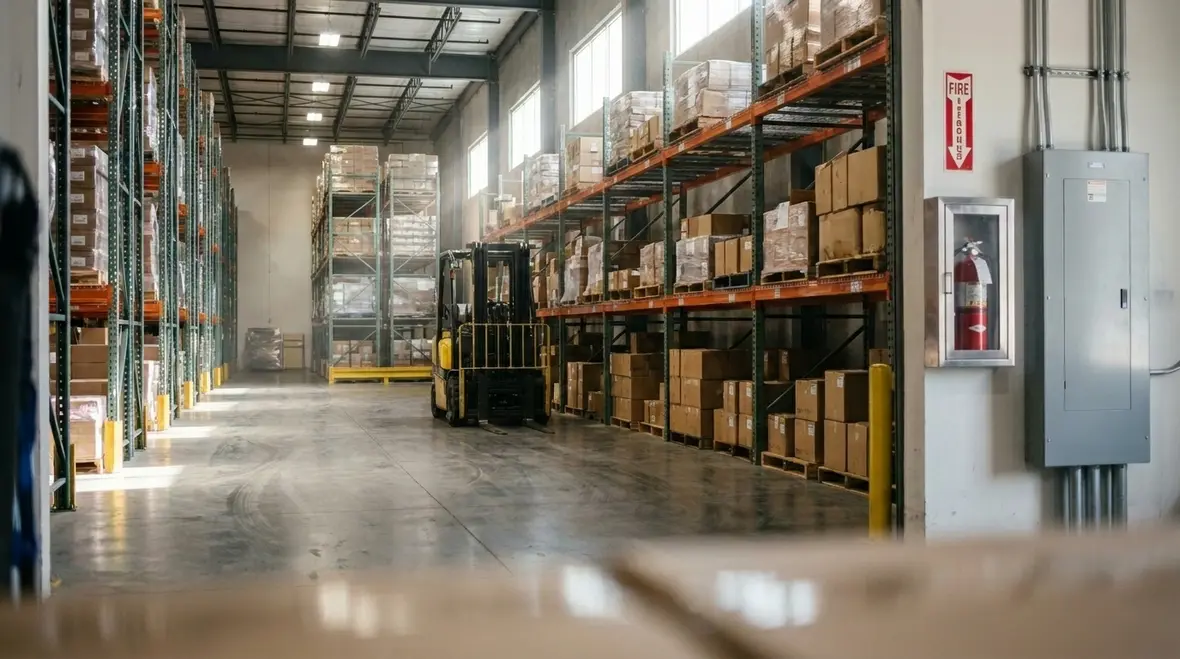
For example, a forklift warehouse might look like it needs only coverage near the exits, until someone notices that aisles narrow during peak shifts. Meanwhile, retail spaces often hide risk behind displays, where staff might not think to scan for extinguishers during busy rushes. And in facilities with service bays or plant rooms, people assume the risk is “contained,” until the first alarm silence convinces them to ignore training.
So, rather than dropping units like they are decorative plants, safety managers should treat placement like an operations plan: visible, reachable, and aligned with likely fire locations. Good placement reduces hesitation. It also reduces the classic commercial-building problem where everybody points in a different direction and somehow all of them are wrong.
Placement should reflect how people actually move
That means observing the site as it truly operates, not as the original drawing imagined it would. A route that seems open during a quiet inspection may become blocked by pallets, carts, stock, cleaning equipment, or temporary promotions once the workday gets going. If the extinguisher is technically present but practically unreachable, compliance starts looking a lot like wishful thinking.
Plan extinguisher locations by risk zones, not by convenience
A smart plan starts with risk mapping. Then, it groups areas into zones based on fuel load, ignition sources, and how quickly a fire could grow. After that, it assigns equipment so it matches the expected fire classes and likely fire growth speed.
In practice, this means placing units near common ignition sources such as electrical panels, switch rooms, charging areas, kitchens and break rooms, storage of flammable liquids, and manufacturing points where sparks and hot surfaces appear. At the same time, it avoids placing extinguishers behind locked doors, inside cupboards without clear signage, or in areas where normal workflow blocks the access path.
Also, commercial teams should consider where people actually walk during emergencies. Employees usually move toward exits, but visitors may pause near displays, loading docks, or counter areas. Therefore, placement should support both staff and visitor movement patterns, not only the smartest person in the building, because everyone else is having a Tuesday too.
Common risk zones worth special attention
- Electrical rooms and switchboards
- Battery charging stations
- Commercial kitchens and staff break rooms
- Storage areas for flammable liquids
- Mechanical rooms, plant rooms, and service bays
- High-traffic sales floors and loading zones
How to set access, visibility, and mounting heights for fast use
Even the best extinguisher does no good if no one can find it quickly. So, access comes first. Installations should keep paths clear and ensure the extinguisher can be reached without stepping into a hazard zone.
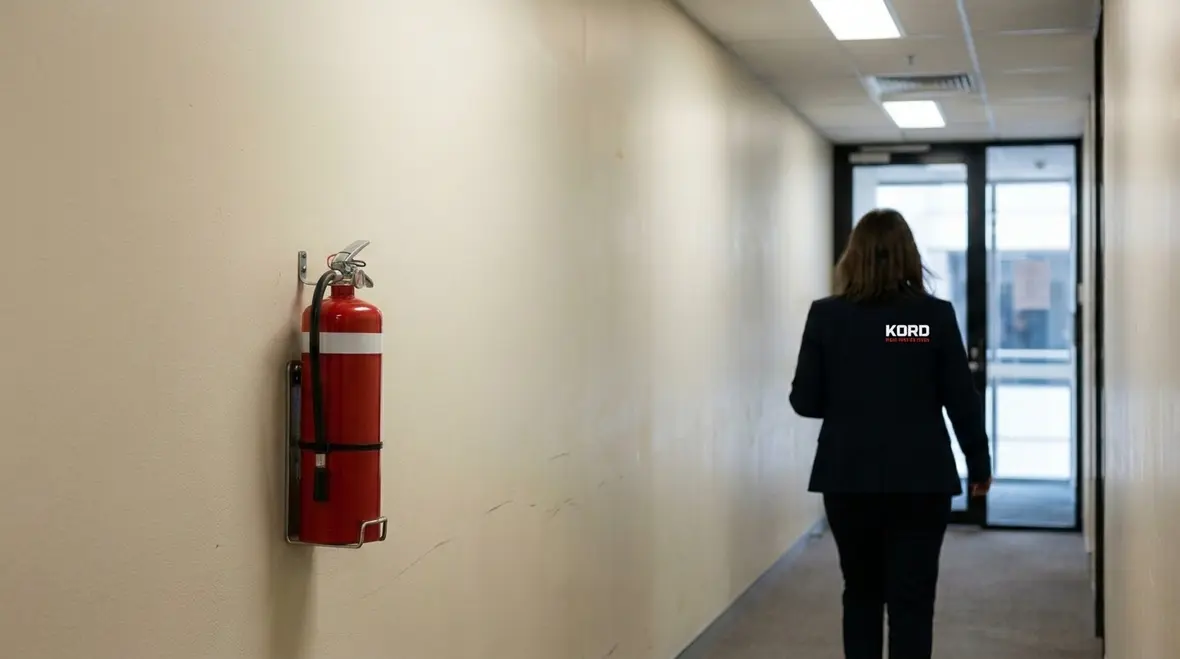
Visibility matters, too. Place units where staff can spot them during normal activity and in low visibility scenarios. That means proper signage, avoiding cluttered corners, and keeping units away from heavy obstructions such as stacked stock, overhanging hoses, or temporary promotions in retail areas.
Mounting height and location also influence speed and safe operation. If a unit sits too high, staff waste time retrieving it. If it sits too low, it becomes harder to grasp, especially for those wearing PPE or working close to machinery. Therefore, teams should follow standards, manufacturer guidance, and site conditions for mounting and operational reach.
Additionally, businesses should plan for realistic emergency movement. If a door opens inward, or if a corridor narrows, accessibility can change. A placement plan should account for these details now, not after an incident, when everyone becomes an armchair engineer.
Three questions to ask during a walk-through
- Can someone reach the extinguisher without moving into the hazard area?
- Is the extinguisher clearly visible from normal approach paths?
- Would the mounting height still be practical for staff wearing gloves or other PPE?
This is also a good place to support the broader life safety layout with related planning. Kord Fire Protection’s emergency lighting placement and coverage guide is a useful companion read, especially for facilities thinking about visibility, travel paths, and safe movement during an incident.
Match extinguisher type and distribution to real hazards
Distribution is only half the equation. The other half is selecting the correct extinguisher type and rating for the hazard, then positioning it in the area where the hazard could reasonably ignite.
For example, electrical risks often require equipment that can handle energized equipment safely, while certain flammable liquid areas need an approach that suppresses vapors and reduces spread. Meanwhile, some larger industrial spaces may need more strategically placed units due to travel distances and the time it takes someone to reach them while using escape routes.
Also, teams should consider the “first response” reality. Staff often use extinguishers during incipient-stage fires, when flames are small and smoke levels are manageable. So, placement should support first response before fire grows into something that looks like a movie montage, except the hero does not have a soundtrack.
Then, after selecting the right units, the business should verify coverage using the building layout and workflow. A placement plan should not rely on assumptions. It should be tested against the site’s actual layout. That same discipline supports inspection quality too, which is why Kord Fire Protection’s annual fire extinguisher inspection checklist guide makes a practical follow-up for facilities reviewing readiness and accessibility together.
Building a compliant system with inspections, signage, and records
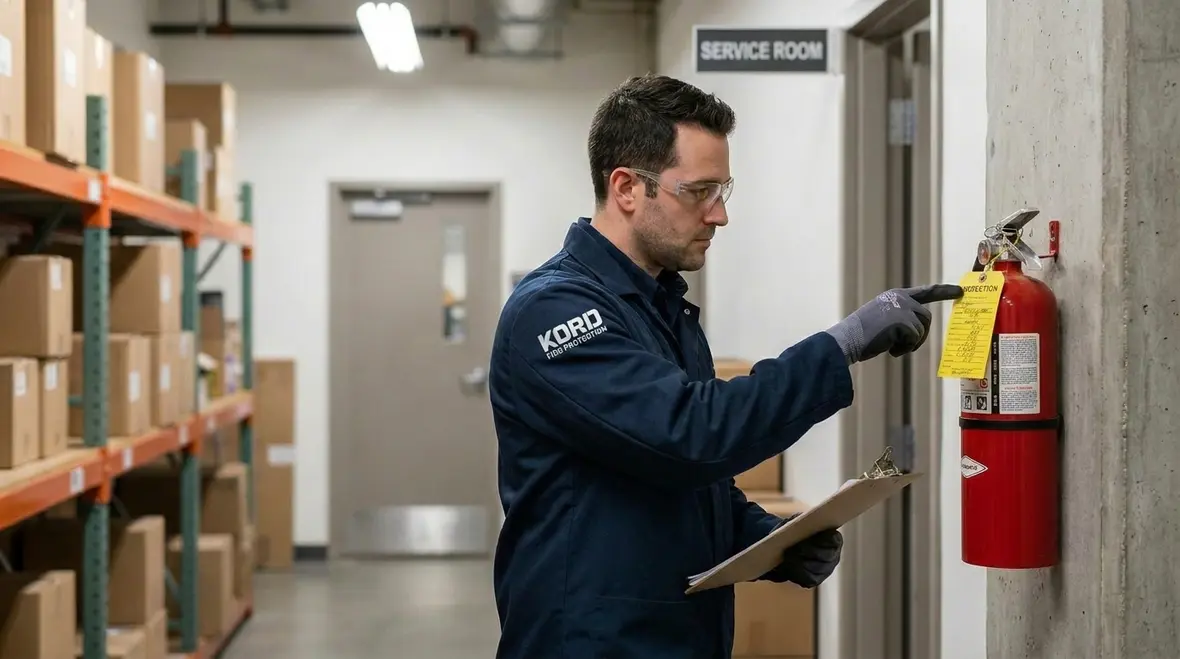
Placement strategy works best when paired with ongoing compliance. That means reliable inspection schedules, correct servicing intervals, and clear records that show the business maintains readiness over time.
Commercial sites change. Stock moves, equipment gets relocated, and retail layouts cycle through campaigns. Therefore, extinguisher locations must stay aligned with current risk and current travel routes. Kord Fire Protection can support this by reviewing changes after fit outs, maintenance works, or operational shifts, so safety coverage keeps pace with the business.
It also helps to keep signage consistent and readable. In busy facilities, signage can get worn, covered, or ignored. When units are easy to spot and correctly labelled, staff react faster. And faster reaction is the difference between “we handled it” and “we called everyone and hoped for the best.”
Finally, recordkeeping should not sit in a dusty folder. Businesses should use service reports as a living system, tracking what happened, what was tested, and what needs attention next. The same thinking appears across Kord Fire Protection’s compliance-focused articles, including the annual emergency lighting test documentation guide, where the message is simple: if the records are weak, confidence gets weak with them.
Why Kord Fire Protection becomes a vital partner
Many businesses treat fire extinguisher services as a one-time task. Then reality shows up, usually at the worst moment, when an inspection finds missing tags, blocked access, or units placed based on old drawings.
Kord Fire Protection helps commercial facilities operate with a calmer, more confident system. First, the team supports strategic planning for extinguisher placement that fits the site’s risks and layout. Then, it backs that planning with servicing, inspections, and documentation that helps businesses stay compliant. Additionally, Kord Fire Protection can assist during operational changes so placement does not drift out of alignment.
In other words, Kord Fire Protection does not just install and leave. It partners with the business so the safety plan keeps working as the site evolves, like a good crew that remembers the script even after the set changes. For teams that want a broader overview of that approach, the full fire protection services page shows how extinguisher work fits into a larger compliance and readiness program.
Dual-column placement checklist for commercial sites
| Placement essentials | What to verify onsite |
| Access and travel path | Unobstructed routes, no blocked access behind equipment, clear reach during normal workflow |
| Visibility and signage | Clear line of sight, consistent signage, avoid cluttered corners and temporary displays |
| Mounting height | Correct mounting and safe reach for staff, especially when PPE is worn |
| Risk matched selection | Correct extinguisher type and rating for electrical, flammable liquid, and other hazard zones |
| Ongoing compliance | Servicing intervals, inspection records, updates after layout or equipment changes |
Frequently asked questions
Final word: get placement right before a problem forces it
Strategic fire extinguisher placement protects people and property, because it turns the “what now?” moment into a clear, fast action. Kord Fire Protection can review site risks, support smart placement, and keep servicing and records on track across industrial, retail, and facility environments. If a layout change or compliance review is on the calendar, act early.
Visit Kord Fire Protection’s fire extinguisher service and certification page to build a plan that stays reliable, visible, and ready to perform when the pressure is suddenly very real.

Join Our Newsletter!
Get the latest fire safety tips delivered straight to your inbox From our Newsletter.