Clean Agent vs Sprinkler System Waterless Fire Protection
Clean Agent vs Sprinkler Systems: Waterless Fire Protection Makes Sense starts with a simple truth: not every building wants to flood its own living room during a fire. In a clean agent vs sprinkler system comparison, the deciding factor often comes down to one question, and it is not “what sounds cooler.” It is about damage control, protection goals, and what the space contains. Some sites need fast suppression without ruining equipment, inventory, or business continuity. Other sites need broad coverage and proven water-based coverage. In most real projects, the best path blends fire safety with operational reality, and that is exactly where a partner like Kord Fire Protection earns its keep.
When the clean agent vs sprinkler system choice becomes a business decision
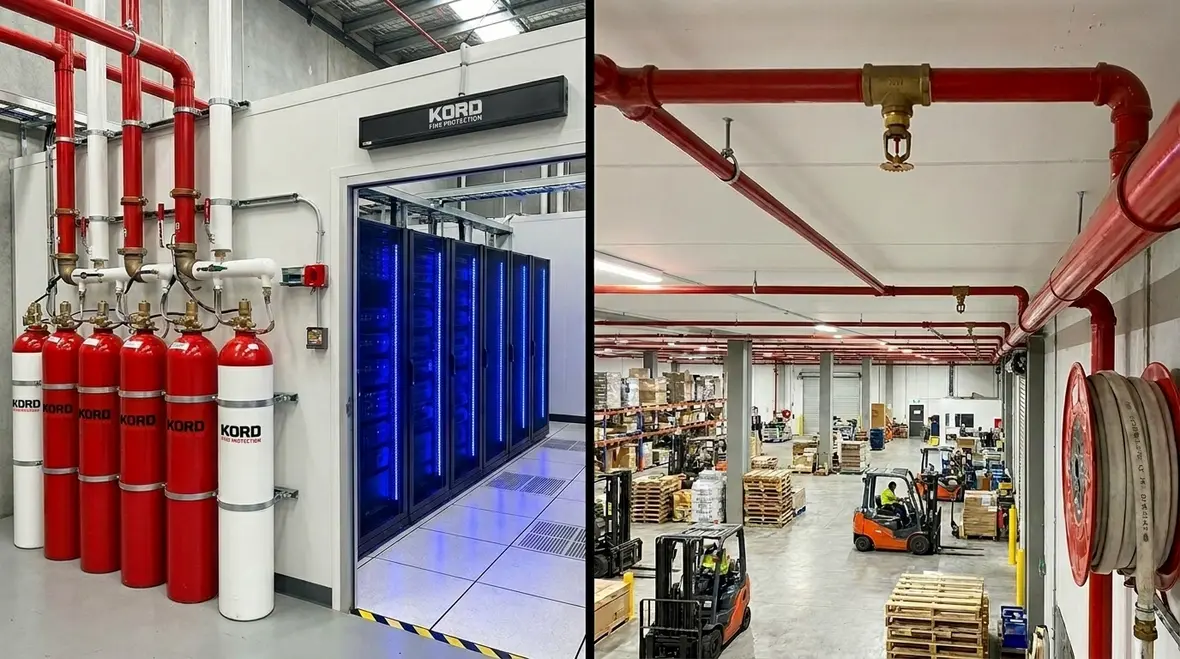
People often treat fire protection like it is a checkbox. However, a serious team treats it like risk management. A clean agent vs sprinkler system decision pushes a company to ask what the building must protect, and what damage it can afford. For example, a facility that houses sensitive electronics, servers, clean rooms, or archives may not survive a water event as well as it would survive the fire itself. Meanwhile, a warehouse with open aisles might prefer the simplicity and coverage style of sprinklers.
In addition, the inspection and maintenance workflow matters. Clean agent systems tend to focus on detection, control, and proper cylinder management. Sprinkler systems focus on piping integrity, inspection, and water supply health. Both matter. Yet the tradeoffs often show up later, in downtime, cleanup costs, and recovery speed. If your team is comparing system families broadly, Kord Fire Protection also has a helpful guide on fire suppression vs fire sprinkler systems that gives additional context from the field. ([kordfire.com](https://kordfire.com/fire-suppression-vs-fire-sprinkler-system-guide/?utm_source=openai))
What clean agent systems do in the real world
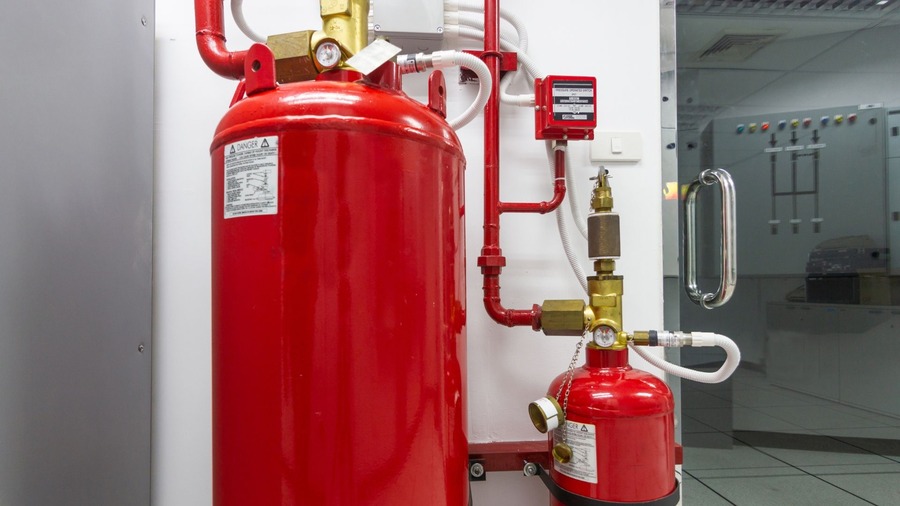
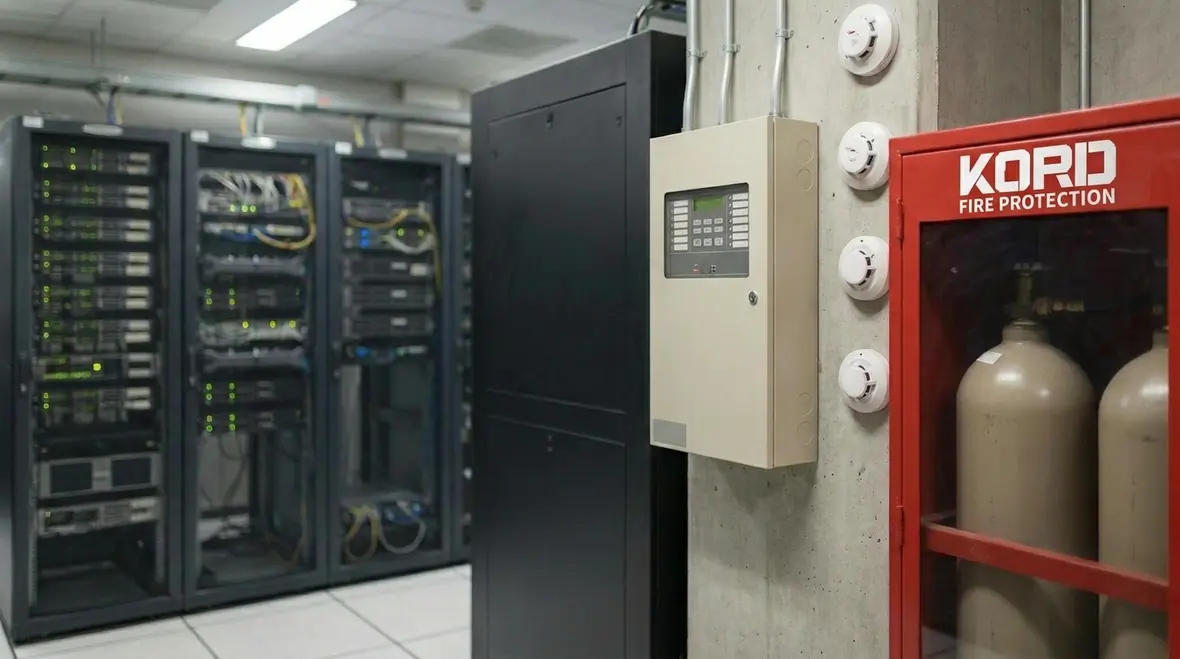
Clean agent systems use an extinguishing agent that suppresses the fire while leaving fewer residue issues than water. They aim to stop the chemical process or interrupt conditions the fire needs to grow. As a result, they can be a strong fit for spaces where water damage is the real villain. Think data centers, telecom rooms, control rooms, and many high value storage areas. Kord Fire Protection’s overview of clean agent fire suppression for critical equipment highlights these exact use cases and explains why electronics-heavy environments often favor a cleaner discharge. ([kordfire.com](https://kordfire.com/clean-agent-fire-suppression-for-critical-equipment/?utm_source=openai))
Also, clean agent systems typically protect enclosed or semi enclosed spaces. If the air volume is too open, the agent may not stay at the right concentration long enough to work well. Therefore, designers pay attention to room boundaries, door types, and airflow paths. And yes, facility managers sometimes joke that the fire system should also learn their building’s “mood swings.” But when engineering gets it right, those mood swings turn into predictable performance.
Why room integrity is not just a nerdy side note
That enclosure issue is not a technical footnote. It is central to whether the system performs as intended. Kord Fire Protection’s article on clean agent suppression system and room integrity testing explains how leakage, doors, and room boundaries can make or break concentration hold times. In plain English, if the room cannot hold the agent, the system may act like a hero with a cape full of holes. ([kordfire.com](https://kordfire.com/clean-agent-suppression-system-and-room-integrity-testing/?utm_source=openai))
Why sprinkler systems still win many everyday battles
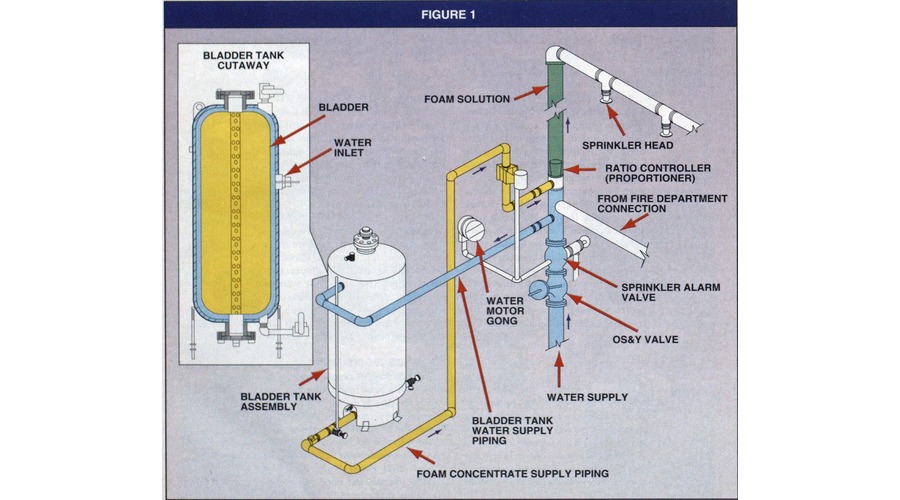
Sprinklers remain one of the most common forms of fire suppression for a reason. They can control fire quickly, often without requiring every space to be airtight. In many buildings, sprinklers provide broad coverage across floors and corridors. This helps teams reduce fire spread, and it supports life safety goals in a practical way.
Furthermore, sprinklers can be more forgiving in spaces with higher airflow or less predictable room boundaries. Maintenance is also widely understood. Many local codes and commercial practices already treat sprinkler protection as a standard approach for many occupancies.
Still, sprinklers do not arrive empty handed. They release water when activated. So even when a fire gets handled early, the cleanup can be expensive. That is why the choice becomes especially important for facilities where even a “small event” can become a big business headache. Kord Fire’s comparison of clean agent vs traditional fire suppression systems reinforces that the best decision usually depends on the space, hazard, and tolerance for collateral damage after discharge. ([kordfire.com](https://kordfire.com/clean-agent-vs-traditional-fire-suppression-systems/?utm_source=openai))
When waterless fire protection makes the most sense
Waterless solutions are not for every building, but they can fit like a tailored suit when the risk profile matches. Clean agent designs often make sense when the protected area contains assets that water would harm heavily, such as servers, critical power equipment, high value electronics, medical technology, or high-end manufacturing controls.
Additionally, some facilities operate with tight downtime windows. A water event can mean days of restoration, equipment testing, and reconfiguration. Clean agent systems can reduce that cleanup burden, so the recovery path can be faster, assuming the incident stays within the protected space design. Kord Fire’s service page for clean agent fire suppression systems emphasizes the same value proposition for mission critical spaces that cannot afford messy downtime. ([kordfire.com](https://kordfire.com/clean-agent-fire-suppression/?utm_source=openai))
However, waterless protection also depends on correct installation and room setup. If a space has poor enclosure, then suppression effectiveness can drop. So the facility team should plan for door closures, sealing details, and detection placement. In other words, waterless systems work best when the building behaves like the drawings.
Common environments where waterless protection shines
- Data centers and server rooms
- Telecom and control rooms
- Medical and diagnostic equipment areas
- Archives, records storage, and specialty collections
- Electrical rooms where cleanup time can wreck operations
How Kord Fire Protection supports the clean agent vs sprinkler system install
Selection is only step one. Execution is step two, and that is where many projects either shine or stumble. Kord Fire Protection can become a vital partner by guiding clients through the entire process, from early evaluation to system coordination and ongoing readiness.
For example, Kord Fire Protection helps teams think beyond the equipment and toward real outcomes. That includes verifying design fit for the space, coordinating detection and control logic, and making sure the system will function reliably when it needs to. In addition, they can support maintenance planning that keeps components in healthy shape, not just “technically functional.”
Also, a strong partner helps reduce surprises during inspections. Fire protection is full of details that sound boring until they fail during a test. Kord Fire Protection helps teams stay ahead of those details so the system does what it should, not what it accidentally can.
Finally, when clients face mixed-use buildings, Kord Fire Protection can help define which areas need waterless suppression and which areas can use sprinkler coverage without overcomplicating the whole site. This is the kind of calm, deliberate planning that keeps budgets steady and operations running. Their broader fire suppression services page is a useful place to start when a project needs a full-site strategy rather than a one-room fix. ([kordfire.com](https://kordfire.com/fire-suppression-system-types-explained/?utm_source=openai))
Design, detection, and maintenance: the unglamorous trio that matters
Every fire system lives or dies by design, detection, and maintenance. Clean agent systems often rely on accurate detection placement and proper agent release control. If detection triggers too late or too early, the whole timeline shifts. Therefore, teams must evaluate ceiling height, airflow, obstructions, and heat patterns.
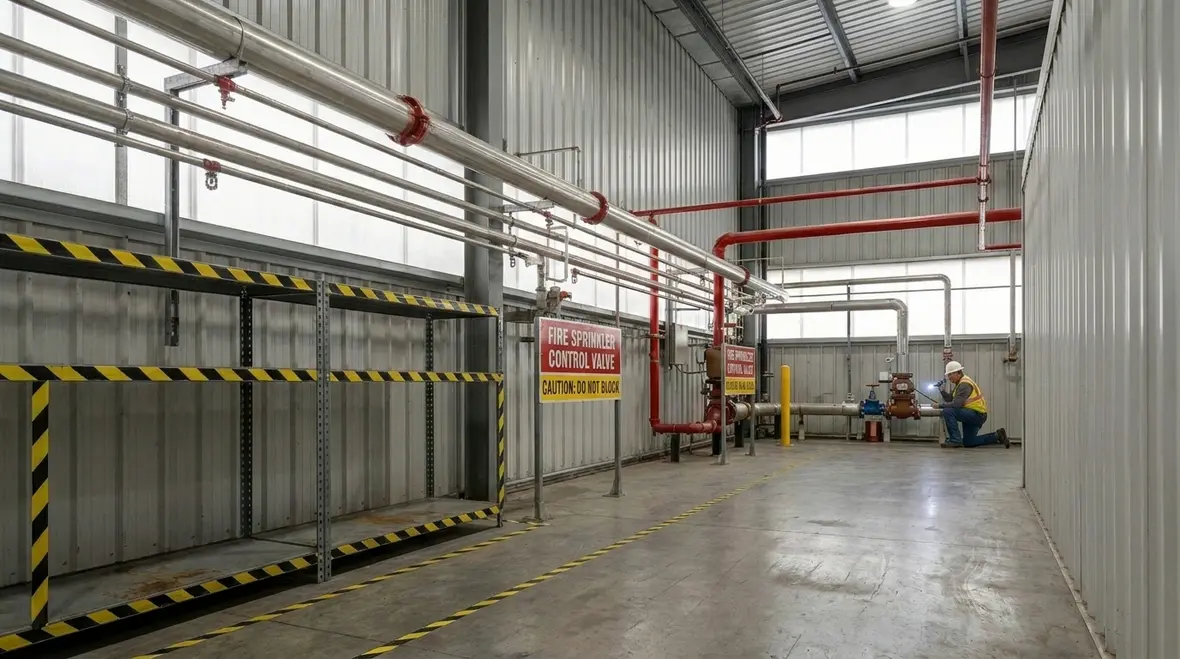
Sprinkler systems rely on piping design, water supply, and correct spacing. If coverage mapping misses a hazard, then the system may not protect the area as intended. Likewise, if the water supply system lacks needed reliability, the best design can still underperform.
In both cases, maintenance keeps the system honest. Cylinders, valves, and releasing devices require attention on clean agent setups. Sprinkler systems require inspections, checks, and assurance that the water side stays ready. And yes, maintenance can feel like paying for an umbrella while the sky looks clear. But once the storm hits, the umbrella becomes the smartest purchase a person makes that day.
Costs, code fit, and decision criteria for facility managers
Cost comparisons can mislead if they focus only on equipment price. A better approach evaluates total impact: installation complexity, restoration expectations, outage risk, and operational downtime. Sometimes a clean agent solution costs more upfront, yet it can reduce the business drag after an event. Other times, sprinklers offer a lower upfront cost and broad protection, and the facility accepts the cleanup burden because the space is better suited for it.
Code requirements also shape the decision. Local regulations, occupancy classifications, and hazard analysis guide which approach makes sense. A qualified fire protection partner helps interpret requirements and translates them into practical design choices. Kord Fire’s recent clean agent standard for fire suppression systems article is a solid interlink here because it underscores how design, testing, and maintenance standards are supposed to prevent real-world failures, not just satisfy paperwork. ([kordfire.com](https://kordfire.com/clean-agent-standard-for-fire-suppression-systems/?utm_source=openai))
Decision criteria can include enclosure quality, hazard type, critical asset value, and how quickly the business must return to normal. Therefore, facility managers often do best when they treat the process like a risk workshop, not a shopping trip.
FAQ about clean agent and sprinkler protection
Final word: make the choice with Kord Fire Protection
Clean agent and sprinkler systems each protect life and property in different ways, and the right answer depends on what matters most in the building. When a facility needs waterless suppression for sensitive areas, Kord Fire Protection helps teams plan with clarity and install with confidence. Instead of guessing, they evaluate hazards, align with code, and build a system that stays ready.
If the business cannot afford downtime, reach out through Kord Fire Protection’s fire suppression service page and map the safest, smartest approach now. For readers who want one more technical comparison before making that call, Kord Fire’s data center clean agent fire suppression guide is another strong internal resource on protecting critical equipment without turning a fire event into a water disaster. ([kordfire.com](https://kordfire.com/data-center-clean-agent-fire-suppression-guide/?utm_source=openai))

Join Our Newsletter!
Get the latest fire safety tips delivered straight to your inbox From our Newsletter.