
Clean Agent Fire Suppression System Design Guide
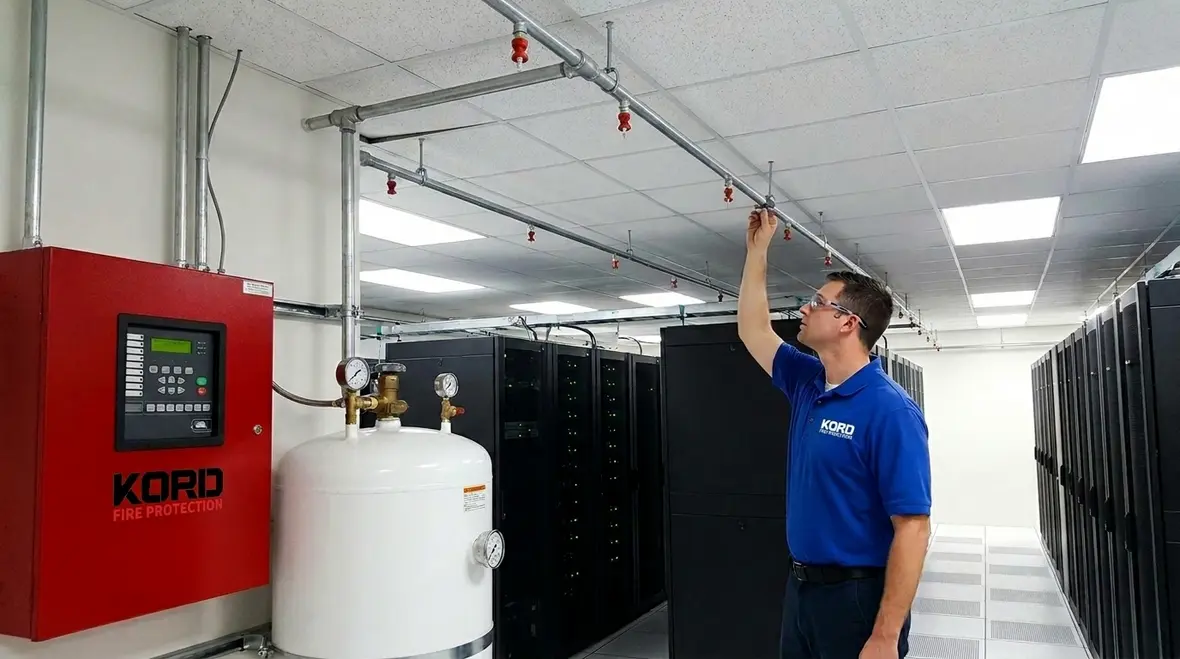
In a clean agent fire suppression system design, the goal stays simple: protect people, reduce damage, and keep spaces ready for business the next day, not the next century. A strong clean agent system design starts with the right protected space layout, smart hazard classification, and a discharge plan that matches the enclosure behavior. From there, the design team balances agent quantity, cylinder placement, detection timing, and control logic so the system releases on time and stops the fire without turning the room into a cloud of chaos. Then, once the drawings are right, the real work begins with installation quality, commissioning, and documentation that actually holds up when questions show up. After all, fire protection is the one job where “we will probably be fine” does not make it into the spec.
What does a clean agent fire suppression system actually protect?
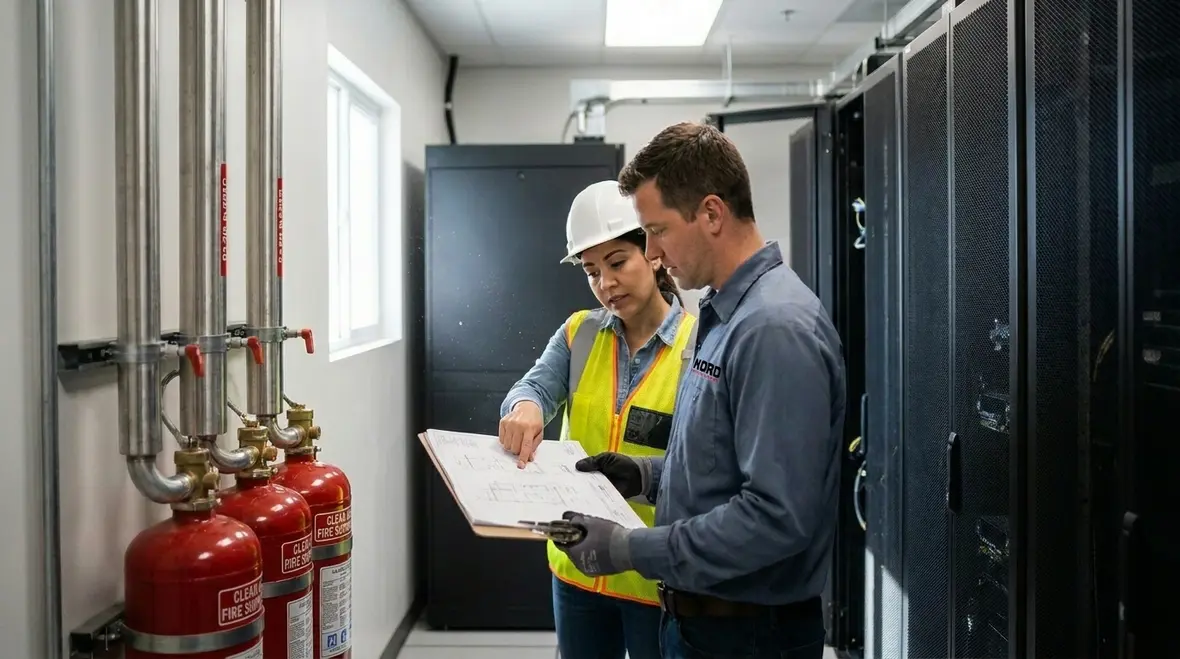
Clean agent systems protect areas where you cannot just flood everything with water. Instead of soaking servers, museums, switchgear rooms, or control centers, these systems use an extinguishing agent that interrupts the fire process. In practical terms, the agent reduces the heat and chemical chain reaction so the fire cannot grow. Therefore, they suit environments with high equipment value or sensitive contents.
However, protection does not start at the nozzle. It starts at boundaries. The designer must understand how the room behaves: volume, leakage paths, ceiling height, door openings, and airflow that might steal the agent before it finishes the job. Consequently, the enclosure quality and the ventilation control plan matter as much as the agent selection.
To keep it business friendly, the best designs consider how people move through the space. Exit routes, signage, and alarm audibility must work for real life, not just for the plan set. And yes, systems should be built to avoid false drama. Nobody wants an emergency discharge because a motion sensor took the day off mentally.
Why enclosure boundaries matter more than people think
A clean agent system can be perfectly selected and still underperform if the room leaks like a gossip chain. Doors, cable penetrations, ceiling voids, and underfloor pathways all influence whether the concentration remains in place long enough to suppress the fire. That is why room behavior is not a side note. It is the stage where the whole performance happens.
Key components in a proper clean agent system design
A reliable clean agent system design depends on several core parts, and each one plays a role that cannot be swapped at random. First, detection equipment watches for heat, smoke, or flame signals depending on the hazard and code basis. Next, the control panel coordinates alarm, pre discharge timing, and release logic.
Then come the storage and release pieces. Cylinders hold the agent, piping routes it to protected openings, and nozzles distribute it in a way that reaches the hazard volume. Meanwhile, manual pull stations provide human control, and abort switches handle situations where safe conditions exist. Dampers and ventilation shutdown devices also matter when the space has HVAC influences that could dilute agent concentration.
Finally, the system needs supervision and safety features. This includes monitoring for low pressure, trouble signals, and interlocks that prevent discharge when doors open or ventilation does not reach the required state. In other words, the system works like a careful conductor, not like a drummer who only hits harder when things get confusing.
The coordination side nobody should ignore
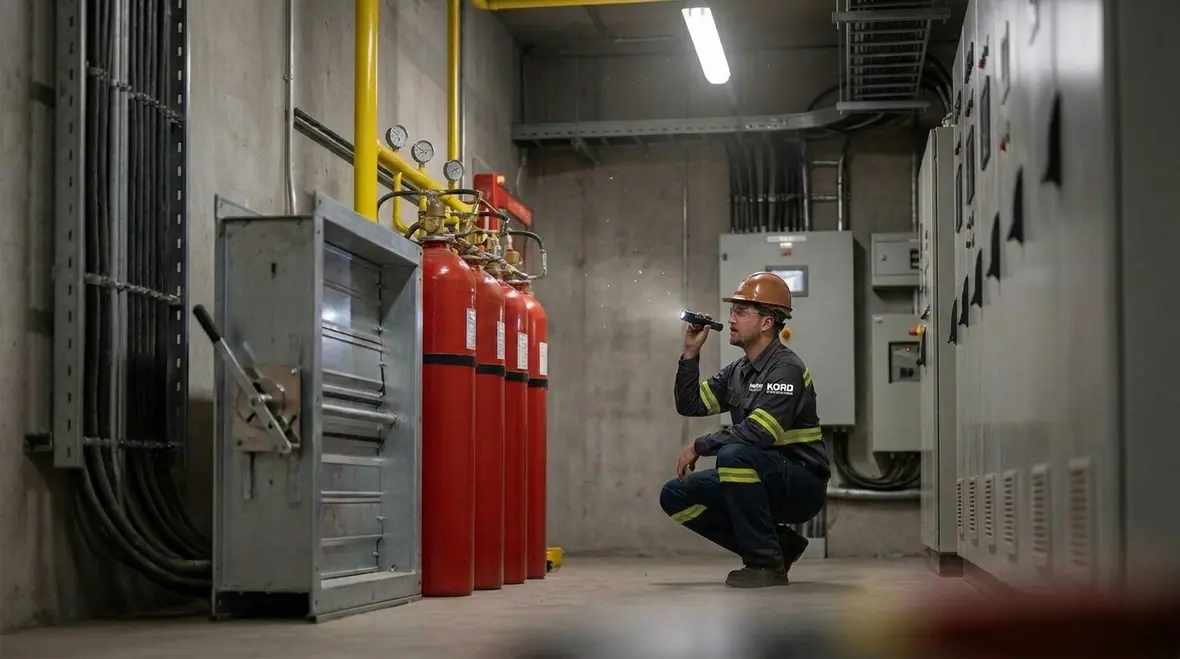
Design is not only about parts on a riser diagram. It also includes how those parts speak to one another. Detection, releasing controls, HVAC shutdown, door hardware, annunciation, and supervision all need logic that makes sense under stress. If one piece misses the cue, the system can feel less like precision engineering and more like a group project that nobody wanted to lead.
How designers choose agent type, concentration, and room behavior
Design teams select the agent and required concentration by considering hazard class, fuel load, and enclosure integrity. First they evaluate what burns: electrical equipment, flammable liquids, or general combustibles. Then they estimate how quickly a fire would develop and how much heat energy it would create.
After that, they calculate the agent quantity needed to maintain an effective extinguishing concentration for the required time. Yet the math does not live alone. Designers also estimate how the room leaks agent and how quickly it mixes. That means they address door seals, ceiling voids, cable trays, and penetrations that act like tiny thieves.
To reduce surprises during commissioning, the design should include leakage assumptions that align with field conditions. Therefore, site measurements and envelope verification become part of the job, not a later “maybe we’ll see.” If the system design ignores real room behavior, performance can fall short and the client ends up with a system that looks great and behaves badly. Nobody orders a Ferrari to drive on potholes and then blames the steering wheel.
That practical focus lines up with Kord Fire’s own clean agent resources, including its Clean Agent Standard for Fire Suppression Systems article and its overview of room integrity testing, both of which reinforce how enclosure performance shapes the real world outcome.
Concentration is not just math on paper
Agent calculations must reflect the protected volume, the hazard, and the way the space actually behaves during discharge. A beautiful spreadsheet cannot seal a leaky door, and a clean drawing set cannot magically fix a missing damper command. Good design respects the equations, but great design also respects the room.
What installation practices make clean agent designs perform
Even the best clean agent system design can stumble if installation quality drops. Designers can draw perfect lines, but installers must follow them with precision. That includes correct pipe routing, proper supports, clean internal surfaces, and correct nozzle placement relative to the hazard.
Leak testing and verification play a major role. Connections must meet the required torque and sealing methods, and system components must arrive in condition that matches documentation. Additionally, electrical wiring must match labeling, polarity, and zone logic so the control panel interprets signals correctly.
Ventilation interlocks deserve extra attention. When airflow continues during discharge, the agent concentration can drop faster than planned. Consequently, designers and installers coordinate with building controls so dampers close and fans shut down when the system initiates.
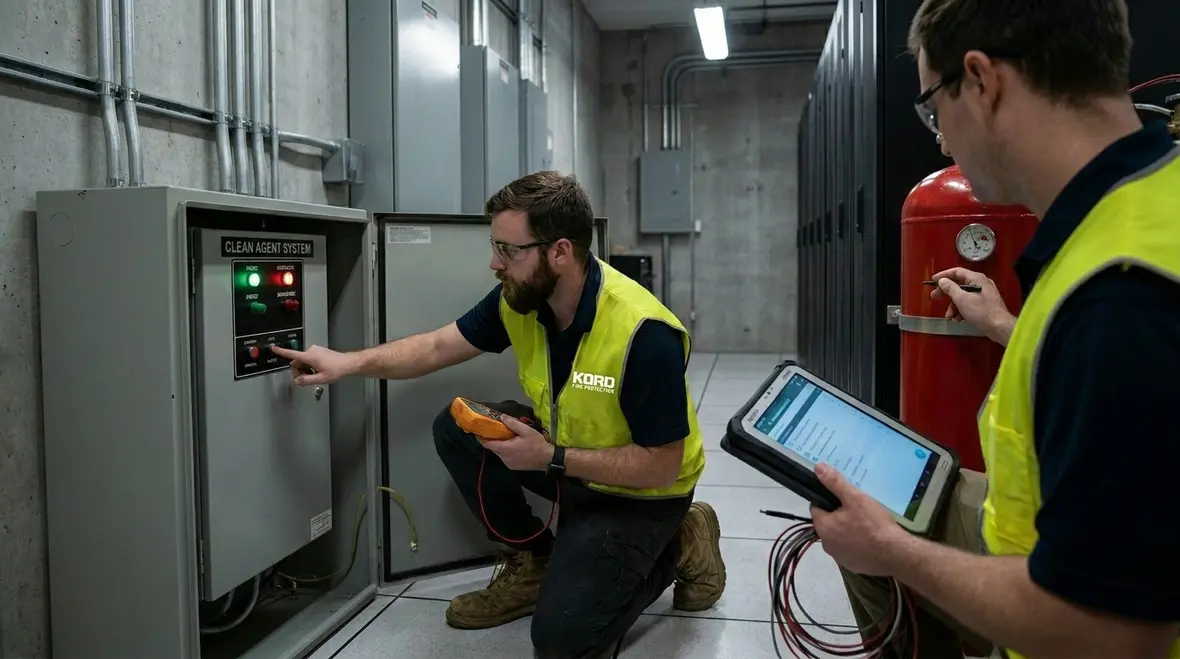
Commissioning then ties it all together. Test sequences confirm detection, alarm timing, pre discharge delays, and abort behavior. It also verifies that the system holds pressure and that supervision signals report correctly. In short, this stage turns a paper plan into a working safety tool that does not get stage fright at the worst time.
Installation quality is where theory meets gravity
Pipe, wire, controls, and sequencing all need to land exactly where the design expects them. A missed support, mislabeled conductor, or badly positioned nozzle can undo a lot of expensive intelligence in a hurry. In fire protection, details are not decorative. They are the difference between confidence and crossed fingers.
Why Kord Fire Protection becomes a vital partner
Field work rarely follows the cleanest script. That is where Kord Fire Protection can become a vital partner with this service or job. When a project moves from engineering documents to real rooms, new questions surface: unexpected airflow, odd ceiling cavities, changed layouts, or equipment vendors swapping details late in the process. Kord Fire Protection helps teams close the gap between design intent and field reality.
They support the process with coordinated submittals, practical site walkthroughs, and safety minded installation reviews. Therefore, the design team spends less time guessing and more time confirming. If changes happen, Kord Fire Protection can help assess the impact on protected volume, enclosure assumptions, and interlock sequencing, so the clean agent system design remains consistent with the hazard.
In addition, ongoing service and inspection programs matter. Fire protection does not end after handoff. Maintenance keeps cylinders, valves, and detection devices in healthy condition and ensures records stay current. That means the client gets reliability, not just paperwork.
And in case anyone thinks fire protection is “set it and forget it,” Kord Fire Protection reminds everyone that fire rarely respects calendars. It shows up when it wants attention, so the system should be ready when it does.
For teams that want a deeper look at related applications, Kord Fire also covers specialized environments in articles such as Data Center Clean Agent Fire Suppression Guide and Clean Agent Fire Suppression for Critical Equipment. Those resources make useful companions when the project involves sensitive electronics, uptime pressure, or critical assets that would really prefer not to meet a sprinkler shower.
Dual column design checklist for smoother delivery
Design and engineering checks
- Hazard classification and fuel load review
- Protected volume and enclosure leakage assessment
- Agent quantity and distribution calculations
- Detection placement and alarm timing strategy
- Ventilation shutdown and door interlock logic
Installation and commissioning checks
- Correct pipe routing, supports, and nozzle placement
- Pressure supervision and cylinder verification
- Leak testing of agent piping connections
- Alarm, pre discharge, abort, and delay sequence tests
- HVAC interlock verification and functional proof
FAQ: clean agent suppression basics
Conclusion and next steps
A clean agent fire suppression system design succeeds when it blends hazard understanding, careful calculations, correct installation, and solid commissioning. When the project moves from plan set to real rooms, Kord Fire Protection can help teams stay aligned, reduce field surprises, and maintain performance long after the punch list closes. If a client needs a dependable design build partnership, the next step is simple: reach out to review the site, hazard details, and timeline, then map out a system that performs when it matters most.
For direct support, explore Kord Fire’s fire suppression services and its dedicated clean agent fire suppression page to connect design intent with installation, inspection, and long term readiness.
Ready to protect the space properly?
Review the hazard, confirm the enclosure, coordinate the controls, and get a suppression plan that works in the field, not just on paper.

Join Our Newsletter!
Get the latest fire safety tips delivered straight to your inbox From our Newsletter.



