
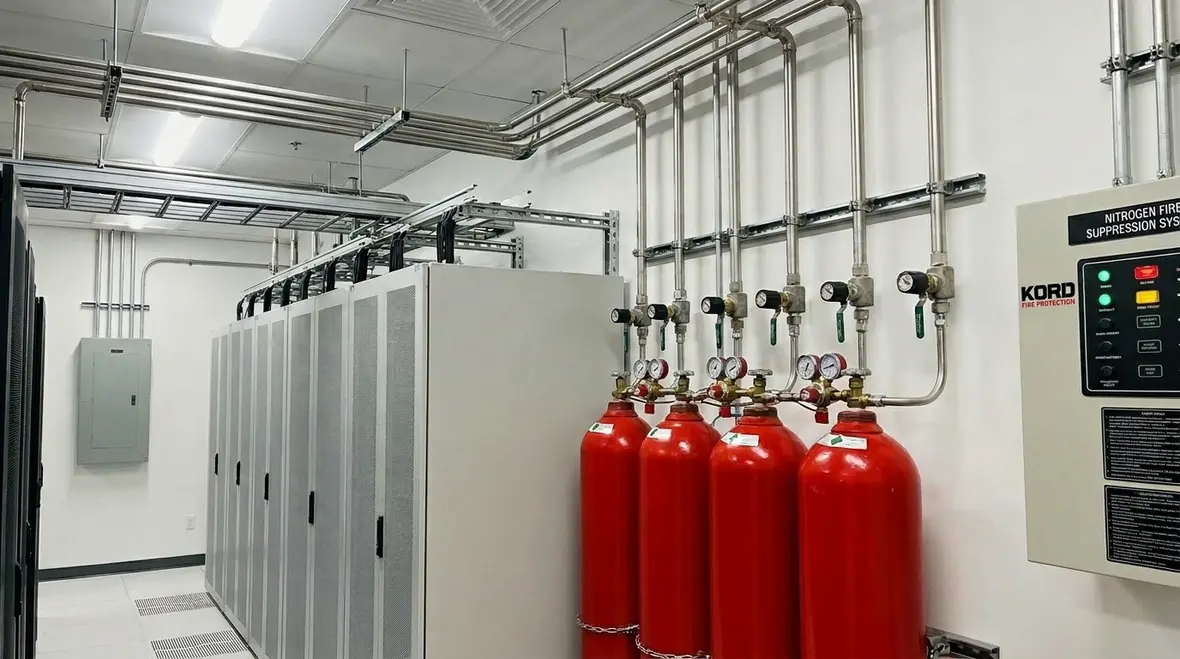
Nitrogen Fire Suppression System by Kord Fire Protection
Picture this: a calm, controlled system that reduces the risk of fire damage without flooding everything with messy residue. That is the promise behind a nitrogen fire suppression system, which uses clean, inert nitrogen to lower oxygen levels in a protected space. As a result, flames struggle to keep burning, and costly shutdowns often turn into manageable, planned responses. However, like most “easy” plans in the real world, success depends on smart design, tight installation, and disciplined maintenance. In other words, a system is only as good as the team that builds it, and that is where Kord Fire Protection can step in as a vital partner for this service and job.
Nitrogen fire suppression system basics in plain terms
A nitrogen fire suppression system works by displacing oxygen around the hazard. Specifically, it releases nitrogen into the enclosure until the oxygen level drops enough to slow or stop combustion. Since nitrogen is inert, it does not react like some chemicals can. Therefore, it protects equipment and finishes while minimizing cleanup effort after an event.
Instead of relying on water or foam, it focuses on the fire triangle. Fire needs fuel, heat, and oxygen. Nitrogen mainly targets oxygen, and it does so quietly and efficiently. Meanwhile, detection and control equipment make the system act at the right moment, not when the building is already yelling “fire” with every alarm bell it owns.
How detection and control work together
Every reliable suppression job starts with a dependable trigger. Typically, the system includes detectors for smoke, heat, or flame, plus a control panel that evaluates signals. When detection criteria meet the programmed threshold, the control unit releases the nitrogen. As a result, the system responds during the early stage of an incident, when suppression has the best chance to prevent escalation.
Engineers also design release timing and discharge patterns for the specific enclosure. That means they do not treat every room like a generic box. For example, they consider airflow, volume, door openings, leakage paths, and the placement of nozzles or diffusers. Otherwise, nitrogen might disperse too quickly or too unevenly, and then the system becomes a very expensive guess.
Furthermore, the system includes interlocks such as fans, dampers, and alarms. If fans would spread the hazard, they may shut down during a discharge. If doors should remain closed to maintain concentration, the design reflects that. In short, the system coordinates like a well-rehearsed crew, not like a group chat that reacts too late.
Where nitrogen systems fit best
Not every space benefits equally from nitrogen. That said, nitrogen fire suppression system designs often make sense where clean agent discharge is preferred or where water could damage sensitive equipment. Facilities protecting servers and electronics often compare this strategy with broader clean agent fire suppression services when planning a code-aligned solution.
- Electrical rooms and data centers, where residue and water damage create headaches
- Telecom and server environments, where uptime matters and cleanup time costs money
- Switchgear rooms, where controlled suppression helps protect critical assets
- Enclosures with hazards that require oxygen reduction for safer control
Additionally, nitrogen can support certain industrial applications where the fuel load and enclosure geometry match the system’s design assumptions. However, this is not a “install and hope” category. The best results come from a careful hazard assessment, which confirms the enclosure integrity and the expected fire behavior.
Design details that make or break performance
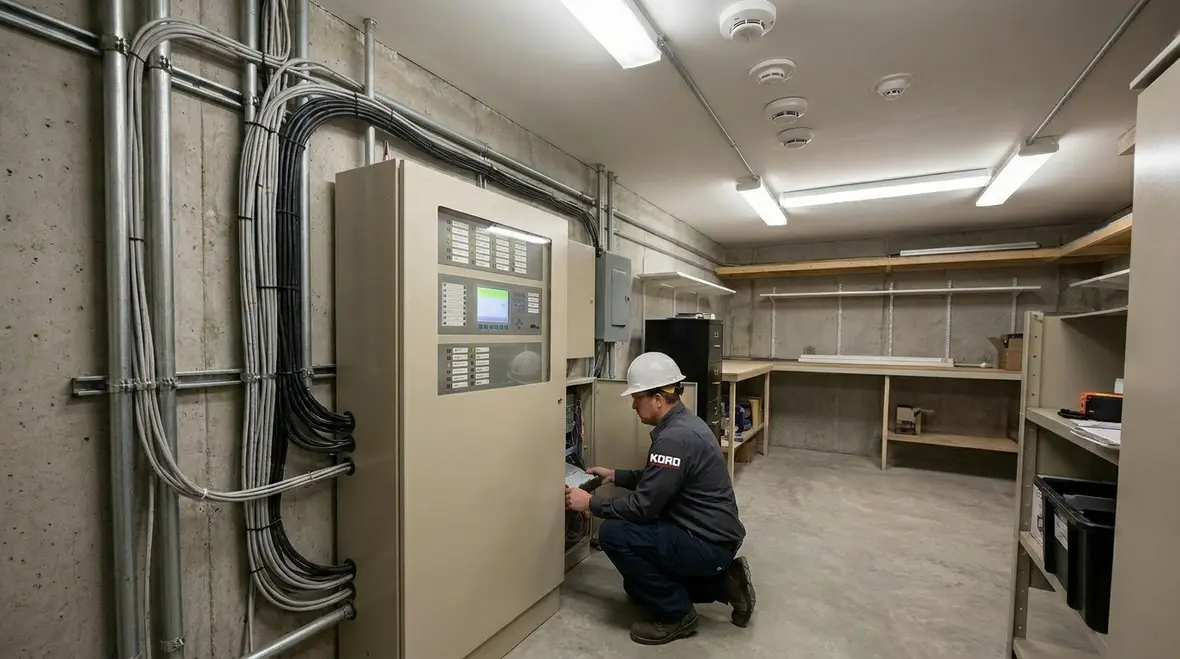
The heart of any nitrogen fire suppression system is the engineering math. Yet the human part matters just as much, because design without site reality is fantasy. Engineers evaluate room volume, leakage rate, expected concentration target, and discharge duration. Then they select cylinder storage, regulators, piping size, and nozzle placement.
Pressure and flow rates matter. If the system releases too slowly, the oxygen level may not drop fast enough. If it releases too aggressively, it can create turbulence that reduces uniform coverage. Also, piping layout affects performance. Long runs, sharp turns, and poorly supported lines can lead to delays or uneven distribution.
Moreover, enclosure boundaries require attention. Even a small breach can reduce oxygen displacement and weaken suppression. Therefore, a competent project includes air sealing recommendations, door and damper coordination, and verification of enclosure integrity. Kord Fire Protection can bring structure to that process by guiding the site toward design-aligned performance. Think of it like tightening the screws before the machine starts running, not after it breaks. For facilities where enclosure performance is a concern, Kord Fire also covers the value of room integrity testing for clean agent systems.
Installation, commissioning, and verification
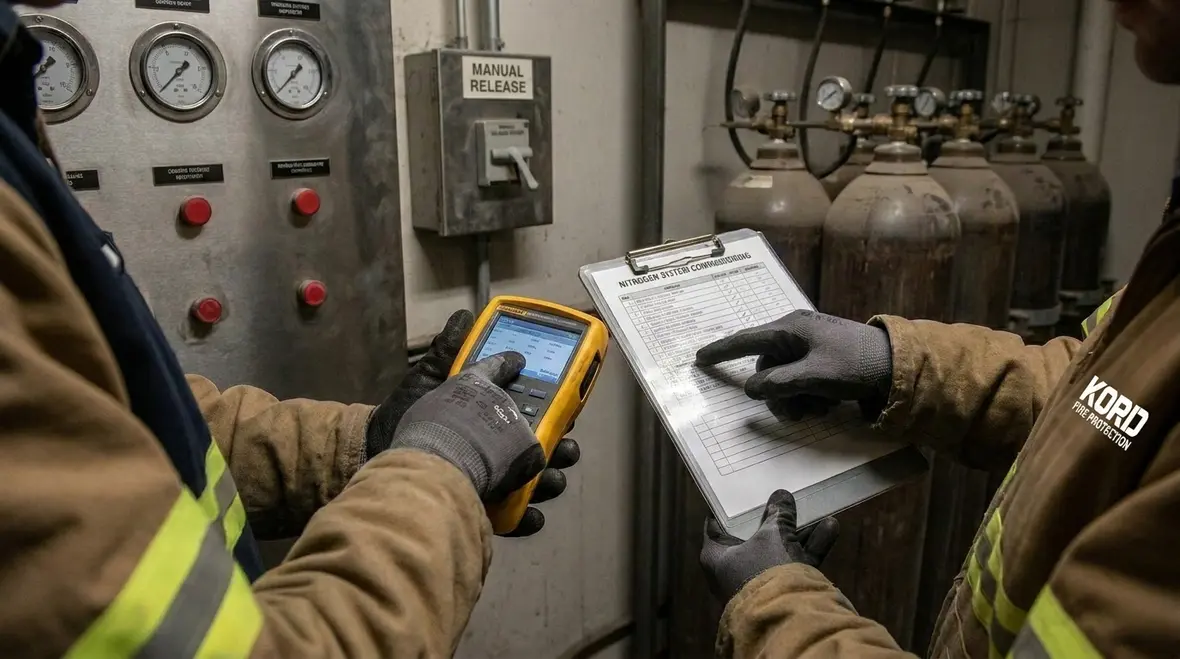
After design approval, installation must follow the plan precisely. That includes correct cylinder setup, secure supports for piping, proper labeling, and clear access to controls and manual release stations. Then commissioning begins, where technicians verify that detection, control logic, and discharge functions match the engineering requirements.
During verification, the team checks alarm operation, panel programming, and sequence timing. They also confirm that discharge paths and nozzle outputs line up with the intended distribution. If the system includes auxiliary shutdown features, those interlocks must prove dependable. In other words, the job does not end at “it released once.” It ends when the system performs exactly as intended under expected conditions.
And yes, there is always a moment during commissioning when someone asks, “Will it work if we trip over the cable?” The soothing answer is, in a well-built job, cables stay secured, pathways stay safe, and the system stays ready. The less poetic answer is that the install should follow best practices and code requirements, not internet folklore.
Maintenance and compliance over the long run
A nitrogen fire suppression system does not run forever on good vibes. Maintenance protects performance and reduces downtime risk. Most programs include periodic inspections of cylinders, pressure readings, valve hardware, detection components, and control panel status. Technicians also review logs and confirm that alarms and fault conditions report correctly.
Additionally, site changes can affect the enclosure. If someone later modifies walls, adds vents, upgrades HVAC, or replaces doors, the oxygen reduction profile can shift. Consequently, maintenance should include a process for change management. That way, the system stays aligned with current site realities.
This is where Kord Fire Protection becomes more than a vendor. By acting as a partner, they can support service planning, document compliance, and help teams respond quickly when inspections reveal gaps. In business terms, that means fewer surprises and less scrambling when deadlines arrive.
| System Component | Why It Matters |
| Detectors and control panel | They trigger discharge at the right time, not the wrong time |
| Cylinders and valves | They deliver the nitrogen with correct pressure and reliability |
| Piping and nozzle layout | They shape distribution for effective oxygen reduction |
| Interlocks and shutdown devices | They limit spread and support the design assumptions |
Common challenges and how Kord Fire Protection helps
Projects often run into predictable obstacles. Enclosure leaks, unclear room boundaries, and incomplete as-built documentation can lead to performance risk. Sometimes the hazard classification changes during construction, or the team discovers later that airflow patterns do not match the original assumptions.
Meanwhile, training gaps can hurt readiness. If facility staff do not understand system operation, they may delay response actions or mishandle reset procedures. Also, poor labeling and weak access routes can slow troubleshooting during an alarm event.
Kord Fire Protection can help by bringing a consistent process that ties design to install and install to service. They can coordinate documentation, support commissioning verification, and build practical maintenance plans. As a result, the nitrogen fire suppression system stays dependable when real incidents show up, because that is when reliability stops being a “nice to have” and starts being the only thing that matters. Organizations protecting technology-heavy environments may also find helpful context in Kord Fire’s data center clean agent fire suppression guide.
FAQ about nitrogen fire suppression system services
Final thoughts and next step
A nitrogen fire suppression system can protect critical spaces with clean, controlled oxygen reduction, but only when the design, installation, and maintenance stay tightly aligned. If a project needs clear documentation, dependable commissioning, and a service plan that holds up long after the ribbon cutting, Kord Fire Protection can help.
Reach out to discuss your enclosure, hazard profile, and compliance goals, and let the right team build a system that performs when it matters. For teams ready to compare options or move toward implementation, Kord Fire’s clean agent fire suppression service page is a strong next stop. After all, nobody wants their fire safety strategy to feel like a movie plot twist.

Join Our Newsletter!
Get the latest fire safety tips delivered straight to your inbox From our Newsletter.



