
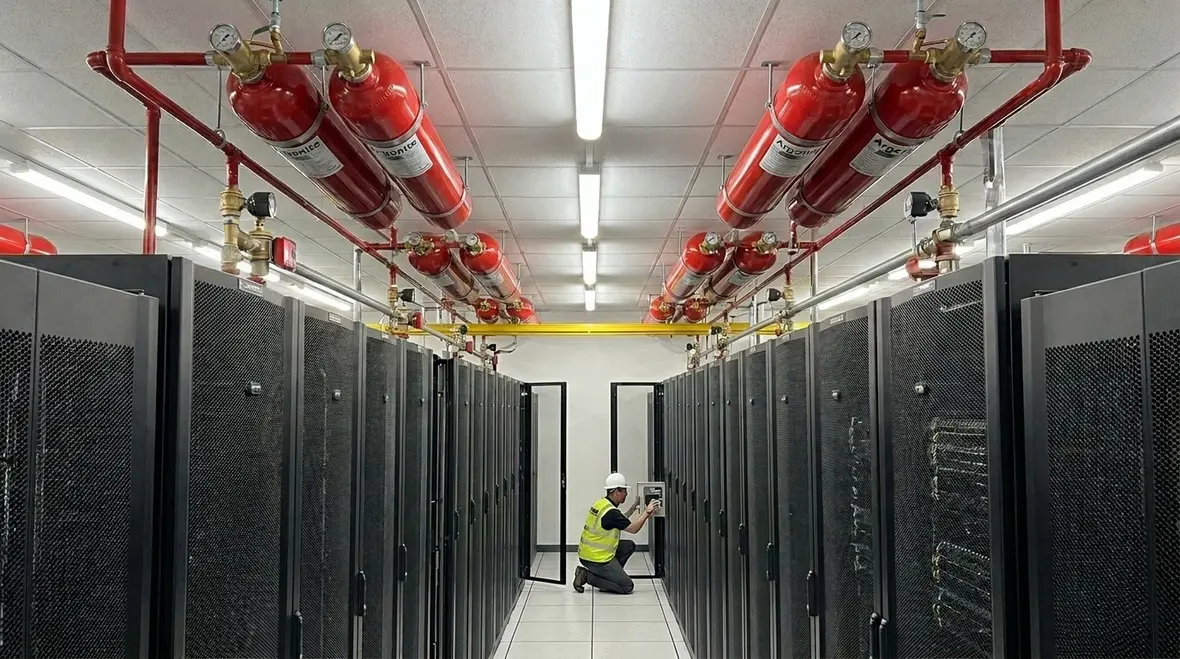
Argonite Fire Suppression Inert Gas Protection by Kord
When Argonite fire suppression gets installed correctly, it can protect people and property without flooding a room with messy residues. In fact, Argonite fire suppression uses inert gas protection principles to help stop a fire by limiting what it needs to keep burning. And because fires do not wait for paperwork, this approach fits well in real world sites like data centers, control rooms, museums, and commercial spaces where downtime and cleanup costs hit hard.
Now, let’s slow it down and explain how inert gas protection works, what a good design includes, and why Kord Fire Protection can become a vital partner for this service job when the goal is safe, reliable performance. After all, no one wants a system that looks great on day one and acts like a no show on day ninety.

Argonite fire suppression: inert gas protection in plain language
What Argonite is actually doing when a fire starts
Argonite fire suppression relies on inert gas behavior. Instead of using chemicals that react with flames, it works by changing the environment around the fire. Specifically, it helps reduce oxygen levels and disrupts the fire triangle. That triangle is the classic recipe for burning: fuel, heat, and oxygen. Remove or lower oxygen, and the fire struggles to sustain itself.
Argonite systems typically release a designed gas mixture when sensors confirm a fire condition. As a result, the fire loses the oxygen needed for combustion. The fire slows, then stops spreading. This is one reason businesses comparing clean agent options often review broader guidance like Kord’s clean agent fire suppression system services page to understand how gas based protection fits sensitive spaces.
Because the gas does not leave the same residue you might see with some alternative methods, businesses often prefer this option for spaces packed with sensitive equipment and irreplaceable assets. In plain English, it is built to stop the fire without making the cleanup crew invent new swear words.

How the system detects, releases, and protects during an event
Detection, control logic, discharge, and hold time all matter
A well planned Argonite fire suppression job starts long before a release. First, detection systems monitor for heat, smoke, or flame patterns depending on the room hazards. Then the control panel verifies conditions and triggers the release sequence.
Once the system activates, valves open and the gas discharges quickly into the protected space. During that window, the design target matters: flow rate, discharge time, and coverage must match the room layout. Kord’s data center clean agent fire suppression guide highlights how fast detection and even distribution support technology heavy environments where seconds and equipment uptime both count.
Then, the system shifts from action to stability. After the release, the oxygen level stays reduced long enough to control the fire. Meanwhile, alarms guide occupants to safe exits. That hold period is not a cute bonus feature. It is one of the reasons a system can suppress a fire instead of merely startling it.
In short, the system does not just “spray and pray.” It follows a sequence engineered to control risk, not to recreate a high school science fair. When detection, controls, and discharge timing line up correctly, the entire room protection strategy feels deliberate rather than dramatic.
Why inert gas protection fits cleanrooms, data rooms, and museums
Low residue and lower secondary damage make a big difference
Many facilities cannot afford downtime, cleanup, or water damage. In these cases, inert gas protection offers a practical balance. It helps protect equipment while keeping secondary damage low.
For data rooms, servers rely on stable conditions. Water based systems can cause major downtime and corrosion risks. Therefore, a gas based approach often aligns better with business continuity. That is also why related Kord articles such as clean agent systems for data center fire protection keep circling back to uptime, quick recovery, and protecting electronics without turning the room into an indoor water feature.
For museums and archives, staff must preserve artifacts. Chemical residues can be a concern, so an Argonite system that avoids that residue risk becomes a strong candidate. The same basic logic applies to libraries, telecom spaces, and record storage where the contents are difficult, expensive, or flat out impossible to replace.
For electrical control spaces, downtime has a cost and a schedule. Consequently, teams often choose Argonite fire suppression because it supports rapid fire control without adding cleanup burdens. If the protected room can get back to work faster, that is not just nice. That is money, operations, and sanity staying on schedule.

Design details that make or break performance
Engineering decisions matter more than a nice brochure
Argonite fire suppression does not succeed on brand names alone. It succeeds on engineering choices. And those choices start with room integrity, hazard mapping, and placement of equipment.
First, designers evaluate room volume, ventilation patterns, and leakage risks. If a room leaks air faster than the system can reduce oxygen, performance drops. So, sealing and door management matter. Even the “mostly closed” door scenario can create problems. People do not mean harm. Doors just do what doors do.
Next, engineers set discharge nozzles and distribution layouts. They also account for obstacles that can block gas movement. Then they define release duration to maintain the intended environment long enough. For teams weighing design assumptions across critical spaces, Kord’s clean agent fire suppression for critical equipment article offers a useful companion read on protecting electronics and sensitive assets.
Finally, they plan for correct signage and safety interlocks. If occupants enter during a release risk, the system must manage access and alarms clearly. Therefore, the design must include both detection logic and practical life safety actions. A good plan protects the room, but a better plan also protects the people who might still be walking through it with a coffee in hand.

Common installation pitfalls and how pros avoid them
Small misses during install can become big problems later
Even solid inert gas designs can fail when installation and commissioning fall short. For example, teams sometimes skip proper pressure checks, misalign distribution piping, or fail to document set points and coverage assumptions. Then, a system “works,” but not as intended. That is the worst kind of success.
Another common issue involves overlooking room configuration changes. A room that was sealed for the original layout might later get new vents, added cable trays, or modified door hardware. As a result, oxygen reduction targets can change. This is exactly why periodic review matters and why service pages like Kord’s clean agent fire suppression and educational posts on standards stay relevant after installation day.
Also, teams sometimes under plan maintenance access. If technicians cannot reach valves, regulators, or detection devices, inspections become rushed. However, maintenance needs to stay thorough, not like a quick wipe of the dashboard before a road trip.
That is where partners matter. Kord Fire Protection can provide ongoing support by helping facilities implement commissioning checks, train staff, and keep inspection logs organized so the system stays reliable over time.
What to check
- Room sealing and leakage assumptions
- Valve and discharge alignment
- Sensor placement and verification
- Signage, alarms, and access control
Why it matters
- Maintains the oxygen reduction target
- Ensures correct flow and distribution
- Improves detection accuracy and trigger timing
- Protects people during activation
Choosing a partner: why Kord Fire Protection can help deliver results
Support during planning, commissioning, and long term care
Installing Argonite fire suppression takes coordination. It requires the right design input, proper system layout, and careful commissioning. Then it needs maintenance plans that fit the facility schedule.
Kord Fire Protection can support the job from planning through closeout. They help teams align the system with the site’s hazards, verify performance during testing, and keep the documentation needed for compliance. In addition, they support training so staff understand what to expect when the system activates. After all, a fire suppression system is only useful when people know how it behaves.
Moreover, a partner helps reduce risk during handoff. When a facility changes staff, contractors, or operations, the system should not become an “orphan” asset. Kord Fire Protection can help keep it cared for, scheduled, and understood.
And yes, that matters. Because the last thing a business needs is to treat a life safety system like a forgotten smoke detector in a rental unit. If your site also needs broader clean agent planning, Kord’s clean agent fire suppression service page is a strong next stop, and if you are comparing inert gas options within that category, the clean agent fire suppression overview provides a direct path toward a project conversation.
Argonite fire suppression FAQ
Conclusion: take action with a fire protection partner
Why Argonite is worth serious consideration
Argonite fire suppression offers a focused way to protect people and sensitive assets using inert gas protection. Yet the real value shows up when the design matches the space, the installation stays precise, and commissioning confirms performance.
Next step with Kord Fire Protection
If a facility wants a dependable outcome and a clear maintenance path, now is the time to engage Kord Fire Protection. Reach out through clean agent fire suppression services to plan your evaluation, confirm requirements, and move from theory to a system that works when it matters. For teams specifically researching inert gas and similar solutions, Kord’s clean agent fire suppression for critical equipment guide is another strong internal resource near the end of the journey.

Join Our Newsletter!
Get the latest fire safety tips delivered straight to your inbox From our Newsletter.



