Clean Agent Fire Suppression for Labs by Kord Fire Protection
In healthcare and lab settings, a fire is not just an emergency, it is a disruption to lives, data, and daily care. That is why clean agent fire suppression for labs matters. It uses engineered extinguishing agents that help control flames without leaving messy residue behind. As a result, medical facilities and research environments can protect critical equipment and maintain cleanliness after an event. However, the best system still requires the right design, the right risk assessment, and the right partner to install and maintain it.
For facilities that cannot afford a sloppy response, clean agent systems offer a practical path forward. They protect environments where uptime matters, where contamination is a headache nobody ordered, and where one fire event can ripple across patient care, research schedules, compliance reviews, and budget meetings that were already painful enough. The goal is not just to stop a fire. The goal is to stop the fire while protecting the mission of the space.
What clean agent systems do for clinical and research spaces
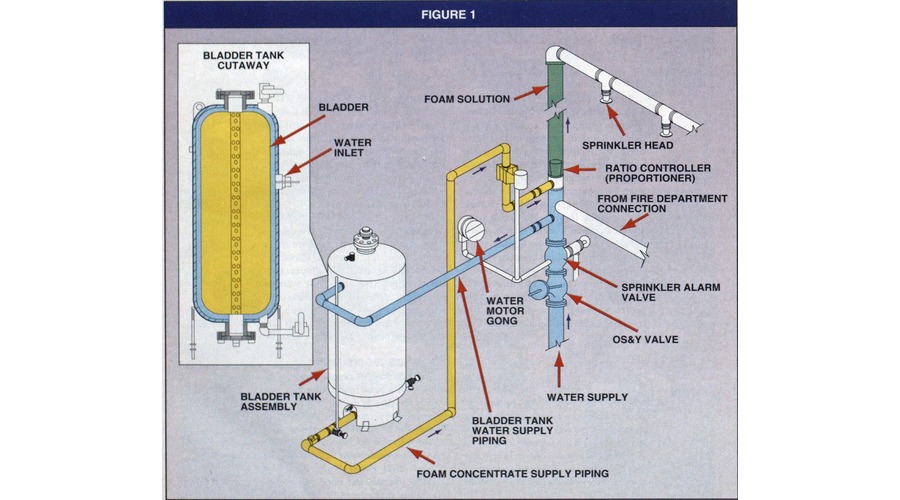
Clean agent systems aim to suppress fire by reducing how the fire can sustain combustion. Instead of flooding an area with water or covering everything with foam, they release a designed agent that helps bring the fire under control. This approach helps facilities reduce damage to sensitive devices, and it supports faster recovery, especially in rooms packed with electronics, imaging equipment, sample storage, and control panels.
Moreover, these systems often work well when a room needs to stay clean, or when water damage would create expensive downtime. And let’s be honest, labs already have enough trouble with spills that look like they escaped on their own. A suppression plan that avoids additional mess can be a quiet win.
This is one reason clean agent solutions continue to show up in discussions around critical equipment, medical labs, and technology-heavy facilities. Kord Fire Protection also explores this broader use case in its article on clean agent fire suppression for critical equipment, where the same principle applies: protect the space without creating a second disaster during the rescue.
Why healthcare and labs need suppression that respects uptime
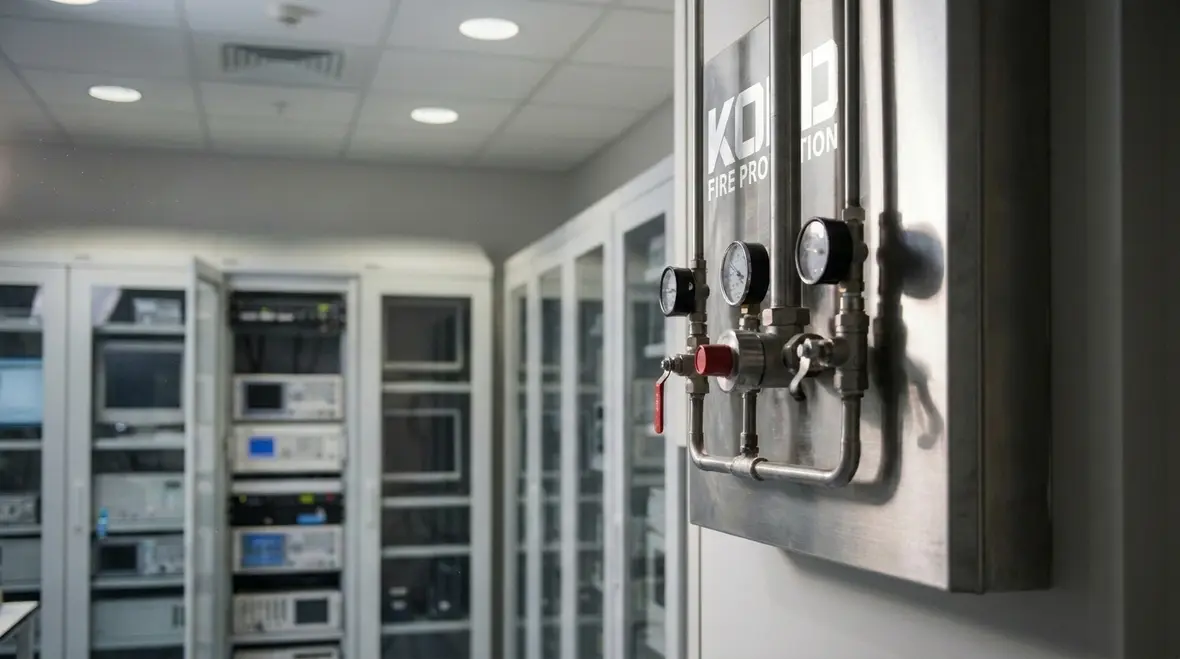
In these environments, downtime does not behave like downtime in a warehouse. It becomes delayed treatments, postponed tests, and rushed reruns. Therefore, the design process must consider occupancy, door arrangements, airflow, and how heat and smoke move through the space. In other words, the system needs to match the building, not just the fire code checklist.
Clean agents can support this need because they leave little to no residue compared with many traditional methods. As a result, teams can often return systems to service sooner, assuming the incident stays within the intended control range. The facility also reduces the need for deep cleanup, which can be a huge deal in sterile or controlled areas.
That need for uptime is not unique to laboratories. Data centers, control rooms, healthcare providers, and other critical operations face the same pressure, which is why Kord Fire Protection frequently discusses similar planning priorities across multiple industries. Their guide on data center clean agent fire suppression reinforces how fast, low-residue suppression supports continuity when interruptions are not just inconvenient, but costly.
Uptime is really a people issue dressed up as an operations issue
When a suppression strategy protects uptime, it also protects schedules, staffing stability, patient expectations, and research integrity. A delayed result or a canceled procedure can trigger a chain reaction that spreads far beyond one room. So while suppression hardware may live above the ceiling or inside cylinders against a wall, its real impact is felt in the day to day rhythm of the people trying to keep that facility moving.
How Kord Fire Protection becomes a vital partner
Even the best fire suppression plan fails if it is not installed correctly, tested regularly, and maintained with care. That is where Kord Fire Protection becomes a vital partner with this service and job. They help facilities move from “we have a system” to “we have a system that performs when it matters.”
First, they support proper system selection based on room hazards and operational realities. Then, they help coordinate inspection schedules and documentation so the facility stays ready for audits and operational reviews. Finally, they maintain the equipment so it stays reliable, not just present.
Because in real life, buildings do not stand still. They get renovated. They get new equipment. They change airflow patterns and storage layouts. Kord Fire Protection helps facilities keep their suppression strategy aligned with how the space actually functions today, not how it functioned when the last drawings were printed.
That kind of partnership matters even more in regulated environments where documentation, testing, and coordination are not optional extras. A contractor who understands only the hardware may install a system. A partner who understands the space can help preserve confidence in it year after year. For a broader overview of available methods and how they are used across facilities, Kord Fire Protection also offers its fire suppression services page as a starting point.
Design considerations that decide whether the system works
Clean agent suppression is not a “set it and forget it” situation. It depends on correct engineering and correct coverage. To support performance, teams typically evaluate the hazard type, enclosure integrity, ventilation conditions, and the time needed to control the fire.
Key design factors often include:
- Room integrity: Doors, dampers, and seals influence how well the agent stays where it needs to be.
- Ventilation and shutdown logic: The system must coordinate with fans and air handling so the agent concentration remains effective.
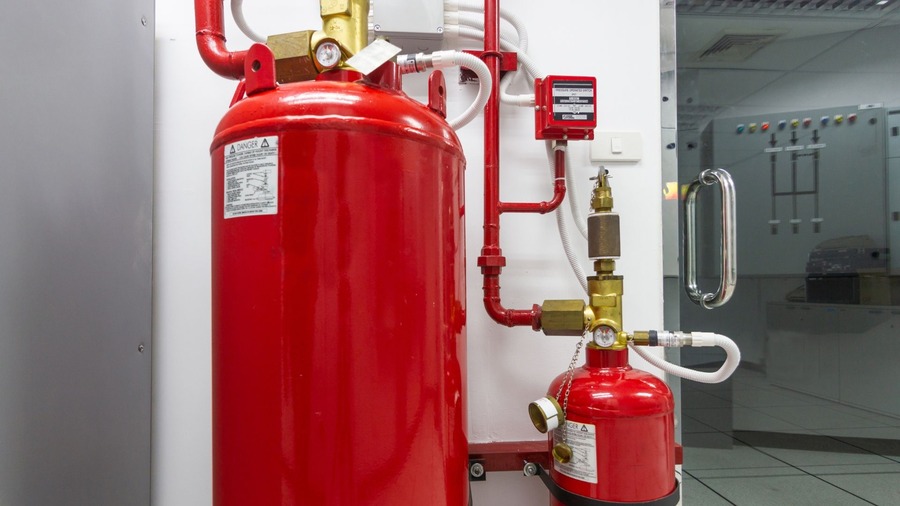
- Cylinder and nozzle layout: Placement affects distribution, especially in rooms with complex geometry.
- Detection and control: Proper detection reduces delays, and proper control reduces unnecessary discharge.
Additionally, healthcare and labs often contain multiple zones, including shared corridors, equipment rooms, and specialized suites. Consequently, the system must fit into how people move, how staff respond, and how alarms alert teams without causing confusion. In a hospital, a false alarm does not just ring. It triggers protocols, and those protocols cost time. A well designed system helps avoid that chaos.
Why room integrity keeps showing up in every serious conversation
If the protected enclosure leaks too much, even an excellent clean agent system can struggle to maintain the concentration it was designed to achieve. That is why room integrity is such a repeat character in clean agent planning. Kord Fire Protection addresses this directly in its resource on room integrity testing for clean agent systems, which is especially relevant for labs and medical spaces with changing penetrations, renovations, and equipment upgrades.
Installation, commissioning, and ongoing maintenance
Once design decisions lock in, quality installation and commissioning determine whether the system performs as intended. For example, correct piping, proper cylinder placement, accurate labeling, and reliable wiring all matter. Then, commissioning verifies that the detection, control panels, and releasing sequences operate under realistic conditions.
After commissioning, maintenance keeps performance steady. Therefore, a facility should plan for routine inspections, part testing, and performance checks. Maintenance also supports compliance with local fire standards and internal safety policies. It also reduces the odds that a future shutdown or a changed lab workflow creates a surprise.
Here is the reality: systems age. Sensors drift. Valves need attention. Panels get updated or replaced. Without scheduled service, performance degrades quietly, like a sitcom character who insists “I am totally fine” while clearly not being fine. Regular service keeps the system honest.
It also helps when the service partner knows how clean agent systems fit into a larger suppression strategy. Kord Fire Protection touches on those comparisons in its post on clean agent vs traditional fire suppression systems, which can help stakeholders explain why lower-residue protection makes sense in sensitive environments.
Preparing staff and operating teams for a real event
A suppression system works best when people know what to do. Accordingly, training should cover alarm meanings, evacuation steps, shutdown procedures, and how to coordinate with facility leadership. Staff also should understand the difference between an alarm condition and an actual discharge event, because response actions can vary.
In labs, staff may also manage experiments, critical storage, and sensitive processes. Hence, the facility should connect suppression events to operational plans. That can include how to secure equipment, how to notify stakeholders, and how to document incident details for review.
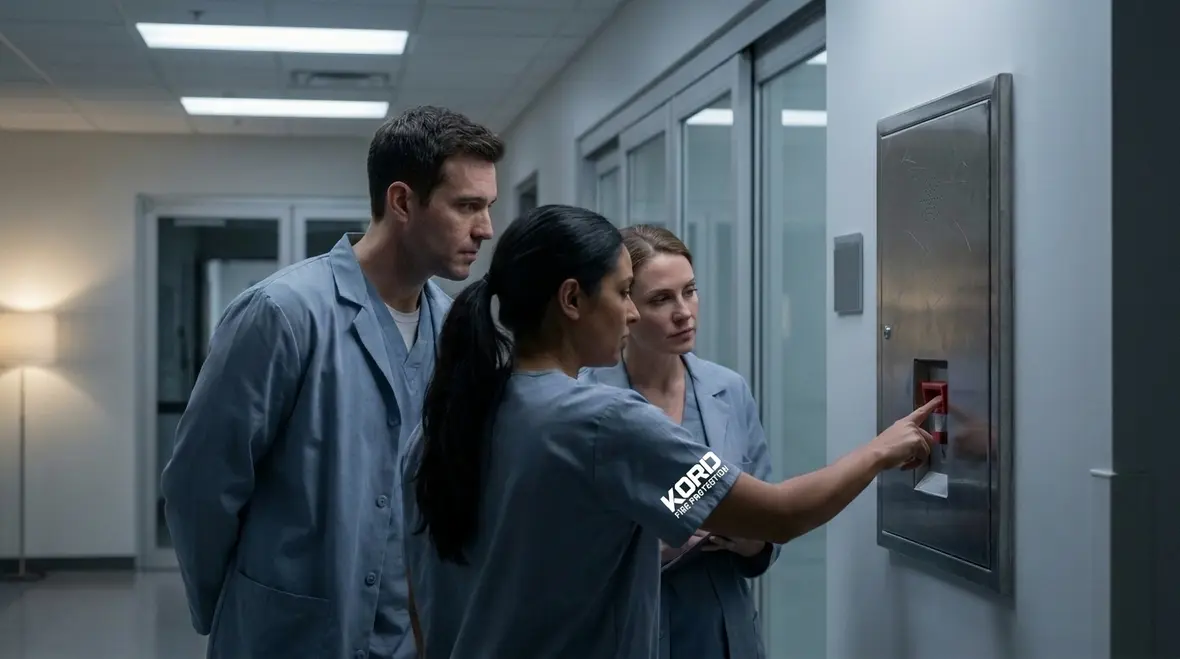
Meanwhile, the facility should maintain clear signage and access to system components. When technicians and emergency teams can find panels and manual controls quickly, response gets faster and calmer. And calmer response helps protect the people who matter most.
Training should reflect what actually happens in the building
A binder on a shelf is not a response plan. Teams should understand what alarms sound like, what countdown procedures mean, which doors must stay closed, who communicates with leadership, and where accountability happens after evacuation. In a space filled with researchers, clinicians, or technicians mid-task, clarity beats panic every time. The smoother the response, the less likely the event turns into confusion wearing a name badge.
Comparison of typical approaches in sensitive facilities
Facilities often weigh multiple suppression methods before deciding. The choice depends on hazard type, enclosure size, and tolerance for residue or cleanup. The following comparison highlights common considerations.
Clean agent approach
- Often supports sensitive electronics and controlled rooms
- Minimizes residue and cleanup in many cases
- Can align well with laboratory and healthcare workflows
Water and foam approaches
- Can create water damage in critical areas
- May require extensive cleanup after discharge
- Often fits better in other hazard types, depending on layout
FAQ
Take the next step with Kord Fire Protection
A reliable fire plan protects people, equipment, and the work that cannot pause. Clean agent systems for healthcare and lab environments deliver control with less cleanup, but only when they are engineered, installed, and maintained the right way. Kord Fire Protection helps facilities partner through design support, commissioning, service, and ongoing readiness so the system performs under pressure.
If this topic applies to your building, explore Kord Fire Protection’s fire suppression services and review its related guidance on clean agent standards for fire suppression systems. Then schedule a consultation and turn fire protection into a dependable part of operations.

Join Our Newsletter!
Get the latest fire safety tips delivered straight to your inbox From our Newsletter.