How Clean Agent Fire Suppression Systems Discharge
How clean agent fire suppression systems discharge during a fire works
When a fire starts, seconds matter. A well designed clean agent discharge is built to act fast, and it does so by releasing an engineered fire suppressant into protected spaces where people and equipment live and work. In practical terms, the system does not “pray for the best” and hope the flames behave. Instead, it detects smoke, heat, or both, then triggers a sequence that opens the right valves, moves the agent through piping, and delivers it into the room with a measured, controlled flow.
Now, the fun part is that the process has to be precise. Too slow and the fire grows. Too fast or too much and the space gets messy for people and equipment. And yes, even high tech systems can feel dramatic, like a very expensive extinguisher with stage lighting. Let’s walk through what happens, step by step.

How detection triggers clean agent release
Before any agent moves, the system must confirm that a fire situation exists. Typically, detectors watch for patterns that match fire behavior, such as heat rise, smoke density, or flame signatures depending on the design. Then, the control panel evaluates the input and decides whether to start the discharge sequence.
As a result, the building does not discharge the agent just because someone microwaved leftovers too aggressively. Instead, the control logic uses timing and verification. Often, it runs a pre alarm or delay sequence so occupants can exit, while staff can verify the situation. Meanwhile, dampers and doors may hold or close to help maintain the protected volume.
Once the panel reaches the alarm stage that authorizes release, it sends an electrical signal to release devices. After that point, the system transitions from “monitoring mode” to “action mode,” and the clean agent discharge sequence begins.
Why verification matters before release
That verification step is one of the quiet heroes of the whole process. It helps reduce nuisance discharges, gives trained personnel a brief chance to assess conditions, and supports a cleaner handoff between the fire alarm system and the suppression controls. In spaces filled with electronics, records, or process equipment, that kind of caution is not overkill. It is common sense wearing a hard hat.
What happens to valves and piping during discharge
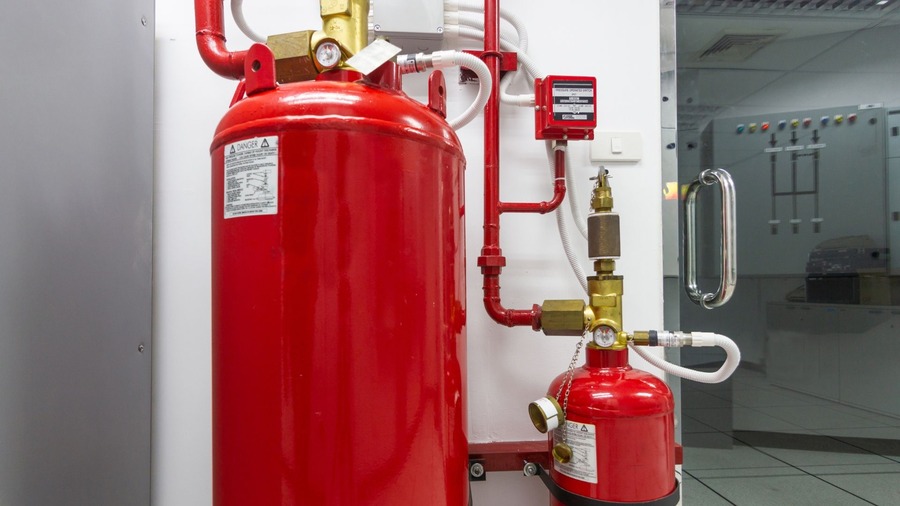
After the control panel authorizes release, the system opens the correct distribution path. First, release heads or valve actuators receive power and shift position. Next, the pressurized agent moves from the storage container into the piping network. From there, piping routes the agent toward nozzles or manifolds matched to the protected area.
At this stage, the design depends on physics and discipline. Clean agents act as suppressants, not as “fire blankets.” To work well, they need to fill the space at the required concentration, within a planned time window. Therefore, the piping layout, nozzle spacing, and flow control devices matter a lot.
Additionally, the system often includes features that prevent partial or incorrect discharge. For example, interlock wiring can require that specific conditions occur, such as door closure or HVAC shutdown, before the valves open fully. This helps keep the agent where it needs to be.
If you want a broader overview of how these systems fit into a facility’s protection strategy, Kord Fire Protection also covers the bigger picture on their fire suppression services page.

How clean agent discharge fills the room at the right time
The release does not simply dump suppressant like a bucket. Instead, it follows a calculated discharge curve based on agent type, hazard class, and room volume. Once the agent leaves the container, it travels through the distribution piping and exits through nozzles.
Then, the agent disperses across the protected enclosure. In many designs, nozzle placement supports mixing so the suppression target concentration reaches the area effectively. Meanwhile, the system controls the discharge duration so it maintains the concentration long enough for fire knockdown.
As a result, the fire experiences both fuel and oxygen related suppression effects, depending on the agent chemistry used. After that, the room conditions shift so the fire cannot sustain itself.
And yes, the timing has to be consistent. A system that discharges too quickly or fails to distribute evenly can underperform, even if the agent quantity looks correct on paper. That is why ongoing inspection and maintenance matter.
Why room integrity affects performance
Even a perfectly sized system can struggle if the enclosure leaks like a secret no one could keep. Doors, penetrations, ceiling spaces, and airflow pathways all affect whether the concentration stays where it should. Kord Fire Protection discusses this in more detail in their article on clean agent suppression system and room integrity testing, which is a useful next read for anyone responsible for mission critical rooms.
Safety controls during discharge: people, airflow, and enclosures
Even though clean agents leave little residue, safety systems still prioritize people. During a discharge, the building must limit how quickly the agent escapes and how much fresh air enters. Therefore, systems may control ventilation dampers and shut down fans, or they may reduce airflow to protect concentration levels.
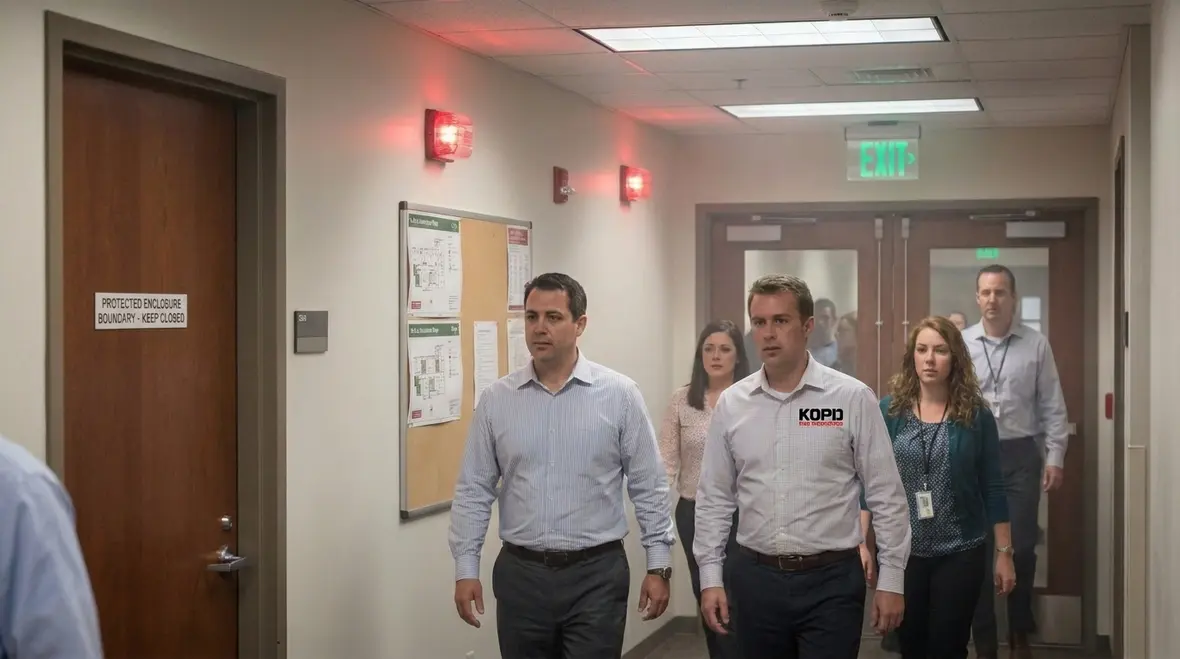
At the same time, audible alarms and visual indicators warn occupants to evacuate. In many projects, signage directs staff to follow emergency procedures and avoid re entering until the all clear signal comes from fire safety leadership.
Furthermore, the system can include interlocks with doors, smoke management, or fire alarm panels. This reduces the chance that the agent gets diluted by open pathways. Think of it like hosting a party in a hallway. The room might be ready, but if the doors never close, the “guest list” never stays put.
Finally, during and after discharge, the design anticipates that the fire department response will arrive quickly. Clean agent systems support those operations, but they do not replace emergency response or site emergency plans.
Why maintenance keeps clean agent discharge reliable
Here is the part people often skip until something fails. Clean agent systems rely on correct pressure, clean valves, unobstructed nozzles, and intact wiring. Dust, corrosion, damaged fittings, or blocked discharge paths can reduce performance. Meanwhile, tamper alarms and inspection records help spot issues before the system needs to work in real time.
For that reason, maintenance includes periodic checks of cylinders, release mechanisms, pressure gauges, and distribution components. Technicians also verify that nozzles remain free of obstruction and that discharge times meet design specs. After service events, they confirm the system returns to normal readiness.
And if a discharge happens, even a small one, the site needs proper verification and documentation. A system may appear “fine,” but internal checks and repairs help restore full performance.
When owners treat this work as an ongoing risk reduction plan rather than a once in a decade task, clean agent discharge stays dependable, not mysterious.
Related reading for system upkeep
For more detail on maintenance expectations and system behavior in sensitive environments, Kord Fire Protection’s article on clean agent fire suppression for critical equipment adds helpful context without making your eyes glaze over.
How Kord Fire Protection supports this job end to end
During a fire, the system’s job is to discharge cleanly and predictably. During the rest of the year, the job of a reliable partner is to ensure that it still will. Kord Fire Protection can become a vital partner for inspection, maintenance, and service planning so the discharge sequence performs as designed when it matters most.
Because clean agent systems involve precise components, Kord Fire Protection supports businesses with field driven expertise, clear service documentation, and practical recommendations. They help owners keep schedules on track, address deficiencies early, and reduce the chance of last minute surprises. In other words, they help protect people and property, not just the paperwork.
Additionally, their team can coordinate service needs with facility operations, which often includes scheduling downtime around critical processes. Therefore, the system stays ready without shutting down the business for longer than necessary.
If a fire suppression system is a promise, then maintenance is the fine print that keeps the promise enforceable.
FAQ about clean agent discharge
When the alarm sounds, what steps should staff take
Even with a dependable clean agent discharge system, staff should treat alarms as real emergencies. First, occupants should evacuate following posted routes and emergency procedures. Next, staff should avoid re entering the area until fire officials give the all clear. That step matters, because fire conditions can include heat, smoke, and hazards beyond the protected enclosure.
Then, facility leadership should coordinate with the fire department and the suppression system documentation. Having maintenance records and recent inspection reports can speed up assessment and reduce downtime.
Finally, after the event, the site should schedule system service and verification. A discharge event often triggers alarms, checks, and component resets. In short, the system needs to return to ready status before normal operations restart.
Conclusion: Partner with Kord Fire Protection to keep systems ready
Clean agent suppression works because it discharges on time, in the right concentration, through well maintained valves, piping, and nozzles. To keep that promise, a building needs more than a brochure. It needs scheduled inspection, clear documentation, and fast corrective action when something drifts out of spec.
Kord Fire Protection can help keep your system dependable, so when the alarm sounds, response stays calm and performance stays on point. Contact Kord Fire Protection today to plan service through their clean agent fire suppression systems page and protect what you cannot replace.

Join Our Newsletter!
Get the latest fire safety tips delivered straight to your inbox From our Newsletter.