Clean Agent Fire Suppression and Environmental Considerations
Clean Agent Fire Suppression and Its Environmental Considerations
Clean agent systems aim to protect people, equipment, and data without filling the room with messy residue. In the same breath, they can reduce the clean agent environmental impact when the right agent and controls are used. That matters, because not all agents behave the same in the real world, and “environmentally friendly” should not be a marketing slogan that vanishes the moment the inspector shows up.
To manage risk properly, facilities need a plan that covers life cycle effects, installation choices, and end of service handling. Moreover, when teams pair their clean agent program with Kord Fire Protection, they build a repeatable process for compliance, maintenance, and long term environmental responsibility. That process becomes even stronger when it is aligned with Kord Fire’s dedicated clean agent fire suppression services and practical guidance on protecting sensitive spaces.
How clean agents compare in environmental impact
Clean agent systems use gases that interrupt the fire chemistry or suppress heat release. However, the environmental outcomes depend on the specific agent type, leak control, and how the system performs over time. For example, some agents can affect ozone, while others may relate more to global warming potential. Therefore, the clean agent environmental impact must be evaluated before selection, not after the system is installed like a surprise party no one asked for.
In addition, good design reduces unnecessary releases. Sealing, pipe sizing, and proper nozzles help deliver the right concentration to the hazard. Consequently, fewer discharges mean less atmospheric exposure and better long term stewardship. Kord Fire’s article on clean agent standards for fire suppression systems reinforces that environmental impact is not some side quest. It sits right alongside occupant safety, asset protection, and reliable system performance.
Why comparison should happen early
The wrong time to think about environmental performance is after cylinders are mounted, labels are printed, and everyone is pretending change orders are “minor.” Early comparison lets the facility weigh occupancy, enclosure tightness, hazard type, serviceability, and future availability. It also helps avoid choosing an agent that looks perfect in a sales sheet but becomes awkward in a real world maintenance program.
- Agent chemistry and expected atmospheric effect
- Expected leakage risk based on the room and building use
- Service logistics, including cylinder refill and replacement planning
- How easily the system can be tested without unnecessary discharge events
Spec selection and lifecycle planning
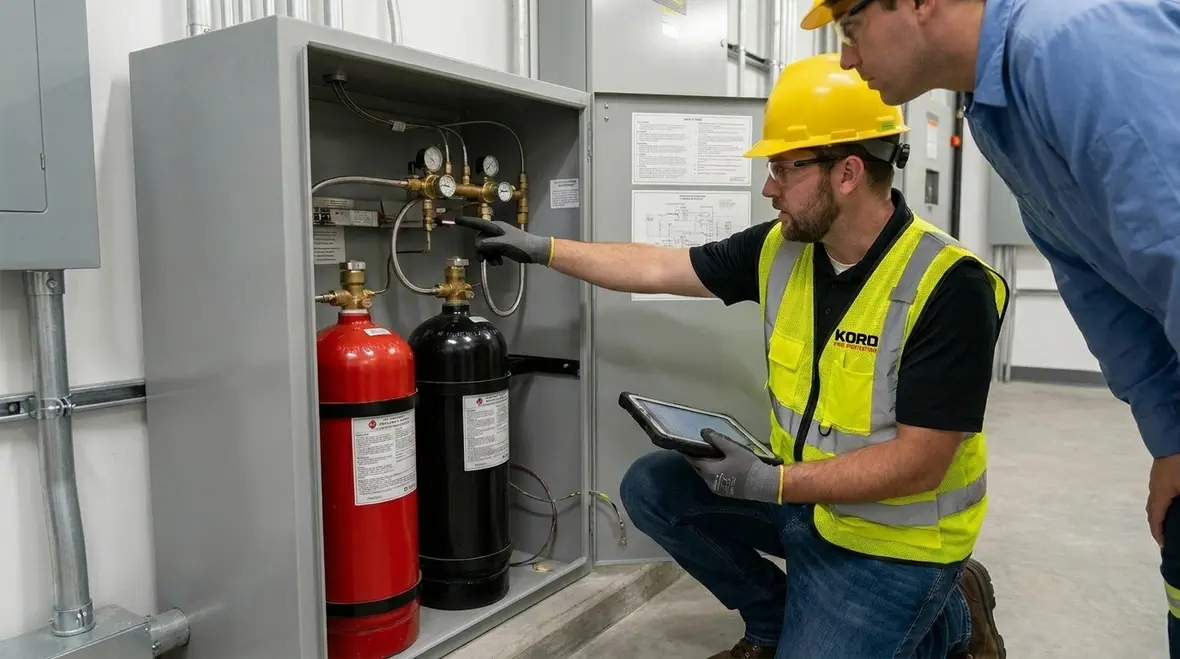
Before any contractor puts a system on paper, the facility team should plan for the full lifecycle. That includes design stage decisions, commissioning tests, routine inspections, and proper service practices. Over time, even a well designed system can face leaks from seals, components, or vibration. Hence, the right lifecycle approach reduces both operational risk and the environmental cost of avoidable discharges.
They also need to consider:
- Agent compatibility with the protected space, including occupancy and room tightness
- Standards and local requirements that govern discharge limits and verification methods
- Availability of replacement cylinders or components to avoid rushed substitutes later
Then, once the system is running, tracking maintenance trends helps keep performance stable. In other words, the facility treats environmental performance like a KPI, not like a hope. That same mindset shows up in Kord Fire’s guidance on clean agent fire suppression for critical equipment, where protection decisions are tied directly to uptime, sensitive assets, and practical service planning.
Lifecycle thinking that actually helps
Lifecycle planning is not glamorous, but it keeps projects honest. It asks what happens during installation, after commissioning, during annual service, and when the system reaches component replacement age. It also forces teams to think about documentation, room changes, tenant improvements, and whether that “tiny wall penetration” is about to become the reason a room can no longer hold concentration.
Installation choices that reduce releases
Environmental stewardship starts with installation quality. Poor layout, loose fittings, or incorrect routing can trigger false alarms, repeated tests, or real discharges. Because clean agent systems rely on controlled delivery, installation details directly impact how long the agent stays where it belongs.
Teams should ensure the following:
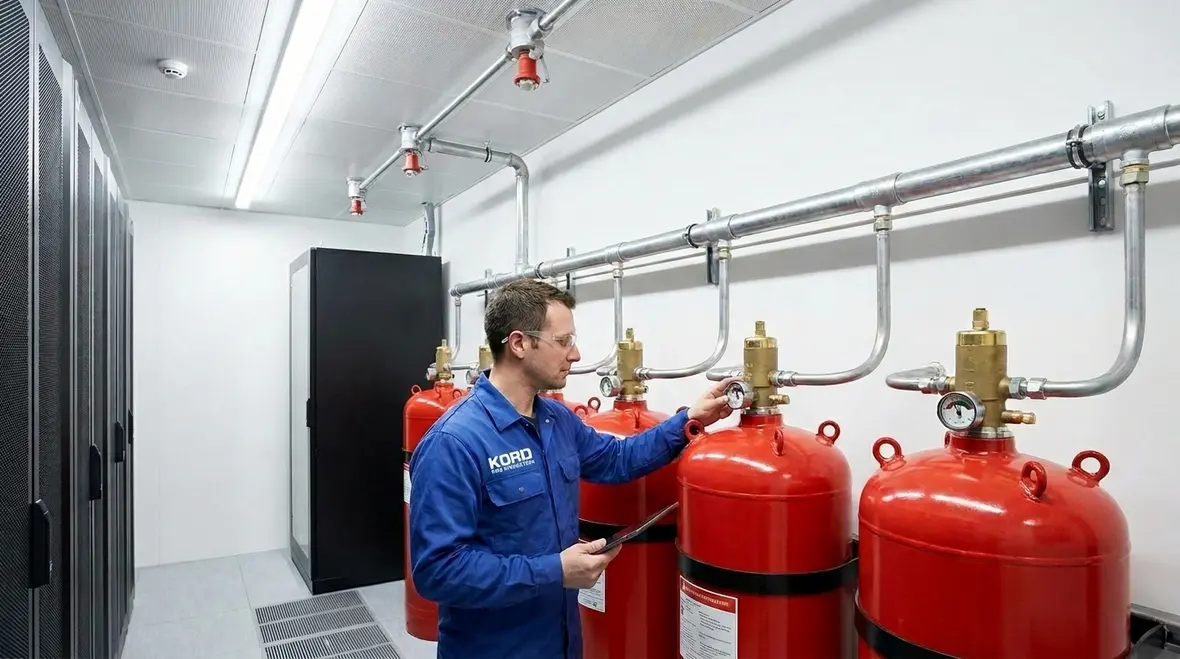
- Proper sizing of piping runs and pressure ratings for the selected agent
- Accurate pipe supports to prevent movement and vibration damage
- Clear labeling and access for future service so work does not become a scavenger hunt
- Commissioning that verifies concentration targets without over testing
And yes, over testing can look harmless, but repeated discharges add up. When organizations work with Kord Fire Protection, they tend to get consistent installation practices, documented commissioning results, and a maintenance roadmap that reduces surprises. That is also why room performance matters. Kord Fire’s article on clean agent suppression system and room integrity testing explains why a tight enclosure is not optional if the goal is reliable suppression with fewer avoidable releases.

Maintenance schedules that protect people and the atmosphere
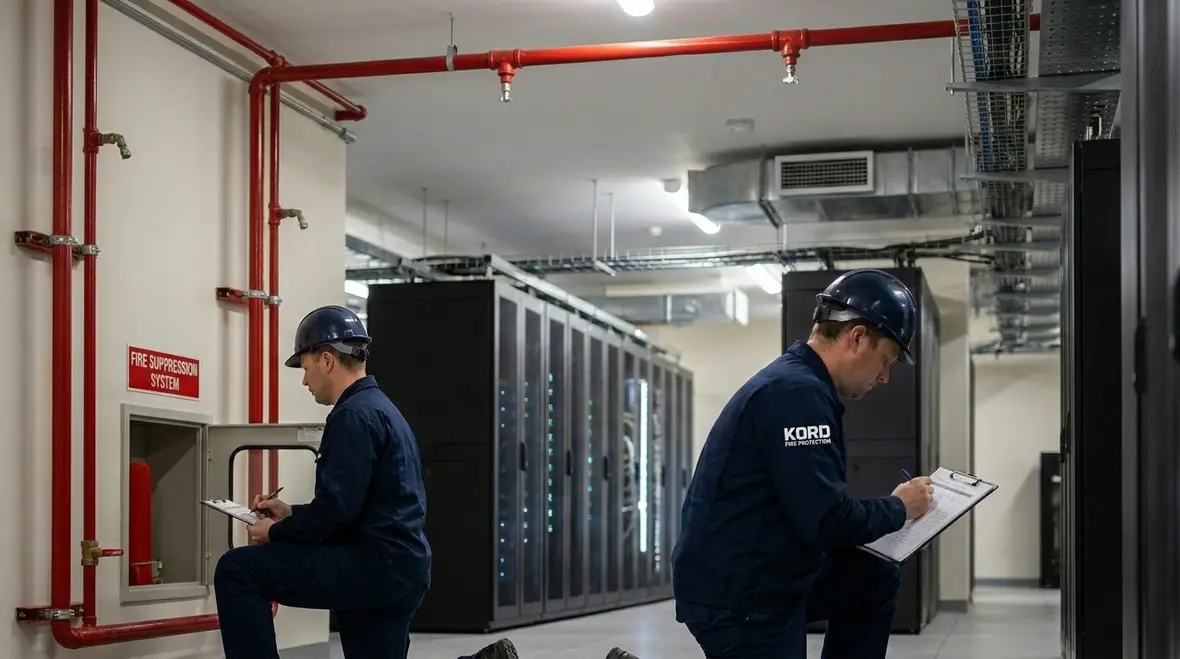
Maintenance does not only keep a system functional. It also protects the environment by reducing the chance of accidental or unnecessary release. Filters, detection devices, and control valves all need periodic inspection, and the team must confirm they still meet performance goals.
Moreover, the facility should plan for both planned and event based triggers. For instance, a damaged actuator or corroded component can cause system faults that lead to more testing or emergency service. Smooth troubleshooting prevents repeated interventions. Additionally, technicians should verify that leak checks and alarm verification stay aligned with current standards and the manufacturer’s guidance.
To keep it practical, facilities can treat maintenance as a chain. If one link weakens, the whole chain loses strength. Kord Fire Protection helps organizations build that chain through proactive service, clear reporting, and training support for site staff. Facilities with high value electronics can also compare planning approaches with Kord Fire’s data center clean agent fire suppression guide, which highlights how disciplined testing, sealing, and upkeep prevent expensive surprises.
A maintenance routine worth keeping
Good maintenance is repetitive on purpose. It checks pressures, verifies initiating devices, reviews panel history, inspects cylinders and valves, confirms signage, and documents anything that drifted out of tolerance. That may not make anyone do a celebratory dance in the electrical room, but it absolutely lowers the odds of unnecessary release and weak system performance.

Compliance, reporting, and service documentation in real terms
When inspectors show up, documentation becomes the quiet hero. It proves that the facility manages clean agent performance and environmental responsibilities with care. Therefore, the facility should store test results, service notes, and system updates in an organized way.
Service documentation also supports future planning. It helps teams estimate when components may need replacement and when cylinder service should occur. In turn, this reduces emergency purchases and rushed work that can compromise environmental outcomes. Put simply, paperwork is not glamorous either, but it is a lot better than trying to explain missing records when the question on the table is whether the system was actually maintained.
Environmental focus
- Leak checks and evidence of tight integrity
- Maintenance records that show discharge reduction
- Proper handling practices during service events
Operational focus
- Detection and control verification
- Alarm and test accuracy
- System readiness for actual fire scenarios
Why Kord Fire Protection becomes a vital partner
Facilities often view fire suppression as a purchase, then set it and forget it. That approach works about as well as ignoring smoke alarms because someone once told them they are “probably fine.” Instead, clean agent systems need ongoing management with environmental considerations built in.
Kord Fire Protection helps organizations treat clean agent environmental impact as a living part of the program. They support system selection guidance, install oversight, commissioning best practices, and service scheduling that reduces unnecessary releases. They also help teams stay aligned with requirements and manufacturer steps, which keeps performance stable and predictable.
As a result, the facility does not just protect property. It protects people and supports responsible stewardship. And in many industries, that is the difference between a system that passes paperwork and one that performs when it truly matters. Near the end of the process, teams looking for a direct solution can explore Kord Fire’s clean agent fire suppression service page and their clean agent guidance for critical equipment to connect planning with real world implementation.
FAQ
Final Call to Action
Clean agent systems can protect people and property while supporting responsible environmental planning when a facility selects the right agent, installs it well, and maintains it consistently. Kord Fire Protection helps organizations build that process with clear documentation, proactive service, and practical steps that reduce unnecessary releases.
If a clean agent program already exists, they can help tighten performance and compliance. If one is still in the planning stage, they can guide the choices through clean agent fire suppression services and related expertise, including critical equipment protection. Reach out to Kord Fire Protection today and protect your site with confidence.

Join Our Newsletter!
Get the latest fire safety tips delivered straight to your inbox From our Newsletter.