Buckeye Kitchen Mister Fire Suppression System Explained
Understanding the Buckeye Kitchen Mister Fire Suppression System
Picture a kitchen fire starting at the exact wrong moment, like when someone says, “We can totally handle this without help.” That is exactly why the Buckeye Kitchen Mister matters. In a commercial kitchen, fire does not politely wait for a convenient pause in service. It shows up around grease, heat, vapor, and fast moving equipment, then tries to turn one bad minute into a very long report. The Buckeye Kitchen Mister is built for that kind of environment. It uses a mist based suppression approach designed for cooking areas where grease hazards and high temperatures are always part of the job. On paper, that may sound straightforward. In reality, the difference between dependable protection and expensive chaos usually comes down to design quality, clean installation, scheduled testing, and maintenance handled with the same seriousness people claim they have for smoke detectors but do not always prove. As Kord Fire Protection explains across its kitchen suppression resources, reliable protection depends on planning, placement, and ongoing service, not wishful thinking. Commercial Kitchen Fire Suppression Systems Explained offers a useful companion look at how these systems protect cooklines, hoods, and ducts in real kitchens.
In this article, third person perspective is used to break down how the system works, what gets installed, what should be checked, and how Kord Fire Protection can become a vital partner for the service job. That partnership matters because fire protection is not a one and done task. It is a continuous process, and kitchens move fast. Layouts change. Equipment gets replaced. Grease builds up where nobody wants to admit it builds up. Service schedules slip when the week gets busy. A properly supported suppression system helps bring order back into that mess before a small hazard becomes a full production. And yes, if a kitchen ever needed a quiet professional in the background, this is it.
What the system does inside a cooking environment
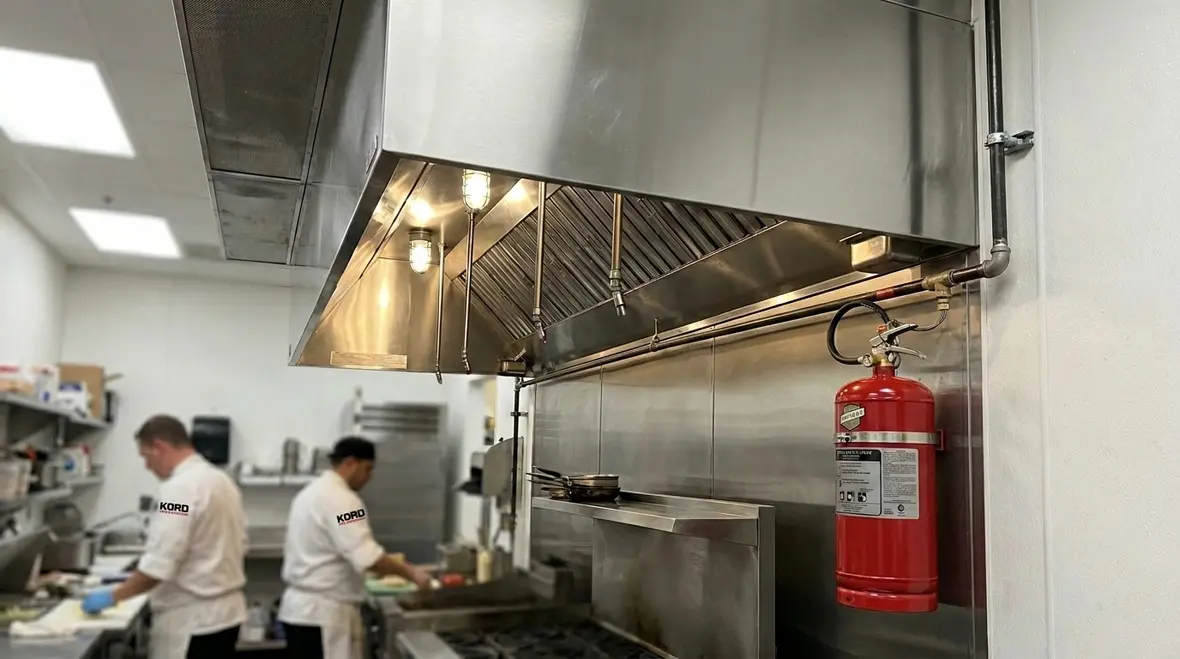
The Buckeye Kitchen Mister fire suppression setup focuses on rapid response and targeted suppression. In most commercial kitchens, heat, grease, and airborne particles combine into a high risk environment. Therefore, a mist based approach helps cool and suppress flames while reducing the intensity of the fire. As a result, the fire is less likely to spread to hoods, ducts, and nearby combustibles. That targeted effect is one reason systems like this matter so much over fryers, grills, ranges, and other cooking appliances that like to test everyone’s blood pressure at the worst possible time.
Furthermore, the system aims to protect more than just the visible flames. It works to help limit the conditions that feed fire growth. Meanwhile, the kitchen can keep operating under normal conditions because the system stays ready in the background. It is like having a calm seatbelt wearer in the passenger seat. Nobody notices until the moment they really need it. Kord Fire Protection makes a similar point in its article on what kitchen fire suppression covers and does not cover, where the emphasis is on understanding protected zones, design limits, and why one layout never perfectly matches another. That matters here because a suppression system is not decorative hardware. It is a response strategy built around a specific cooking environment.
Why kitchens need targeted suppression instead of general hope
Commercial kitchens are not gentle spaces. They combine open flame, hot surfaces, oils, grease vapors, metal hoods, moving staff, and nonstop timing pressure. A generic response is rarely enough. The suppression system has to work where the hazard starts and where it is most likely to spread next. That is why design, placement, and coverage are tied directly to the protected appliances and hood geometry. One kitchen may need coverage adjusted for fryers and charbroilers. Another may need a different approach because of line arrangement, obstructions, or hood dimensions. As Kord notes in its broader kitchen suppression articles, one size does not fit all, and kitchens have a talent for proving that point dramatically.
How detection and discharge work together
Most installations rely on a sequence that follows real fire behavior. First, the system detects heat and fire conditions using approved devices that match the local requirements and the equipment layout. Then, once thresholds are reached, the control process triggers the discharge. At that point, the mist is released in a way designed to cover the protected area under set design parameters. That timing matters because a delayed response in a grease fire is like giving the problem a head start and a snack.
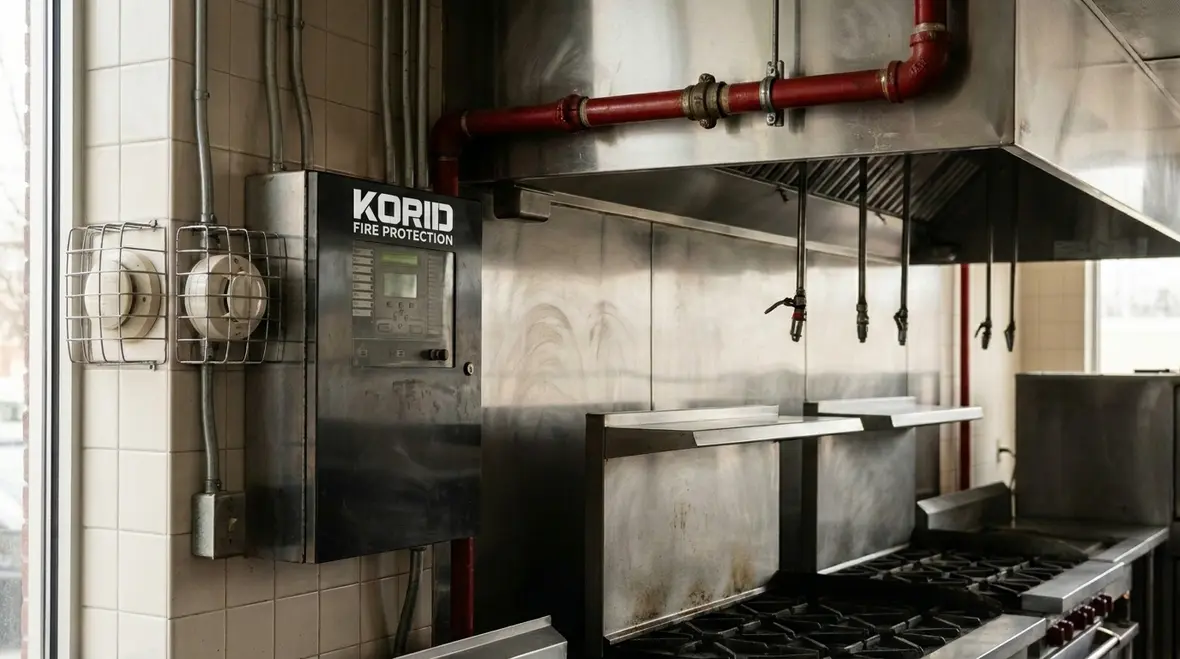
Because kitchen layouts vary, placement and coverage matter. In practice, the system designer coordinates nozzle locations, pipe routing, and the coverage profile so the mist supports fire control where it counts. Additionally, the system must integrate with existing kitchen equipment and safety controls so that the response is reliable rather than hopeful. Kord Fire Protection touches on related system logic in its discussion of commercial kitchen fire suppression electrical interlocks, where shutdowns, sequences, and real world testing help ensure the system does what it is supposed to do when heat and flame conditions appear.
What proper coordination looks like on site
Good coordination means the detection method, discharge path, shutdown functions, and appliance layout all make sense together. It means the protected area is not guessed at after the fact. It means service access is considered before equipment gets boxed in by convenience. It means the system can be inspected, tested, and restored without anyone acting surprised that maintenance needs room to exist. A kitchen can be fast, creative, and a little chaotic. The suppression layout should be none of those things.
Design, piping, nozzles, and key installation details
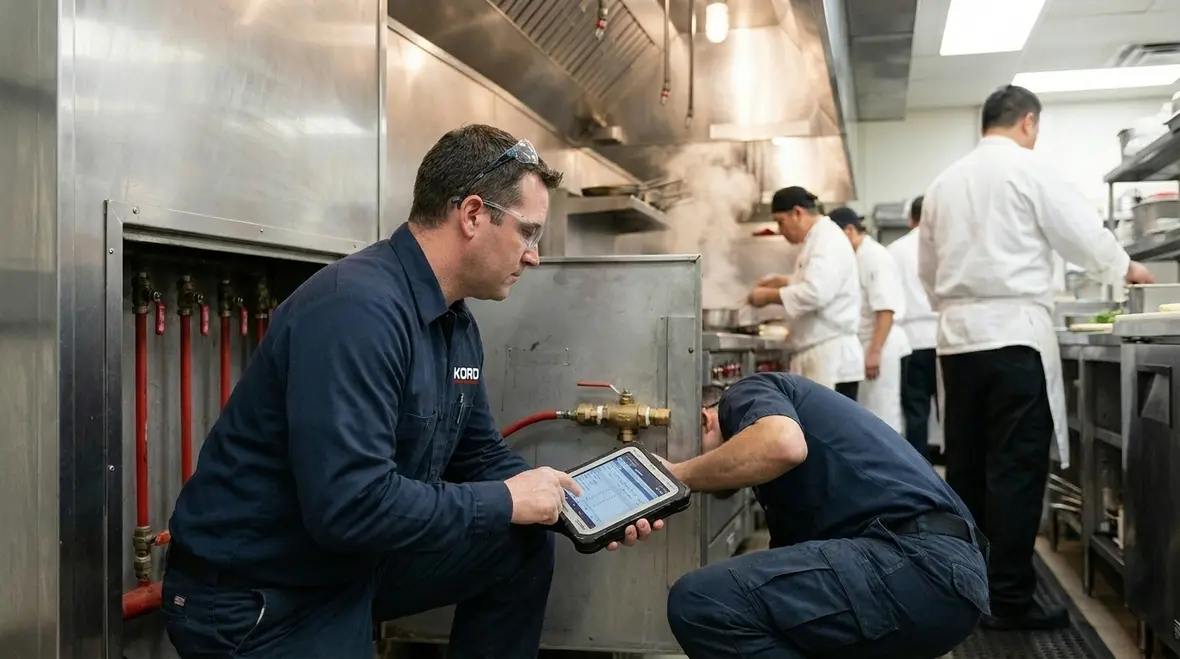
Installation quality makes or breaks performance. The Buckeye Kitchen Mister approach depends on correct design inputs and careful field work. To start, piping size and routing must match the system plan. Next, fittings need to be set properly, and supports must hold alignment without creating stress points. After that, nozzle placement must follow the engineered layout to maintain the correct discharge pattern. If those details are handled well, the system behaves like a professional. If they are handled poorly, the system becomes a future service headache wearing a shiny badge.
Even small oversights can create headaches later. For example, routing lines around obstacles without planning can affect distribution. Also, poor labeling or unclear access points makes future service harder than it needs to be. Kitchens already have enough “surprises” like a pot that never dries fully. Service techs should not have to hunt for shutoff locations like it is a scavenger game. Therefore, an experienced install team documents the layout, test points, and operating parameters so that inspections and repairs do not turn into guesswork.
Kord reinforces that same theme in its article on kitchen suppression systems for equipment and grease fires, where system planning, protected zones, and maintenance are all tied back to actual cooking risks rather than generic assumptions. The stronger the documentation and the cleaner the installation, the easier it is to confirm readiness later and the less likely the service team is to inherit a puzzle nobody meant to build.
Installation details that matter more than they look
- Accurate nozzle placement over each protected hazard area.
- Pipe routing that avoids awkward obstruction workarounds.
- Secure supports that maintain alignment over time.
- Clear labels and access points for testing and service.
- Documentation that records the layout before memory gets creative.
Inspection, testing, and maintenance that keep the system ready
Once the Buckeye Kitchen Mister system is installed, ongoing readiness becomes the real job. Routine inspection checks help confirm that valves, controls, nozzles, and detection devices remain within expected condition. In addition, service teams should verify that system components stay clean, unobstructed, and free from buildup that can reduce performance. This is where the glamorous side of fire protection really shines, which is to say it mostly involves details, records, and looking carefully at things nobody applauds until something goes wrong.
Testing typically includes functional checks and review of key system indicators based on the design and local code requirements. Even when everything “seems fine,” it is smart to follow a schedule. Otherwise, the first time the system gets attention might be the same time the fire department gets a call. Nobody wants that kind of Monday. Kord Fire Protection regularly stresses in its kitchen inspection content that tags, reports, and repeat service intervals are not paperwork theater. They are part of proving the system is still capable of doing the job it was installed to do.
Moreover, maintenance should include updating records. Accurate documentation helps owners prove compliance, supports insurance needs, and helps future service work faster. When these steps stay consistent, the system becomes dependable, not mysterious. That is especially helpful in kitchens where staff turnover, equipment changes, and schedule pressure can make institutional memory vanish faster than break room doughnuts.

A practical maintenance mindset
The best maintenance plans are boring in the best way possible. They are scheduled, documented, repeatable, and easy to follow. They account for visual checks, functional review, cleaning around components, record updates, and professional follow up when anything looks off. In a busy kitchen, that kind of consistency is a gift. It reduces surprises, shortens service visits, and helps managers answer inspection questions without staring at the ceiling for inspiration.
Why Kord Fire Protection becomes a vital partner
Fire protection service works best when the team understands the equipment, the layout, and the operational rhythm of the facility. Kord Fire Protection can become a vital partner with the Buckeye Kitchen Mister job because it brings focus to design coordination, installation quality, and continuing maintenance. That matters because a system is only as strong as the people who support it after the ribbon cutting. Plenty of systems look impressive on day one. The better question is whether they still inspire confidence when grease, time, and kitchen reality start doing what they do.
In many projects, the tricky part is not the concept. It is the details during service planning, code alignment, and long term upkeep. Kord Fire Protection supports that work by helping define what should be checked, how often it should be checked, and what documentation should be kept. Meanwhile, the kitchen stays operational, and safety improves without chaotic disruption. For facilities with broader needs, Kord’s fire suppression service page is a logical next step near the end of the planning process because it connects kitchen protection with wider suppression support and ongoing service capabilities.
So, when Kord Fire Protection teams up with the installation and service schedule, the Buckeye Kitchen Mister system does not just exist. It performs when it needs to, and it stays ready year after year. That is the goal. Not a nice looking tag. Not a false sense of security. Real performance, confirmed over time, with fewer surprises and a lot less crossing fingers.
Common questions about mist based kitchen suppression
Home cooks worry about smoke. Commercial kitchens worry about fire control. To help decision makers and facility managers move forward, the most common questions typically center on coverage, triggers, maintenance, and system behavior. The answers usually come back to the same fundamentals: design around the actual hazard, install cleanly, inspect consistently, document everything, and work with a service team that knows the difference between “looks good” and “is ready.”
Coverage and layout
Design teams place nozzles based on hood geometry, cooking surfaces, and protected area goals. Therefore, correct placement helps maintain the intended discharge effect. Two kitchens can look similar and still require different layouts, because hazard zones and equipment arrangement rarely stay as predictable as people hope.
Response and reset
Detection triggers system operation. After activation, service staff follow the reset and inspection process to restore the system to ready status. Reset should never be treated like flipping a mystery switch and hoping for the best. Post activation review matters just as much as the initial discharge.
FAQ
Final thoughts and next steps
A kitchen fire suppression system is not a purchase. It is a safety plan that must stay current. When the Buckeye Kitchen Mister is designed and installed correctly, and when Kord Fire Protection supports inspections and maintenance, owners gain real peace of mind. That peace of mind is earned through clean layouts, dependable response, scheduled testing, accurate records, and service support that does not disappear after installation day. If a project is under review or service planning is overdue, now is the moment to act before “later” turns into an emergency with witnesses.
For teams ready to move from general concern to a specific plan, Kord Fire Protection offers a clear next step through its fire suppression services page. It is a strong place to connect kitchen protection needs with inspection, testing, maintenance, and broader suppression support. In other words, the system can stop feeling like a technical mystery and start functioning like the reliable safeguard it is supposed to be.
Need kitchen suppression support?
Contact Kord Fire Protection to discuss your kitchen layout, code needs, and a service schedule that keeps the system dependable.

Join Our Newsletter!
Get the latest fire safety tips delivered straight to your inbox From our Newsletter.