Kidde Kitchen Fire Suppression Service and Maintenance
When a cooking mishap turns into a real emergency, Kidde kitchen fire suppression can make the difference between “oops” and “call everyone and their cousin.” These systems are designed to detect fast-moving fire and then discharge an agent to help stop it quickly. However, the real value shows up after the install, when people actually maintain the system, train staff, and verify performance. In this guide, third person explains what to know about Kidde kitchen fire suppression systems, what matters during service, and how Kord Fire Protection can become a vital partner for the job from start to finish.
What a Kidde kitchen suppression system actually does
A commercial kitchen fire can grow in seconds, especially around grease, fryers, and hood exhaust areas. Kidde systems focus on that high risk zone. First, the system monitors heat and fire conditions near the protected equipment. Next, when it meets the trigger thresholds, it releases the suppression agent. Then the agent coats key surfaces and helps break the fire cycle. In short, it aims to put the fire down fast, before it spreads to hoods, ductwork, and neighboring equipment.
Now, to be clear, this is not a magic wand. It does not replace safe cooking practices, proper ventilation, or regular cleaning. Still, it adds a critical layer of protection that many kitchens need, because fire loves timing and grease loves drama. For teams that want a broader overview of kitchen coverage limits, Kord Fire Protection’s kitchen fire suppression guide offers useful context before service questions start piling up.
Why that quick response matters in real kitchens
The speed piece is what makes these systems so important. Cooking oils, open flame appliances, and hot metal surfaces do not wait politely for someone to finish a ticket. They escalate. A properly maintained system is there to react while staff move to emergency procedures, and that difference can protect people, equipment, and the rest of the building from becoming tomorrow’s cautionary tale.
Where systems are installed and why placement matters
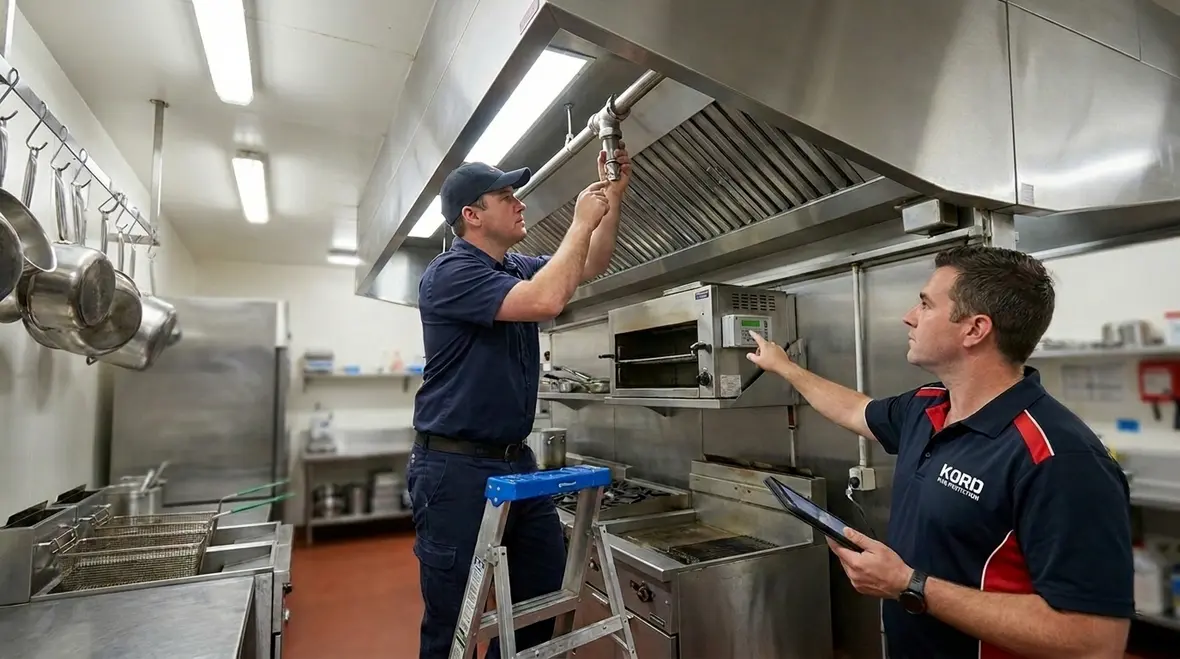
Installation location directly affects performance. Typically, the protection covers the cooking equipment and the hood system, with components placed where flames and heat rise first. In many kitchens, that means the hood, duct connection points, and the immediate equipment zone. Additionally, the discharge nozzles and distribution piping must align with the hazard so the agent reaches the intended surfaces.
If the layout changes, the system can lose effectiveness. For example, when a business moves equipment or changes the hood configuration, a technician should review the system and confirm the discharge coverage still fits. Otherwise, the system might work, but it may not cover the right angles. And nobody wants their fire suppression to behave like a well meaning extra in a movie who shows up late and then trips over the props.
That is also why articles like Kord Fire Protection’s UL 300 restaurant hood fire suppression guide matter during planning and renovations. They help operators understand that modern kitchen protection is tied closely to exact appliance layout, not vague good intentions and crossed fingers.
Placement issues often hide in plain sight
One of the sneakiest problems in commercial kitchens is that small changes feel harmless. A fryer shifts six inches. A griddle gets replaced. Someone adds equipment because business is booming and nobody wants to say no to more orders. Yet those little updates can change the actual hazard footprint. Service technicians look at those details because the system has to protect the equipment that exists now, not the version of the kitchen that lived there two menu revisions ago.
Key components and what technicians verify
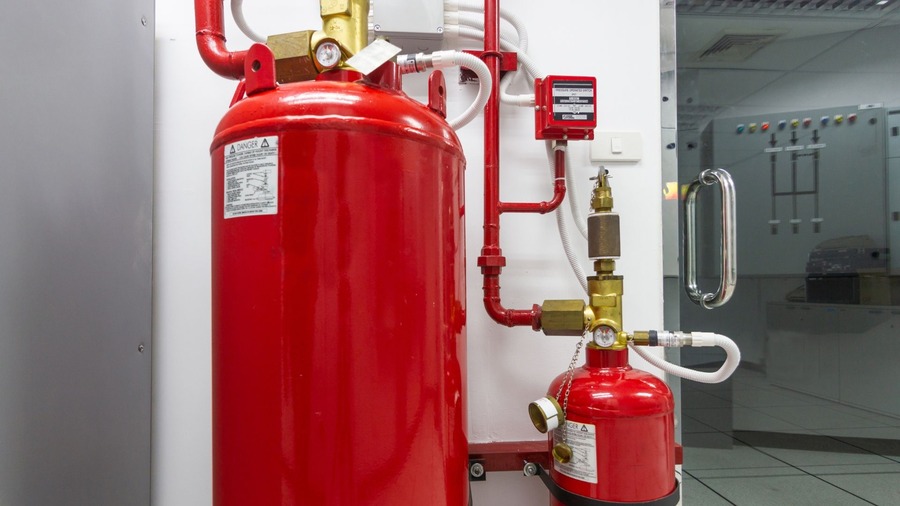
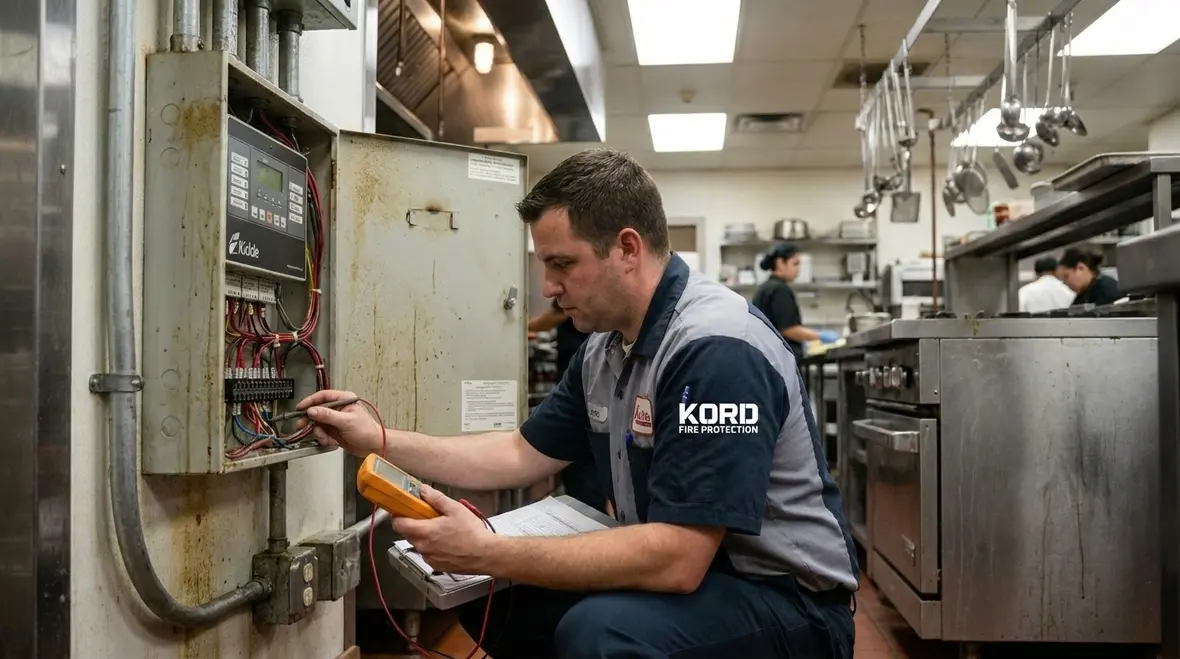
A Kidde kitchen fire suppression setup includes several parts that must function as a system, not as separate gadgets. Technicians typically verify the detection devices, the control panel logic, the agent storage, and the discharge hardware. They also confirm the wiring, mounting, and supervision features so the system can trigger reliably during an event.
During service, professionals check for things that can quietly reduce performance over time. For example, corrosion, loose fittings, damaged cabling, blocked discharge paths, or failed components can undermine the system. Moreover, they inspect the control panel history and alarms. This matters because a system that frequently logs trouble codes may still “power on,” but it cannot be trusted when seconds matter.
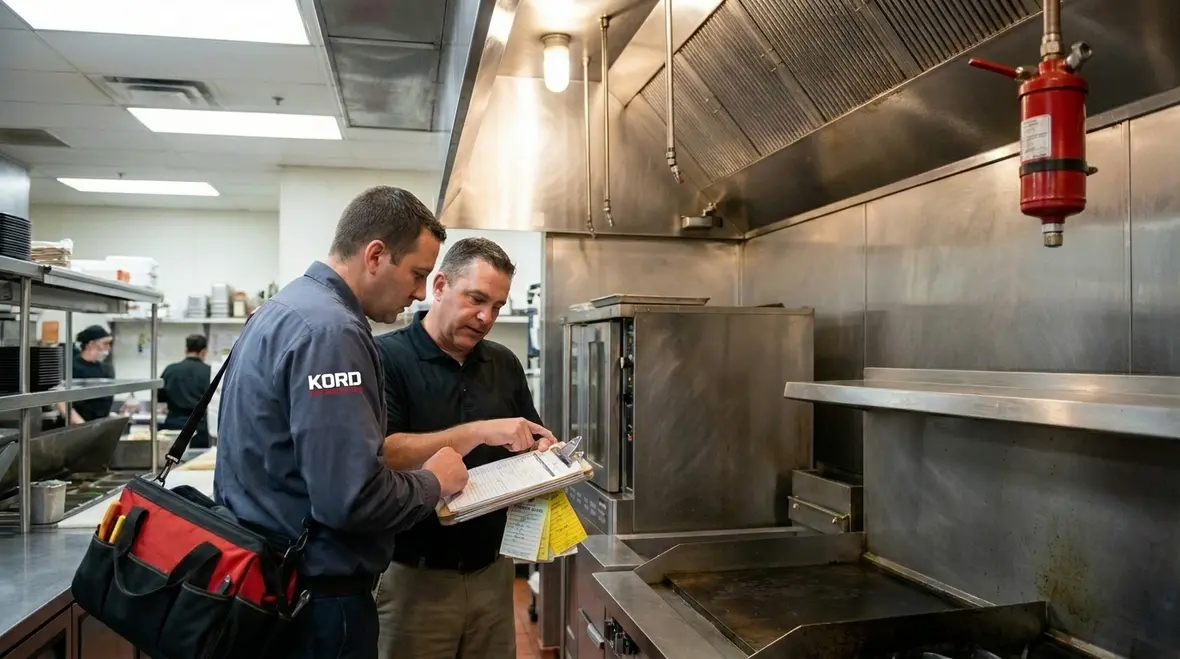
Finally, a strong service visit includes documentation. That means clear records for what was tested, what was found, and what changed. Businesses need that paperwork for internal audits and often for compliance as well. Kord Fire Protection’s restaurant hood fire suppression inspection checklist guide reinforces how these individual checkpoints support the whole system instead of living as random boxes on a clipboard.
- Detection devices that recognize dangerous heat conditions near the hazard area
- Control equipment that manages logic, alarms, and release sequencing
- Agent storage and piping that deliver suppression where it is actually needed
- Nozzles and fittings that must remain clean, aligned, and unobstructed
- Documentation and tags that prove service happened and support compliance
Service is part inspection, part detective work
Good technicians are not just checking boxes. They are looking for patterns. Has vibration loosened something over time? Is grease building up where it should not? Did a past activation leave behind issues nobody fully resolved? That investigative mindset is what helps a kitchen catch trouble before trouble decides to make an entrance.
Maintenance schedules that keep performance steady
Most owners want to know, “How often?” and the honest answer is that it depends on the manufacturer instructions, local requirements, and the kitchen’s actual usage. Still, regular inspections, routine checks, and timely service help keep Kidde kitchen fire suppression ready. Grease-laden environments can be tough, so cleaning and verification should match the kitchen reality, not just the calendar.
During routine maintenance, technicians commonly confirm that the detection portion remains clean and unobstructed, that wiring stays secure, and that the system can initiate the correct discharge sequence. They may also inspect the agent integrity and review any prior activations or trouble events. In addition, they verify that reset procedures follow the correct steps so the system returns to a safe ready state.
One more point: staff training is part of maintenance. If employees do not know what to do after discharge, operations can stall and risks can rise. A well-run kitchen treats training as regularly as it treats invoices, because forgetting procedures is cheaper for nobody.
Consistency beats panic every time
Nobody wants maintenance to become important only after an incident. The strongest kitchen safety programs make service boring in the best possible way: scheduled, documented, repeatable, and done before someone starts saying, “Wait, did anyone check that?” That kind of consistency keeps performance steady and stress levels much lower.
Compliance, safety codes, and the documentation trail
In many regions, kitchen fire suppression systems fall under specific safety standards and inspection requirements. Therefore, businesses benefit from working with a service partner that understands both the equipment and the documentation expectations. That includes recording tests, noting findings, and issuing reports that clearly support safe operation.
Compliance also affects how insurance companies and building managers view risk. When records show consistent inspections and repairs, it signals good stewardship. Conversely, missing documentation can create delays during renewal or inspections. In other words, it is hard to argue with a paper trail that proves the system received proper care.
Additionally, code requirements may influence how frequently the hood, duct, and suppression system should be inspected. Because these parts work together, one area cannot be neglected without raising risk in another. For businesses reviewing broader system options, Kord Fire Protection’s fire suppression services page is a strong starting point near the decision stage.
How Kord Fire Protection supports Kidde service and partner success
This is where Kord Fire Protection becomes a vital partner with Kidde kitchen fire suppression service and jobs. A reliable partner does not just swap parts and leave. Instead, it builds a plan that aligns system checks, kitchen changes, and compliance needs into one steady workflow.
For example, Kord Fire Protection can support project planning by confirming system fit during installs, validating component placement, and coordinating service timelines around business hours. Then, during ongoing maintenance, it can ensure testing, inspections, and repairs stay consistent. Moreover, it helps kitchens understand what to monitor between visits, so minor issues do not turn into big surprises.
Think of it like this: you would not let a random person “time” your favorite cooking show with the wrong remote. You want a team that knows the system, the safety expectations, and the operational pressure. When Kord Fire Protection handles the service side, the kitchen can focus on cooking, not firefighting. Businesses that want a close look at the operational side can also explore Kord’s article on commercial kitchen fire suppression electrical interlocks, which connects service details to real-world system response.
Common issues that show up before trouble happens
Even well-designed systems can run into problems. And the best time to catch issues is before the kitchen needs to test them the hard way. Technicians often find a few recurring concerns:
- Obstructed discharge paths from stored items, damaged ducting, or improper hood adjustments
- Wiring or sensor faults caused by wear, vibration, or heat exposure
- Corrosion or loose fittings in harsh environments where steam and grease hang around
- Reset or activation misunderstandings when staff do not follow the correct post-event steps
Furthermore, kitchens that renovate, add cooking equipment, or modify hood layouts often need a re-check. A system that once fit like a glove can become a bad costume after renovations. So when changes occur, a qualified service partner should review the configuration and ensure Kidde kitchen suppression coverage remains accurate.
Common issues usually start small
That is the frustrating part. A blocked nozzle cap, a loose fitting, or a staff misunderstanding can sound minor until it combines with high heat and bad timing. Regular service exists to keep those little misses from stacking up into one very expensive day.
FAQ about Kidde kitchen fire suppression
Final takeaway and next steps
Kidde kitchen fire suppression systems add real protection, but they only perform well when the kitchen runs them like a team sport. That means correct placement, consistent maintenance, clean documentation, and staff training that does not rely on hope. If a system needs service now, or if a kitchen is preparing for install or renovation, Kord Fire Protection can help coordinate the job with care and confidence.
Reach out to plan inspections, address issues early, and keep the kitchen ready for the moment you hope never arrives. For a direct next step, review Kord Fire Protection’s fire suppression service options and connect with a team that understands service, compliance, and how to keep commercial kitchens from turning one bad moment into a full production.

Join Our Newsletter!
Get the latest fire safety tips delivered straight to your inbox From our Newsletter.