Electrical Sensor Calibration for Commercial Standpipe Systems
Quick Answer: Electrical sensor calibration in commercial standpipe systems keeps pressure readings accurate when buildings get busy and conditions change. By verifying sensor output against trusted references, facilities reduce false alarms, prevent underperformance, and support code readiness. Kord Fire Protection can partner with calibration teams to connect sensor health to inspection, testing, and reliable fire response.
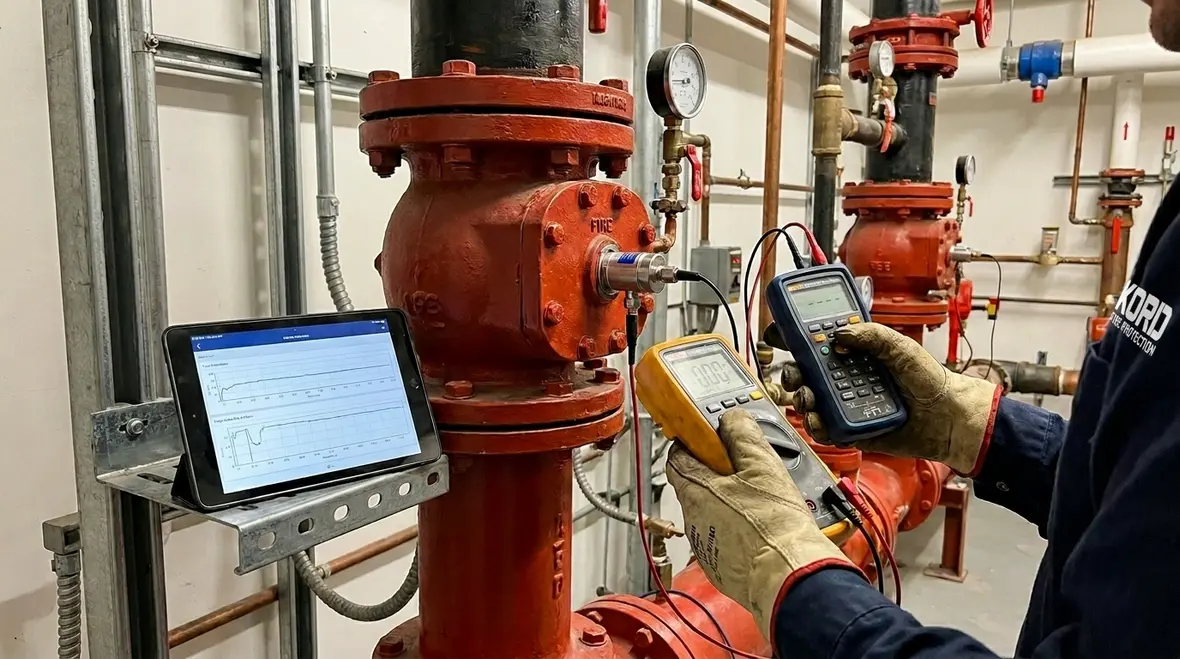
In commercial facilities across Australia, the standpipe system must do one thing extremely well: deliver the right pressure at the right time. That is where commercial standpipe system pressure sensors matter. They watch the system, translate pressure into electrical signals, and send those signals to controllers and monitoring panels. However, sensors are not born with perfect accuracy and they do not stay perfect forever. Temperature swings, vibration, water quality, drift in electronics, and even changes after maintenance can nudge readings off target. Therefore, electrical sensor calibration becomes the quiet hero of reliable fire protection, especially in industrial, retail, and multi-site facilities where uptime and compliance both matter.
For teams building a broader service plan, it helps to tie calibration work to comprehensive fire protection services and to related standpipe maintenance tasks. Near the testing side of the conversation, Kord Fire Protection also explains in its standpipe system pressure testing guide that documentation should include pressure values, test method, and calibration status, which is exactly the sort of detail that keeps “maybe it is fine” from becoming an expensive guessing game.
Why accurate pressure signals depend on calibration
Calibration matters because the system does not respond to “close enough.” When a commercial standpipe system pressure sensor drifts, the controller may interpret normal conditions as a problem, or the opposite. Either way, it can trigger unwanted maintenance runs, nuisance fault codes, or missed performance signals during operational checks. And yes, nobody enjoys troubleshooting alarms at the exact moment the loading dock is hopping. Calibration prevents that chaos.
Over time, sensors can shift due to long-term exposure and aging components. Even if the mechanical parts look fine, the electrical pathway may not match the real pressure at the gauge. Calibration ties the electrical output back to a known reference. Consequently, facility teams gain confidence that monitoring data reflects the actual system state, not a guess made by an aging instrument.
What technicians verify during electrical sensor calibration
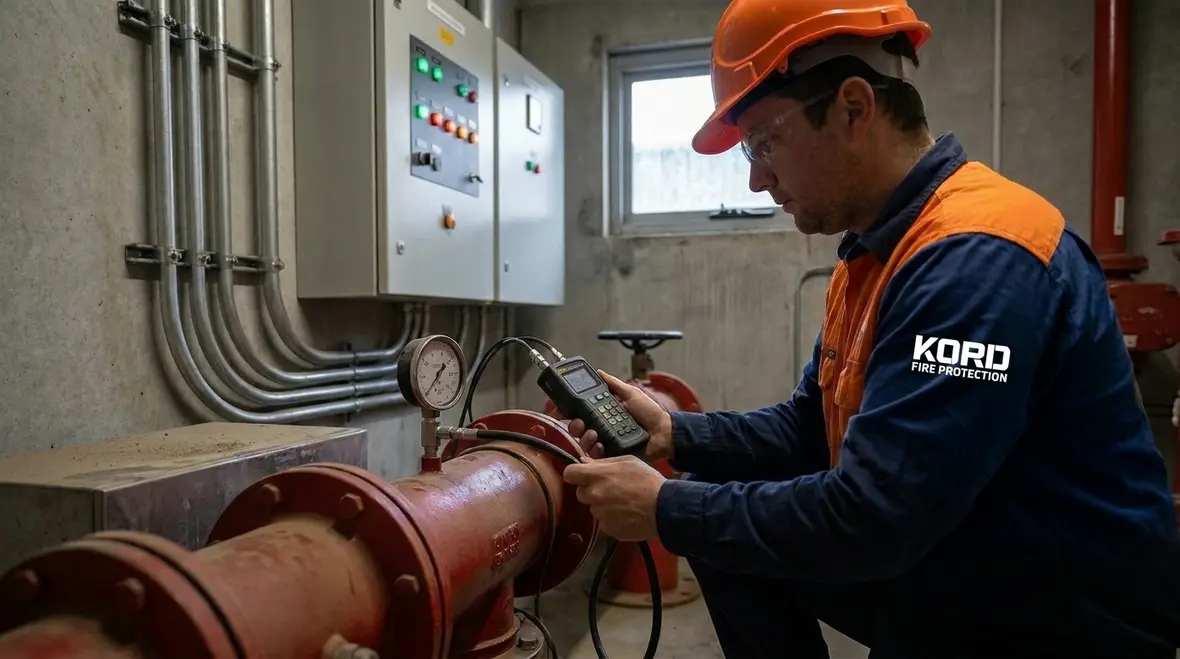
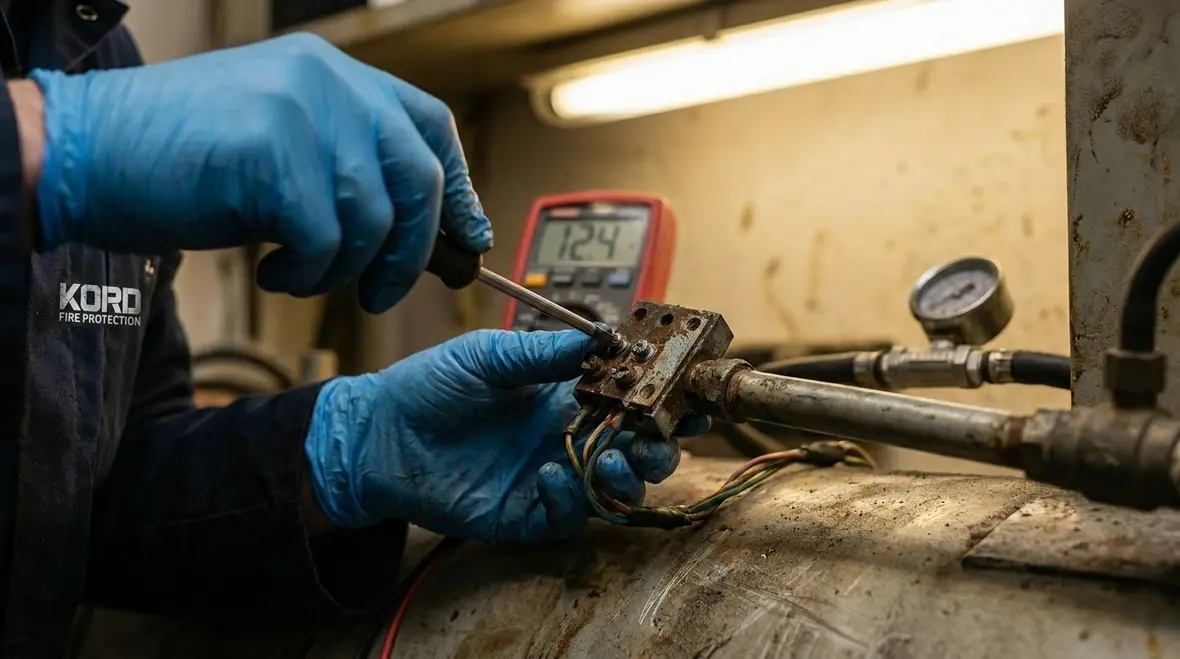
Calibration is not a single button press. A competent service method typically checks several technical points, and it does so in a controlled order. Good technicians do not wander in, tap the sensor like it owes them money, and call that precision.
Key checks often include
- Zero and span verification: Technicians confirm the sensor output at a known low pressure and a known higher pressure.
- Linearity: They confirm the output matches the expected curve across the operating range, not just at two points.
- Signal stability: They observe whether readings settle smoothly or jump around due to noise or wiring effects.
- Electrical integrity: They check wiring terminations, grounding, and connector condition to ensure the signal stays clean.
- Response time: They confirm the sensor reacts within the expected time window when pressure changes occur.
- Environmental compensation: They evaluate how temperature variations impact output, especially in plant rooms and riser cupboards.
Then, when the readings do not match the expected values, technicians adjust sensor settings or update scaling factors in the monitoring equipment, as permitted by the system design. After that, they record results so future checks can compare “then versus now.” In other words, calibration creates a paper trail that prevents uncertainty from hiding in the shadows.
This also aligns naturally with Kord Fire Protection’s discussion of advanced standpipe pressure monitoring technology, where sensor diagnostics and calibration insights help teams understand how the system behaves under real demand rather than relying on a single snapshot. When a building watches pressure trends over time, calibration stops being a clerical checkbox and starts becoming actionable intelligence.
How calibration connects to standpipe performance and testing
Facilities sometimes think calibration is a standalone task. In practice, it connects directly to performance testing, inspection, and ongoing system reliability. For example, during commissioning or periodic testing, teams compare sensor trends with real-world pressure measurements at the system. If the sensor output drifts, the test results can look inconsistent even when the pump and valves perform correctly.
Therefore, calibration helps teams avoid false conclusions. It supports decision-making during:
- Routine operational testing: So system behavior matches the monitoring record.
- Repairs and upgrades: After sensor replacement, controller changes, or wiring work.
- Seasonal readiness: Because thermal conditions shift across Australian climates.
- Performance investigations: When one zone shows unusual readings compared with expected operation.
And when teams reduce mystery, they also reduce downtime. That is a win for operations, not just compliance. Kord Fire Protection makes a similar point in its standpipe flow test guide, which focuses on confirming whether the system can deliver the water pressure and volume firefighters need when seconds matter. Reliable testing depends on reliable inputs. Otherwise the numbers look official while the truth quietly leaves the room.
Common calibration challenges in Australian commercial buildings
Every site has its own personality. And most of those personalities come with constraints.
Some common challenges technicians face include
- Shared plant spaces: Industrial and retail facilities often host multiple systems in the same area, which increases vibration and electrical noise.
- Water quality effects: Sediment and scale can influence pressure transmission at fittings and manifolds, which then affects sensor readings.
- Access limitations: Standpipe components may sit behind panels or in riser rooms with restricted working access.
- Limited outage windows: Teams must schedule calibration to avoid interfering with live operations.
- Documentation gaps: Some older installations lack clear calibration history, so technicians must establish a new baseline carefully.
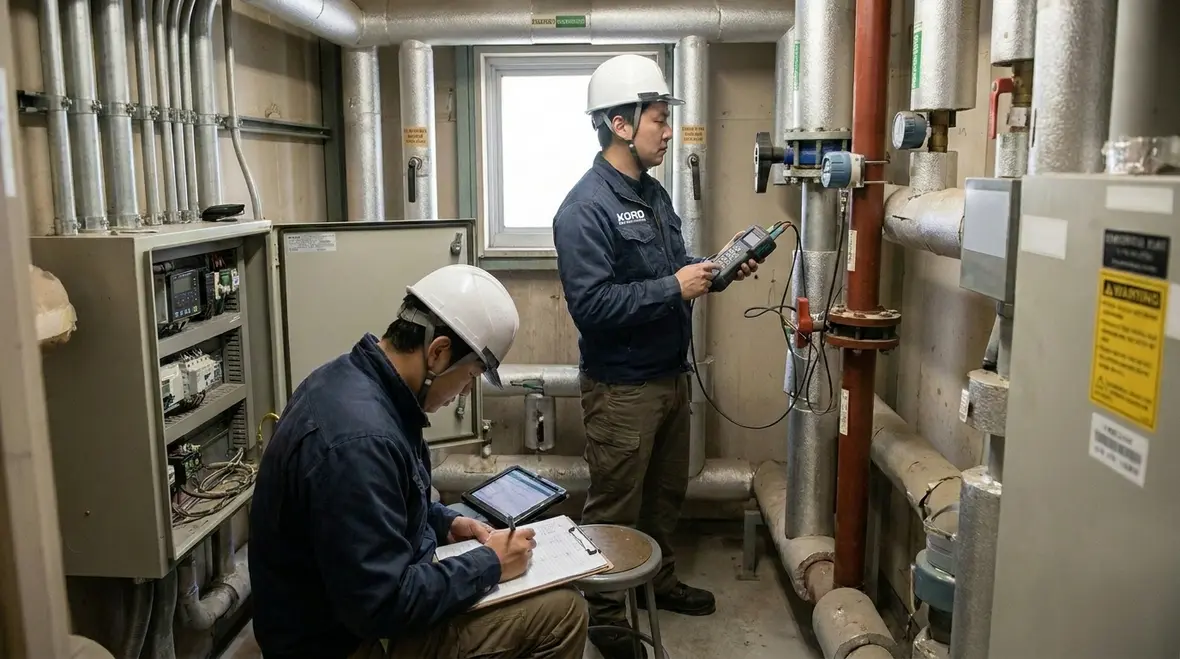
To handle these realities, good calibration teams plan the job in advance, set expectations with the facility manager, and coordinate with other trades. Transitioning from “we should calibrate” to “we safely calibrated and proved it” requires method, timing, and strong communication.
That coordinated mindset fits neatly with Kord Fire Protection’s broader standpipe content, including its article on standpipe fire department connection requirements, where the message is clear: systems perform best when the parts work together, not when each component is treated like its own little kingdom.
Why Kord Fire Protection can be a vital partner
Calibration alone does not guarantee system success. It helps, but fire protection is an ecosystem. That is where Kord Fire Protection becomes a vital partner. They can align calibration activities with broader standpipe service responsibilities, inspection workflows, and documentation expectations.
In practical terms, a coordinated approach helps facilities in these ways:
- Unified compliance planning: Kord Fire Protection can schedule calibration alongside related service tasks so the site experiences fewer disruptions.
- System-wide consistency: They can ensure sensor health matches the rest of the standpipe performance checks and device condition assessments.
- Clear reporting: Your team receives results that connect sensor calibration outcomes to ongoing fire system readiness.
- Faster troubleshooting: When alarms or pressure inconsistencies appear, an integrated service history shortens root-cause timelines.
In other words, Kord Fire Protection helps turn calibration from a “nice-to-have” task into a dependable part of your service program. And if you have ever listened to a standalone technician say, “It tests fine,” while the alarm keeps yelling anyway, you already know why coordination matters. Fire systems do not negotiate.
Best practices for keeping sensors accurate after calibration
Calibration sets the baseline, but maintenance protects the outcome. After the initial work, facilities can extend sensor accuracy with practical actions that do not slow operations.
Recommended best practices include
- Track trends, not just pass or fail: Monitor how outputs change over time, so drift gets caught early.
- Protect wiring and terminations: Inspect for moisture ingress, loose connections, and wear near vibration points.
- Coordinate changes with service records: When contractors touch panels or run new cables, update documentation and confirm calibration impact.
- Schedule periodic verification: Use a defined interval based on system criticality, environment, and historical stability.
- Address mechanical causes: If fittings or transmission paths accumulate sediment, electrical calibration cannot fully compensate.
Also, teams should ensure their internal stakeholders know what the readings mean. Clear understanding prevents confusion and reduces the likelihood of chasing the wrong issue when operational symptoms appear. It is much easier to solve the real problem when the entire team agrees that the sensor is telling the truth.
FAQ about electrical sensor calibration in standpipe systems
Conclusion
Electrical sensor calibration protects the reliability of your standpipe monitoring and supports confident performance testing across industrial, retail, and commercial sites. Accurate readings help teams respond faster, troubleshoot smarter, and maintain clearer records when compliance and uptime are both on the line.
If you want accurate readings, cleaner troubleshooting, and a service program that connects the dots, reach out to Kord Fire Protection. They can help plan calibration as part of a coordinated fire protection workflow. Call today to discuss your system and schedule the next verification.

Join Our Newsletter!
Get the latest fire safety tips delivered straight to your inbox From our Newsletter.