Fire Protection System Power Monitoring for Constant Readiness
Quick Answer: Remote monitoring keeps fire protection electrical circuits ready by watching power health in real time, spotting trouble early, and helping teams act fast. When faults start as small symptoms, fire protection system power monitoring shortens response time and reduces downtime. Kord Fire Protection can act as the partner that installs, calibrates, and supports the whole program.
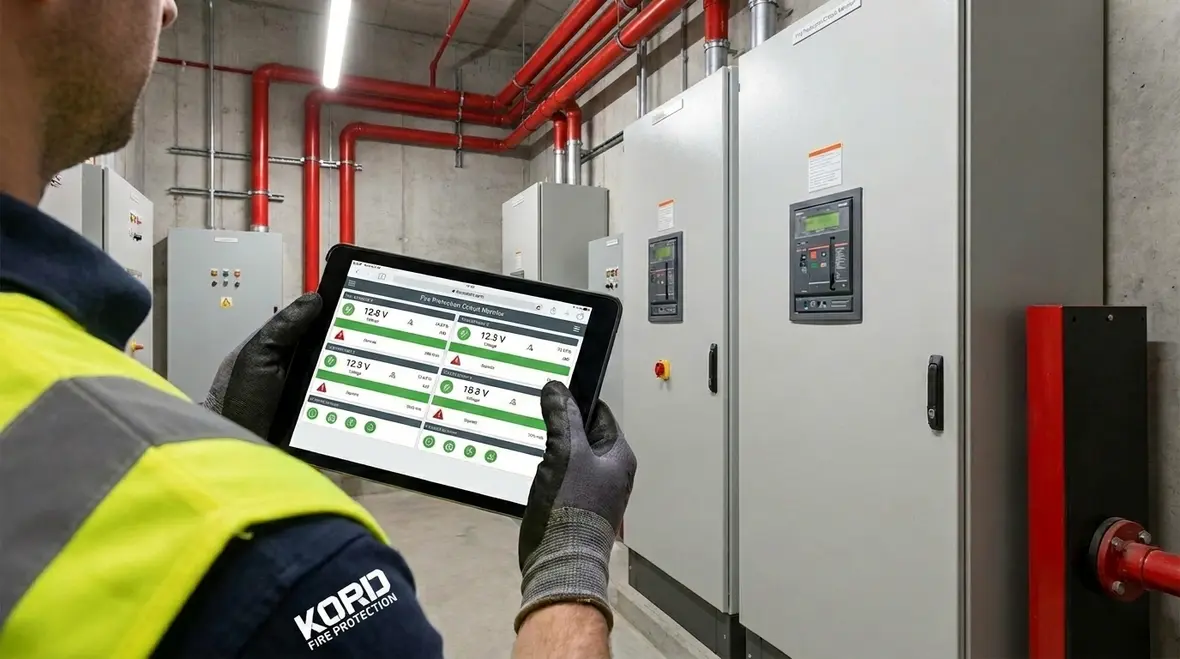
In Australia’s industrial, retail, and commercial sites, fire safety equipment cannot afford surprises. That is why many teams rely on fire protection system power monitoring to keep critical electrical circuits under constant watch. Instead of waiting for a test day or a shutdown alarm, the system tracks voltage, current, isolation behavior, and load stability as conditions change. Then, when something drifts out of safe bounds, alerts reach responsible staff quickly, not hours after the fact. And yes, it is a lot less dramatic than discovering the problem during a routine walk with a torch and a prayer.
For facilities planning a broader support strategy, Kord Fire Protection’s fire alarm services can fit naturally alongside monitoring, maintenance, and fault response. That matters because power visibility only helps when the site also has the right service pathway behind it. In other words, seeing the issue is great. Having the right people ready to deal with it is even better.
How remote monitoring keeps fire circuits ready
Fire protection electrical circuits power alarms, signaling devices, extinguishing controls, and related life safety equipment. Remote monitoring supports readiness by verifying the electrical story before it becomes the incident story. Specifically, it checks whether the circuit is getting stable power, whether the load is behaving normally, and whether insulation and connection health show early warning signs.
In practice, monitoring helps teams catch issues like gradual voltage sag, rising resistance across terminations, intermittent contact, or abnormal draw that can indicate failing components. As equipment ages, electrical performance can drift. However, with remote visibility, facilities staff do not need to guess. They can review trends, compare to expected ranges, and make informed decisions.
Additionally, remote monitoring improves coordination. Electrical contractors, fire system technicians, and facility managers often work on different schedules. Yet the monitoring dashboard can align their next steps. Therefore, the site responds faster, documents conditions more clearly, and reduces the “who saw what and when” debate that turns every incident review into a courtroom drama.
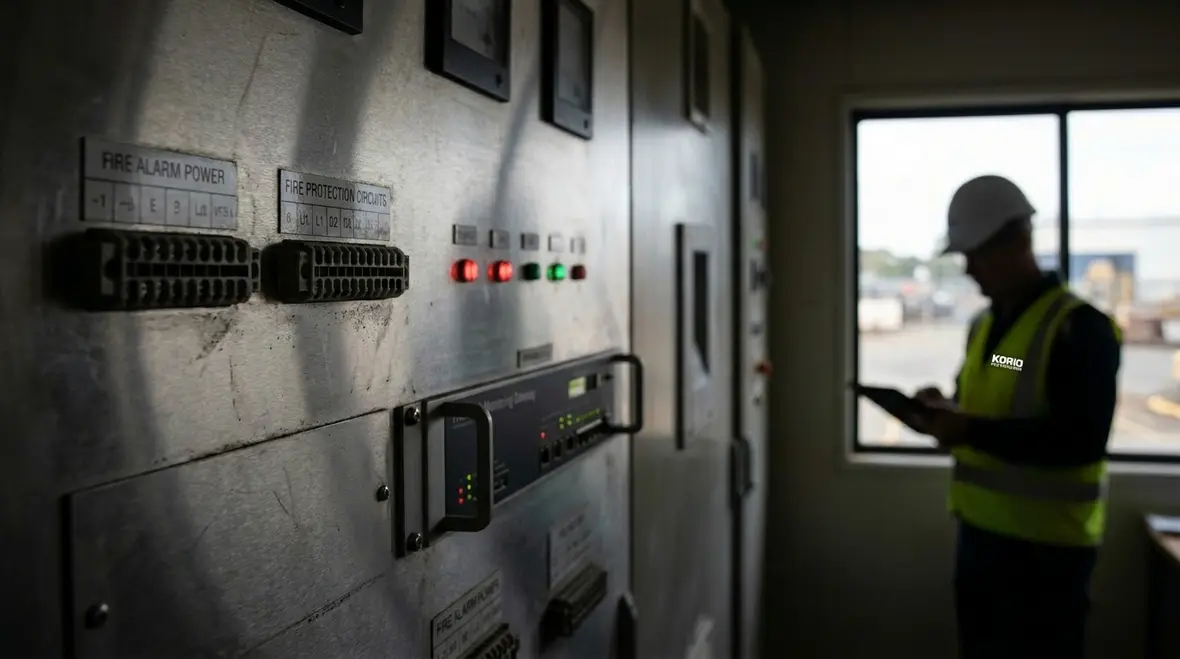
Why visibility beats guesswork
A monitored circuit tells a more complete story than a single inspection snapshot. One reading taken during a routine visit may look fine, while a trendline across days or weeks can reveal recurring dips, rising load, or unstable charging behavior. That trend view is what gives teams the chance to intervene before a nuisance issue becomes a service disruption.
What systems actually monitor in an electrical fire setup
Remote monitoring is not one generic sensor and a hopeful email. It typically tracks several power and circuit signals that map to real risks. Depending on the site and system design, the monitoring program can include:
- Voltage stability across fire alarm and fire protection power paths to detect sag, imbalance, or supply dips
- Current draw trends to highlight growing resistance, failing drivers, or loads that start behaving strangely
- Isolation and leakage indications to spot insulation decline or moisture related problems
- Battery health indicators where relevant, including charging behavior and capacity drift
- Event and alarm correlation that ties power anomalies to system events so teams do not chase blind trails
- Time based reporting that supports audits and maintenance planning
As a result, monitoring becomes a decision tool, not just data collection. It also helps teams prioritize repairs. For example, a small but consistent rise in current draw may indicate overheating at a connection point. That is easier to fix early than to troubleshoot after a failure cascades.
This also connects naturally with Kord Fire Protection’s article on detecting electrical faults in fire alarm panels early, because many circuit failures announce themselves quietly before they become obvious. Monitoring gives teams a way to hear that quiet part.
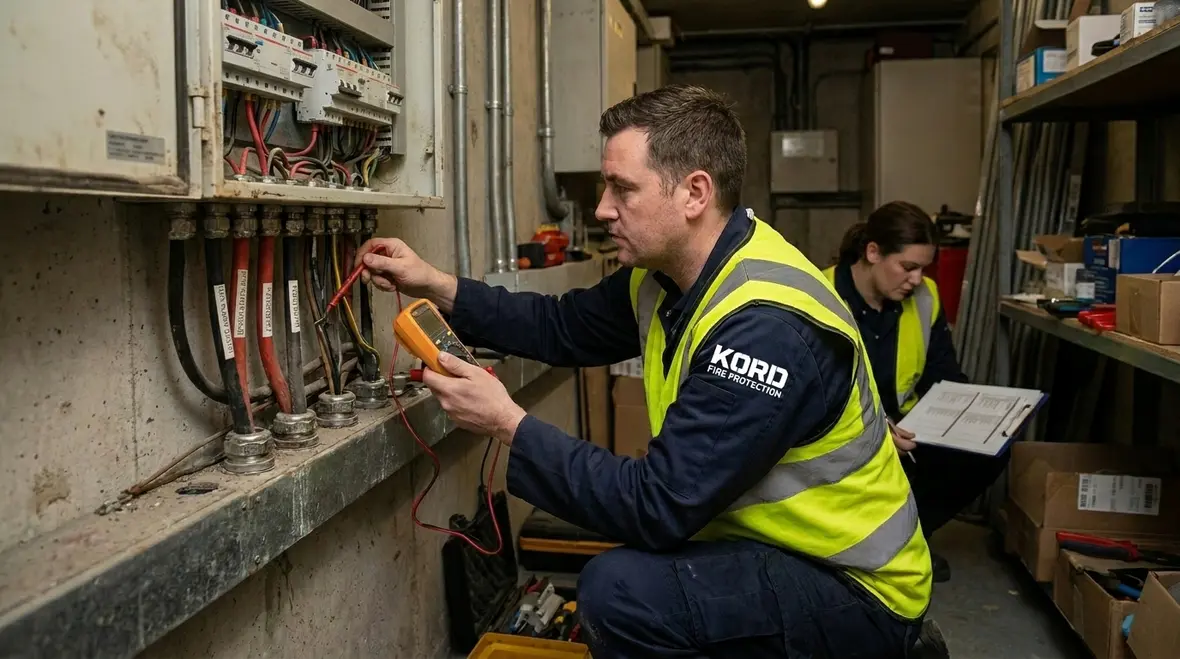
Turning data into maintenance decisions
Useful monitoring is not about collecting numbers for the sake of having a dashboard that looks impressive in meetings. It is about turning those readings into action. If current draw rises on one branch, that should lead to inspection. If leakage indicators change after wet weather or cleaning work, that should lead to targeted checks. Good systems make maintenance sharper, faster, and a little less dependent on crossed fingers.
Where early detection reduces downtime and risk
Remote monitoring delivers the biggest payoff when the site can act before performance turns into failure. Many problems start as subtle changes: a loose terminal, moisture ingress, a deteriorating cable run, or a power supply that is losing efficiency. Then, if the system only detects issues during manual checks, time slips away.
With fire protection system power monitoring, teams can spot the pattern sooner. For instance, they can see a gradual trend that pushes outside tolerance. Then they can schedule maintenance in a controlled window, rather than during peak operations or after a fault triggers a service call at the worst possible time.
And let us be honest, downtime is expensive. In retail and commercial facilities, closures disrupt revenue. In industrial sites, delays can affect production schedules and safety compliance. Therefore, early detection protects both life safety readiness and operational continuity.
That same thinking appears in Kord Fire Protection’s fire protection system remote monitoring for faster response article, where the practical value is speed: see the problem earlier, route it clearly, and respond while the fix is still manageable instead of memorable for all the wrong reasons.

Keeping alerts useful, not noisy
Monitoring only helps when alarms are actionable. If every minor fluctuation triggers a notification, teams ignore it, and the whole program becomes about “alert fatigue.” Nobody wants to run a fire safety operation like a phone notification festival.
To avoid that, the monitoring setup should define thresholds, time windows, and escalation rules based on system design and site conditions. For example, a short event during power switching may be normal, while a recurring sag at the same hour each week may point to upstream supply issues.
Additionally, teams should implement clear routing for alerts. A meaningful plan assigns who receives the notification, how fast it escalates, and what evidence supports each step. That includes linking the event to relevant circuit details and trend context. As a result, technicians arrive with the right information, not just a ticket and a sense of optimism.
Thresholds, timing, and ownership
A useful alert policy answers three simple questions. What condition matters, how long should it last before it becomes meaningful, and who owns the response? Once those rules are clear, teams spend less time debating whether something was serious and more time addressing what the system already proved.
Why Kord Fire Protection becomes a vital partner
Technology provides visibility, yet a service partner makes it effective. Kord Fire Protection can work alongside the facility team to set up and support remote monitoring for fire protection electrical circuits end to end. That means aligning the monitoring with the installed fire system, confirming correct configuration, and ensuring the data reflects how the circuits actually operate on site.
Further, Kord Fire Protection can help interpret what the system sees. Raw numbers mean very little if nobody ties them to practical maintenance actions. Therefore, the partner role often includes reviewing trends, recommending targeted inspections, and supporting corrective work when power behavior shows risk signals.
Just as importantly, Kord Fire Protection can support service continuity. In multi site operations across Australia, teams need consistency. They want the same monitoring approach, the same reporting standards, and the same follow up process. That is where Kord Fire Protection becomes more than a supplier. It becomes the steady hand that helps sites move from reactive fixes to planned readiness.
That partner model also aligns with Kord Fire Protection’s broader piece on the full lifecycle of fire protection servicing, where installation, maintenance, upgrades, and replacement are treated as one connected responsibility instead of disconnected tasks passed around until everyone looks confused.
Integrating monitoring into daily maintenance and audits
Remote monitoring works best when it plugs into existing workflows. First, facilities should use the monitoring feed to prepare for inspections. Then, technicians can focus time on circuits that show trends, unusual draw, or isolation movement. In turn, this reduces time spent on “check everything” routines and increases time spent on the right tasks.
Second, the data supports audit readiness. For industrial, retail, and commercial sites, compliance is not a once a year scramble. Teams can produce reports that show power health history, alert response logs, and maintenance outcomes. That helps during internal reviews, contractor coordination, and external assessments.
Finally, monitoring supports lifecycle planning. Equipment does not age at the same speed everywhere. By tracking performance patterns, sites can plan upgrades and replacements with less guesswork. So instead of replacing components just because a calendar says it is time, teams replace based on evidence. That is business intelligence you can feel in your maintenance budget.
If the site is already refining documentation and service timing, Kord Fire Protection’s article on streamlining fire alarm maintenance schedules for compliance is a strong companion read. Monitoring and scheduling work best together, because data is most useful when it feeds directly into an organized maintenance plan.
Featured FAQ on remote monitoring for fire circuits
Conclusion: act now for constant readiness
Remote monitoring gives fire protection electrical circuits a steady watch, so small power problems do not grow into major failures. With fire protection system power monitoring, teams gain trend visibility, faster response, and better audit support.
Kord Fire Protection can become the vital partner that installs, interprets, and supports the program across industrial, retail, and commercial sites in Australia. Arrange a discussion today and build readiness you can prove.

Join Our Newsletter!
Get the latest fire safety tips delivered straight to your inbox From our Newsletter.