How to Pass a Fire Inspection Successfully
There comes a moment in every building owner’s life when the calendar reminder pops up and the heart skips just a bit. Fire inspection day. It is not unlike a pop quiz in high school, except the stakes are higher and the fire marshal does not accept late homework. Understanding how to pass a fire inspection is not about luck. It is about preparation, clarity, and steady execution. Throughout this guide, Kord Fire Protection technicians explain each step in calm, practical terms so businesses can move forward with confidence instead of crossed fingers.
So let us walk through the process, one measured step at a time.
Understanding What Inspectors Actually Look For
First, it helps to know what is happening behind the clipboard. Fire inspectors follow a structured checklist based on national and local codes. However, their main goal is simple. They want to see that people can exit safely and that fire protection systems will work when needed.
Therefore, inspections typically focus on three areas.
Life safety systems
Fire alarms, smoke detectors, emergency lighting, exit signs.
Fire suppression equipment
Sprinkler systems, standpipes, fire extinguishers, kitchen suppression systems.
Building safety conditions
Clear exits, proper storage, electrical safety, hazardous material handling.
According to Kord Fire Protection technicians, many violations happen not because equipment is missing, but because it has not been maintained. In other words, it is rarely about dramatic movie scenes with sparks flying. It is usually about a blocked exit door or an expired inspection tag quietly waiting to be noticed.
Once building owners understand the focus areas, the path to passing a fire safety inspection becomes much clearer. For a deeper dive into how inspectors approach water-based systems specifically, many property managers also review Kord Fire’s NFPA 25 overview on water-based fire protection systems maintenance to align internal routines with code expectations.
How to Pass a Fire Inspection Without Last Minute Panic
Preparation should begin weeks before the inspector arrives. While that may sound intense, it simply means building a repeatable routine.
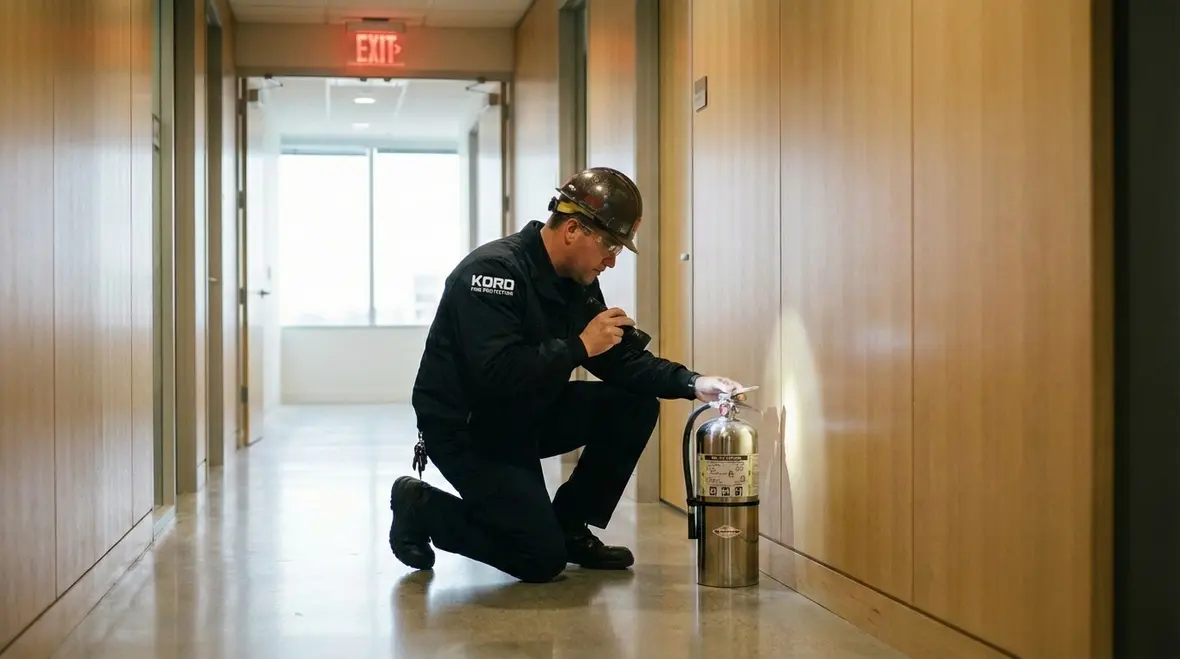
First, schedule internal walkthroughs. A facility manager or safety officer should inspect the property using the same checklist a fire marshal would use. Kord Fire Protection technicians often guide clients through mock inspections so there are no surprises later.
Next, verify documentation. Inspectors often ask for:
- Fire alarm inspection reports
- Sprinkler system service records
- Extinguisher maintenance tags
- Emergency lighting test logs
Additionally, confirm that all required systems have been tested within the proper timeframe. For example, many alarms require annual testing, while some components require quarterly checks. Missing paperwork can turn a well maintained building into a failed inspection faster than one might expect. Resources like Kord Fire’s guide to fire alarm inspection and testing for commercial buildings make it easier to align schedules with NFPA and local code requirements.
Finally, address small issues immediately. A burnt out exit sign bulb may seem minor. However, to an inspector, it signals neglect. Fix the small things early, and the big picture improves automatically.

Fire Alarm and Sprinkler Systems Explained in Plain Terms
If there is a backbone to any fire protection strategy, it is the alarm and sprinkler system. These systems must function properly, communicate clearly, and receive regular service.
Kord Fire Protection technicians explain it this way. The fire alarm system is the building’s voice. The sprinkler system is its action. If the voice fails, no one hears the warning. If the action fails, the fire spreads.
To prepare these systems for inspection:
- Test alarm signals and confirm monitoring connections
- Ensure pull stations are visible and unobstructed
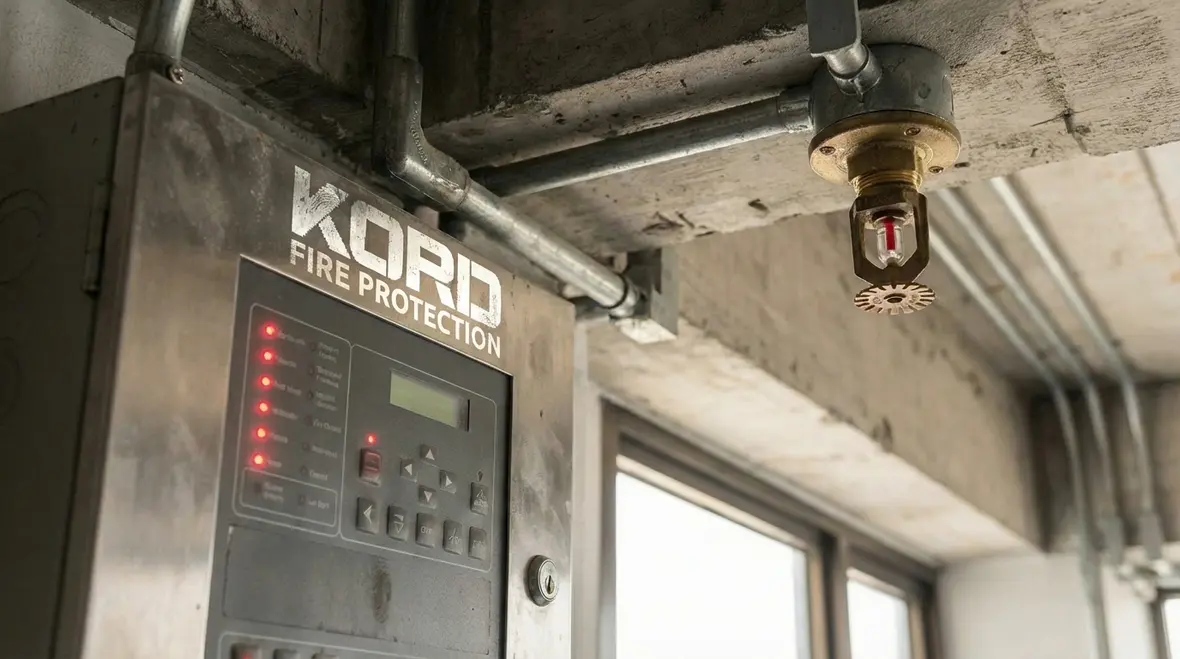
- Check sprinkler heads for damage, paint, or corrosion
- Maintain proper clearance below sprinkler heads
Furthermore, storage practices matter. Stacking boxes too high in a warehouse can block sprinkler spray patterns. Although it may look organized, it can compromise suppression performance.
Routine servicing by certified professionals not only supports compliance but also extends system life. As a result, businesses reduce both risk and repair costs over time.
Common Violations That Derail an Inspection
Even well run facilities can stumble over avoidable issues. Fortunately, most common violations are simple to correct once identified.
Below is a practical comparison to clarify what inspectors often find and what should be happening instead.
Common Issue What Should Happen Instead
Blocked exit doors Keep all exits clear and unlocked during business hours
Expired extinguisher tags Schedule annual servicing and monthly visual checks
Covered electrical panels Maintain required clearance space at all times
Missing ceiling tiles Replace promptly to preserve fire barriers
Improper extension cord use Install permanent outlets where needed
Notice a pattern? Many of these violations relate to daily habits rather than major repairs. Therefore, consistent housekeeping plays a major role in learning how to pass a fire inspection successfully.
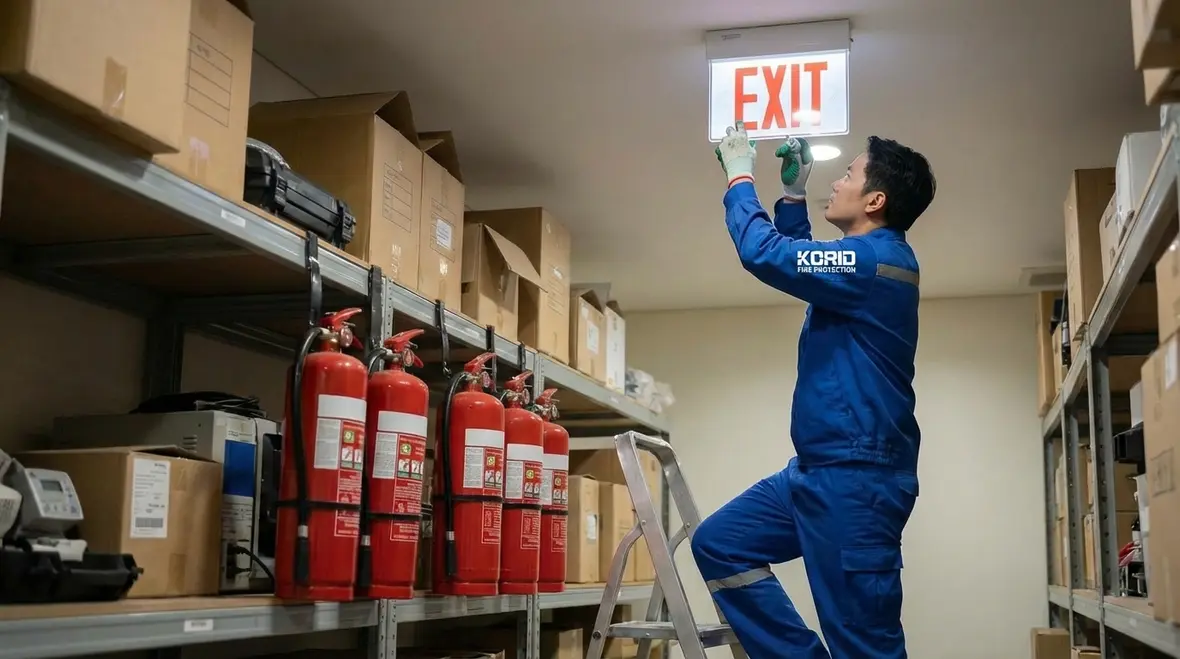
And yes, that storage closet stuffed like a game of Tetris may be impressive. However, the fire marshal will not admire the high score.
Training Staff So Everyone Supports Compliance
A building does not pass an inspection. People do.
Employees should understand basic fire safety practices. Although they do not need to quote code books, they should know evacuation routes, extinguisher locations, and emergency reporting procedures.
Kord Fire Protection technicians often conduct on site training sessions. During these sessions, they explain how systems work and why specific rules exist. When staff understand the reasoning behind requirements, compliance improves naturally.
In addition, assign responsibility clearly. Someone should oversee monthly extinguisher checks. Another person should monitor exit pathways. When duties are shared but defined, tasks do not fall through the cracks.
As a result, inspection day feels like a routine confirmation rather than a nerve wracking event.
What Would an Inspector Ask About Your Building?
This is the question many owners type into search engines late at night. And it is a fair one.
An inspector may ask:
- When was the last fire alarm test conducted?
- Are employees trained in evacuation procedures?
- Have there been any recent renovations?
- Is hazardous material stored properly?
Therefore, preparation should include clear answers supported by documentation. Keep records organized and accessible. Digital backups also help in case paper copies go missing.
Moreover, communicate openly during the inspection. If an issue exists, acknowledge it and explain the corrective plan. Inspectors appreciate transparency more than perfection.
In many cases, cooperation and professionalism shape the outcome just as much as equipment condition.
How to Pass a Fire Inspection in Commercial Properties with Complex Layouts
Larger facilities, such as warehouses, hospitals, and multi tenant offices, present added complexity. Multiple floors, varied occupancy types, and specialized systems increase the inspection scope.
Consequently, coordination becomes critical. Property managers should:
- Review tenant spaces for compliance consistency
- Verify fire department access remains unobstructed
- Confirm fire lanes are clearly marked
- Ensure annunciator panels are labeled accurately
Kord Fire Protection technicians emphasize system integration in these environments. For example, alarm panels must correspond accurately to sprinkler zones. When devices are mislabeled, response time suffers.
Additionally, conduct pre inspection walkthroughs with maintenance teams. Identify ceiling penetrations, damaged fire doors, or mechanical room clutter. Addressing these details demonstrates active management and significantly improves the odds of passing a fire code inspection.
Complex buildings demand structured oversight. However, with organized planning, even large properties can move through inspections smoothly.
FAQ About Fire Inspections
Take Control Before Inspection Day Arrives
Preparation is not about impressing an inspector. It is about protecting people, property, and peace of mind. When businesses take proactive steps, maintain systems properly, and train staff consistently, inspection day becomes a formality rather than a fear.
Kord Fire Protection technicians stand ready to guide each phase with clarity and care. Schedule a professional assessment today and move forward knowing your building is ready for whatever the checklist brings. If you want a single partner to coordinate sprinklers, alarms, extinguishers, and more, explore Kord Fire’s full fire protection services for a code-compliant, inspection-ready plan tailored to your facility.
Know Your Weapon Before You Fight the Flame
Kord Fire Protection is your go-to when it comes to all things fire protection. For over 20 years, we’ve been serving Southern California with the quality service and equipment to keep your home or business safe at all times. Our competitive prices reflect our unwavering commitment to protecting what matters most in the event of a fire emergency. Give us a call, send an email, or use that form!

Join Our Newsletter!
Get the latest fire safety tips delivered straight to your inbox From our Newsletter.