Early Signs of Commercial Fire Pump Controller Health
When fire protection systems sit idle, problems often hide in plain sight. That is why kord fire protection technicians focus on commercial fire pump controller health as an early warning mindset, not just a checklist. A healthy controller helps pumps start on demand, keeps alarms meaningful, and reduces the odds of a failure that shows up during a real emergency. In the sections that follow, this article breaks down the early signs of controller trouble, explains what causes them, and shows how technicians verify fixes without guessing. And yes, while nobody wants to treat a controller like a “mystery box,” the field teaches that random failures usually follow a pattern.
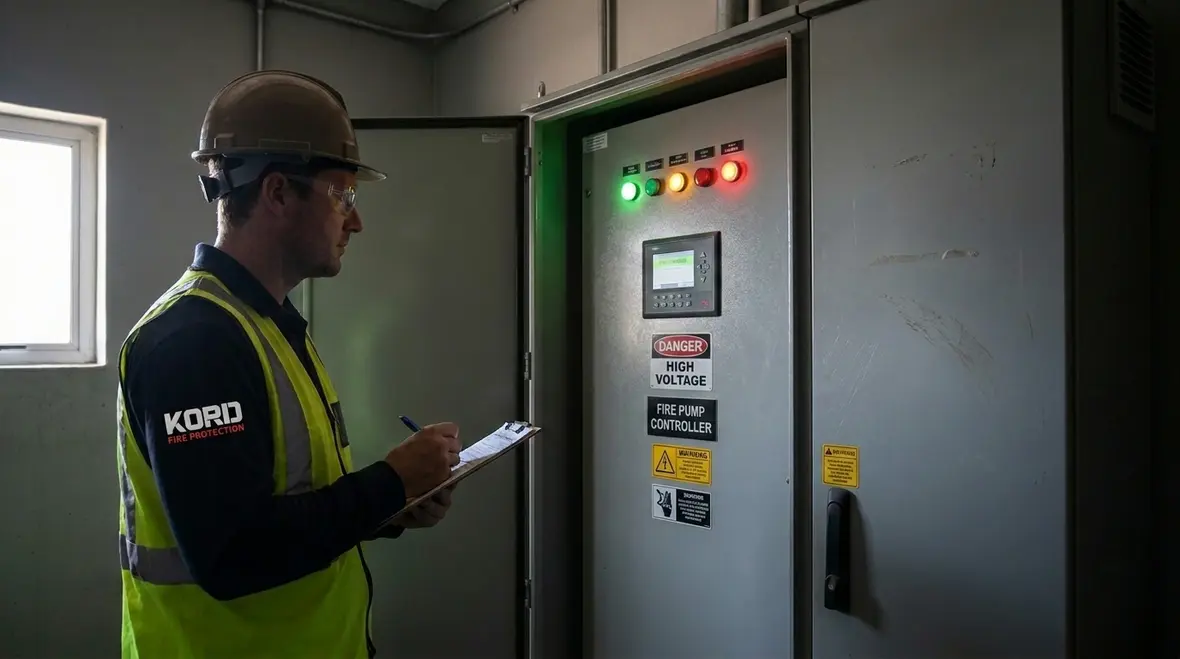
Common symptoms that show up before the controller fails
Technicians often notice issues long before a full shutdown. Kord fire protection explains that early signs usually appear as small behavior changes, not dramatic fireworks. For example, the controller might take longer to start the pump, or it may show repeated fault codes after resets. Also, the system may run the pump during test cycles but fail to respond normally when pressure drops. That mismatch matters.
Common symptoms include unusual timing, inconsistent pump run status, and alarms that appear in waves. Furthermore, the controller may display minor faults that clear temporarily, only to return after a short period. Over time, those “small” events often point to worn components, loose wiring, moisture intrusion, or power quality problems.
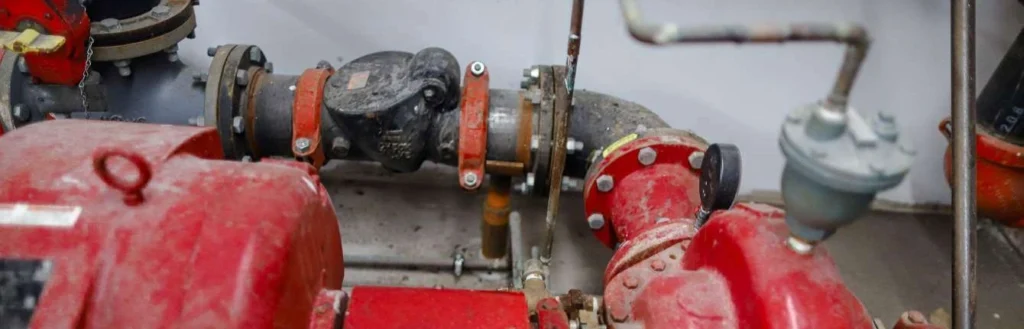
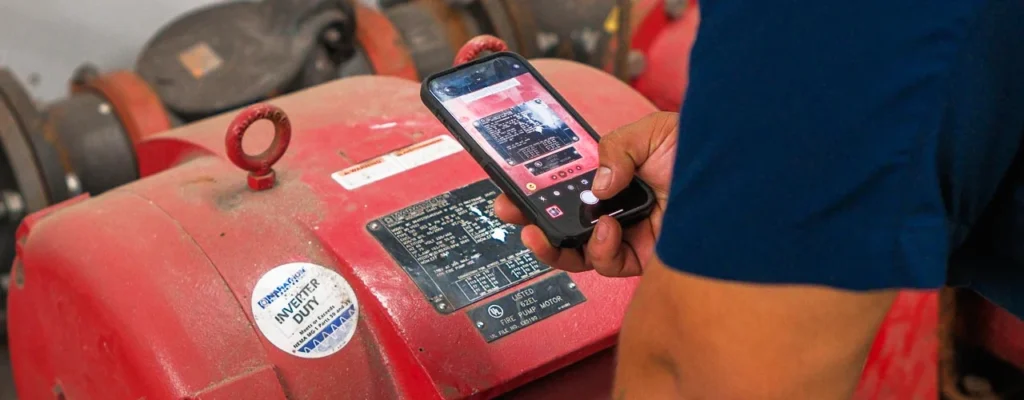
This is one reason technicians pair controller diagnostics with broader system awareness. On Kord Fire’s fire pump service page, the company highlights how inspection, repair, maintenance, and detailed documentation all support dependable pump performance. That framing matters here, because controller health rarely lives in isolation from the rest of the fire pump system. Fire pump service becomes a practical context for understanding whether the controller is the true culprit or simply the first component showing stress.
What readings and indicators should technicians watch first
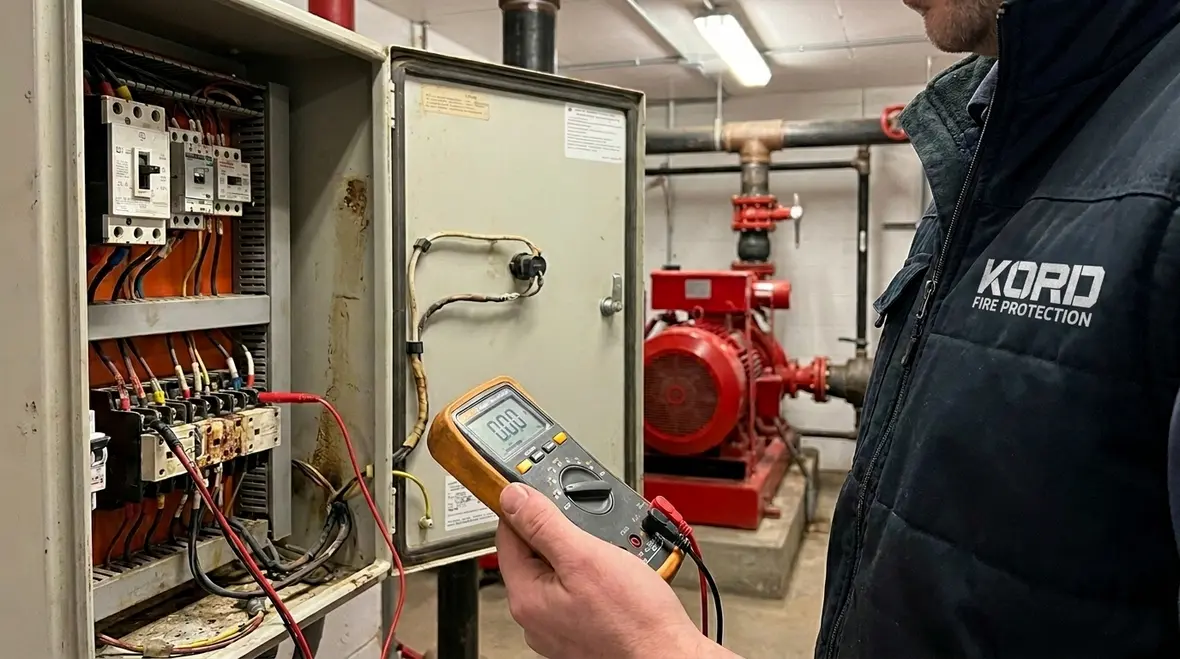
Instead of chasing every alarm, kord fire protection technicians often start with the basics: control voltage, output status, and the condition of status lights and indicator screens. Then they compare the current readings to known good baselines. When a reading drifts, it rarely does so by accident.
Here is what technicians typically check in the field, using a calm, methodical approach. First, they look at power and control supply stability. Next, they review pump start and stop signals. Finally, they inspect transformer health, contactor feedback, and any measuring values tied to pressure, flow, or speed control.
- Short run cycles or repeated starts during a test
- Fault codes that appear in clusters rather than one isolated event
- Indicators that flicker, lag, or reset unexpectedly
- Controller settings that drift from the last documented configuration
Kord Fire also emphasizes a full-service approach to fire protection, with fire alarms, fire pumps, inspections, and testing all working together to keep facilities operational. That broader service perspective is useful because technicians can compare controller clues against alarm reporting, system demand history, and maintenance records instead of reacting to one blinking light like it just delivered a prophecy. If your team is reviewing notification and reporting behavior alongside controller issues, this related fire alarm services page is a relevant supporting resource.
How to spot wiring and terminal issues early
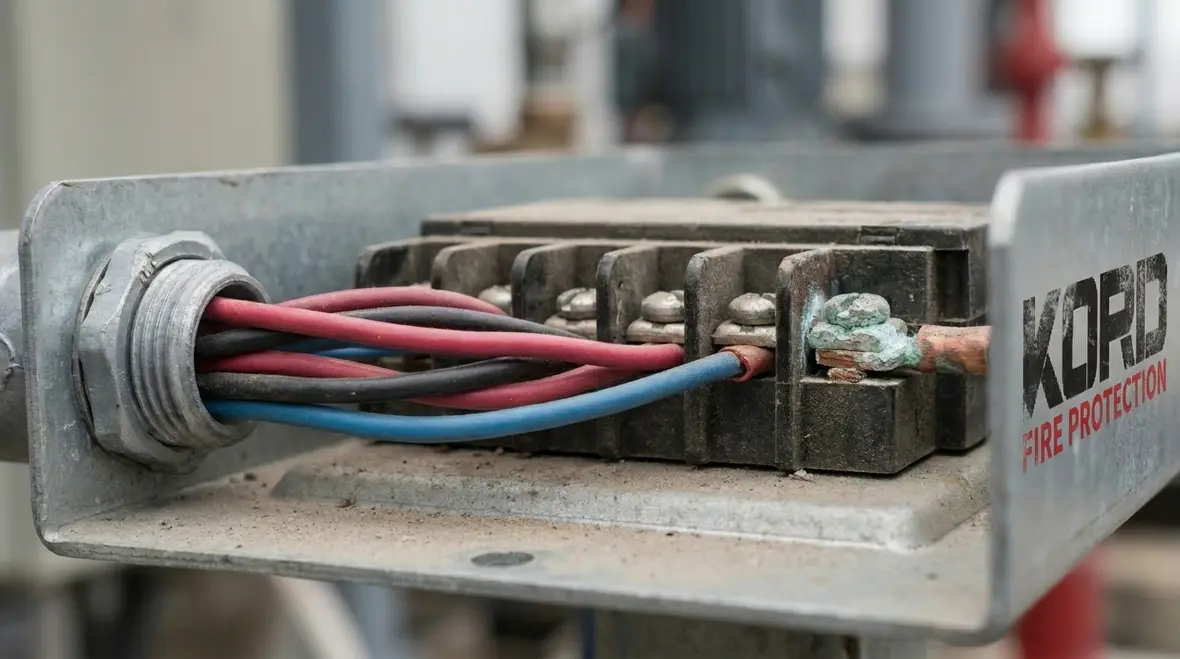
Wiring problems do not announce themselves with a trumpet. They usually build slowly, especially where vibration, heat, and repeated cycling stress connections. As a result, terminals can loosen, and insulation can crack. Then the controller starts to misread signals, which makes it look like the controller “forgot” its job.
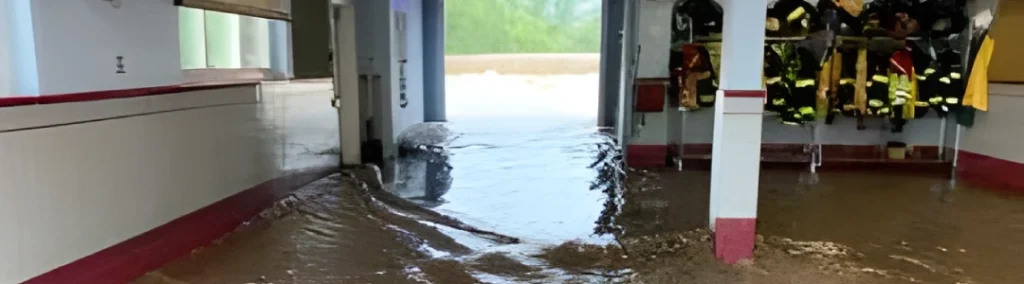
Kord fire protection technicians often find early wiring issues in places that installers and owners overlook: terminal blocks, conduit entries, and field wiring routed through cabinets. Also, they check for corrosion at screw points and for signs of water tracking. Even a small amount of moisture inside the enclosure can turn “steady” into “intermittent,” which is the controller’s least favorite style of performance.
Quick field clues technicians do not ignore
- Discoloration near terminal screws
- Insulation wear at conduit entries
- Visible corrosion or water tracking
- Intermittent signals during start sequences
| Early sign | Likely cause |
|---|---|
| Controller alarms after a period of quiet | Loose terminal connection warming up under load |
| Faults clear on reset but return quickly | Intermittent contact or failing relay contact |
| Unstable readings during pump start | Voltage drop or damaged conductor |
Relay, contactor, and power supply wear patterns that matter
Controllers rely on power supply circuits, relays, and contactors to move signals from “thinking” to “doing.” As these parts age, they can still function, but they may not switch cleanly. That is how you get chattering, delayed transitions, or unusual start behavior. Meanwhile, a power supply that drifts under load can cause logic boards to reset or misreport states.
Kord fire protection emphasizes that technicians should not only look at whether a fault appears, but also how it appears. For instance, if a relay output shows signs of burning, discoloration, or overheating, the issue will likely worsen. Likewise, if contactors make noise that did not exist before, the contacts may not close fully. And when contacts do not close fully, the controller experiences inconsistent feedback, which can cascade into other faults. Like a bad connection in a group chat, everything starts to look “random” until someone checks the basics.
On Kord Fire’s fire pump page, the company notes that excessive leaking, corrosion buildup, and low pressure are common issues identified through inspections and regular maintenance. While those points describe the pump system broadly, they reinforce the same lesson for controller health: repeatable service and documented findings expose wear patterns before a high-stakes failure gets the starring role. In other words, if the controller starts acting moody, there is a decent chance the rest of the system has already been trying to drop hints.
Controller behavior during tests and demand calls
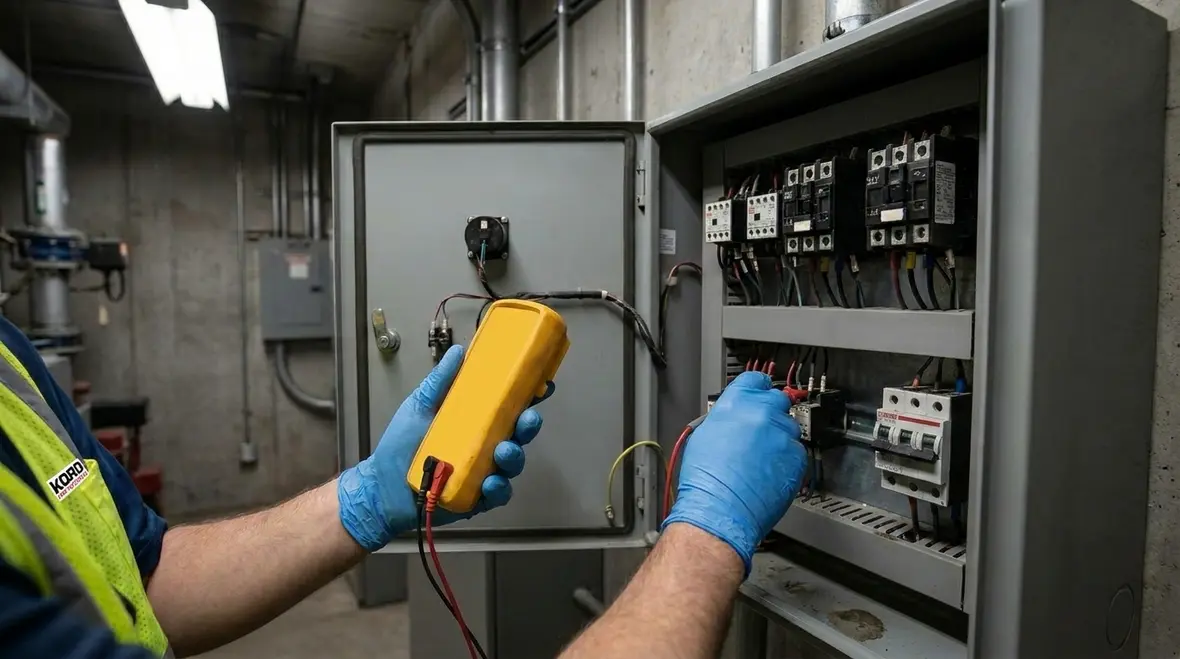
Early failure signs often show up when the system runs, not when it sits. Therefore, technicians review controller behavior during scheduled pump tests and when demand signals occur. They look for consistent start times, stable pressure control behavior, and correct transfer between states. If the controller behaves well during one test but struggles during the next, technicians treat that as a clue, not a coincidence.
In addition, they check how the controller handles automatic restart logic. Some systems will retry starts when pressure does not reach expected values. If that retry behavior changes, the controller might be misreading sensors, timing, or controller thresholds. Additionally, if the pump runs but the controller does not log the run in a normal way, memory or input tracking can become suspect.
- Delayed start compared to earlier test history
- Unexpected retries after the pump should already hold pressure
- Alarm history that differs from the typical timeline
- Loss of correct state transitions between modes
Why trend history beats guesswork
A single odd event can be noisy. A series of odd events becomes evidence. That is why technicians compare current behavior against past inspections, prior alarm history, and known operating baselines. Trend history helps separate a one-time nuisance from a controller that is slowly drifting toward failure. It also gives owners something better than “it looked weird once,” which is not exactly the kind of technical report anyone wants to staple to a maintenance file.
What preventive steps reduce the odds of a sudden failure
Business casual advice for serious systems goes like this: verify, document, and maintain. Kord fire protection technicians often use a repeatable process that reduces guesswork. They start with documentation, including last inspection findings, controller firmware or settings records, and a baseline of normal readings. Then they clean and inspect the cabinet, review torque on terminals where appropriate, and confirm that seals and conduit fittings keep moisture out.
Next, they validate sensor inputs and outputs, because a controller can look sick when the real problem sits outside the cabinet. They also test alarm points and verify the controller reports faults correctly. Finally, they recommend a practical maintenance schedule based on system usage, environment, and past failure patterns. In the real world, controllers fail faster in hot, humid, or vibration heavy spaces. So a schedule that ignores environment is like a movie sequel that forgets the plot.
Kord Fire’s broader service pages reinforce that testing, maintenance, inspections, and repairs are meant to be coordinated rather than handled as isolated tasks. That is useful near the end of this article because owners usually need a practical next step, not a pile of interesting symptoms. If your facility needs support that ties controller issues back to full system reliability, the company’s full fire protection services page gives a clear overview of related support, while the dedicated fire pump service page is the most direct fit for a controller-focused inspection or diagnostic.
FAQ for early controller failure signs
Conclusion and next step
Early signs of fire pump controller failure rarely stay “small” for long. When commercial systems show delays, unstable alarms, or inconsistent test behavior, the right move is prompt inspection, careful documentation, and a real diagnostic, not another reset. Kord fire protection technicians can help confirm commercial fire pump controller health by checking wiring integrity, power stability, and feedback signals. If you want fewer surprises and better reliability, schedule a controller assessment before a minor issue turns into a very expensive lesson in timing.
For facilities that need a direct next step, Kord Fire offers dedicated fire pump service with inspections, maintenance, repairs, and documentation, plus related support through its fire alarm services team. That means owners can address controller symptoms in context instead of guessing from the sidelines. Your future self will thank you, and your fire pump will stay ready for its starring role.

Join Our Newsletter!
Get the latest fire safety tips delivered straight to your inbox From our Newsletter.