Fire Safety Electrical Panel Bonding for Fault Clearing
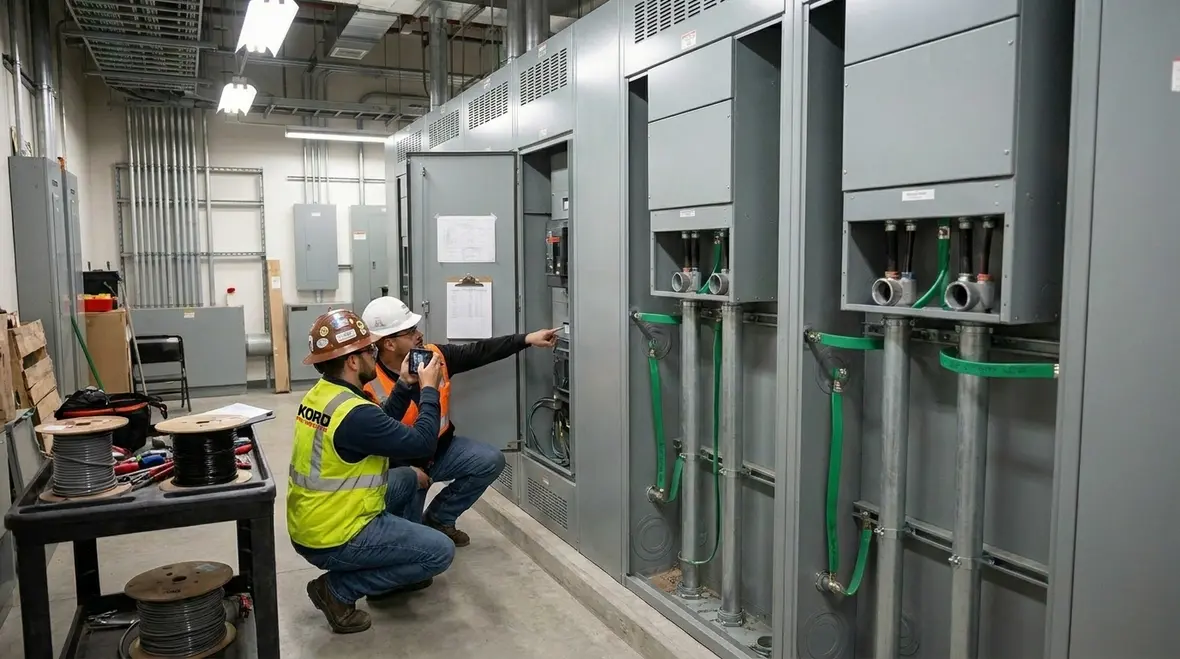
Electrical fires do not usually announce themselves with a siren. Often, they start quietly, grow fast, and then everyone wishes they had done one more thing “before.” That is why proper fire safety electrical panel bonding matters to overall facility fire safety. It helps keep electrical systems at stable electrical potential, reduces stray voltage, and supports the quick operation of protective devices when faults happen. In this article, Kord Fire Protection technicians explain how bonding fits into a wider fire safety plan, why it affects heat, arcing, and fault clearing, and what facility teams should ask for during inspections and upgrades.
Bonding as a fire safety control, not just electrical paperwork
Facility managers sometimes treat bonding like a line item on a checklist. However, bonding works as an active control that helps prevent dangerous conditions from turning into flames. When metal parts that should be electrically connected are left isolated, fault currents can behave unpredictably. Then protection devices may trip late or not at all, depending on the situation. Consequently, the system can overheat long before someone notices a problem.
Meanwhile, proper fire safety electrical panel bonding helps create a controlled path for fault current. So, if insulation breaks or a conductor fails, current takes the designed route through the bonding connections. This supports faster fault clearing and lowers the time that a damaged component has to heat up.
Kord Fire Protection technicians often put it this way: bonding does not stop every problem, but it changes the odds. And odds, like plot armor, matter. When faults happen, the goal is to keep the “story” from ending in smoke.

How bonding supports safe fault current pathways
To understand fire safety electrical panel bonding, the key idea is potential control. Electrical energy seeks paths. If metal frames, enclosures, and conduit systems are not bonded, the available paths for current become messy. Then arcing and heating can increase at loose connections, damaged terminations, or corroded joints.
With correct bonding, the facility gives fault current a predictable route. In turn, protective devices like breakers and fuses can operate as intended. As a result, the electrical fault clears before it can turn a small defect into a sustained heat source.
Kord Fire Protection technicians explain that bonding is not only about “connecting metal.” They verify that the connection methods are appropriate for the environment, the materials involved, and the expected fault conditions. For example, if a panel enclosure uses multiple mounting points, bonding must be reliable across those interfaces. Otherwise, a “connected” metal surface can still act like an electrical island under stress.
Why continuity matters more than appearances
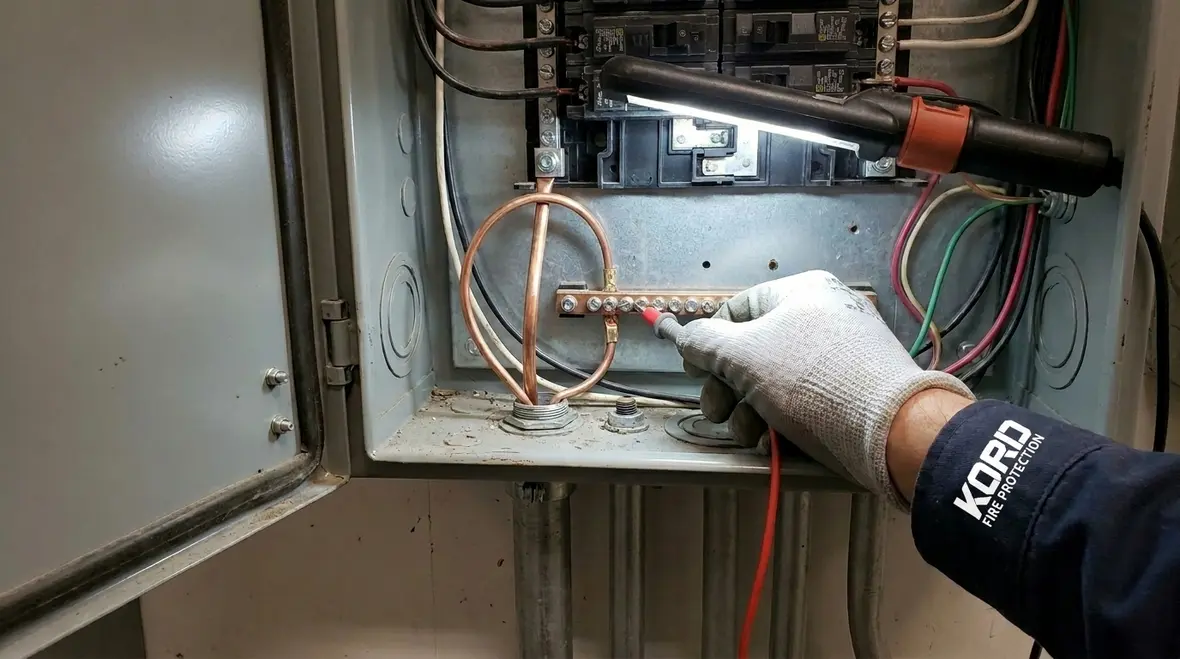
A panel can look neat, labeled, and professionally installed while still hiding weak bonding points. Paint, oxidation, mixed metals, loose locknuts, or field modifications can interrupt continuity in ways that are not obvious from a quick glance. That is why technicians do not stop at “looks good to me.” They think about whether the fault path would still behave under stress, because electrical systems are very honest when something goes wrong.
This is also where broader facility fire protection planning comes into view. Teams that already schedule routine fire inspection checklist reviews tend to catch related electrical hazards sooner. Bonding may live inside the electrical scope, but its effects spill directly into fire safety performance.
Bonding and corrosion: why time turns good installs into bad ones
Facilities do not stay still. Temperature swings, humidity, cleaning chemicals, and vibration all push connections toward wear. Over time, oxidation and corrosion can increase resistance at contact points. That resistance matters because heat grows with current and resistance. So, even if a system starts in compliance, it can drift out of safe performance.
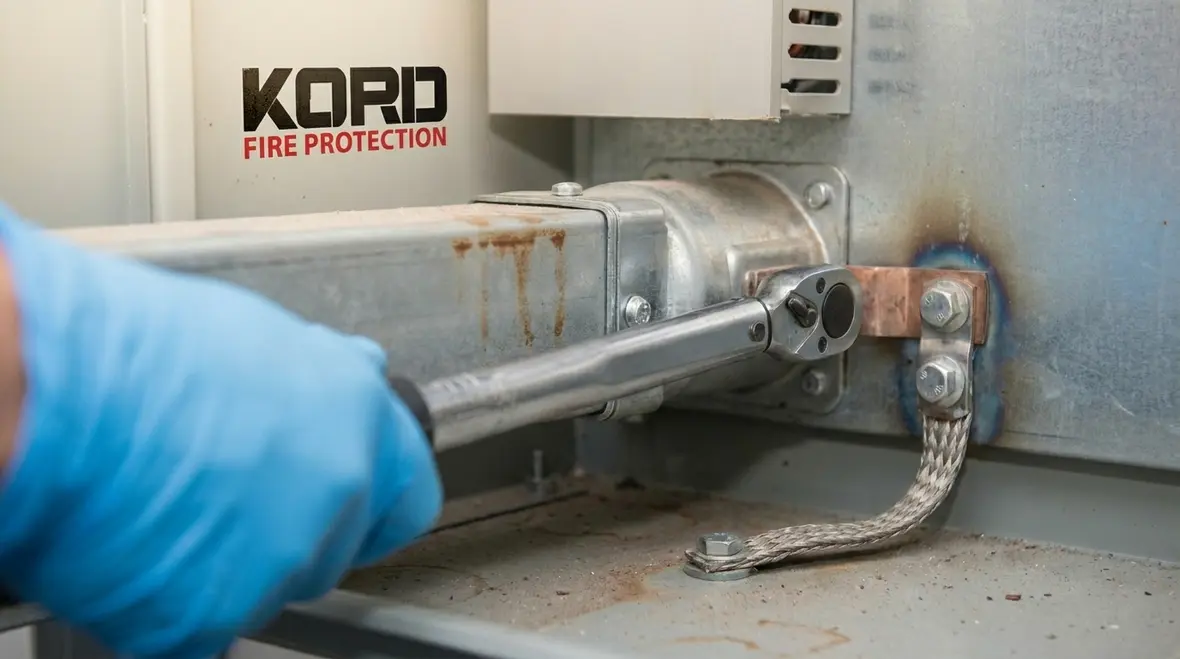
Therefore, bonding should be treated like a living part of the electrical system. Kord Fire Protection technicians recommend periodic inspections that look beyond visual checks. They look at attachment integrity, coating breakdown, and the condition of bonding straps, jumpers, and grounding conductors. They also confirm that contact surfaces stay prepared and tight, because a loose bond can act like a slow-burning fuse.
And yes, corrosion can be sneaky. It does not always look dramatic. It can hide behind paint, conduit couplings, and “it was installed right the first time” assumptions. Facilities need to update their thinking as conditions change.
Environmental conditions that quietly chip away at bonding
Electrical rooms near washdown areas, coastal air, rooftop mechanical zones, manufacturing lines, and high vibration spaces deserve extra attention. Even routine janitorial practices can matter if moisture or chemical residue regularly reaches metallic parts. When a facility has changed how a space is used, the bonding strategy may need a second look too. A dry storage room that turns into a busy equipment area does not stay electrically “the same” just because the wall label never changed.
Bonding works with grounding, sizing, and protective device behavior
Some teams mix up bonding and grounding. Both matter, but they serve different roles. Bonding ties together conductive parts so they share electrical potential. Grounding connects the system to earth or a grounded reference in the designed manner. When these work together, protective devices can clear faults with less delay.
However, proper performance depends on correct design and correct installation. That includes conductor sizing, connection techniques, and routing. If a bonding conductor is too small, or if the connection method does not meet the intended current path requirements, protective device operation can suffer.
Kord Fire Protection technicians explain that the facility should match bonding design to the actual equipment and current paths present. For example, if a panel feeds multiple metallic raceways, bonding must address how those raceways tie into the panel and the building system. If the facility later adds equipment, changes wiring methods, or modifies enclosures, the bonding plan may need updates too.
In practical terms, bonding and grounding help the fault “show its hand” quickly. They make faults easier for the system to detect and interrupt, which reduces the chance of sustained arcing and overheating.
Why electrical changes should trigger a bonding review
New disconnects, added raceways, equipment replacements, tenant improvements, and panel retrofits can all change metal continuity and fault pathways. Unfortunately, modifications are often where small bonding omissions sneak in. A facility may assume the new work “hooked into what was there” correctly, but assumptions and electrical faults are not a charming duo. Reviewing bonding after upgrades helps catch missing jumpers, poor terminations, or mismatched connection hardware before the system gets tested by a real fault.
Preventing arcing and overheating at panels and metallic raceways
Many electrical fire incidents involve arcing at connections. Arcing can start when current jumps across a gap, often caused by loose terminals, damaged insulation, or corrosion that increases contact resistance. Once arcing begins, it can generate enough heat to ignite surrounding materials, especially in crowded electrical rooms with dust, fibers, or storage items.
Bonding affects this chain reaction. When enclosures and raceways stay properly bonded, fault current flows more directly. That can reduce the duration of abnormal electrical conditions that contribute to arcing. Also, correct bonding helps prevent floating metal parts that can become energized through fault paths.
Meanwhile, facility teams should also control mechanical risks. Vibration, poor support, and repeated cable movement can stress terminations. Therefore, bonding inspections should include checking cable supports, torque integrity on terminals, and signs of heat damage near panel components. Kord Fire Protection technicians commonly note that “good bonding” cannot undo poor workmanship at terminations. It can only limit how far the damage can grow before protection clears it.
In short, bonding is one layer of defense that helps keep electrical panels and metallic raceways from becoming the spark plug to a bigger problem. And nobody wants to be the person explaining to leadership why the electrical room turned into a slow roast.
Pair electrical panel safety with broader inspection habits
Bonding is stronger when it lives inside a bigger culture of maintenance. That includes keeping electrical rooms clear, documenting changes, following correction timelines, and rolling panel concerns into wider business fire inspection checklist planning. Fire safety problems rarely stay politely in one category. They overlap, stack up, and wait for a bad day.
What cordoned inspections should look like in real facilities
Inspections should not treat bonding as a one-time event. Instead, Kord Fire Protection technicians recommend a process that blends visual review with functional thinking. First, inspectors should verify bonding continuity at panels, enclosures, metallic raceways, and associated grounding connections. Then, they should check that bonding conductors remain secure and properly connected, with no signs of overheating, corrosion, or loose hardware.
Next, the facility should consider how systems have changed since the last audit. New lighting, added HVAC controls, expanded racks, or upgraded distribution equipment can shift how metal paths connect. Consequently, bonding that once worked can become incomplete if the new work did not maintain the bonding design.
Finally, technicians document conditions and corrective actions. That documentation helps facility teams schedule repairs, control downtime, and track repeat issues. In business terms, it turns surprise failures into planned work. In fire safety terms, it turns “maybe later” into “addressed now.”
What facility teams should ask during an inspection
- Which panels, raceways, and metallic enclosures were checked for bonding continuity?
- Were any loose, corroded, or heat-damaged bonding points found?
- Have recent renovations or equipment additions changed the intended fault path?
- Do any terminations, supports, or panel conditions suggest elevated arcing risk?
- What corrective items should be prioritized before the next inspection cycle?
FAQ: fire safety electrical bonding basics
Conclusion and call to action
Electrical fires rarely start with “big drama.” They often begin with small failures that linger: resistance at connections, loose bonds, corrosion, and delayed fault clearing. By focusing on fire safety electrical panel bonding and related bonding checks, facilities reduce overheating, arcing, and energized metal risks. Kord Fire Protection technicians can review panel bonding, verify continuity, and spot weak links before they become smoke signals.
If your electrical room has seen upgrades, changing loads, or harsh conditions, schedule a bonding-focused safety review today. It also helps to pair that review with related life safety support such as emergency exit light services, because safe fault clearing and safe egress belong in the same conversation. Because the best time to fix bonding is before the alarm does it for you.

Join Our Newsletter!
Get the latest fire safety tips delivered straight to your inbox From our Newsletter.