Fire Extinguisher Training: PASS Method and Liability
Fire Extinguisher Training: How to Teach PASS Without Creating Liability
Fire Extinguisher Training: How to Teach PASS Without Creating Liability
In the first few moments of a small fire, confidence matters. That is why many safety leaders rely on the fire extinguisher training pass method to give employees a simple, repeatable process. Pull. Aim. Squeeze. Sweep. Four steps that can turn panic into action. However, teaching the PASS technique is not just about memorizing letters. It is about delivering clear instruction, setting safe boundaries, and protecting the organization from unnecessary liability. As Kord Fire Protection technicians often explain during onsite sessions, the goal is not to turn employees into firefighters. Instead, it is to prepare them to make smart decisions under pressure.
This guide walks through how to teach the PASS approach the right way, with authority, clarity, and just enough humor to keep everyone awake.
Why Proper Fire Extinguisher Training Matters More Than a Poster on the Wall
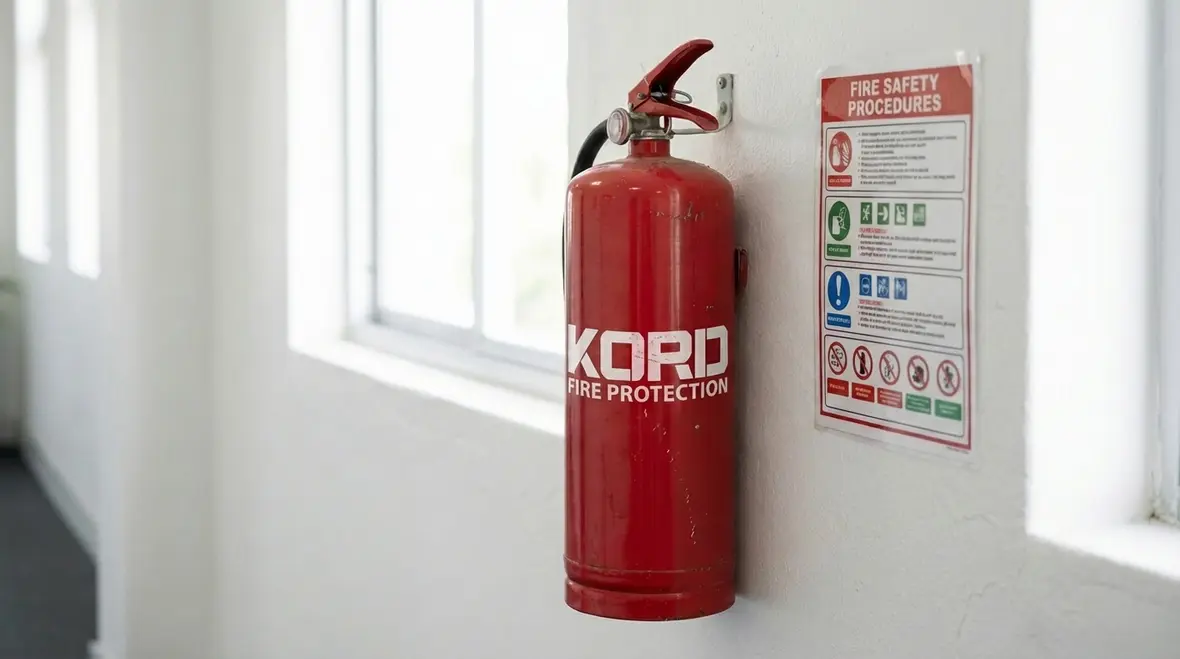
Many workplaces hang a bright red extinguisher and call it a day. It looks reassuring. It photographs well for insurance inspections. Yet when smoke curls toward the ceiling, that red cylinder can feel like a mysterious artifact from an Indiana Jones movie. Consequently, without structured instruction, employees hesitate or misuse equipment.
Effective fire extinguisher training pass method instruction does three critical things. First, it builds muscle memory. Second, it clarifies when not to act. Third, it documents compliance. Each of these reduces risk.
Kord Fire Protection technicians emphasize that most liability does not come from teaching people too much. Instead, it comes from vague direction. When an employer says, “Use it if you need it,” that leaves too much room for guesswork. Clear policies, reinforced through live demonstration, protect both the employee and the company.
Moreover, regulators expect employers to provide training if extinguishers are available for employee use. Therefore, skipping formal instruction while leaving units accessible can create exposure. In other words, if the tool is on the wall, the responsibility is on the organization.
For companies that already invest in fire extinguisher service and certification, pairing maintenance with structured PASS training closes the loop between equipment readiness and human readiness.
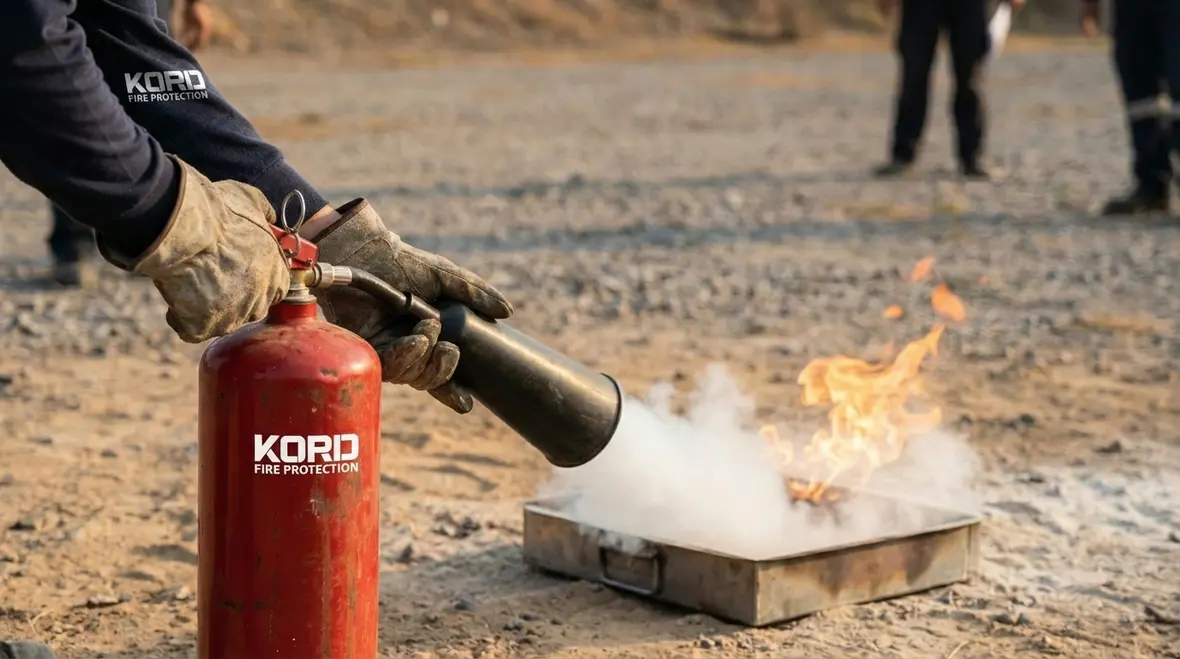
Breaking Down the PASS Method So Anyone Can Understand It
The PASS framework works because it is simple. However, simplicity does not mean shallow instruction. Each step deserves context.
Pull
Pull the pin. This breaks the tamper seal and unlocks the handle. During live demonstrations, technicians show how the pin may resist slightly. Consequently, trainees learn not to panic if it does not slide out like butter.
Aim
Aim at the base of the fire. Not the flames. Not the smoke. The base. This is where combustion lives. Kord Fire Protection technicians often illustrate this point with controlled training props, explaining that attacking the top of the flames is like trimming weeds without pulling the roots.
Squeeze
Squeeze the handle to discharge the agent. Controlled pressure matters. A sudden burst may waste product. Therefore, trainees practice steady compression.
Sweep
Sweep from side to side at the base until the fire appears out. Importantly, they continue watching the area. Reignition is not just a movie plot twist. It happens.
Although the steps seem straightforward, instructors should connect each action to a safety principle. For example, they explain why standing six to eight feet back improves visibility and escape options. By adding reasoning, the fire extinguisher training pass method becomes more than a chant. It becomes a strategy.

How to Teach PASS Without Creating Liability
Teaching the technique is only half the job. The other half is defining limits. Liability often arises when employees believe they are expected to fight every fire. Therefore, the training must include decision making boundaries.
Start with this rule. Employees should only attempt to extinguish small, contained fires, and only if they have a clear exit behind them. If the fire is spreading, producing heavy smoke, or involves hazardous materials, evacuation comes first. Always.
Kord Fire Protection technicians are known for stating this plainly. “If it looks like a movie scene,” they say, “leave it to the professionals.” That line gets a laugh. More importantly, it sticks.
Documentation also protects the organization. Keep records of attendance, curriculum, and hands on practice. Additionally, update training annually or when equipment changes. This shows due diligence.
Finally, avoid improvisation. Use consistent language across sessions. When instructors freelance their own rules, confusion follows. Instead, anchor every class to written policy and the established PASS sequence.
Designing a Training Session That Sticks
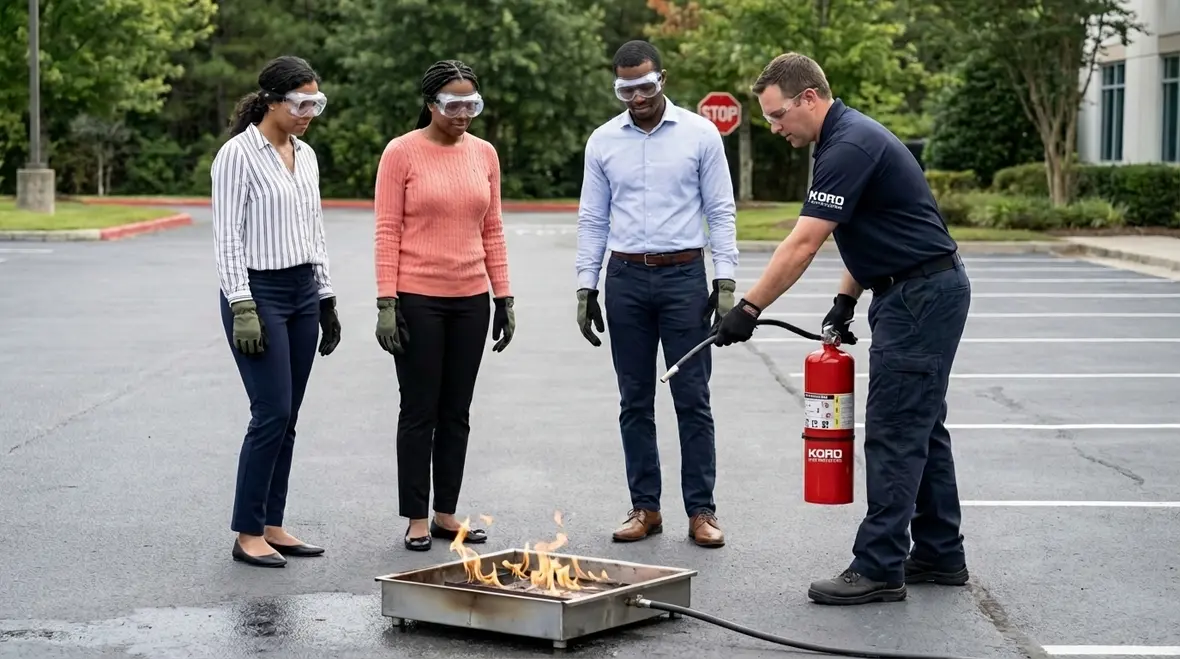
A strong session blends explanation, demonstration, and participation. First, the instructor reviews fire basics. Then, they demonstrate extinguisher types and limitations. Finally, participants practice in a controlled setting.
However, engagement matters. No one wants to sit through a monotone lecture about combustion chemistry at 8 a.m. Therefore, seasoned instructors weave in relatable examples. A small trash can fire is manageable. A warehouse pallet fire is not. The contrast makes the lesson real.
Kord Fire Protection technicians often use a simple comparison. Using an extinguisher on a small fire is like putting a lid on a pan with burning oil. It is quick and contained. Trying to fight a large blaze is like bringing a water gun to a dragon fight. Entertaining? Perhaps. Wise? Absolutely not.
Additionally, instructors should explain the types of extinguishers present in the facility. Class A for ordinary combustibles. Class B for flammable liquids. Class C for electrical equipment. When employees understand the labels, they avoid using the wrong agent. That knowledge reduces risk and reinforces the logic behind the PASS steps.
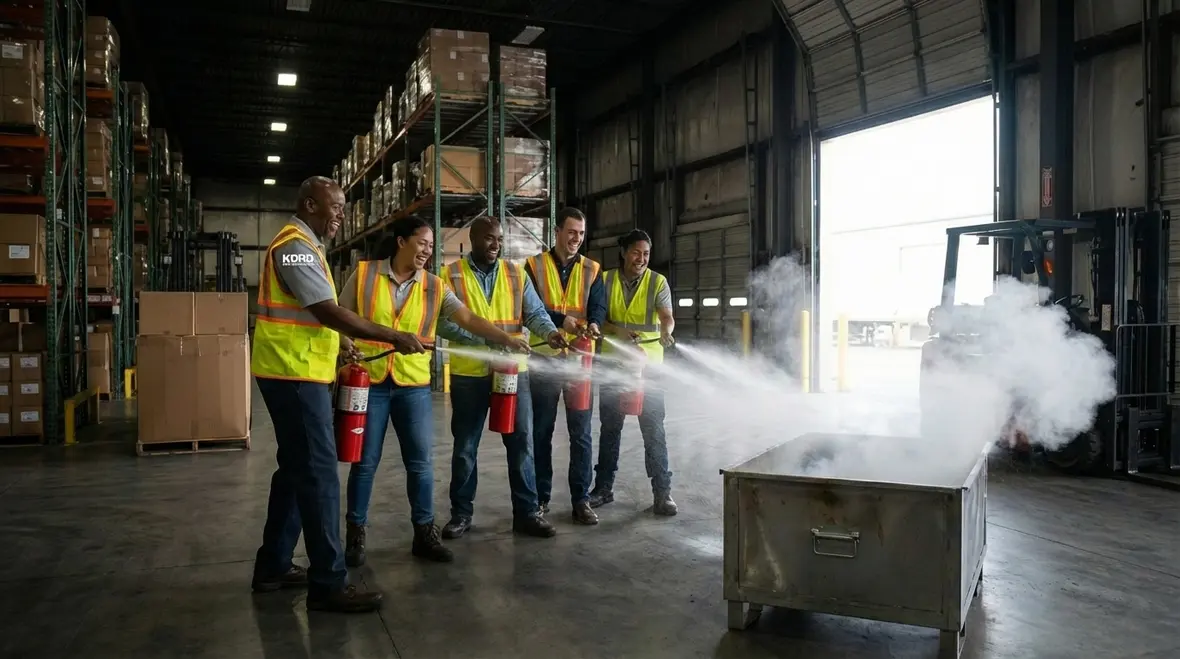
What Should Employees Actually Be Told to Do During a Fire?
Employees should hear a clear sequence of actions. First, activate the alarm. Second, call emergency services. Third, evaluate the size and safety of the situation. Only then should they consider using an extinguisher.
Therefore, training must stress that life safety outranks property protection. No desk, server rack, or break room microwave is worth an injury. That message, repeated calmly and firmly, lowers the chance that someone feels pressured to play hero.
Furthermore, instructors should teach proper stance. Stand with a clear exit behind. Keep low to avoid smoke. Test the extinguisher briefly before approaching the fire. These physical cues create a mental checklist.
| Safe Response | Unsafe Response |
| Fire is small and contained | Fire is spreading rapidly |
| Exit path is clear | Exit path is blocked |
| Minimal smoke | Heavy or toxic smoke |
| Employee trained recently | No recent training |
This simple contrast clarifies expectations. As a result, employees understand that the PASS technique is conditional, not automatic.
The Role of Kord Fire Protection Technicians in Reducing Risk
Experience shapes credibility. When Kord Fire Protection technicians lead sessions, they draw from real inspections, real system failures, and real success stories. Consequently, their explanations carry weight.
They often walk participants through common mistakes. For instance, some people forget to check pressure gauges during routine inspections. Others block extinguishers with storage boxes. While these errors seem minor, they can become serious during an emergency.
Moreover, technicians explain maintenance schedules, inspection tags, and compliance standards in plain language. This helps managers connect training with broader fire protection strategy. Fire extinguisher training pass method instruction then fits into a larger safety ecosystem rather than standing alone.
Because they service equipment regularly, these professionals also demonstrate how different extinguishers discharge. Seeing the force and spread of the agent prepares trainees for the real sensation. That familiarity reduces hesitation.
Common Mistakes That Increase Liability
- Failing to define whether employees are required or merely permitted to use extinguishers.
- Providing extinguishers without hands on instruction.
- Skipping refresher sessions for years.
- Ignoring documentation of completed training.
- Allowing unqualified staff to modify safety procedures.
Each of these gaps weakens the safety program. Therefore, leadership should review policies annually. Additionally, they should confirm that signage, alarms, and evacuation maps align with the training message.
Another subtle mistake involves tone. If management praises aggressive fire response without mentioning safety limits, employees may feel pressure to act beyond their training. Balanced messaging matters. Courage is admirable. Smart courage is better.
Building Confidence Without Encouraging Heroics
Confidence grows from clarity and repetition. When employees practice the PASS steps in a calm setting, they build familiarity. However, instructors must pair that confidence with restraint.
One effective tactic is scenario discussion. Present a realistic situation and ask participants what they would do. Then, guide the conversation toward safe decision making. This approach encourages critical thinking rather than blind action.
Additionally, trainers can remind participants that emergency responders exist for a reason. Firefighters train for years, wear protective gear, and operate as teams. Expecting an office worker to match that capacity is unrealistic. The extinguisher is for early stage incidents only.
Humor, used carefully, reinforces this boundary. As one technician quipped during a session, “If the ceiling tiles are melting, that is your cue to exit, not audition for an action movie.” The room laughed. The message landed.
Creating a Culture Where Safety Is the Default
Ultimately, effective instruction shapes culture. When leaders attend sessions alongside staff, they signal commitment. When managers schedule regular drills, they normalize preparedness. As a result, employees view safety as part of daily operations rather than an annual chore.
Integrating the fire extinguisher training pass method into onboarding also strengthens continuity. New hires learn expectations from day one. Furthermore, refresher courses can address changes in layout, equipment, or regulations.
Communication should remain ongoing. Emails, brief safety talks, and visible inspection tags reinforce the message. Over time, the workplace develops a steady rhythm of awareness. That rhythm reduces panic and supports sound judgment.
FAQ: PASS Method, Training, and Liability
Conclusion: Turn PASS into a Safer, Stronger Safety Culture
Teaching employees how to respond to a small fire is both a responsibility and an opportunity. When organizations present the PASS steps with clarity, define firm safety limits, and rely on experienced voices like Kord Fire Protection technicians, they build confidence without inviting chaos. Now is the time to review policies, schedule professional instruction, and strengthen your safety culture.
Pairing high quality training with reliable equipment service closes the loop. If your workplace needs help aligning PASS instruction with code requirements, extinguisher inspection, or fire extinguisher maintenance and certification, reach out to Kord Fire Protection. A calm, prepared team today prevents costly mistakes tomorrow. Reach out and make fire safety a priority.
Schedule fire extinguisher training and service with Kord Fire Protection to keep your people confident and your facility compliant.
Know Your Weapon Before You Fight the Flame
Kord Fire Protection is your go-to when it comes to all things fire protection. For over 20 years, we’ve been serving Southern California with the quality service and equipment to keep your home or business safe at all times. Our competitive prices reflect our unwavering commitment to protecting what matters most in the event of a fire emergency. Give us a call, send an email, or use that form!

Join Our Newsletter!
Get the latest fire safety tips delivered straight to your inbox From our Newsletter.