Warehouse Fire Suppression System with Kord Fire Protection
When fire threatens a warehouse, every second matters. That is why a warehouse fire suppression system becomes a core layer of protection for buildings, inventory, workers, and cash flow. In the introduction, it is worth saying plainly: one well placed detection and suppression setup can keep a small incident from turning into a headline. Then again, warehouses run on schedules, not miracles. So, when suppression matters, Kord Fire Protection can become a vital partner, helping teams plan, install, test, and maintain these systems with the calm focus you want when everyone else is panicking like it is a late season reality show.
Warehouse fire suppression systems: what they protect and how they work
A warehouse does not just store items. It stores fuel in many forms, like plastics, paper, pallets, packaging, and sometimes chemicals. Fire risk grows as heat, airflow, and fuel sources line up. Therefore, suppression systems focus on two jobs: detecting the event early and controlling or extinguishing the fire before it spreads beyond the point of origin.
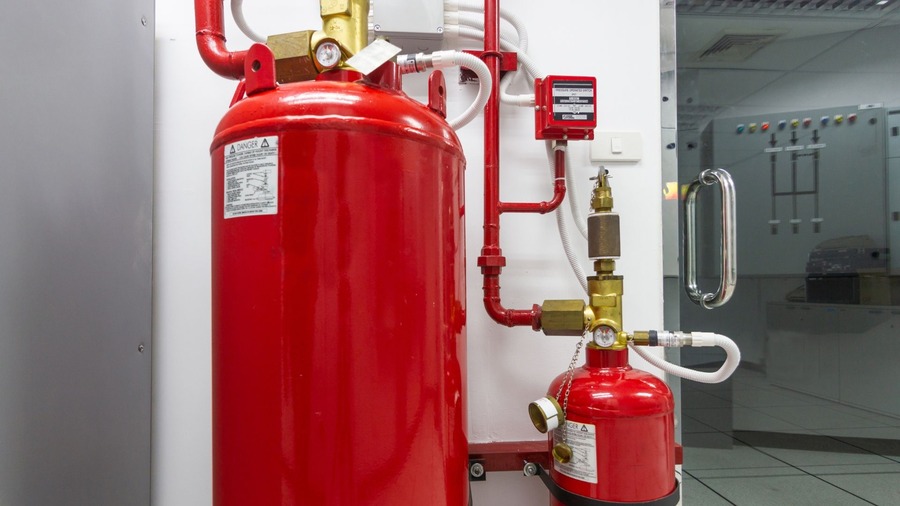
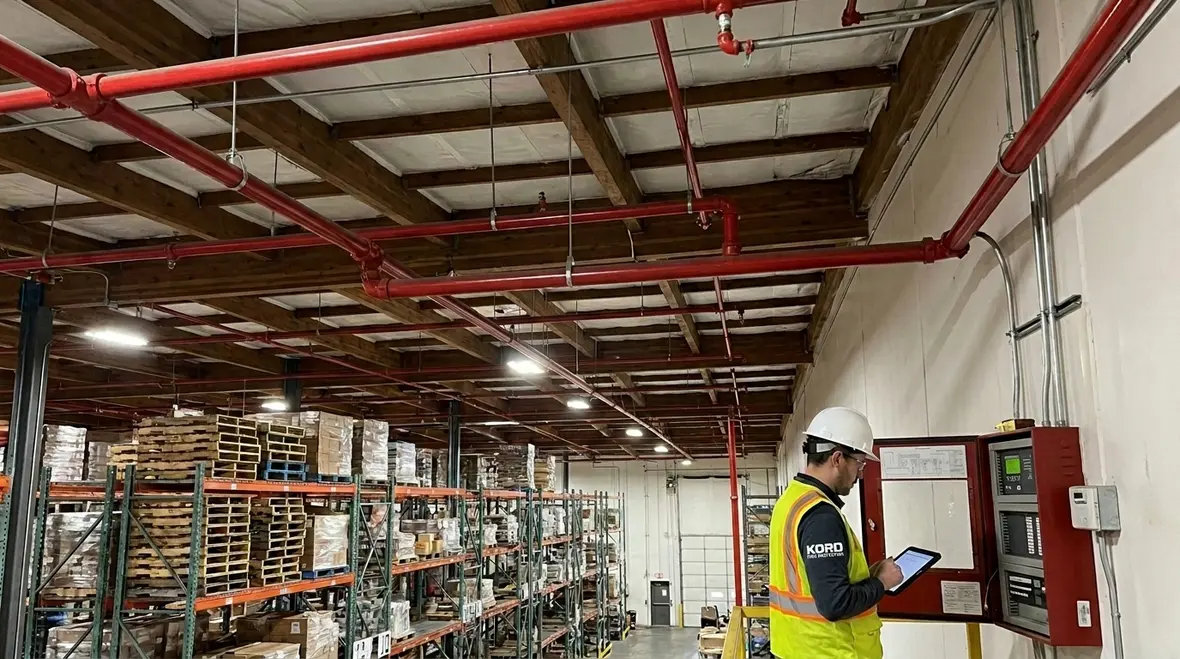
Different systems act in different ways. Some release agent through sprinklers that cover defined areas. Others use clean agent or specialized approaches where water can create major damage. Regardless of the method, the system relies on components that work together: detection devices, control panels, valves, pipe networks, and nozzles or discharge devices. In other words, the system is not one gadget. It is a coordinated response that turns seconds into outcomes.
Kord Fire Protection highlights the same connected approach across its fire protection services, including design, installation, inspections, repairs, and maintenance for sprinklers, alarms, and fire suppression systems. That matters in warehouses because reliability usually comes from system coordination, not wishful thinking and crossed fingers. For facilities needing broader support beyond a single system, Kord also offers full fire protection services that tie these moving parts together.
Choosing the right approach for warehouse hazards
Warehouses vary wildly. Some store mostly boxed goods. Others handle rack storage with high ceilings. Some sites include aerosol products, flammable liquids, or dust from processing areas. As a result, the correct design depends on hazard classification, layout, and storage height.
For many facilities, water based solutions remain a practical choice. However, a warehouse fire suppression system must match how the building behaves during a fire. For example, a high bay space can create stratification, and heat may rise faster than a typical response expects. Additionally, obstructions like beams, sprinklers at specific spacing, and the density of stored pallets can affect coverage.
Kord Fire Protection already addresses similar warehouse conditions in its City of Industry warehouse fire suppression content, where the focus stays on coordinated protection for industrial and distribution spaces. If your facility includes production lines as well as storage, it is also smart to review manufacturing plant fire suppression systems in Los Angeles because mixed use industrial spaces rarely stay simple for long.
- Rack geometry and storage height
- Commodity type and packaging materials
- Presence of aerosols, solvents, or hazardous chemicals
- Air movement from HVAC units and loading docks
- Areas with dust generation or machining processes
Then comes the part that teams sometimes underestimate: coordination. Fire suppression does not work alone. It must align with detection placement, alarm notification, evacuation routes, and sometimes smoke management. A system that looks good on paper can fail to perform if the details do not match the real world.
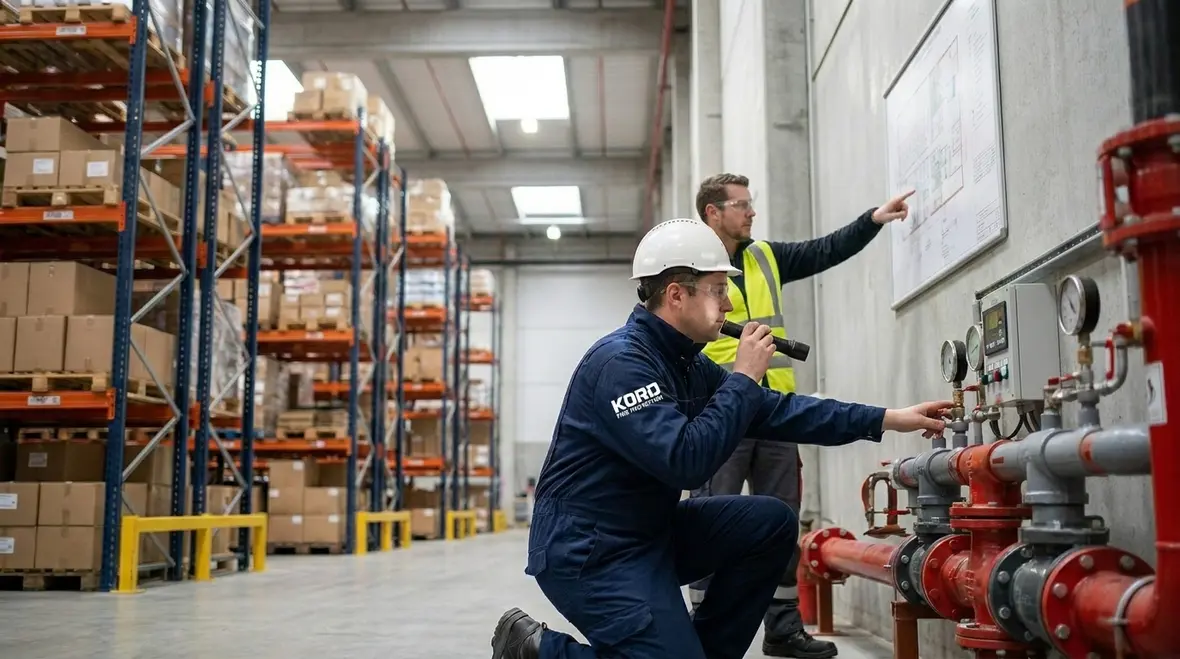
Hazard evaluation should happen before the layout starts changing itself
That means teams should revisit fire protection planning whenever inventory profiles shift, racking gets taller, or a once quiet storage zone suddenly begins handling higher risk materials. Warehouses are famous for evolving one pallet, one process, and one “temporary” decision at a time. Fire protection should be one of the few things on site that does not quietly drift into chaos.
System components that must be sized and placed correctly
A warehouse cannot afford guesswork. When a system is designed, it must account for water supply, pressure, pipe sizing, and expected discharge rates. Moreover, spacing rules exist for a reason. Sprinkler placement, nozzle orientation, and distance from obstructions affect spray pattern and coverage.
- Detection devices like heat and smoke sensors, depending on the application
- Control equipment such as alarm panels and supervisory switches
- Actuation valves and tamper switches for readiness
- Pipe and nozzle network sized for the required flow and coverage
- Water supply including tanks, city feed, pumps, or combined sources
Furthermore, Kord Fire Protection helps partners move from drawings to correct installation. That includes verifying that the layout matches the engineered intent, confirming coverage in high bay spaces, and ensuring that each component functions as the design expects. If that sounds like “just doing the job,” it is more than that. It is protecting the weakest link before it becomes the loudest problem on move in day.
Where water supply and pressure become critical, Kord Fire Protection also supports related infrastructure through its broader service lineup, including fire pump expertise and sprinkler system work. That coordination helps warehouses avoid the classic problem where one part of the system is beautifully specified while another part is left to hope, optimism, and a contractor saying “it should be fine.”
Inspection, testing, and maintenance that keep compliance on track
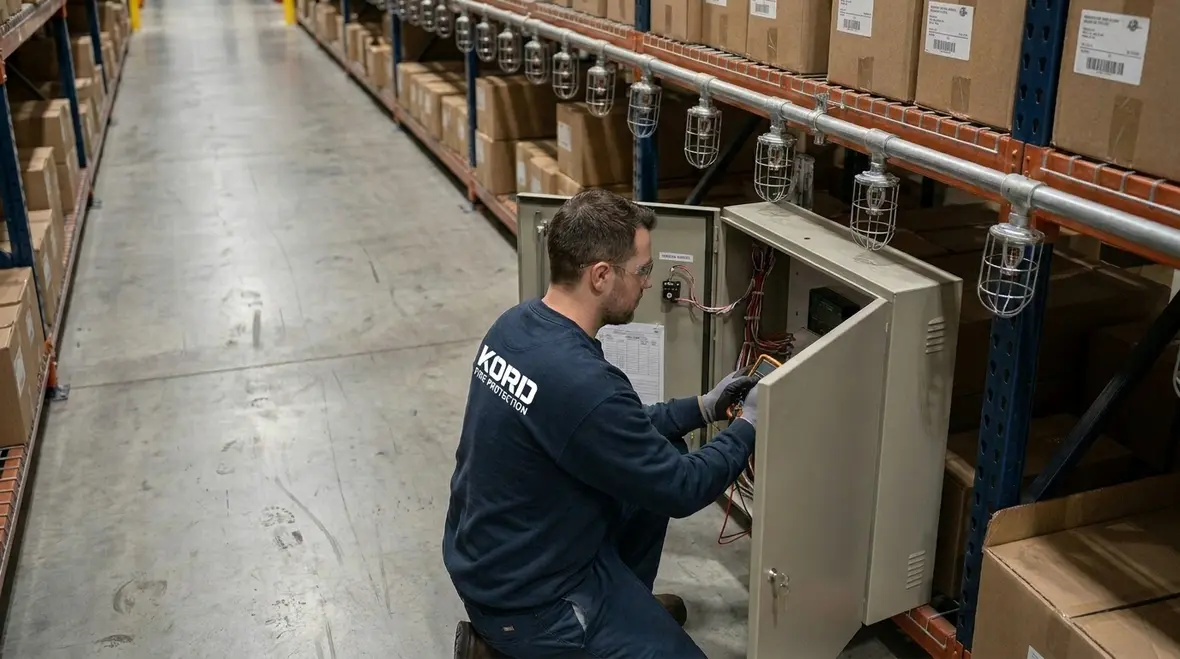
Fire systems do not freeze in time. They age, shift, get bumped by forklifts, and suffer wear from real warehouse life. Consequently, inspections and testing are not optional chores. They are the process that preserves reliability.
- Valve supervision and alarm operation
- Pressure readings and flow test results
- Sprinkler heads for physical damage or obstruction
- Battery and power status for alarm and control equipment
- Hydraulic calculations review when storage layout changes
Even better, routine service reduces downtime risk. For example, if a system shows trouble during a scheduled test, teams can fix it before an emergency forces expensive emergency work. And yes, forklifts can be chaotic. However, the fire protection network should not be. With Kord Fire Protection on board, warehouses can build a practical maintenance plan that matches their operating schedule instead of interrupting it every time someone wants to “just check something real quick.”
Kord specifically offers fire sprinkler service for installation, inspection, maintenance, repairs, and repositioning, which is especially useful when warehouse layouts change and clearance issues start creeping in. That kind of upkeep is less glamorous than ribbon cutting photos, but much more useful when equipment gets bumped and storage patterns change after a busy quarter.
Compliance is easier when service follows the rhythm of the building
A maintenance plan should not feel like a surprise attack on operations. Warehouses need inspections, testing, and repairs scheduled in ways that support throughput, staffing, and access to storage zones. The best plans protect compliance without turning the loading dock into a stress experiment.
How fire suppression planning supports real operations
A warehouse fire plan has to function during the messy part of the day, not just during inspections. Therefore, the fire suppression strategy should align with how teams work: receiving, storage, picking, staging, and shipping. It should also fit the site’s risk profile as product types change.
- Map where smoke and heat would travel based on ventilation patterns
- Confirm access for firefighters and clear paths to standpipes and controls
- Coordinate alarm zones so staff know where events start
- Train employees on evacuation and basic reporting procedures
- Review changes after major renovations or rack upgrades
Then comes the business side. A warehouse protects revenue by reducing downtime. If the suppression design limits fire spread, the recovery timeline shortens. That means fewer weeks of “we will be back soon,” which is a phrase that makes any operations director age faster. In other words, a well run system supports continuity, and continuity keeps the lights on.
Why Kord Fire Protection acts as a vital partner
In the real world, warehouses need more than a single vendor who drops off equipment and disappears. They need a partner who understands how fire protection projects connect: engineering, installation, verification, and ongoing service. Kord Fire Protection supports that full lifecycle so teams can move forward with confidence.
- Reviewing site conditions and hazards before design decisions lock in
- Coordinating installation details to meet engineered intent
- Delivering documentation teams can use for compliance and audits
- Providing maintenance support that fits the warehouse schedule
- Responding with practical guidance when changes happen
And because warehouses change constantly, having trusted support makes a difference. A system that once fit perfectly can need updates after a layout shift, a new product line, or rack modifications. So, while the equipment matters, the relationship matters too. Kord Fire Protection helps keep the warehouse fire suppression system ready for the moments that truly count.
Near the end of any planning conversation, the practical next step is simple: talk with a team that already handles system design, code compliant installation, maintenance, and repairs across Southern California. If your facility needs a service focused entry point, Kord Fire Protection’s fire sprinkler system service page is a strong place to start before moving into a broader site review.
FAQ
Conclusion
Fire protection should feel steady, not improvised. A properly designed and maintained warehouse fire suppression system helps control fire spread, protects teams, and reduces downtime when incidents happen. Kord Fire Protection supports the full process, from thoughtful planning to installation verification and ongoing service that fits warehouse operations.
If this year’s safety goals include stronger coverage and smoother compliance, reach out through Kord Fire Protection’s fire sprinkler service page and schedule a review. Because when the unexpected arrives, the plan should already be in place.

Join Our Newsletter!
Get the latest fire safety tips delivered straight to your inbox From our Newsletter.