City of Industry Warehouse Fire Suppression
Fire Suppression Systems for City of Industry Warehouses
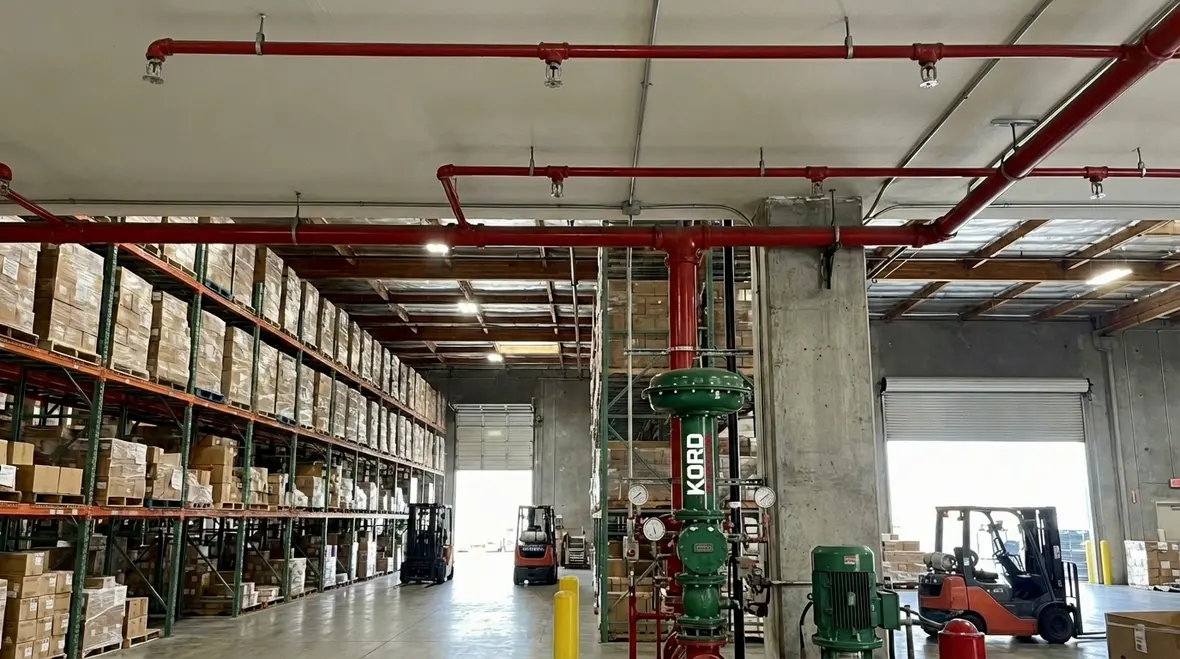
In the heart of Southern California’s logistics corridor, warehouses move fast. Pallets rise, forklifts glide, and inventory flows in and out like clockwork. However, behind that rhythm sits a quieter force keeping everything safe: City of Industry fire suppression systems. Within the first hundred feet of racking, one truth becomes clear. When protection works, no one notices. When it fails, everyone does.
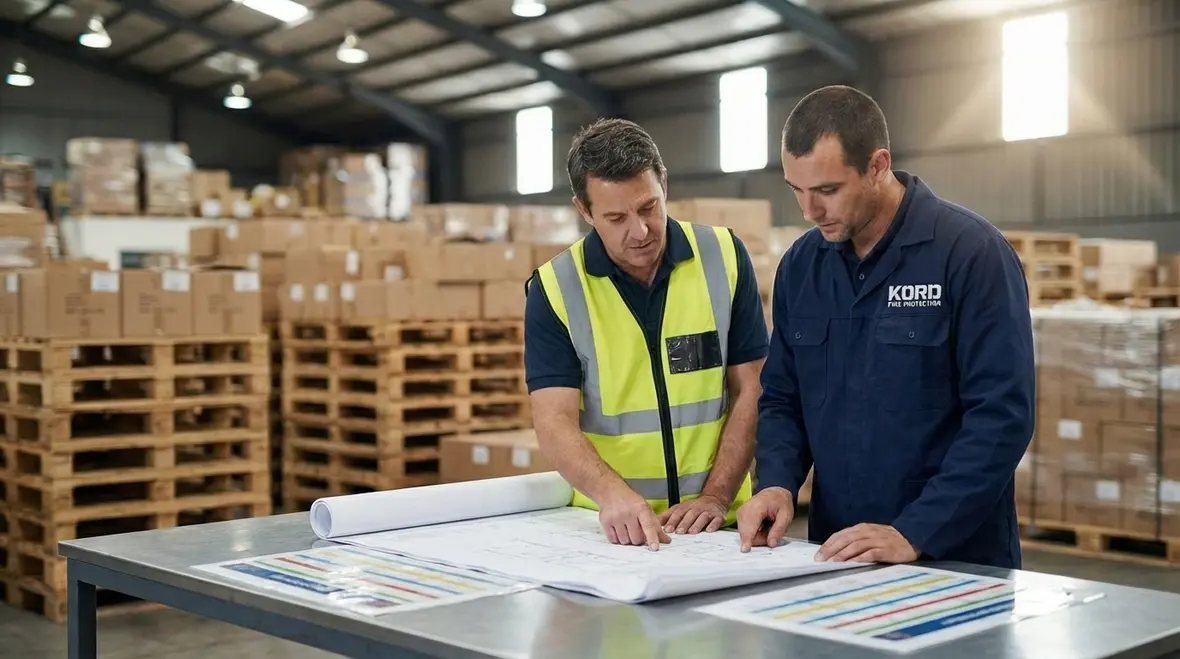
That is why warehouse owners rely on trained specialists, including Kord Fire Protection technicians, who walk facilities floor by floor explaining how each valve, pipe, and panel stands guard. They do not just install equipment. They translate code into calm confidence. And in a space filled with cardboard and electrical loads, calm confidence matters.
Why Warehouses in the City of Industry Face Unique Fire Risks
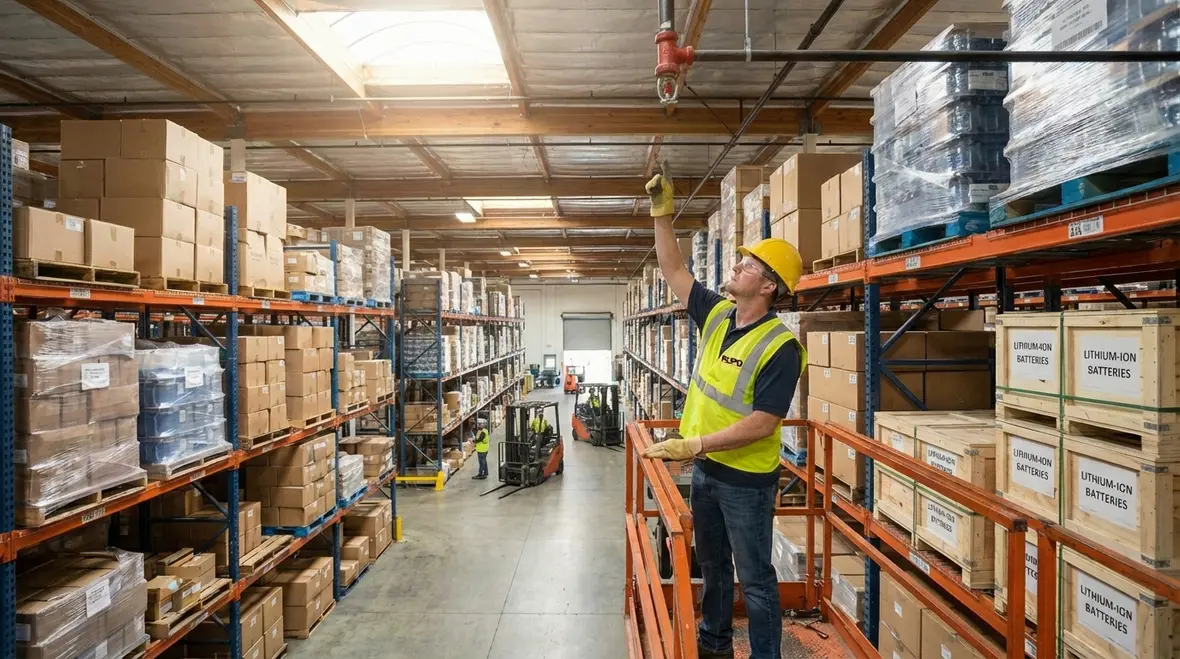
Warehouses here are not small storage units with a dusty padlock. They are high pile storage environments stacked to the ceiling. Consequently, fire behavior changes. Flames climb vertically, heat gathers fast, and smoke spreads before anyone can finish their morning coffee.
Additionally, many facilities store mixed commodities. One aisle may hold paper goods. Another may contain plastics. Meanwhile, lithium ion batteries quietly power equipment in the background. Each material burns differently. Therefore, suppression strategies must adapt to fuel type, storage height, and airflow.
Kord Fire Protection technicians often explain it this way. Fire is not random. It follows physics. So the system must follow physics too. Sprinkler density, water supply, and response time all align with the specific hazard classification. In other words, there is no one size fits all solution, no matter how much someone wishes there were a big red easy button.
How City of Industry Fire Suppression Systems Protect High Pile Storage
High pile storage demands precision. Because heat rises, ceiling mounted sprinklers must activate quickly enough to control flames before they spread horizontally. Early Suppression Fast Response sprinklers, often called ESFR, discharge large volumes of water in a short time. As a result, they suppress fires rather than simply control them.
However, design does not stop at the ceiling. In rack systems, in rack sprinklers may sit between product levels. These units attack fire at its source. Therefore, they reduce the chance of vertical flame spread inside the rack structure.
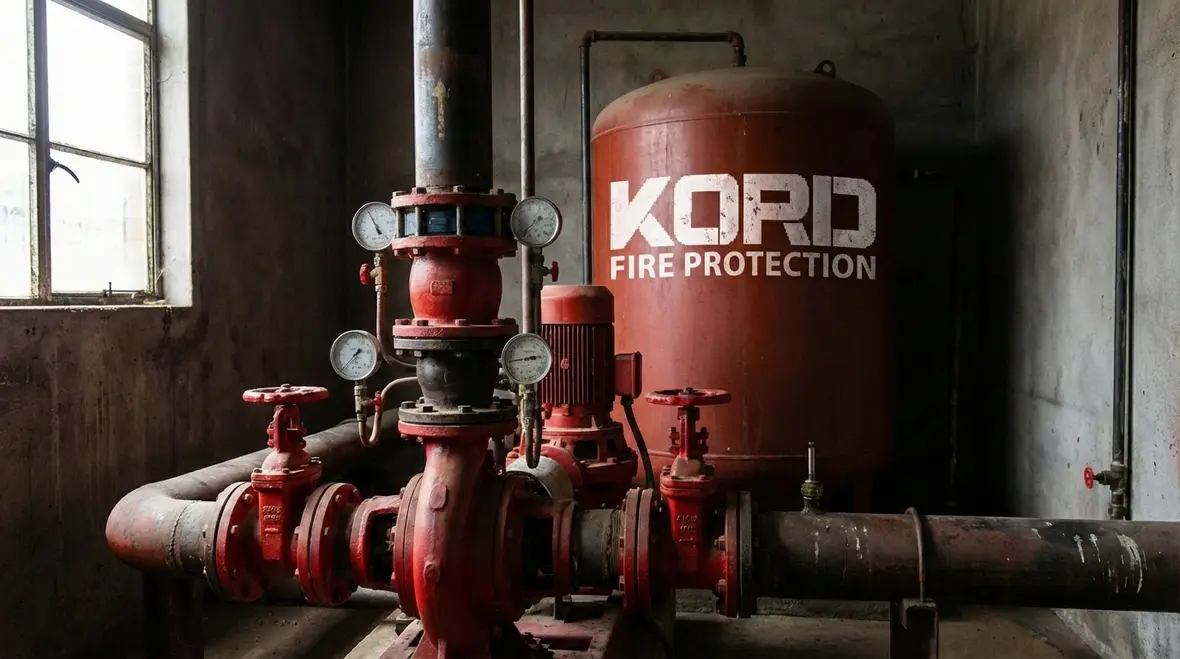
Kord Fire Protection technicians routinely walk managers through hydraulic calculations. While that might sound like something from a high school math class nobody asked for, it is actually the backbone of reliable protection. Water supply must meet pressure and flow demands simultaneously. If the municipal line cannot support the load, fire pumps and storage tanks step in.
Furthermore, warehouse fire suppression in the City of Industry must comply with California Fire Code and NFPA standards. Inspectors review spacing, obstruction rules, and seismic bracing. Since this region sits in earthquake territory, systems require flexible couplings and secure supports. After all, a sprinkler line should not swing like a jump rope during a tremor.
What Should a Warehouse Owner Ask About Fire Protection?
Warehouse owners often type that very question into search engines. The answer begins with clarity. First, what commodity classification applies to the stored goods. Second, what is the maximum storage height. Third, does the building have adequate water supply.
In addition, owners should ask about inspection frequency. Fire suppression systems in industrial facilities require routine testing. Valves must remain open. Alarm connections must transmit signals properly. Backflow preventers need certification. Therefore, a maintenance plan matters just as much as the initial installation.
Kord Fire Protection technicians encourage owners to request a full site evaluation. During these visits, they explain code requirements in plain language. They also identify future expansion needs. Because warehouses grow, protection must scale with them. It is far easier to plan for growth than to retrofit a fully stocked facility later.
Components That Make Up Modern Warehouse Fire Protection
Although sprinklers receive most of the attention, a complete system includes several coordinated parts. Each component plays a role, much like members of a well rehearsed orchestra.
Water Based Systems
- Automatic sprinkler networks with control valves
- Fire pumps that boost pressure when city supply falls short
- Water storage tanks sized for required duration
Detection and Control
- Heat and smoke detectors linked to alarm panels
- Supervisory switches that monitor valve positions
- Monitoring connections that alert emergency responders
Together, these elements form integrated fire protection for City of Industry distribution centers. When one device activates, others respond. Consequently, response time shrinks and damage decreases.
Kord Fire Protection technicians often compare it to a relay race. The detector senses heat. The panel signals the alarm. The sprinkler releases water. Meanwhile, monitoring alerts the fire department. Everyone passes the baton quickly. No one drops it.
The Role of Code Compliance and Insurance Requirements
Insurance carriers pay close attention to warehouse fire risk. Therefore, they evaluate suppression design before issuing coverage. If systems fail to meet standards, premiums rise. In some cases, coverage becomes difficult to secure.
Because of this, detailed documentation matters. Hydraulic calculation reports, inspection logs, and as built drawings provide proof of compliance. Kord Fire Protection technicians maintain clear records so owners can present them during audits.
Moreover, local authorities conduct periodic inspections. They verify that City of Industry fire suppression systems remain operational and unobstructed. Storage must stay below sprinkler deflectors at approved distances. Exit paths must remain clear. It sounds simple, yet busy warehouses sometimes treat those clearance rules like optional suggestions. They are not.
Common Mistakes That Undermine Warehouse Fire Safety
Even the best system struggles if daily operations ignore basic rules. For example, stacking inventory too close to sprinkler heads blocks water distribution. Similarly, shutting a control valve for maintenance and forgetting to reopen it leaves the building unprotected.
Another issue involves unauthorized modifications. When new racking appears without consulting a fire protection specialist, sprinkler spacing may no longer comply with design criteria. Therefore, any layout change should trigger a review.
Kord Fire Protection technicians emphasize communication. They encourage facility managers to treat fire protection like any other critical infrastructure. One would not unplug a server room without telling IT. Likewise, one should not alter suppression equipment without consulting experts.
Inspection, Testing, and Long Term Reliability
Protection does not end at installation. In fact, that is only the beginning. Over time, corrosion can affect pipes. Valves may stiffen. Alarm batteries lose charge. Therefore, regular inspection and testing ensure that systems perform when needed.
Quarterly and annual checks typically include valve inspections, alarm tests, and flow tests. In addition, internal pipe assessments may occur at scheduled intervals to identify buildup. These steps keep warehouse fire suppression in the City of Industry reliable year after year.
Kord Fire Protection technicians approach maintenance with a calm, methodical pace. They explain findings clearly and recommend corrective actions without drama. Because in fire protection, steady diligence beats last minute panic every time.
Frequently Asked Questions
City of Industry Fire Protection Support and Related Services
City of Industry warehouses do not operate in isolation. They sit within a broader network of Los Angeles County fire protection resources and service options. Partnering with a team that understands this landscape helps you stay prepared for inspections, capital projects, and future growth.
Kord Fire Protection supports industrial and distribution properties across the region with design, inspections, repairs, and testing. From Industry fire protection services to county wide support, their technicians help streamline compliance and reduce downtime when work needs to be performed during active operations.
For large or multi site operators, coordinating services through a single partner can simplify documentation, standardize inspection routines, and provide a clear roadmap for upgrades over time. That way, when codes evolve or your storage profile changes, your fire protection plan evolves with it instead of scrambling to catch up.
Conclusion: Keep Your Warehouse Ready, Not Lucky
Warehouses power the City of Industry. Yet behind every shipment stands a silent shield of pipes, valves, and fast acting sprinklers. Properly designed and maintained, these systems protect people, products, and profits. Kord Fire Protection technicians bring clarity to complex codes and build solutions that stand ready at all hours. For facilities seeking dependable protection, now is the time to review, upgrade, and strengthen their fire suppression strategy with trusted experts.
Next Step: Schedule a Warehouse Fire Protection Review
If your operation depends on uninterrupted shipping, storage, and order fulfillment, do not wait for an inspection notice or close call to evaluate your system. Schedule a walkthrough with a qualified fire protection partner and confirm that your design, documentation, and maintenance are aligned. To coordinate comprehensive support across sprinklers, alarms, extinguishers, and more, consider Kord Fire’s full fire protection services for Southern California facilities.
Know Your Weapon Before You Fight the Flame
Kord Fire Protection is your go-to when it comes to all things fire protection. For over 20 years, we’ve been serving Southern California with the quality service and equipment to keep your home or business safe at all times. Our competitive prices reflect our unwavering commitment to protecting what matters most in the event of a fire emergency. Give us a call, send an email, or use that form!

Join Our Newsletter!
Get the latest fire safety tips delivered straight to your inbox From our Newsletter.