Vehicle Fire Suppression System by Kord Fire Protection
When a vehicle fire starts, seconds matter. That is where a vehicle fire suppression system steps in, helping control flames before they spread like a bad decision at a movie theater midnight showing. In simple terms, it is a purpose built setup that detects heat and fire conditions, then releases an agent fast enough to protect people, cargo, and the vehicle itself. This article explains how these systems work, what they protect, and how Kord Fire Protection can become a vital partner for customers who want dependable service, proper installation, and ongoing readiness. Because after the smoke clears, the real question is whether the protection system is still ready to do its job.
How a vehicle fire suppression system prevents fire spread
A vehicle fire suppression system is designed to react automatically. First, it monitors conditions inside or near the hazard area. Then, when it senses a fire signature, it triggers a rapid response. Next, it releases a fire suppressant in a controlled way so heat and oxygen conditions shift, slowing the fire’s growth. As a result, flames lose their momentum and spread gets reduced, which often improves safety outcomes and lowers damage costs.
Unlike “spray and hope” approaches, the system uses a planned sequence. It does not wait for someone to notice the problem, because people are busy being humans, and humans sometimes notice things late. Instead, the system aims to act early, which is a calmer plan for a stressful moment. Kord Fire Protection describes these systems as a primary defense against vehicle fires and notes that custom system design, risk review, and proper discharge planning all matter when the goal is fast response and reduced loss. Vehicle Fire Suppression Systems is a useful page to review if you want to see how that protection strategy is approached in real service environments.
Components inside the system and how they work together
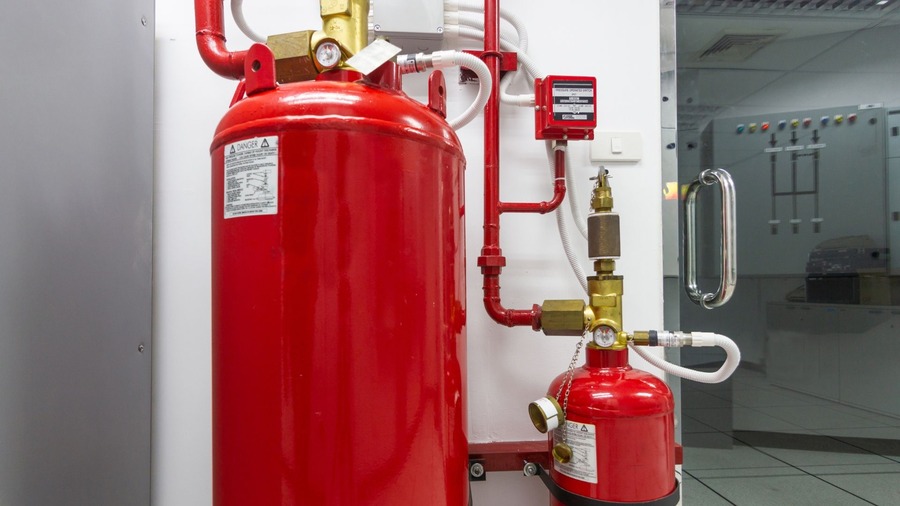
Most vehicle suppression setups share core parts. However, the exact design can change based on vehicle type, compartment layout, and the hazard class being protected. Typically, the system includes detection devices, a control head, storage cylinders, valves, and distribution lines or nozzles.
The system works as a team, not a solo act
- Detection: Heat sensing elements and sometimes flame or multi signal detection options watch for fire conditions
- Control head: This unit interprets signals and initiates the discharge sequence
- Storage and agent: A pressurized agent, chosen to match the risk, sits ready
- Valves and lines: These move the agent from the storage point to the protected area
- Nozzles or discharge ports: These direct the agent where it works best
Therefore, the system does not rely on one component doing everything. It relies on timing and coordination. When each part performs as designed, the agent reaches the area with the right pressure and direction, which improves effectiveness. Kord Fire Protection also explains that many systems are built around detection sensors, a control panel, tanks filled with suppression agent, manual or automatic discharge options, and a distribution network, which reinforces why design details are not decorative extras. They are the whole plot. For readers wanting broader context, Fire Suppression System Design, Types and Maintenance adds helpful background on how suppression system design choices support reliability over time.
Where these systems install and what they protect
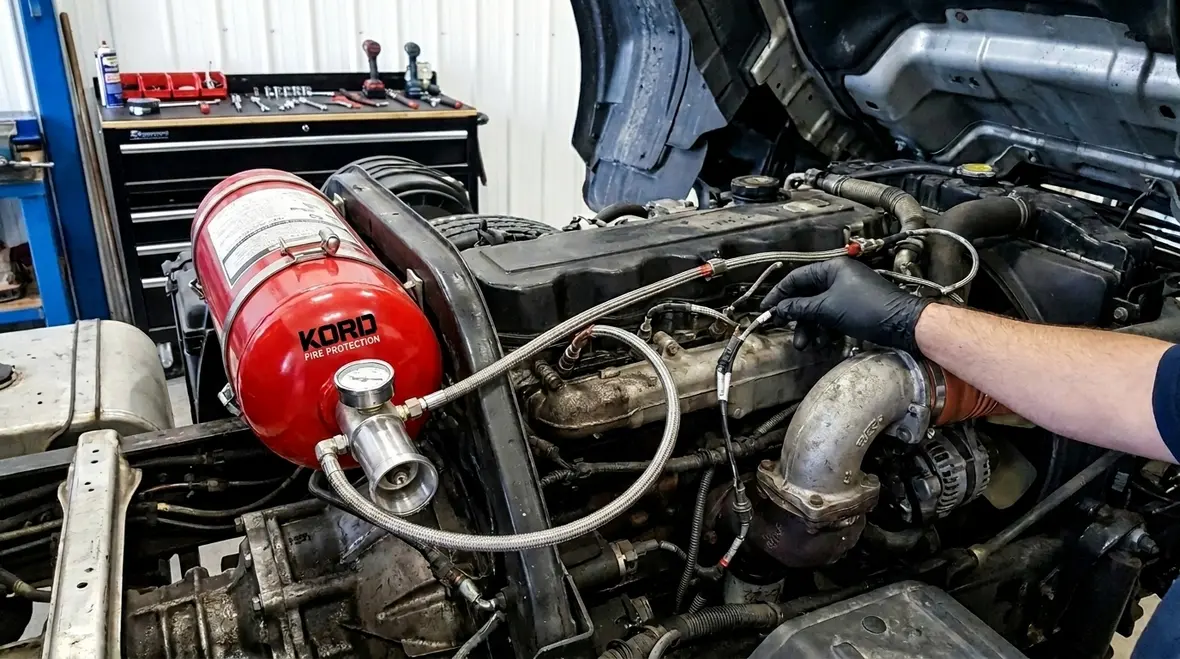
Vehicle fires do not always begin in the obvious place. Heat sources, wiring faults, fuel lines, hydraulic components, and battery related issues can all ignite. Consequently, the protection plan usually focuses on high risk areas and enclosure compartments. Common examples include engine compartments, wheel well spaces, transmission or powertrain zones, and cargo or utility compartments depending on the vehicle design.
Additionally, many customers care about protecting not just the vehicle, but what sits inside it. That includes tools, medical equipment, flammable materials, and electronics. When the vehicle is part of daily operations, a suppression system supports continuity. After all, downtime can be expensive, and fire damage makes “busy season” disappear fast.
Protection zones are chosen for real risk
Kord Fire Protection’s maintenance guidance highlights that engine compartments, hydraulic systems, battery compartments, and fuel storage areas are common protection zones because those areas combine heat, fuel sources, and ignition potential in ways that can turn ugly quickly. That matters for heavy equipment, public transportation, service fleets, and specialized vehicles where one fire event can interrupt operations well beyond the vehicle itself. The more the system matches the actual hazard map of the vehicle, the less it behaves like a generic afterthought and the more it acts like planned protection.
Key testing and inspection steps that keep performance reliable
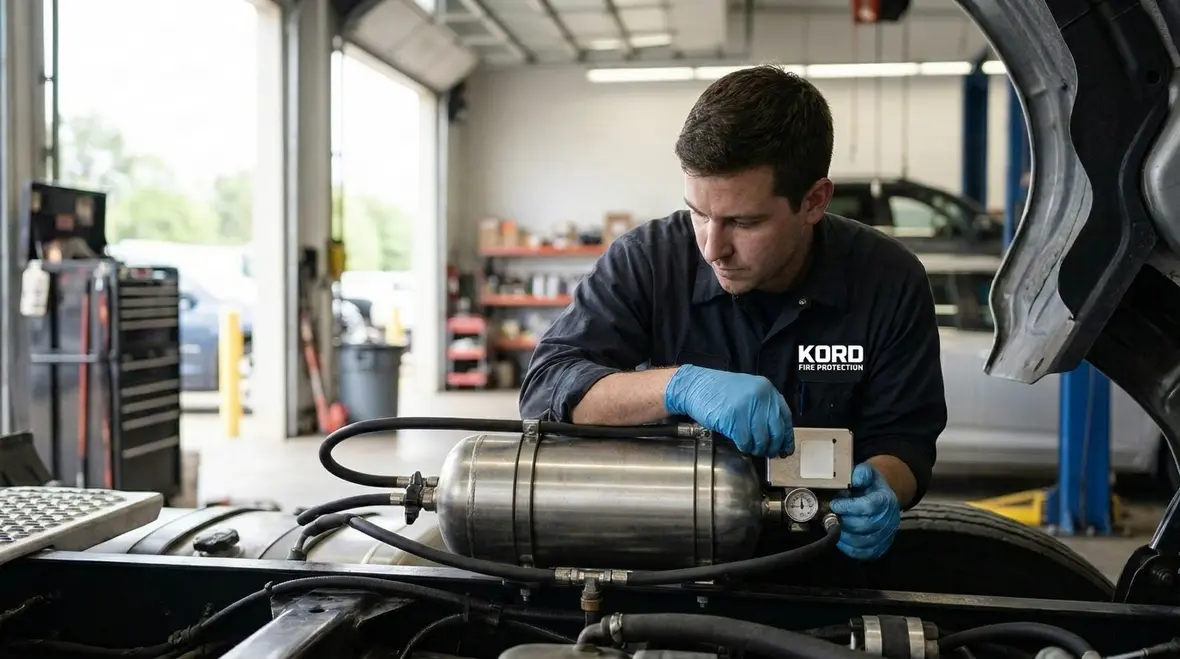
Installation is only the beginning. A successful vehicle fire suppression system program requires testing and inspection that match the system’s design and the environment it operates in. Over time, vibration, corrosion, temperature swings, and physical wear can affect components. So routine checks help confirm the system stays ready.
Typical inspection items include verifying the indicator status, checking control panel communication, inspecting detection paths, confirming cylinder pressure and condition, reviewing nozzle placement, and ensuring nozzles and discharge routes remain unobstructed. Also, service teams often verify that wiring connections remain tight and that the system’s discharge pathway is free from damage.
Kord Fire Protection supports customers by treating these tasks as a safety discipline, not a checkbox. That means documentation, clear reporting, and a service plan that respects how the vehicle is used day to day, including routes, load types, and operating conditions. Their maintenance guide also emphasizes that system health often determines whether a bad day becomes a total loss, which is a dramatic sentence only because reality wrote it first. If your team is building out long term service habits, Vehicle Fire Suppression Systems Maintenance Guide is a strong contextual resource to keep in the mix.
Why Kord Fire Protection becomes a vital partner
For many fleets and vehicle owners, the hardest part is not buying equipment. It is managing the lifecycle. A vehicle suppression system gets installed once, but it needs attention repeatedly. At this point, Kord Fire Protection can become a vital partner because it brings hands on service, practical guidance, and a focus on long term readiness.
In other words, they help clients avoid the classic problem: the system that “looks” good but quietly loses readiness due to missed service. And no, that is not a scene from a horror movie. It is just real life, where time and wear add up.
With Kord Fire Protection, teams can align service schedules with vehicle usage, confirm system functionality, and address issues before they become emergencies. This partnership also helps customers coordinate documentation for internal audits and insurance needs, which can save time and headaches when questions show up. Kord Fire Protection’s broader Full Fire Protection Services page also makes it clear that vehicle suppression is part of a wider support model, which can be useful for customers who need more than a single isolated fix.

Choosing the right design for different vehicle types
Not every vehicle needs the same suppression layout. The right design depends on the hazard profile, vehicle geometry, compartment volume, and operating patterns. For example, a high vibration environment may require additional attention to secure mounting and cable routing. Similarly, a vehicle carrying higher risk materials may need a more targeted discharge strategy.
Furthermore, operators should consider installation constraints. Space limitations affect nozzle locations and line routing. Heat loads and airflow patterns can influence agent effectiveness. That is why a good system design process includes a thoughtful review of the vehicle, the compartments to protect, and the expected fire sources.
One size fits all is a great slogan for socks, not suppression
When customers work with experienced service partners like Kord Fire Protection, they reduce guesswork. They also improve the odds that the system releases the agent in a way that matches the vehicle’s needs, not just a generic template. Kord Fire Protection specifically notes that there is no one size fits all approach and that risk assessments help determine which suppression agent and design suit the application. That kind of front end thinking can spare operators from discovering too late that a shortcut was not actually clever.
Featured FAQ
Next steps for safer operations
Vehicle fires move fast, and hope does not qualify as a safety protocol. A vehicle fire suppression system offers fast action, planned discharge, and better control during the first moments of a fire event. To keep it dependable, owners should schedule inspections, confirm readiness, and address issues early. Kord Fire Protection helps customers manage that lifecycle with real service and clear documentation.
If you want a suppression plan that stays reliable in the real world, contact Kord Fire Protection and get started today. For a direct next step, review the dedicated Vehicle Fire Suppression Systems service page or explore the broader Fire Suppression service page to coordinate a solution that fits your vehicles, hazards, and operating conditions.

Join Our Newsletter!
Get the latest fire safety tips delivered straight to your inbox From our Newsletter.