
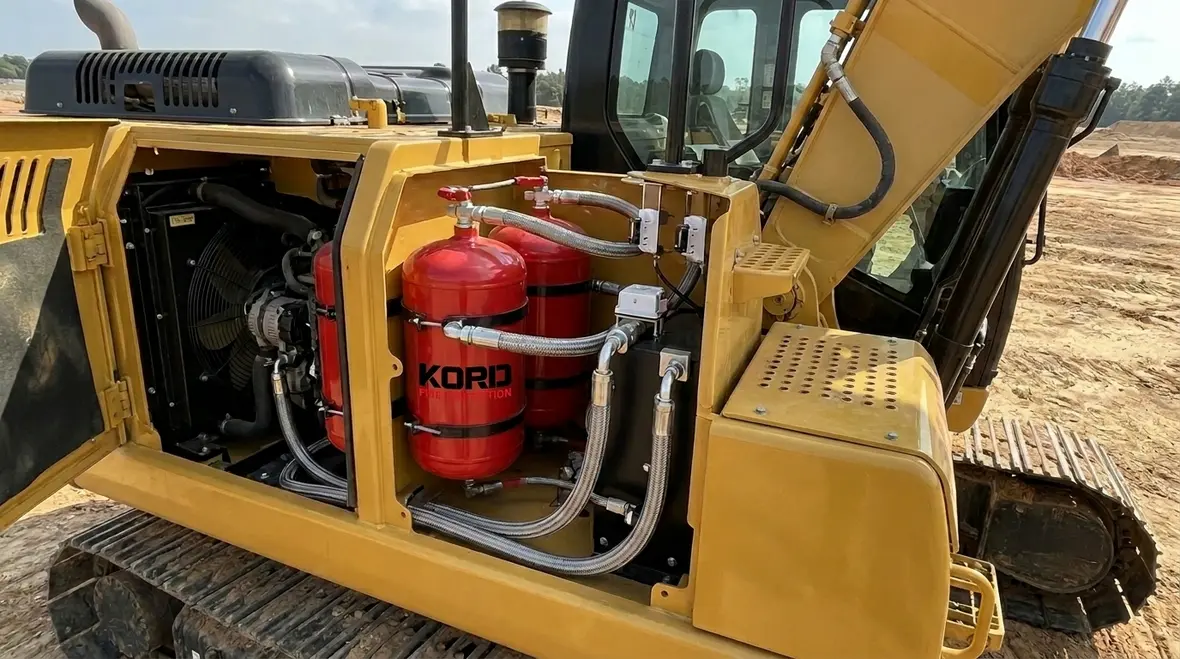
Vehicle Fire Suppression Systems for Heavy Equipment
Vehicle Fire Suppression Systems for Heavy Equipment help protect jobsites where fires start fast and spread even faster. On a bulldozer, excavator, skid steer, or material handler, a small electrical fault or fuel leak can turn into a major event before the operator can react. That is where vehicle fire suppression plays a key role by detecting heat and releasing the right firefighting agent at the right moment.
In the rest of this article, heavy equipment fire suppression will be explained in practical terms, including how the systems work, how crews choose agents, what maintenance looks like, and how Kord Fire Protection can become a vital partner for this service job. Because let us be honest, no one wants to “wing it” with fire protection. That is how you end up trending online for the wrong reason.
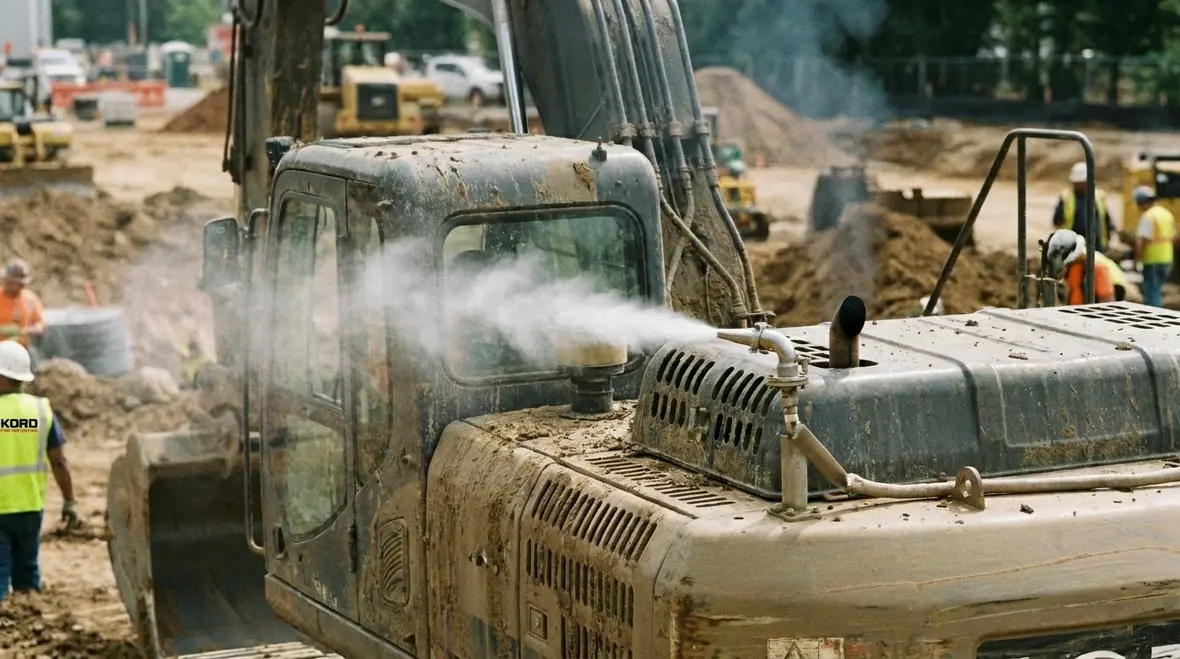
How heavy equipment fire suppression prevents sudden losses
Heavy equipment fire suppression focuses on one goal: stop a fire early, before it damages the machine, threatens workers, or halts a whole project. Fire often begins inside engine compartments, near hydraulic lines, or around electrical panels. Then it grows as heat builds, fuel vapor increases, and airflow feeds the flames.
Vehicle fire suppression systems respond quickly by combining detection and discharge. First, the system monitors heat using heat sensing elements. Next, when it reaches the set threshold, the control triggers the discharge sequence. Then the agent floods the protected space, cooling the fire zone and interrupting the conditions that allow combustion to continue.
As a result, the system can buy critical minutes. Those minutes matter for safe shutdown, evacuation, and preventing secondary damage to hoses, wiring, and nearby equipment. And while people sometimes imagine a hero with a handheld extinguisher rushing in like an action movie, real jobsites need something more dependable than hope and good intentions.
Why early response matters on heavy machinery
On heavy machinery, fire rarely waits around for a committee meeting. Once flames get into fuel, oil, insulation, or hose coverings, the loss curve gets ugly in a hurry. A properly designed system gives operators a chance to shut down equipment, move to safety, and keep a small event from becoming the sort of incident everyone has to explain three different times.
What parts make vehicle fire suppression systems work
Most systems include a few core components, and each one supports the chain of survival from detection to knockdown.
- Detection devices watch temperature rise patterns in the protected area.
- Control units manage the release logic and monitor status.
- Storage cylinders hold the extinguishing agent under pressure.
- Nozzles and tubing deliver the agent into the right spaces, such as engine bays or specific compartments on the vehicle.
For heavy equipment, installation details matter. For example, nozzle placement must match how heat travels and where typical ignition sources occur. Meanwhile, discharge routes must avoid sharp bends that can reduce flow. Additionally, crews often need integration with the machine layout so that the agent covers the area without hitting hot surfaces in ways that limit effectiveness.
In short, the system is not just a box and a bottle. It is an engineered setup that considers how the equipment runs, how compartments vent, and how fires grow when nobody asked them to.
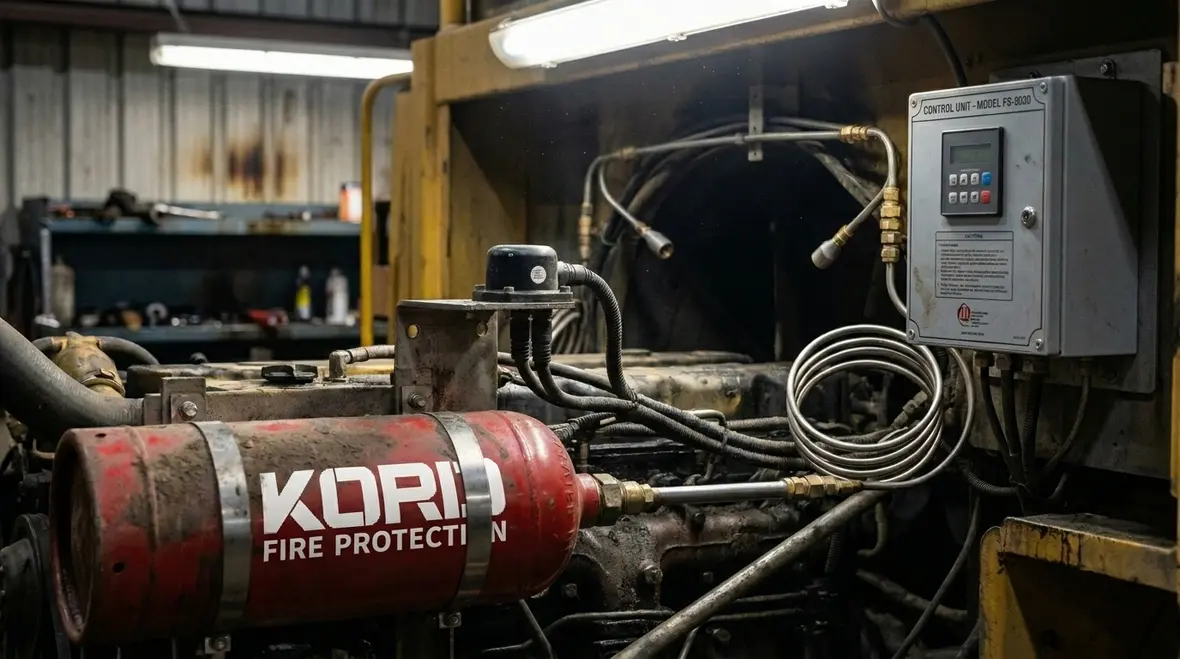
System design is more than parts on a diagram
That engineering piece matters because heavy equipment does not operate in a calm, climate-controlled bubble. It runs in dust, vibration, heat, mud, and the occasional environment that seems personally offended by electrical wiring. So components need to be placed where they can actually perform instead of just looking good on paper.
Choosing the right extinguishing agent for jobsite risk
When a contractor selects a suppression agent, they match it to the hazard type and the environment. In heavy equipment applications, common risks include diesel fuel ignition, electrical faults, and hydraulic fluid fires. Therefore, the chosen agent must handle fast-growing heat and combustible vapors.
Some agents focus on cooling and smothering, while others use chemical action to interrupt combustion. Also, the selection needs to consider visibility, potential residue, and cleanup expectations. Nobody loves spending the rest of the week scrubbing a mess that could have been avoided, unless it is a team building activity and everyone is laughing.
Also, the jobsite environment matters. Indoors, in enclosed equipment bays, and in cold storage areas, the system design often requires more careful layout. On open sites, where airflow can change fast, technicians still must ensure the agent distribution reaches the ignition source.
By balancing hazard mapping and discharge performance, crews avoid the trap of “any extinguisher works.” Fire does not respect optimism.
For teams comparing options, Kord Fire Protection’s Vehicle Fire Suppression Systems page explains how custom system design, testing, and agent selection support equipment used in construction, transportation, waste handling, forestry, and other demanding industries. ([kordfire.com](https://kordfire.com/vehicle-fire-suppression-systems/?utm_source=openai))
Installation and inspection steps that keep systems dependable
Effective fire suppression depends on correct setup and ongoing compliance. During installation, technicians evaluate the machine type, compartment size, and potential ignition points. Then they design nozzle coverage, route tubing, and set detection thresholds aligned with the equipment’s operating conditions.
After installation, the service job does not end at commissioning. Routine inspection often includes checking cylinder pressure, verifying detection circuits, inspecting nozzle integrity, and ensuring wiring remains secure around vibration points. Technicians also confirm that discharge paths stay clear and that the system labeling remains visible for operators and supervisors.
Furthermore, many operations need documentation for safety audits and insurance requirements. That means service records, inspection tags, and reports that track each visit. When paperwork gets ignored, people sometimes discover it only after a claim or an audit. And by then, the only thing on fire might be the budget.
Maintenance planning keeps small issues from growing teeth
A pressure drop, damaged line, loose connection, or blocked nozzle might look minor during a rushed walkaround. During a real fire event, though, those little misses stop being cute. Structured inspections help teams catch wear before it becomes failure, which is exactly the kind of boring success story a fleet manager should love.
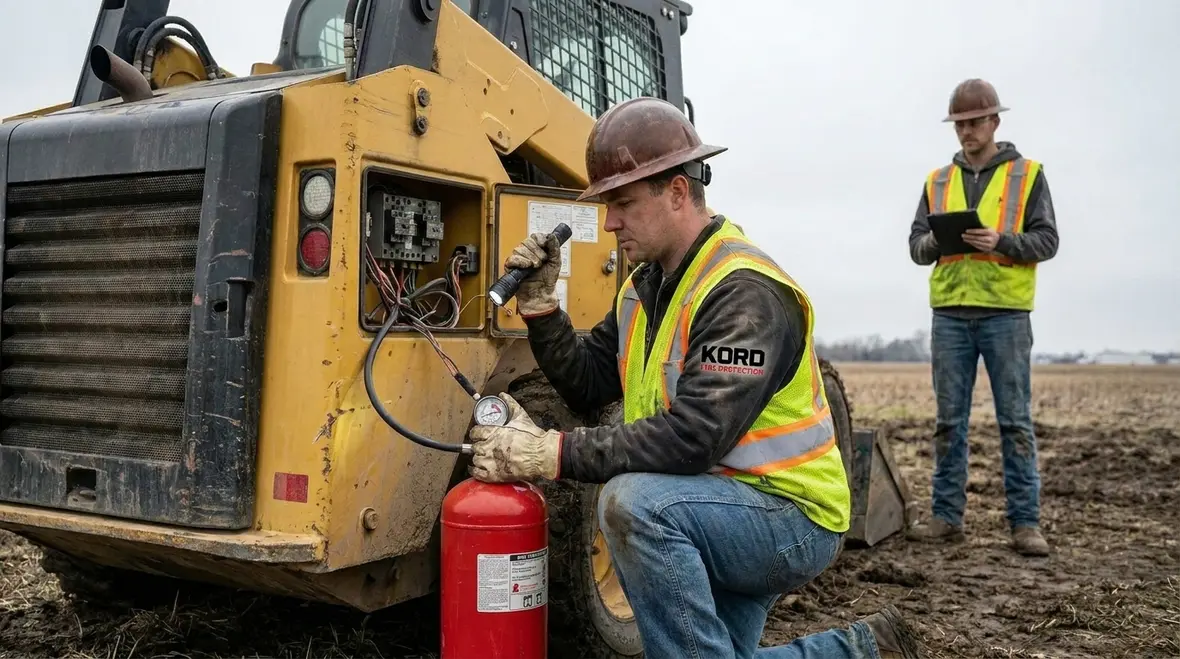
How Kord Fire Protection partners on heavy equipment fire suppression
Kord Fire Protection can become a vital partner for this service job because it treats vehicle fire suppression as a full lifecycle program, not a one-time installation. They support the job with field knowledge, system verification, and practical guidance that fits the real way equipment is used on the road or on the pad.
For example, Kord can help identify risk patterns across fleets, especially where similar machines share common ignition points like engine compartment layouts or electrical access panels. Then they can recommend consistent setups so operators do not face different behaviors across the same equipment line.
In addition, Kord Fire Protection can coordinate inspection schedules and help teams stay ahead of compliance timelines. That reduces downtime risk because crews plan service work during windows that make sense. And if a machine needs adjustment, technicians can troubleshoot issues like sensor placement, wiring protection, and discharge coverage based on how the equipment actually performs.
Ultimately, this partnership supports safety, reduces surprise costs, and keeps the project moving. Fire prevention works best when it feels boring and reliable. Like a good meeting agenda. Nobody cheers for it, but everyone thanks it later.
Kord also emphasizes risk assessment before installation, plus testing, inspection, maintenance documentation, and 24/7 support for vehicle suppression systems. That lifecycle approach aligns well with fleets that want less guesswork and more consistency across high-value equipment. ([kordfire.com](https://kordfire.com/vehicle-fire-suppression-systems/?utm_source=openai))
Maintenance practices that reduce false alarms and failures
Even the best system will underperform if maintenance slips. Therefore, operations teams should build a routine that includes both scheduled inspections and quick checks after unusual events.
Technicians typically verify that detection elements stay clean and intact. They also confirm that the control unit receives correct readings and that any fault indicators follow the intended troubleshooting process. At the same time, they inspect wiring harnesses and connectors for heat or abrasion damage, especially on equipment that vibrates hard and runs in dust.
On the operational side, crews can help by reporting warning lights immediately and avoiding modifications that bypass sensors or change compartment airflow. Additionally, they should keep extinguisher access paths clear and ensure operators know how to respond during a suspected event, including shutting down and moving people away from hot zones.
When maintenance runs smoothly, the system stays ready. And readiness means fewer fires, fewer losses, and fewer late-night calls that start with, “So… we might have a problem.”
If your team wants a deeper read on upkeep, Kord’s Vehicle Fire Suppression Systems Maintenance Guide expands on inspection intervals, hazard zones, and what routine service looks like in practice. ([kordfire.com](https://kordfire.com/vehicle-fire-suppression-systems-maintenance-guide/?utm_source=openai))
Vehicle fire suppression system planning for real jobsite timelines
Contractors can avoid delays by planning suppression work like a normal project milestone. They can schedule installations during maintenance windows, align inspection times with shift changes, and document the service so fleet managers know what was completed and when.
Also, planning includes training. Teams benefit from simple instructions on what warning signals mean, how to keep access points clear, and who to contact after an event. That kind of clarity reduces confusion, especially during busy shifts when everyone is juggling equipment, deliveries, and deadlines.
When this planning happens, it keeps operations safe without turning maintenance into a recurring emergency. In other words, it prevents the “fire drill,” which is fun only when you are a kid.
Tie service windows to uptime goals
The smartest schedules usually pair suppression service with downtime you already planned for oil changes, inspections, or component work. That way, safety improvements do not feel like surprise interruptions. They become part of how the fleet runs, which is exactly where they belong.
FAQ on vehicle fire suppression systems for heavy equipment
Final call to action for safer heavy equipment
Vehicle fire suppression systems for heavy equipment protect crews, assets, and schedules, but they only perform well when they are designed, installed, and maintained correctly. Kord Fire Protection helps fleets plan inspections, verify performance, and keep readiness high across jobsite changes.
If a machine is due for service or a fleet needs a smarter suppression strategy, reach out through Kord’s Vehicle Fire Suppression Systems service page or explore broader Fire Suppression Services to schedule the right support for your equipment. Secure your equipment now, so your next jobsite story is about progress, not panic. ([kordfire.com](https://kordfire.com/vehicle-fire-suppression-systems/?utm_source=openai))

Join Our Newsletter!
Get the latest fire safety tips delivered straight to your inbox From our Newsletter.



