Standpipe System Pressure Testing for Commercial Safety
In a commercial standpipe system, pressure does not “sort of” stay put. It must stay right. That is why standpipe system pressure testing matters from the first minutes of commissioning and again when conditions change. A good test tells owners whether the system can deliver water at the pressures firefighters need, when they need it. Meanwhile, Kord Fire Protection technicians explain the process in plain language, because the truth is, pressure regulation can look mysterious from the outside. However, once you break it down, it behaves like a well trained crew, not a chaotic group chat during halftime.
In this article, third person guidance and field like examples show how pressure regulation protects people, property, and budgets. Also, it prevents common failures that show up only after trouble begins. Along the way, readers can connect the dots between testing, maintenance, and the broader fire protection picture by reviewing Kord’s Fire Protection Services Guide by Kord Experts, which shows how standpipes fit into a larger safety strategy.
Why commercial standpipes need pressure control
Commercial standpipes move water through pipes, valves, hoses, and pressure related devices. Yet water does not follow wishful thinking. As water flows, friction reduces pressure. At the same time, elevation changes and system demand can shift the operating conditions fast. Therefore, pressure control helps the system maintain usable outlet pressure across floors and discharge points.
When regulation fails, firefighting operations suffer. Too low pressure means inadequate flow. Too high pressure can damage components, increase leaks, and create unsafe conditions for crews and occupants. Kord Fire Protection technicians often summarize it like this: “You cannot fight a fire with guesswork, and you cannot regulate the system after the alarm hits.”
The balancing act behind every outlet
Pressure control is really about balance. A building may have enough water supply in theory and still struggle at a specific hose valve because the system loses pressure on the trip upward or across long piping runs. That is why technicians do not settle for broad assumptions. They look at where pressure starts, where it drops, and whether the drop still leaves firefighters with a useful result. It is less magic and more disciplined math wearing steel toe boots.
How pressure regulation works in standpipe piping
Pressure regulation typically involves devices that stabilize system pressure under varying flow rates. These devices may include pressure reducing equipment, pressure relief paths, control valves, and check valves that manage direction of flow. In practice, the system must balance two goals at once. First, it must deliver enough pressure where it matters. Second, it must keep internal pressures within component limits.
Additionally, regulation depends on how the system is set up. The pump curve, pipe sizing, and valve positions all affect the pressure profile. So even small changes, like a valve replacement or a partial obstruction, can alter readings. That is why thorough standpipe system pressure testing focuses not just on one point, but on system behavior under realistic conditions. Readers wanting a bigger picture of test goals and flow verification can also explore Kord’s related article on the standpipe flow test guide for fire protection.
Why one changed part can shift the whole result
A standpipe system is not a collection of independent actors. It is a coordinated network. Change a control valve, leave one section partially shut, or let a regulator drift off its intended setting, and the pressure profile can change in ways that are not obvious until water moves at demand. That is why testing under flow matters so much. The system tells the truth when it is asked to perform, not when everyone is standing around admiring the red paint.
What Kord Fire Protection technicians check during testing
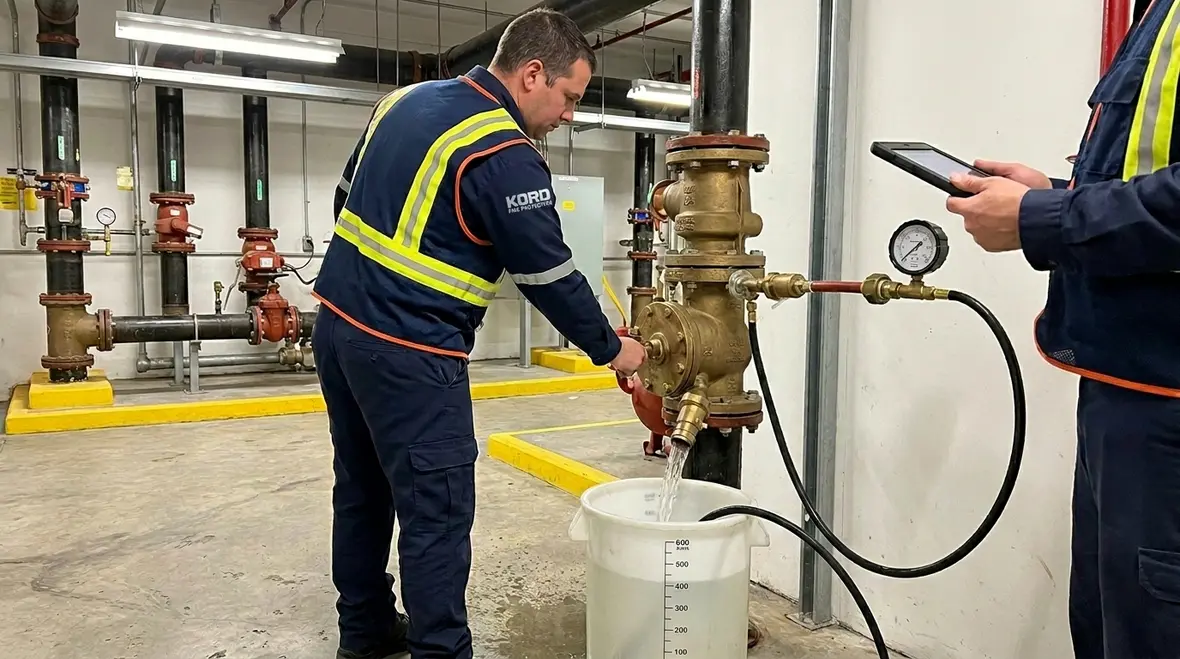
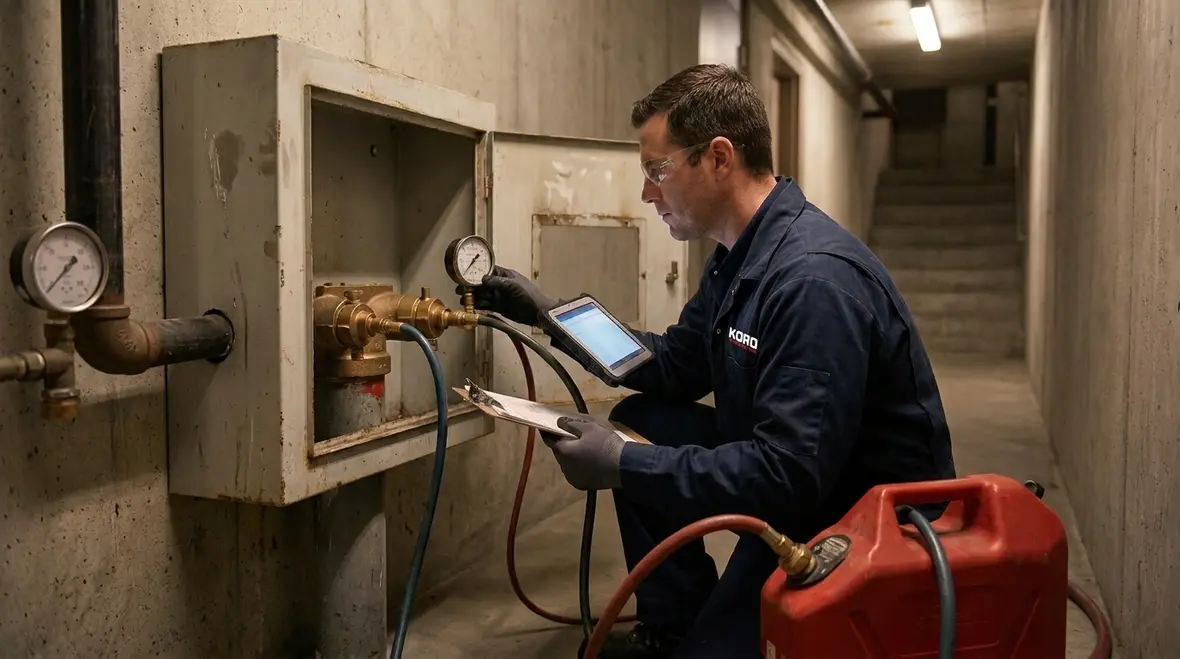
Kord Fire Protection technicians approach testing like a quality audit for the real world. They do not treat pressure as a single number. Instead, they track how pressure changes as flow changes. During testing, they verify that pressure remains within target bands at the correct locations, such as risers and hose valve outlets.
They also confirm device response. For example, regulators must react smoothly when demand changes, not lag and not overshoot. Furthermore, technicians review system documentation and compare it to what the piping actually delivers. If the measured pressure differs from the design intent, they identify the likely causes, such as valve settings, air in the system, or pump control issues.
And yes, sometimes someone thinks a reading that is “close enough” will behave fine. That is the kind of confidence that works in movies, not in life safety systems. A standpipe system does not care about good intentions.
What the field notes usually reveal
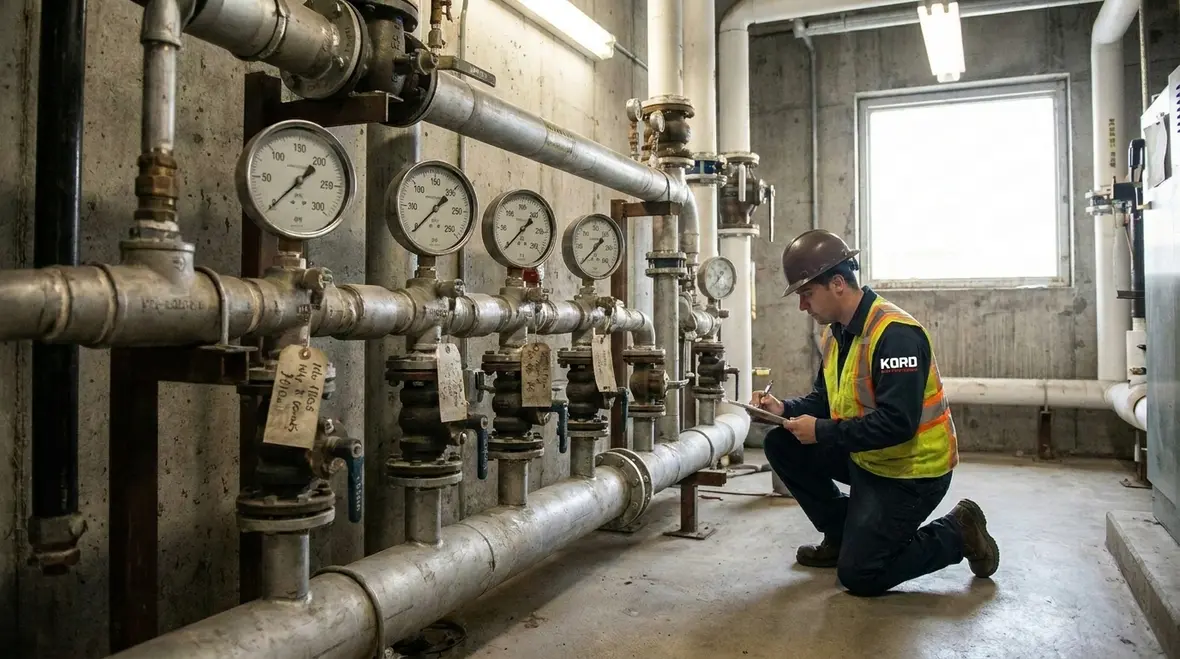
A strong test record usually shows more than pass or fail. It shows whether outlet pressures are consistent between floors, whether response smooths out as expected, and whether any component behaves like it had too much coffee. These notes matter because future testing can compare against the baseline and catch developing problems before they become expensive surprises.
Common failure points when pressure is not controlled
Pressure problems rarely appear out of thin air. Instead, they develop from predictable issues across design, installation, and maintenance. One frequent culprit is misadjusted regulators. When setpoints drift, the system may deliver too much or too little pressure.
Another issue involves system obstructions. Even minor scale buildup, debris, or partially closed valves can increase friction and reduce effective pressure. In addition, worn seals and leaky fittings can drop pressure at critical times, especially when flow ramps up quickly.
There is also a coordination problem. Pressure regulation devices must work with pumps and control systems. If the pump starts under one control assumption but the regulation equipment is tuned for something else, the system can hunt, spike, or fall short. Therefore, testing must validate the full interaction, not just isolated components.
Small issues that become big headaches
The trouble with pressure related defects is that many of them stay polite until the worst possible moment. A regulator can drift slowly. A fitting can leak just enough to be annoying, not dramatic. A valve can sit half wrong for months. Then demand arrives, and suddenly the system acts like it never heard the game plan. That is why proactive testing is cheaper than emergency lessons.
Using pressure testing results to improve performance
Once testing runs, the real value shows up in the follow up work. Kord Fire Protection technicians interpret results to decide what to adjust and what to leave alone. First, they confirm whether pressure targets match the design and the current building layout. Then, they compare outlet performance across floors so they can spot uneven delivery.
Next, they look for trends. A system that delivers acceptable pressure today but trends downward can signal gradual wear, a slow valve movement issue, or developing internal restrictions. Additionally, they document baseline results so future checks can detect change early.
When the findings call for it, technicians tune regulators, verify valve positions, and adjust control logic. They also recommend maintenance steps that reduce future drift. In other words, they turn the numbers into a plan, not a folder of paperwork that collects dust.
Turning readings into action
Data only helps when someone knows what to do with it. Good technicians use pressure readings to make focused recommendations, not random guesses. If one floor performs differently than the rest, that is a clue. If the whole system trends low, that is another clue. The goal is not to produce a dramatic spreadsheet. The goal is to make the standpipe behave reliably when everything else is already stressful enough.
Maintenance that keeps regulation stable over time
Pressure regulation is not a one time event. It is an ongoing requirement that must survive real building life: tenant changes, valve usage, pump service, and periodic inspections. Therefore, maintenance should focus on the parts that most often shift performance.
Kord Fire Protection technicians typically emphasize these areas: proper valve settings, regulator calibration integrity, leak checks at fittings, and verification that control components respond correctly after servicing. They also help owners maintain consistent test schedules so problems do not hide between long intervals. For buildings running wet systems, Kord’s wet standpipe system inspection and maintenance guide offers additional context on the service habits that keep equipment dependable.
Also, the building team should protect the system from “helpful” modifications. If someone reroutes piping, upgrades a pump, or changes a control panel, pressure regulation assumptions can break. Consequently, owners should treat any change as a trigger for updated testing and documentation review.
Safety and compliance benefits for owners and managers
Pressure regulation improves more than fire response. It improves day to day risk management. When the standpipe system delivers the right pressure, firefighters can operate with confidence and reduced uncertainty. Meanwhile, safer pressure levels help protect valves, hoses, and fittings from damage that can occur when pressures run high.
Furthermore, strong regulation supports code compliance and reduces the chance of failing inspections. That matters for managers who do not want last minute scramble energy. You get predictable outcomes when pressure devices stay within target ranges and when standpipe system pressure testing confirms real performance.
And, for the record, the only thing that should “spike” during an emergency is the drama, not the pressure relief. Professionals design for stability. Then technicians verify it.
FAQ
Final call to action for safer standpipe performance
Commercial owners should not wait for a test failure or an emergency to find out how their system performs. By scheduling timely standpipe system pressure testing and pairing it with focused maintenance, they keep pressure regulation stable and dependable. Kord Fire Protection technicians can review results, identify pressure trends, and recommend adjustments that protect equipment and improve firefighting effectiveness.
For owners ready to move from “we should probably check that” to an actual plan, Kord’s Standpipe Systems service page is the right next stop. It covers installation, inspection, maintenance, and repairs for Class I, II, and III systems. Reach out to start a performance plan today, and keep your standpipe system ready before the alarm ever rings.

Join Our Newsletter!
Get the latest fire safety tips delivered straight to your inbox From our Newsletter.