Restaurant Hood Fire Suppression System Guide by Kord
Inside a busy kitchen, flames can show up faster than a late delivery driver at a Friday rush. That is why a restaurant hood fire suppression system matters. It protects the areas that usually catch heat first: the cooking equipment, the grease-laden hood, and the duct path where fire loves to travel like it has a season pass. In this guide, the article explains how these systems work, what to look for during installation, and how Kord Fire Protection can become a vital partner to keep the job done right from inspection day to the last alarm test.
Modern kitchen protection is not just about hanging equipment and hoping the hood behaves itself. It is about pairing the right detection, nozzles, agent, pull station access, and shutdown sequence so the whole system responds like it trained for this exact moment. That is also why restaurant operators often end up learning a lot more about hoods, ducts, and appliance layouts than they ever expected when they first thought, “We just need the kitchen to open on time.”
For readers who want more background on code-driven kitchen coverage, Kord Fire also has a strong resource on UL 300 restaurant hood fire suppression, which connects well with the design and service ideas covered here.
How a restaurant hood fire suppression system prevents grease fire spread
A hood fire can start small and still get loud quickly. Grease vapors ignite, then heat feeds the flame through the hood filters and into the exhaust duct. A proper restaurant hood fire suppression system interrupts that chain of events at the exact moment it matters.
Typically, these systems use three coordinated steps. First, detection devices sense heat or flames near the hood. Next, the control unit triggers the discharge. Finally, the system releases an extinguishing agent into the hood area and often into the duct zone. As a result, the fire loses fuel and oxygen at the source, instead of being pushed through the building like a bad playlist that will not end.
Most kitchens do not need guesswork. They need consistent protection designed for grease cooking environments, not a one size fits all extinguisher scheme. Moreover, the system needs to match the cooking appliances, hood design, and airflow, because kitchen smoke behavior is not casual. It is physics with a side of drama.
Why the hood, plenum, and duct all matter together
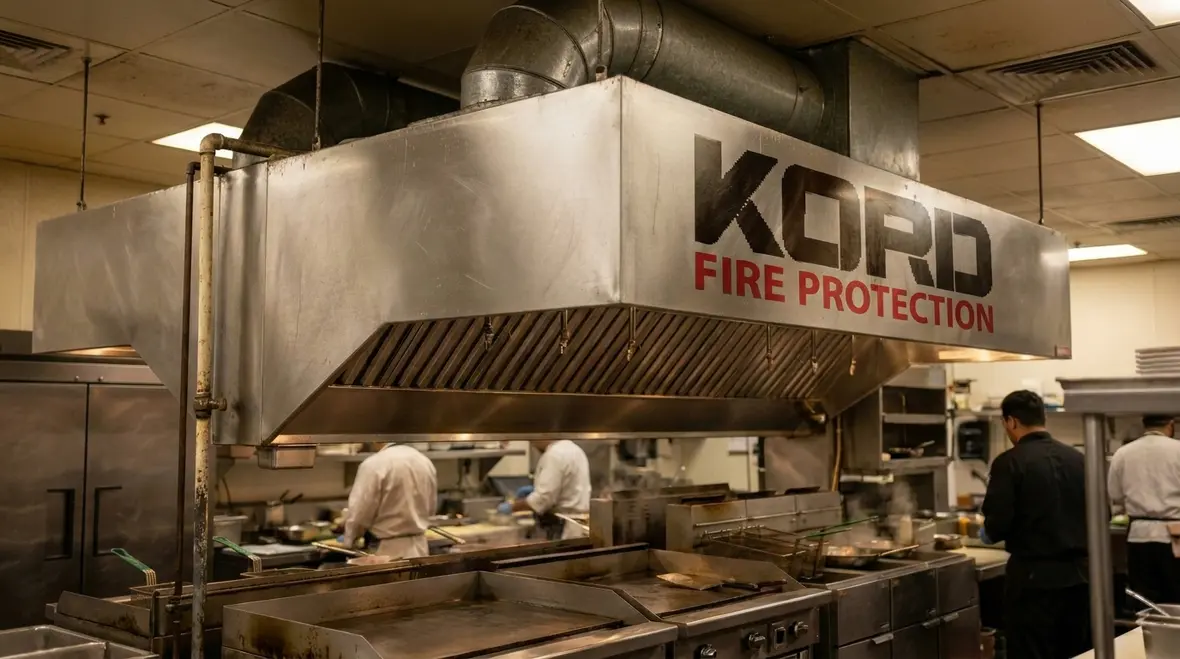
One of the biggest mistakes people make is thinking the visible flame is the whole problem. It is not. The hood captures vapors, the plenum collects contaminated air, and the duct gives fire a route upward if the hazard is not controlled quickly. That is why proper discharge coverage is aimed at more than one spot. The system has to stop spread, not merely make the surface look calmer for a dramatic five seconds.
Key parts of hood suppression systems that crews actually interact with
To understand the service, it helps to know the parts. And when people know the parts, they can spot problems sooner, which saves time and stress.
- Detection devices mounted in the hood area monitor heat rise and fire conditions.
- Nozzles positioned to discharge agent into the hood and, where designed, duct pathways.
- Control panel manages signals and triggers release.
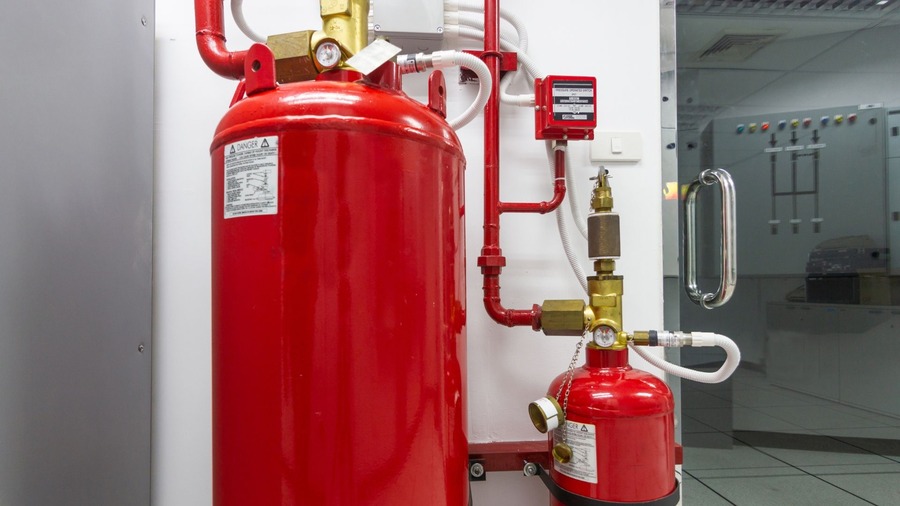
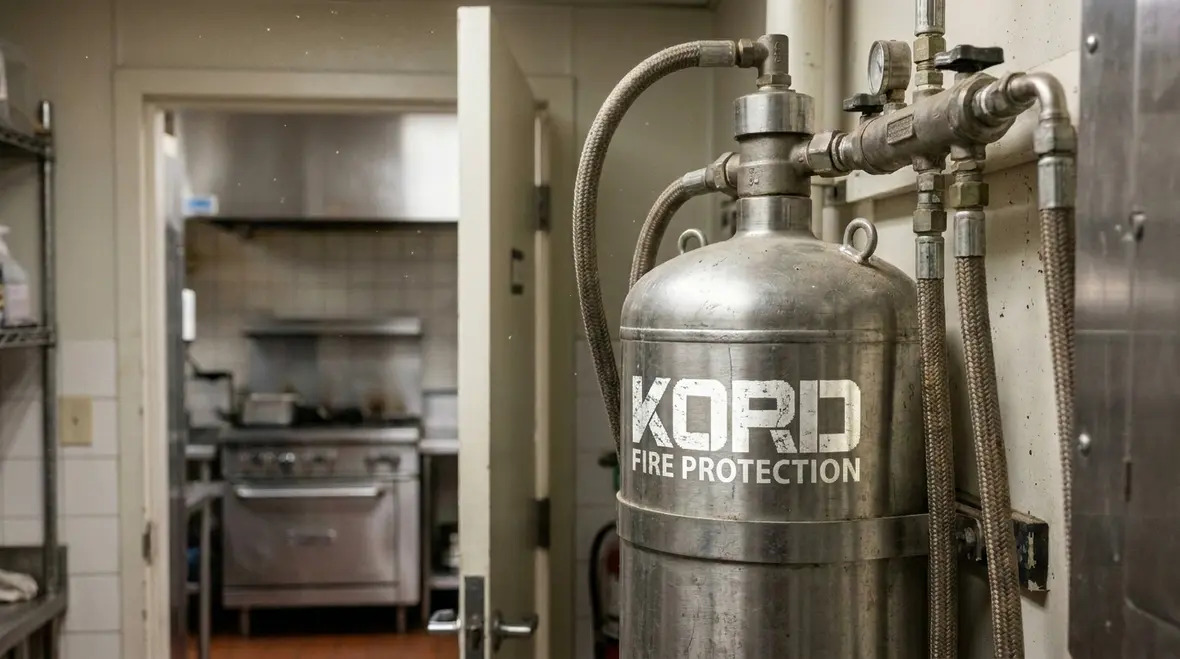
- Agent storage holds the extinguishing medium, ready for discharge.
- Manual pull station allows trained staff to activate immediately when needed.
- Detection and alarm wiring links the system into the building’s safety workflow.
Then there are the details that do not look exciting until they fail. For example, nozzle orientation, discharge coverage, and proper placement of detection components impact results during real events. Also, service teams need access for inspections, cleanings, and component checks without turning a maintenance visit into a kitchen scavenger hunt.
If the idea of routine review sounds tedious, it helps to remember that Kord Fire has also published a useful restaurant hood fire suppression inspection checklist guide. It gives owners and managers a clearer idea of what technicians actually evaluate during recurring service visits.
The small components that cause large headaches
Nozzle caps, clear access to pull stations, updated labels, and unobstructed detector paths tend to get ignored because they are not glamorous. But they are often the parts that decide whether inspection day feels smooth or feels like everyone suddenly forgot where the system paperwork lives. In fire protection, boring details are usually doing the heaviest lifting.
Where codes and standards guide the design and installation
Restaurant fire protection does not run on vibes. It follows rules set by recognized fire and life safety standards. Installers must size the system correctly, place devices in the right locations, and verify performance with documented steps. If a system is undersized, it may not cover the hood hazards. If it is installed loosely or incorrectly, it may trip at the wrong time or fail when activated.
Meanwhile, local authorities having jurisdiction often require documentation, inspection reports, and sometimes system testing results. Therefore, the “setup” is not only about mounting equipment. It also includes wiring verification, agent connections, and labeling for fast understanding during an emergency. In other words, a good installation behaves like a well rehearsed stage crew. No one notices until the curtain rises and everything goes smoothly.
Operators planning upgrades should also look at Kord Fire’s article on UL 300 upgrade checklist for commercial kitchens. It is especially helpful when an older system is still in place and the kitchen has changed enough that the hazard profile no longer matches the original design.
Agent types and why kitchen layout changes the answer
Different suppression systems use different agents, and the right choice depends on the hood, cooking processes, ventilation design, and the fire scenario the system targets. Some systems use clean agents, while others use specific chemical solutions designed for grease fires.
However, the agent is only half the story. Kitchen layout plays a heavy role. A hood over a flat-top grill behaves differently than a hood over fryers. Ventilation duct length and turns influence how heat and smoke travel. Consequently, designers must account for airflow patterns, hood geometry, and the intensity of cooking loads.
Additionally, service planning matters after install. Some setups require more frequent inspection of nozzles and detection coverage to keep performance reliable. Thus, the best approach considers both day one operation and long-term maintenance.
Why equipment changes can force a redesign
A new fryer, range shift, or hood modification may seem like an operations decision, but it can become a fire protection decision very quickly. When appliance footprints move, nozzle targets and discharge zones may need to move too. That is why the sentence “We only swapped one piece of equipment” can make a technician raise an eyebrow with impressive speed.
Installation, commissioning, and testing that keep systems dependable
Once the equipment arrives, the job moves from “install” to “prove.” Commissioning usually includes verifying detector positions, checking control panel programming, confirming wiring continuity, and testing functional aspects as allowed by local requirements.
During testing, crews validate that the system can detect a simulated heat condition, then trigger alarms and discharge as specified. They also confirm that manual stations work, that notification devices alert properly, and that labels guide staff in plain language.
And yes, staff training belongs here too. When people know what to do, they reduce delays. After all, during a fire, every second counts, and fumbling for the pull station like it is the last missing piece of a gaming controller is not the plan.
Electrical interlocks and shutdown behavior
Another piece that matters is what happens to fuel and power when the system trips. Suppression is stronger when it works alongside the proper shutdown sequence for connected equipment. Kord Fire discusses that side of the equation in its article about commercial kitchen fire suppression electrical interlocks, which is worth reviewing if the kitchen team wants to understand how discharge and equipment shutdown are supposed to work together.
How Kord Fire Protection becomes a vital partner in ongoing service
Even a correctly installed restaurant hood fire suppression system can lose reliability without routine service. That is where Kord Fire Protection earns its keep. They support owners, managers, and kitchen teams with inspection support, maintenance scheduling, and documentation that aligns with safety expectations.
Instead of treating fire protection as a once-and-forget purchase, a strong partner helps the client stay ready. Kord Fire Protection can help verify system readiness, review past performance, and keep components in working order so the next inspection does not feel like a surprise pop quiz. Also, when kitchens change, such as a new fryer, upgraded hood, or duct modifications, a partner can evaluate whether the system design still matches the hazard profile.
| What Kord Fire Protection supports | Why it matters for kitchen safety |
| Inspection and service planning | Keeps the restaurant hood fire suppression system responsive when it counts |
| Component checks and functional verification | Reduces the chance of nuisance triggers and hidden failures |
| Documentation and readiness for review | Helps owners meet safety expectations with less scramble |
For businesses that need a direct path to service, Kord Fire’s fire suppression services page is the right next stop. It highlights support for Kitchen/UL-300 suppression along with installation and maintenance options that fit commercial kitchens and other protected spaces.
FAQ about restaurant hood fire suppression systems
Ready to protect the hood and the business?
Fire safety should not feel like a gamble. A well planned restaurant hood fire suppression system protects the hazard at the source, then supports staff response with clear activation and alerting. If a new kitchen is in the works or an existing system needs reliable service, Kord Fire Protection can help keep coverage accurate and up to date.
Reach out through Kord Fire’s UL300 Restaurant Systems page to schedule an inspection, review current coverage, and build a maintenance plan that keeps your operation open, calm, and compliant. When the kitchen is running full speed, that kind of confidence is worth a lot more than luck.

Join Our Newsletter!
Get the latest fire safety tips delivered straight to your inbox From our Newsletter.