Restaurant Fire Suppression for Food Trucks and Grease
Restaurant Fire Suppression for Food Trucks: The Quiet Line Between Dinner and Disaster
When a food truck serves brisk business, it feels like the grill is the only thing that matters. Yet heat, grease, and cooking oils can turn a good night into a bad one fast, which is why restaurant fire suppression for food trucks deserves real planning, not hope. Food truck fire suppression helps protect the cooking area, reduces flames, and supports faster response when the unexpected shows up. And yes, fire acts a lot like an uninvited guest at a tailgate: it arrives quickly, it doesn’t pay, and it makes everything harder for the host.
Because the consequences are high, operators should treat suppression as a core safety system, similar to how restaurants treat alarms and hood suppression. Next, they should build a plan around hazards, code expectations, and the team that can test, service, and stand by their system long after opening day.
Why food truck fire suppression belongs in every kitchen plan
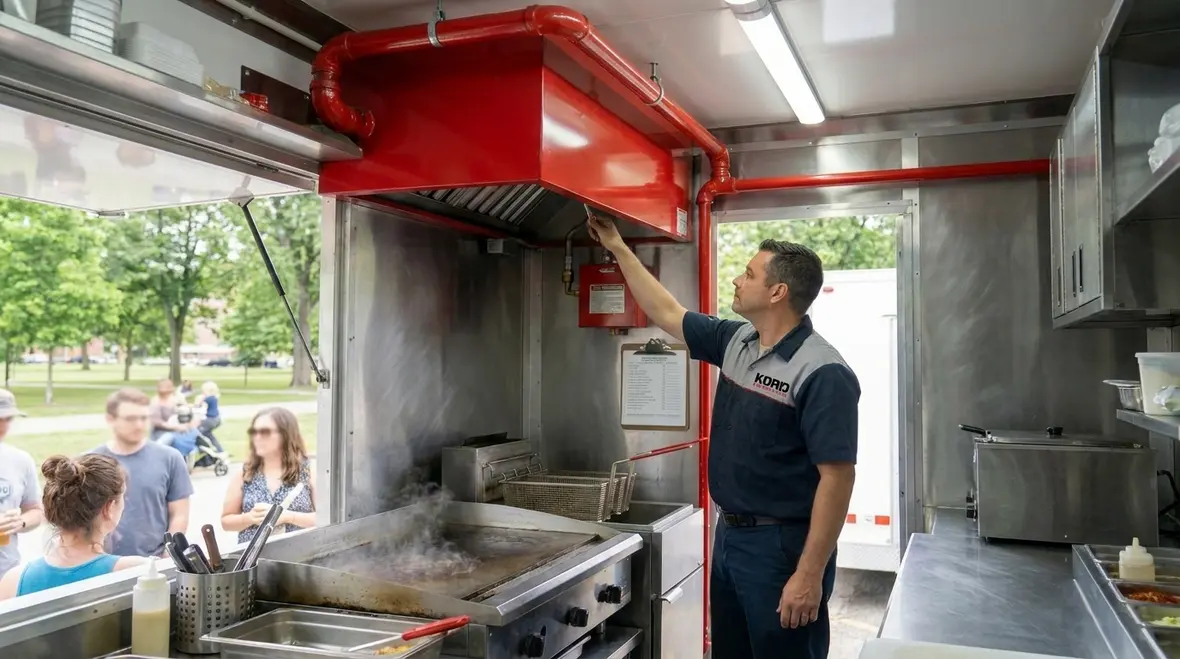
Food trucks run on tight space, high temperatures, and constant movement. That combination raises risk even when cooks follow best practices. Food truck fire suppression systems target the specific conditions that fuel kitchen fires, especially in the hood and cooking equipment area. As a result, the goal stays simple: stop the fire early and limit spread.
In many cases, the most dangerous fires start as small flare ups from grease vapor or cooking residue. Then, wind and airflow inside the compartment can help flames grow. Meanwhile, a person trying to use a small extinguisher may face thick heat, poor visibility, or an awkward reach around equipment. Therefore, an engineered suppression approach often performs better than “grab and hope,” even when the staff is trained.
Also, downtime costs real money. A suppression system that works reliably can protect the truck from catastrophic damage. And if the system helps prevent a bigger incident, the owner avoids the kind of closure that ruins a week of catering revenue.
Compact kitchens need full coverage, not partial luck
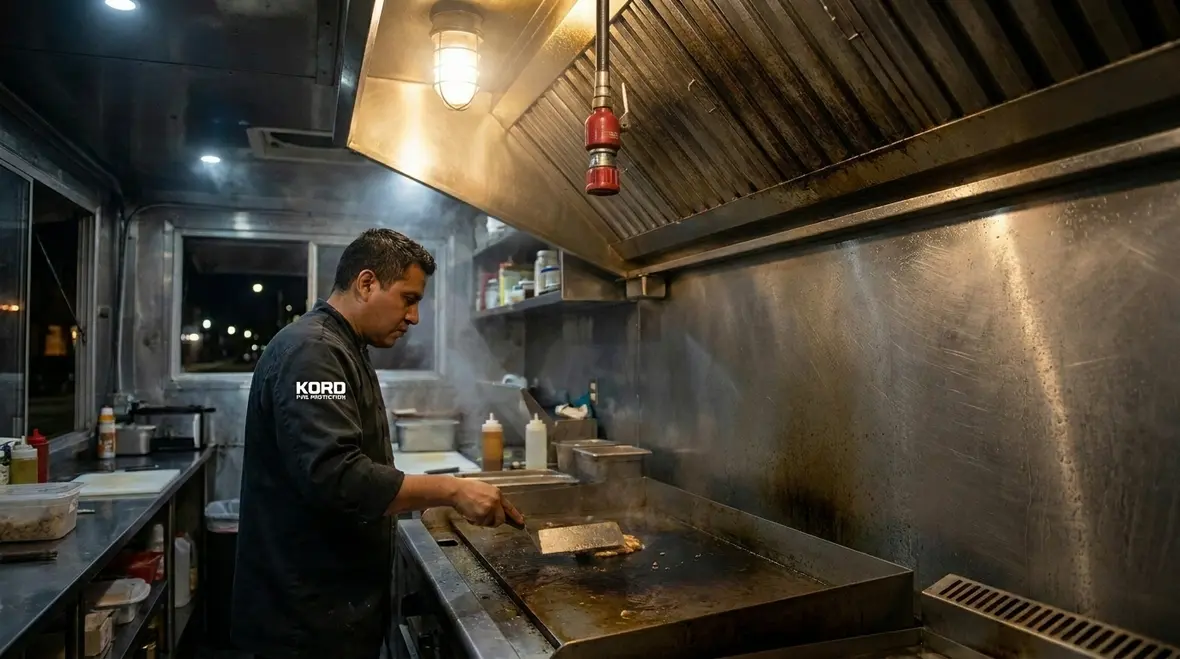
The challenge with mobile cooking is that every inch matters. Fryers, griddles, burners, and hood space all live shoulder to shoulder. That means even a small ignition source can affect multiple surfaces fast. In a full size restaurant, crews may have more room to react. In a truck, there is less distance between heat source, grease residue, and operator. That is exactly why a proper suppression system is not some luxury add on. It is the quiet line between business as usual and a very long night.
Owners who already understand restaurant hood protection often benefit from reviewing how modern UL300 restaurant systems are built around real cooking hazards. The principles carry over neatly to mobile kitchens, especially when grease, oil, and tight hood layouts are part of the daily routine.
How restaurant style suppression works on a moving operation
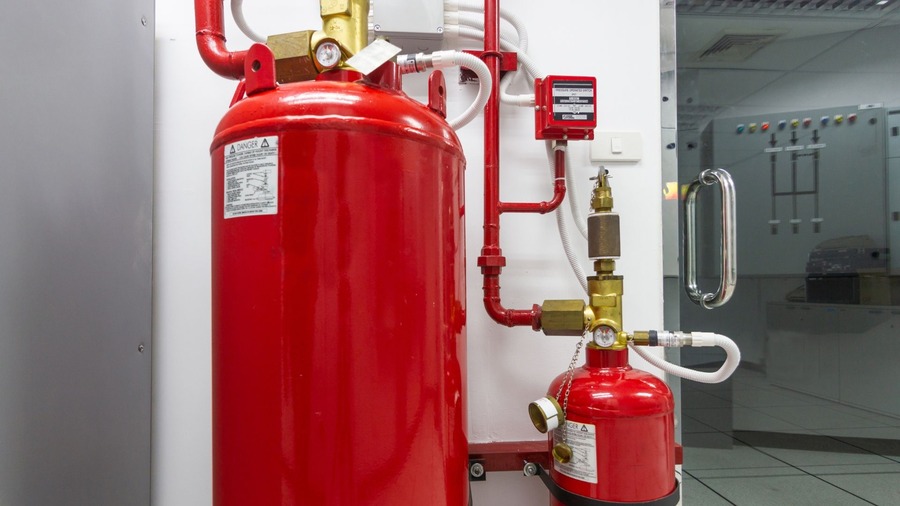
Traditional restaurant kitchens use hood suppression because they capture grease-laden vapors at the source. Food trucks need the same mindset, but with special attention to compact layouts. Typically, a suppression setup includes a few key parts: detection or activation, a distribution method, nozzles or agent delivery, and a control system that triggers fast.
Then comes the agent choice. Many systems use clean agents or specialized fire suppressants designed for cooking oil and grease. The right selection matters because the goal is to smother flames and prevent re ignition, not just blow out a moment of heat.
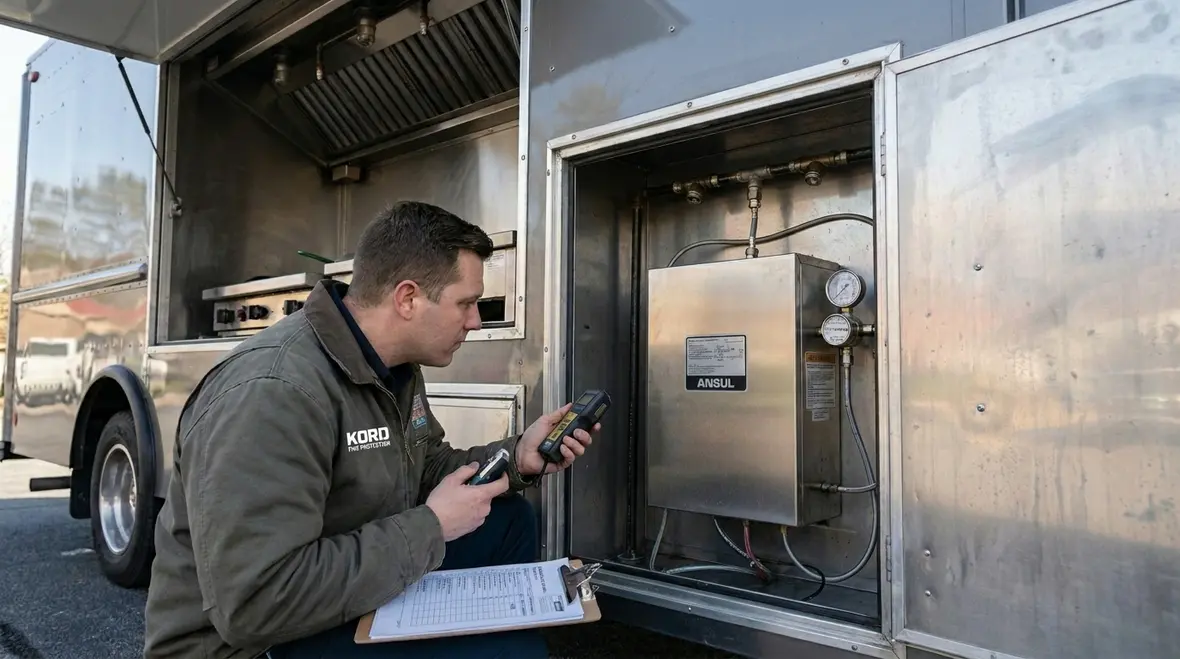
At the same time, installers should consider the truck’s real world. Vibration, travel, temperature swings, and ongoing maintenance can affect components over time. So technicians must mount parts securely, verify proper piping or tubing, and confirm that the agent reaches the correct zones. In short, the system must perform under real conditions, not only in a showroom demo.
What good coverage actually looks like
Good coverage means the hood, plenum, duct entry points, and cooking appliances are treated like one connected hazard, not random separate pieces. A fryer does not care that it lives beside a flat top. Fire definitely does not care. If grease vapor rises and spreads, the suppression pattern has to account for that path. This is where thoughtful design separates a professional system from something that only sounds reassuring on paper.
For operators wanting a broader look at code driven kitchen suppression strategy, Kord Fire’s UL 300 restaurant hood fire suppression guide gives useful context that supports smarter planning before inspection day sneaks up like an unpaid parking ticket.
Where codes and inspections meet the real hazards
Fire requirements vary by location, but the common theme stays consistent. Local authorities and insurance carriers often expect suppression to match specific standards for commercial cooking equipment. Even if a truck uses a smaller hood or different cooking methods, the system should align with the risk profile.
During inspections, officials typically look for proper design, labeling, and maintenance records. They may also ask whether the hood coverage fits the cooking appliances and whether the system triggers as intended. Therefore, operators should prepare documentation before problems appear. That includes test logs, service notes, and proof of scheduled maintenance.
Meanwhile, staff training plays a role that some owners underestimate. A system can discharge, but people still need to respond safely. They should understand evacuation steps, shutoff procedures, and how to alert the right parties. After all, suppression buys time, not miracle miracles.
Paperwork matters because memory is not a maintenance plan
A surprising number of headaches come from simple missing records. Owners know the system was checked. The technician remembers being there. But if the paperwork is scattered between glove boxes, text threads, and someone’s email from six months ago, inspection day gets awkward in a hurry. Keeping service logs, labels, manuals, and update notes together helps prove that the system protecting the truck is the same system documented on paper.
That same organized approach also supports compliance with broader kitchen safety expectations discussed in Kord Fire’s restaurant fire safety regulations compliance guide, which helps owners connect suppression, inspection records, and everyday operating discipline.
Maintenance schedules that keep systems ready, not rusty
A suppression system is not a one time purchase. It is more like a dependable coworker: it only helps if it gets the right checkups. Over time, nozzles can clog, sensors can drift, and valves can wear. Agent components may need inspection or replacement based on manufacturer guidance and local requirements.
Operators should schedule service around real usage patterns. A truck that runs daily, handles heavy grease cooking, or works long catering events often needs more frequent attention than one that cooks lightly on fewer shifts. Also, a team should inspect for physical damage after transport or after any major equipment change.
When maintenance is handled correctly, it supports consistent discharge pressure, correct detection performance, and dependable control behavior. That matters because in a real fire, seconds count. So owners should treat maintenance like a budget line item that prevents a far bigger bill.
Small changes in the truck can create big protection gaps
Swap one appliance, shift a fryer, add a griddle, or change the hood arrangement, and the suppression design may need attention too. This is where operators sometimes get tripped up. The cooking line evolves because the menu evolves. Suddenly the truck serves more volume, more oil, more heat, and more risk than the original setup was built around. Maintenance is not just about replacing worn parts. It is also about making sure the system still matches reality.
If that sounds familiar, Kord Fire’s vehicle fire suppression systems maintenance guide is a helpful related read for owners balancing movement, vibration, and ongoing service demands in a mobile environment.
Why kord fire protection can become a vital partner
Many operators try to manage suppression with whatever is convenient. Then inspections happen, parts fail, or systems fall behind schedule, and suddenly “convenient” becomes “chaotic.” That is where kord fire protection can become a vital partner with the service and job of restaurant fire suppression for food trucks by bringing consistent, job minded support.
Instead of dropping a checklist on the truck and walking away, a capable fire protection partner can help align system design with the cooking layout, verify coverage, and keep maintenance on track. They also can support troubleshooting when something behaves differently than expected, whether due to sensor sensitivity, valve issues, or changes in equipment.
Additionally, a strong partner helps operators plan the next steps early. For example, when a hood or appliance gets upgraded, the suppression system should reflect that change. Then, owners avoid the uncomfortable surprise of “your system does not cover that equipment.” And nobody wants to explain that to a health inspector while the line is still forming for tacos.
Ultimately, kord fire protection supports the operational side of safety, helping the truck run confidently, not nervously. When the job includes service, testing, and guidance, fire suppression becomes a system that performs when it is needed.
Installation and ongoing training that prevent mistakes
Proper installation is where many issues begin. Technicians should check placement, verify that detection points match cooking vapor flow, and confirm that discharge distributes agent to the intended hazards. Then they should label controls clearly so staff can operate the system or respond properly after activation.
Next, training matters. Food truck crews should know how the system works in plain language. They should practice what to do when the system triggers, how to evacuate the space, and who to call. Also, staff should understand safe shutoff steps to reduce chance of flare ups.
Finally, owners should build a simple communication rhythm. For example, they can assign one person to monitor suppression checks, keep service documents in a dedicated folder, and report signs of wear quickly. When responsibilities stay clear, the truck avoids slow leaks in safety.
Near the practical end of the conversation, it also helps to work with a team that handles broader suppression needs, inspections, and support. Kord Fire’s fire suppression services page is a strong next stop for owners who want service help, upgrades, or a clearer path to keeping a mobile kitchen protected without guessing their way through it.
FAQ
Conclusion: Plan suppression now, protect the season later
Food trucks win when they stay open, safe, and ready for rush hour. Restaurant fire suppression for food trucks helps prevent small grease flare ups from turning into costly damage, downtime, or worse. The smartest operators plan suppression with the right design, inspections, and training from day one.
Then they partner with a dependable team like kord fire protection to keep the system ready through every change, every season, and every catering job. If the truck is cooking tonight, it should also be protected tonight. For owners ready to take the next step, Kord Fire’s fire suppression services page offers a practical starting point.

Join Our Newsletter!
Get the latest fire safety tips delivered straight to your inbox From our Newsletter.