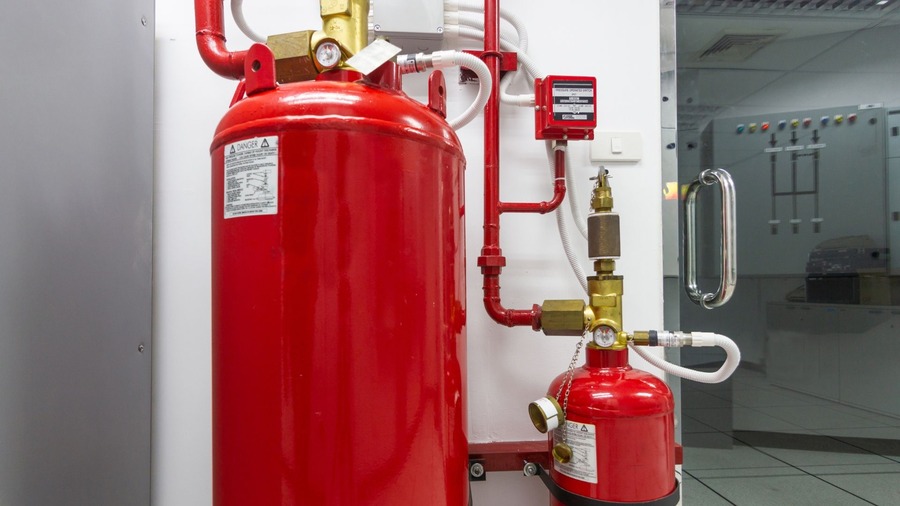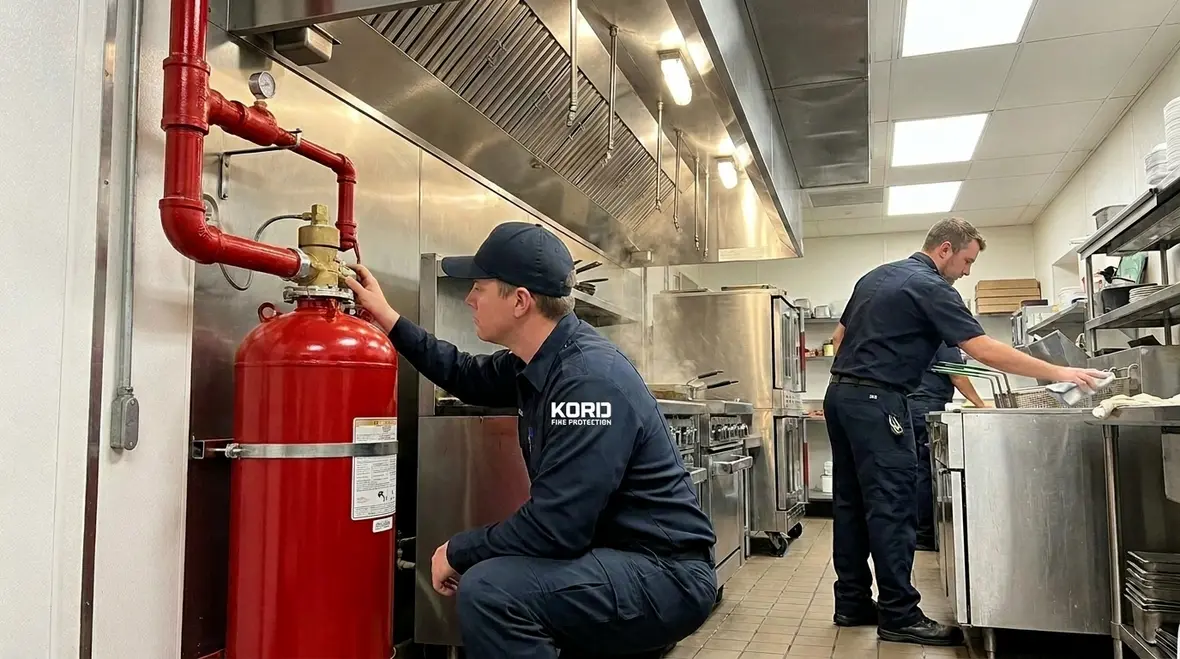
Kitchen Suppression Recharge Steps After Activation
After a kitchen suppression recharge, the system does not simply “go back to normal.” Instead, it enters a careful recovery and verification phase where safety, compliance, and kitchen uptime all matter. When a fire suppression system activates, it used agent and triggered components that must be restored and checked, so the kitchen can protect people again. And yes, the restaurant team often discovers this the hard way, right after the smoke clears and someone says, “Can we just… refill it later?” They can not. Not if they want the protection to work the next time the fryer decides to audition for a blockbuster sequel.
In this guide, third person explains what happens after activation, what technicians check, and how Kord Fire Protection can become a vital partner in the recharge process, the inspections, and the ongoing maintenance that keeps the system ready. For readers who want related context on compliant kitchen protection, Kord Fire Protection also covers UL300 restaurant systems and how they fit real world cooking hazards.
What triggers a kitchen suppression discharge and why it matters
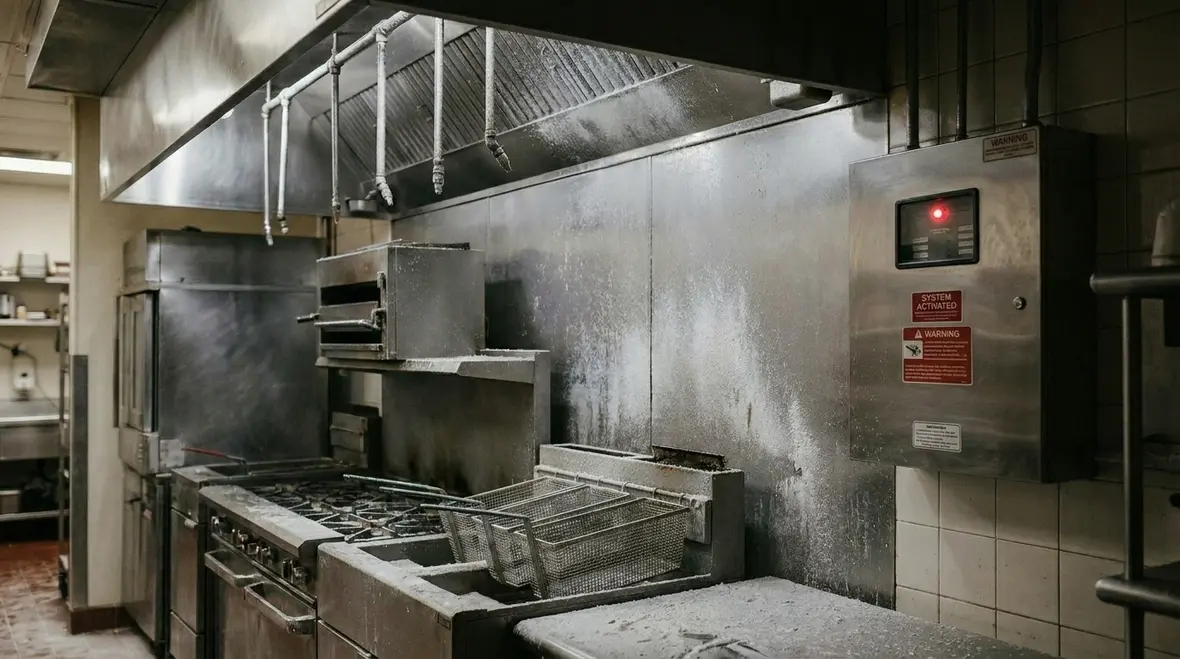
Kitchen systems typically activate when heat, flame, or sensing elements detect a cooking-related fire. Once triggered, the control unit releases the extinguishing agent through piping and nozzles. Consequently, the system changes from “standby” into “spent” status. Even if the fire looks small, the discharge proves the detection and release path worked, which means the kitchen must treat the event as real.
After the event, the biggest risk does not come from the soot alone. It comes from assuming the unit is still protected when it is not. Therefore, the recharge process must restore the correct agent level, confirm the mechanical components, and ensure the sensors and alarms operate as designed. That same logic appears throughout Kord Fire Protection’s guidance on what kitchen fire suppression covers and does not cover, because a discharged system is no longer a ready system just because the kitchen has stopped smoking.
Why the first few hours matter so much
The time immediately after activation shapes everything that follows. If staff rush back into service, move parts without documentation, or assume cleanup is the same thing as restoration, they can create delays that last longer than the original fire. The kitchen needs a methodical response, not a heroic shrug. Fires are dramatic enough already. The recovery phase does not need improv theater added to it.
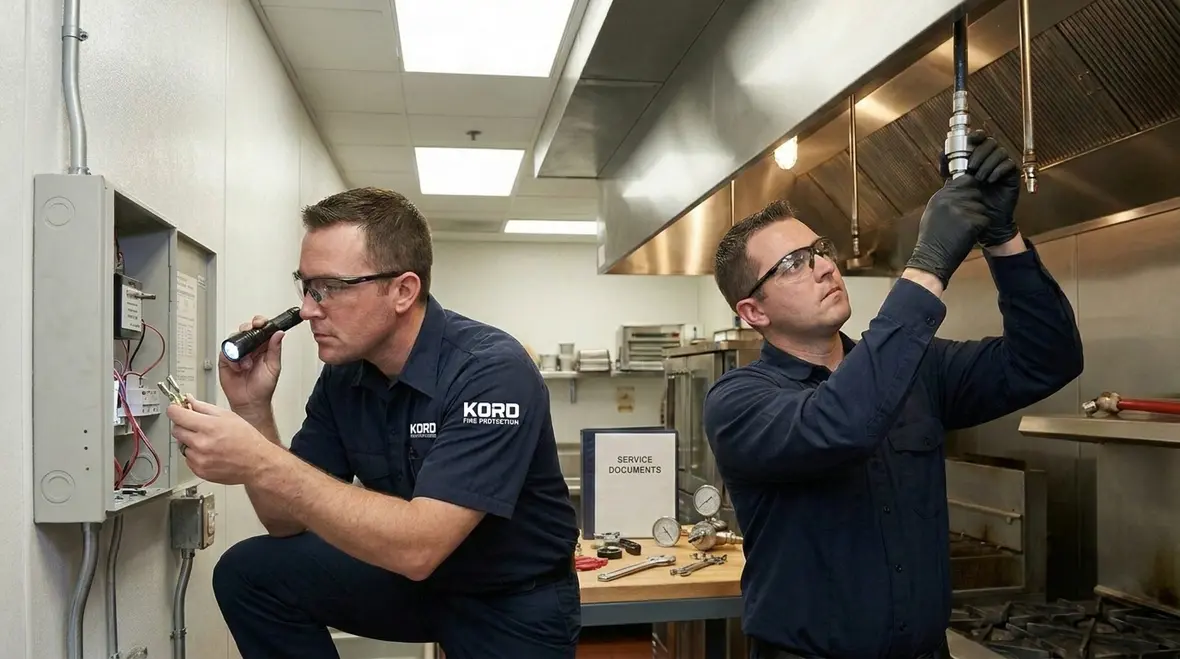
Kitchen suppression recharge steps technicians follow after discharge
The next phase focuses on returning the system to a trusted and documented condition. To do that, technicians usually complete these steps in order, because missing one step turns the job into a “good luck” plan, and nobody should cook on luck.
- Secure the site so only authorized personnel work around the piping, nozzles, and control panel.
- Assess the damage including discharge residue, heat exposure, and any bent lines or stressed fittings.
- Identify the cause by reviewing the panel history, sensor readings, and any alarm codes.
- Remove discharged agent if any remains in a way that interferes with proper function.
- Replace or service components as required by the system design and manufacturer guidance.
- Recharge the system with the correct agent type, quantity, and pressure values.
- Restore standby status and verify the control logic resets correctly.
- Conduct operational checks that confirm the release path, alarms, and monitoring signals.
Then technicians document everything. And documentation matters because it tells the truth when an inspector asks for proof, not just hope. It also helps the business separate a clean reset from a messy guess. Those records become especially useful when future service visits compare component wear, recurring trouble spots, or changes to the kitchen layout.
What technicians are really looking for
A recharge visit is not just a refill appointment with better tools. Technicians are checking whether the activation damaged alignment, stressed fittings, altered detector positions, or exposed weak spots that existed before the incident. A system can discharge and still reveal that something else needs correction before it is truly dependable again. That is why Kord Fire Protection often pairs recharge work with broader review of kitchen fire suppression electrical interlocks, especially where shutdown functions and reset logic affect kitchen reopening.
What gets inspected once the agent is restored
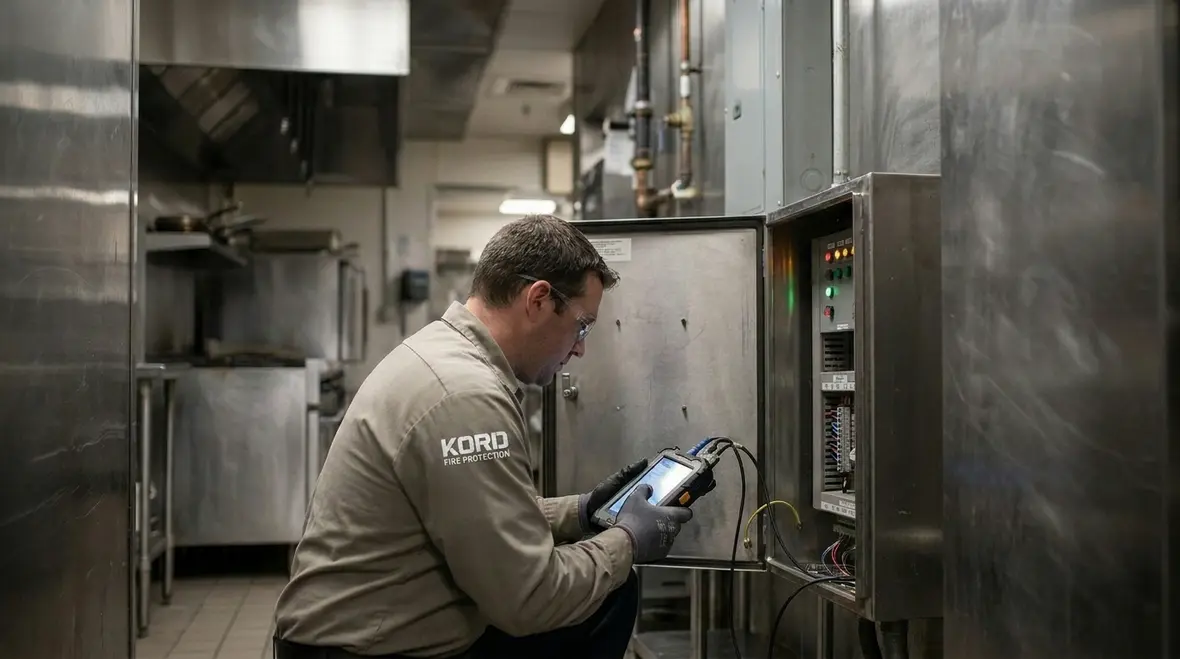
After the recharge, the real work continues. Technicians look beyond the obvious “refilled canister” idea. First, they verify that the nozzles sit properly and that the piping supports the correct distribution. Next, they inspect the discharge lines for blockage, corrosion, or alignment changes caused by heat.
Then they evaluate the detection side. Heat detectors, fusible links, or other sensing elements must function properly, and the panel must read the system status correctly. Also, they check manual pull stations and any interlocks that control ventilation shutdown, gas shutoff, or alarm signaling.
Finally, they run tests that confirm the system can move from standby to alarm and discharge logic without delay. In other words, the system must not just “look ready,” it must behave correctly. That practical distinction also shows up in Kord Fire Protection’s explanations of kitchen suppression systems for equipment and grease fires, where system design and real appliance hazards have to match.
How residue and cleanup affect future protection
When a system discharges, it may leave residue in the hood space, filters, and around duct openings. Even if the kitchen team handles cleanup quickly, residue can hide in places technicians cannot ignore, like creases in metal surfaces or near joints. Over time, that buildup can affect airflow and create stubborn messes that stain and attract grease.
In addition, residue can complicate nozzle performance if it interferes with discharge patterns or causes uneven spray or distribution. Therefore, cleanup and inspection should move together. Technicians coordinate with the kitchen to remove residue while still preserving key evidence and verifying that components remain serviceable.
And when it comes to timing, they understand that kitchens run on schedules. Yet they refuse shortcuts, because the next activation does not care how busy the lunch rush feels. The fryer will still ignite when it wants to. That is just how fire behaves. Rude, yes. Predictable, also yes.
Cleanup is not the same thing as readiness
This is one of the easiest mistakes for a busy team to make. If the visible residue is gone, the kitchen can feel normal again, but the system still needs confirmation that every protected area, every nozzle, and every shutdown function remains ready for the next emergency. Shiny stainless steel is nice. Verified protection is nicer.
Why service records make compliance easier later
Fire suppression service depends on more than technical skill. It depends on history. After activation and recharge, records show when the system discharged, what components changed, and what checks proved the system can protect again. This is where Kord Fire Protection becomes a vital partner.
For business owners and managers, a complete file reduces confusion and speeds up the next required inspection. It also supports clear decisions about repairs. If a component repeatedly fails or shows stress after activation, the record reveals that pattern early. Then the team can address the root cause rather than treating every event like a one-off tragedy.
So instead of scrambling to assemble paperwork after the fact, businesses work from clean, organized service logs. That helps procurement, planning, and risk management. And it helps prevent the dreaded moment when someone says, “Wait, when was it last recharged?” Related resources such as Kord Fire Protection’s restaurant fire safety regulations compliance guide reinforce just how useful proper records become during inspections and follow-up service.
Where Kord Fire Protection fits in the recharge job
A recharge is not a one-person sport. Kord Fire Protection supports the full cycle that follows activation. That includes post discharge assessment, proper agent restoration, component verification, and system checks that confirm monitoring and release paths work. In addition, a strong partner helps teams plan the next steps, including any repairs needed for components exposed to heat.
Kord Fire Protection also helps businesses connect suppression protection to real kitchen operations. Therefore, the process accounts for hood layouts, hood interlocks, gas or ventilation ties, and the practical way staff resets operations afterward. As a result, the kitchen gets protection that aligns with how the facility actually runs, not how someone guessed it ran on paper.
In the end, a partner like Kord Fire Protection reduces delays and surprises. It turns the recharge into a managed service event rather than a chaotic emergency chore. Businesses that need broader support can also review Kord Fire Protection’s kitchen hood fire suppression service for installation, maintenance, and ongoing system support tied to real commercial kitchen conditions.
Dual-column: common post activation needs and what to do next
Need after activation
Verify agent restoration and correct pressure
Confirm nozzles and piping alignment
Inspect detection and alarm signaling
Check interlocks for ventilation or shutoff
Recommended next actions
Recharge using correct system specifications and document values
Service or replace affected parts based on findings
Test detection response and reset logic
Run operational tests to confirm shutdown functions
FAQ
Bottom line and next step
After activation, a kitchen needs more than a reset. It needs a real recharge, thorough inspection, clean documentation, and tests that confirm the system will respond the next time heat hits the wrong place. A business can plan for that process now, instead of improvising under stress later. If they want dependable restoration and clear service records, Kord Fire Protection helps the team move fast while staying compliant.
Need a trusted next step? Explore kitchen hood fire suppression service or review UL300 restaurant systems to keep the kitchen protected before the next emergency tries its luck.
Contact Kord Fire Protection today to schedule the post activation recharge and verification.

Join Our Newsletter!
Get the latest fire safety tips delivered straight to your inbox From our Newsletter.